Flowering Bulbs6 min read
How to Care for Amaryllis After the Flowers Fade
When the last amaryllis flower wilts, the show is not necessarily over. The large bulb can continue growing long after its spectacular blooms disappear, gathering the energy it needs for a possible return performance. With a little attention to pruning, light, water, and seasonal rest, you can keep the plant attractive and give it a good chance of flowering again. The timing is flexible: focus on the condition of the bulb and leaves rather than expecting every plant to follow the same calendar.

Remove Spent Flowers, but Keep the Leaves
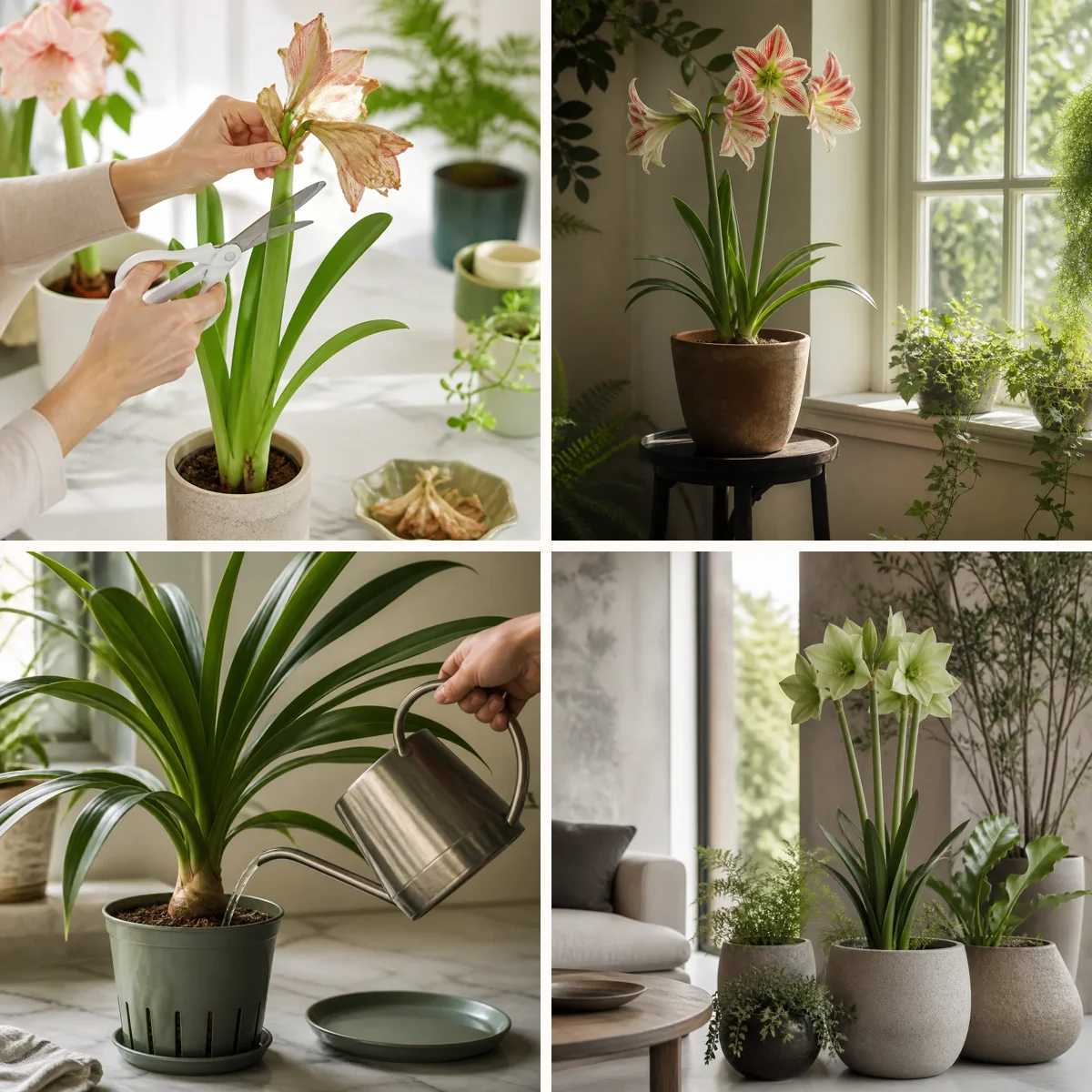
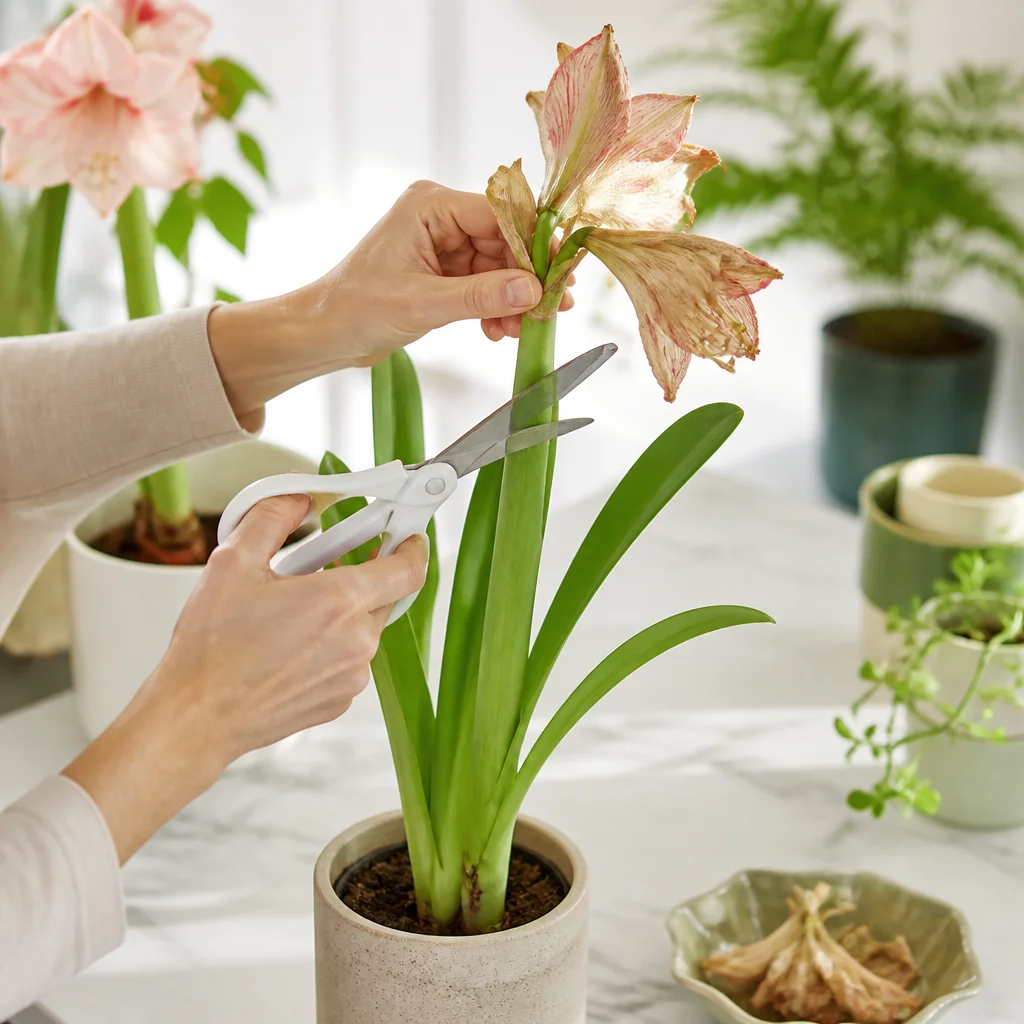
As each flower fades, snip it off just behind the swollen base where it joins the stalk. This keeps the plant looking tidy and prevents it from putting energy into developing seed. Use clean scissors or pruning shears, and take care not to cut the strap-shaped leaves emerging from the bulb. If you would like to try raising amaryllis from seed, you can leave a pollinated flower to develop, but seedlings take years to reach flowering size. Once every flower on a stalk has faded, cut the hollow stalk back to about an inch or two above the bulb. It may release a little sap, so protect a delicate tabletop while you work. Leave any green leaves in place, even if they appear after the flowers: they are the plant’s energy collectors for the months ahead.
Give the Bulb a Bright Growing Season
Move your amaryllis to a bright spot where its leaves can receive several hours of light each day. A sunny windowsill or a position close to a bright window is often suitable. Turn the pot regularly so the leaves do not all lean in one direction. If the foliage has been in a dim room, introduce stronger sun gradually to reduce the risk of scorching. Once frost has passed and temperatures are reliably mild, you can place the pot outdoors for the growing season. Begin in a sheltered, lightly shaded position, then gradually move it into brighter light. Choose a stable spot protected from strong wind, and bring the plant indoors before cold weather returns. Long leaves may arch naturally; a discreet support can keep them from sprawling across a path or neighboring pots.
Water and Feed While Leaves Are Growing
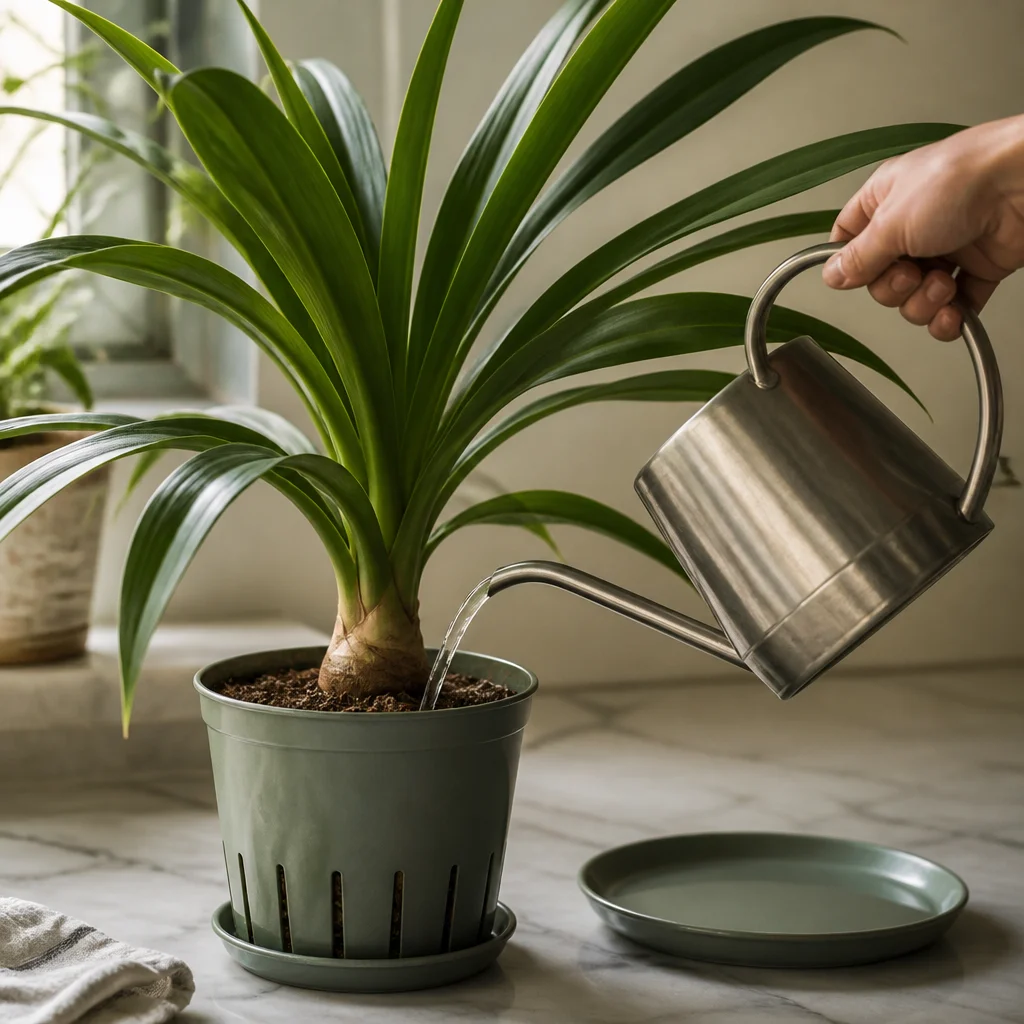
During active growth, water when the top inch of potting mix feels dry. Water thoroughly, then let excess drain away rather than leaving the pot standing in a saucer of water. Amaryllis bulbs can rot in persistently soggy mix, so a pot with drainage holes is important. Check moisture more often in warm weather or outdoors, where a container can dry quickly. Feed the plant with a balanced houseplant fertilizer during the leafy growing season, following the dilution and frequency on the label. The aim is to support healthy foliage and replenish the bulb, not to force immediate flowers. Stop feeding when you begin preparing the plant for dormancy. If leaves yellow unexpectedly while the mix remains wet, ease off watering and check that the drainage hole is clear.
Let the Leaves Earn Their Keep
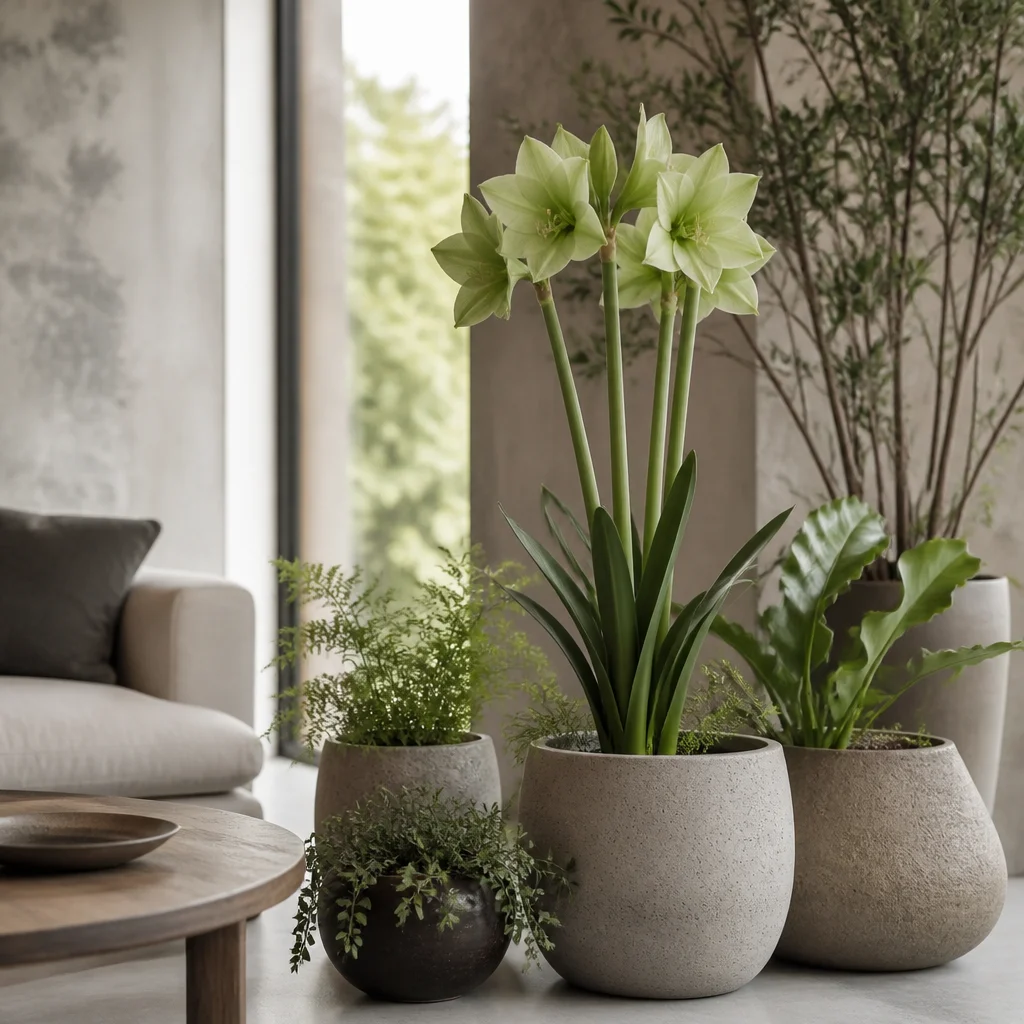
The foliage may look less dramatic than the flowers, but it is doing essential work. Through photosynthesis, the leaves help rebuild the reserves that the bulb draws on for future growth and flowering. Keep them green and growing for as long as they remain healthy; do not braid them, tie them tightly, or cut them back simply to make the pot look neater. To make a leafy amaryllis feel intentional indoors, group its pot with other foliage plants of different heights, leaving enough space for light and air to reach the leaves. A plain outer planter or a shallow tray can make a nursery pot look more finished. If you use a decorative cachepot without a drainage hole, remove the inner pot to water it and empty any collected water before putting it back.
Prepare for a Resting Period
After the bulb has had several months of leafy growth, you can encourage a rest period to help time a future bloom. In late summer or early autumn, gradually reduce watering and stop fertilizing. As the mix dries, the leaves will eventually yellow and die back. Let them decline naturally, then remove them close to the bulb once they are dry. A gradual transition gives the plant time to move into rest rather than losing healthy foliage all at once. Not every amaryllis follows the same schedule, and a rest is a useful way to manage reblooming rather than a guarantee of flowers. If the plant is still growing vigorously, give it more time in good light before starting the process. Bulbs that were small, stressed, or recently purchased may need an additional growing season to build enough strength to bloom.
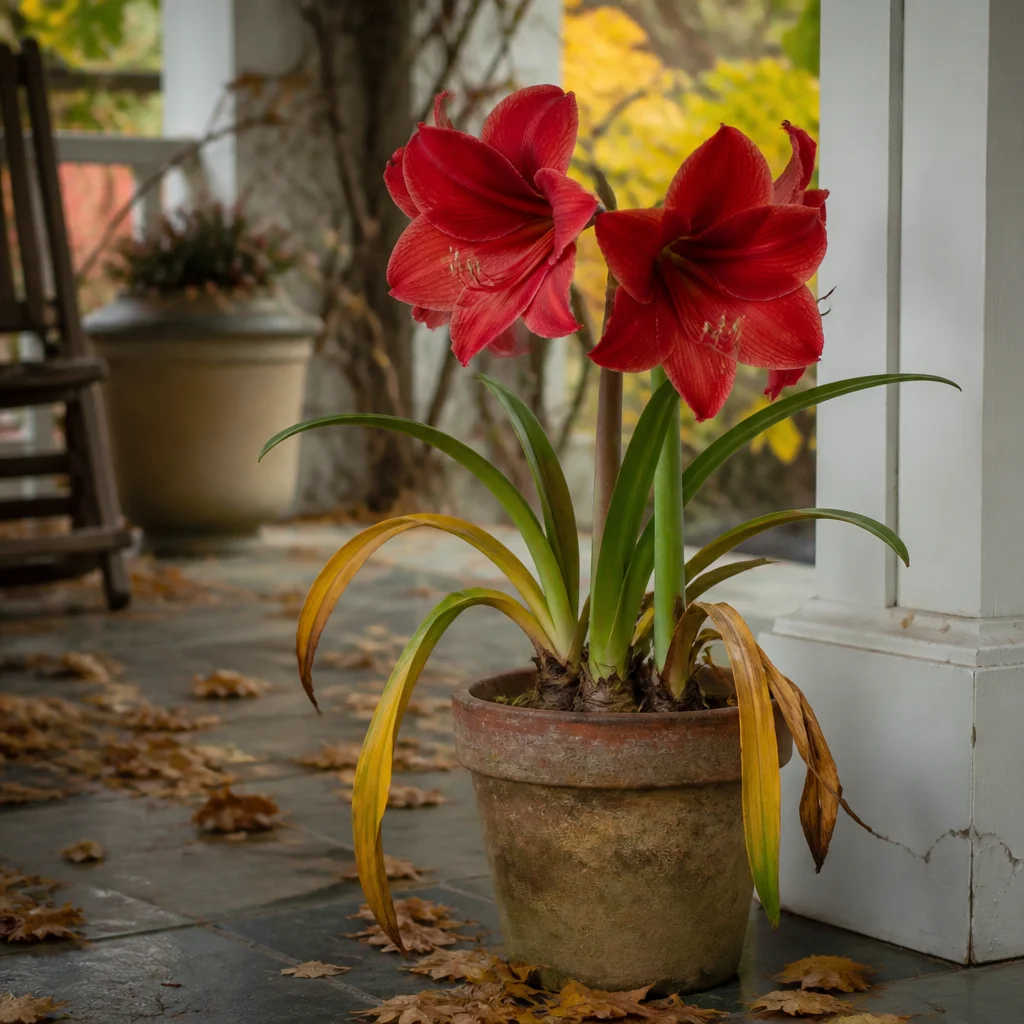
Store the Resting Bulb Cool and Dry
Leave the dormant bulb in its pot or store it loose after gently removing excess dry mix. Choose a cool, dark, dry place that stays above freezing, such as a suitable cupboard or basement. Around 50–55°F, or 10–13°C, is a useful target. Keep the resting bulb away from damp conditions, and do not water it while it is fully dormant. Avoid storing it near ripening fruit, which releases ethylene gas that can interfere with flower development. Allow roughly 8–12 weeks of rest, then check the bulb. It should feel firm rather than soft or collapsed. Remove loose, papery outer material if it comes away easily, but leave healthy roots attached. If you find soft, spreading rot or a persistent mold problem, discard the affected bulb rather than returning it to your plant collection.
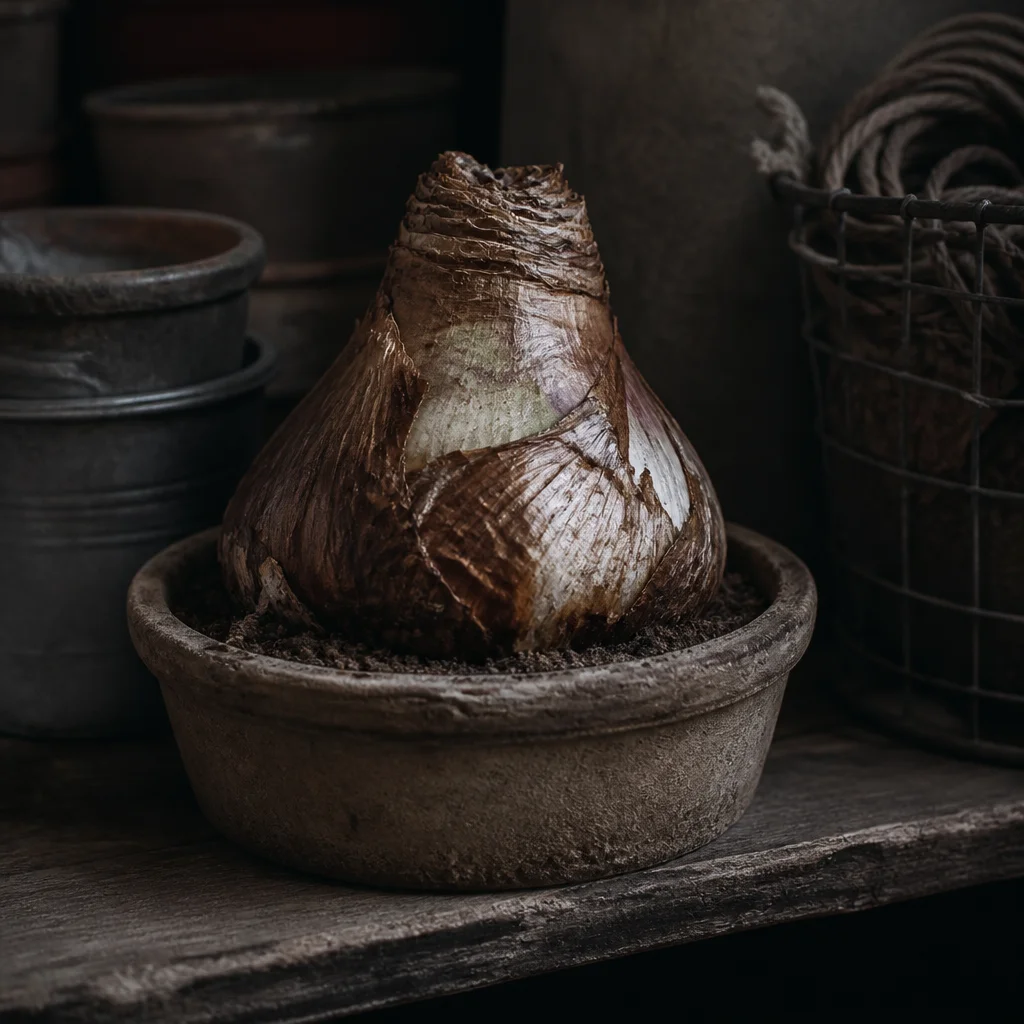
Wake the Bulb and Refresh Its Pot
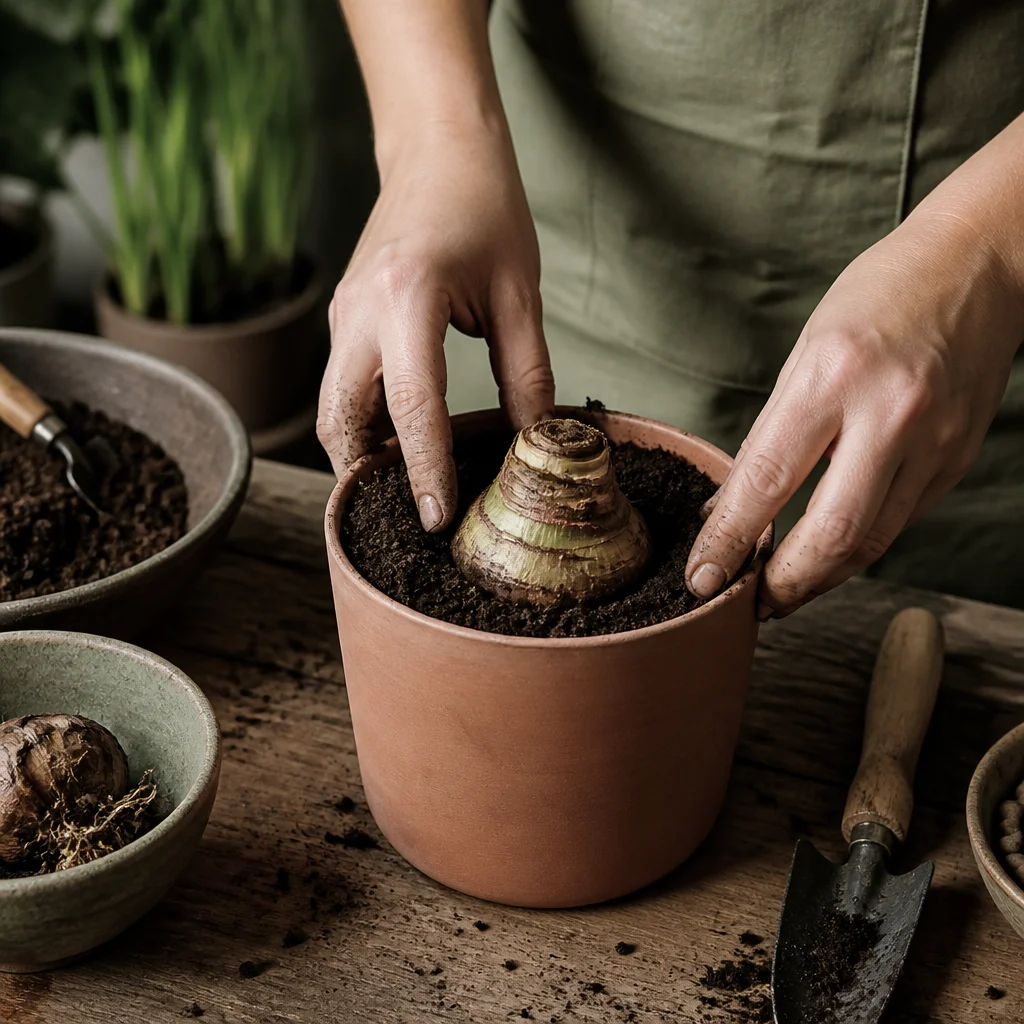
After its rest, bring the bulb into a warm, bright room. If the existing mix is in good condition and roots are not crowded, you can leave it in the same pot; amaryllis does not need repotting every year. When fresh mix is needed, choose a container with drainage holes that leaves about an inch or two between the bulb and the pot’s sides. Set the bulb in a well-draining potting mix with its upper third above the surface, and firm the mix gently around the roots. Water once to settle the mix, then water sparingly until new growth appears. Increase watering as the leaves or flower stalk develop. A heavy pot can help balance a tall stalk, or you can place a lighter pot inside a stable decorative container. Keep the drainage arrangement easy to access so excess water never pools around the bulb.
Plan for Flowers Without Relying on a Date
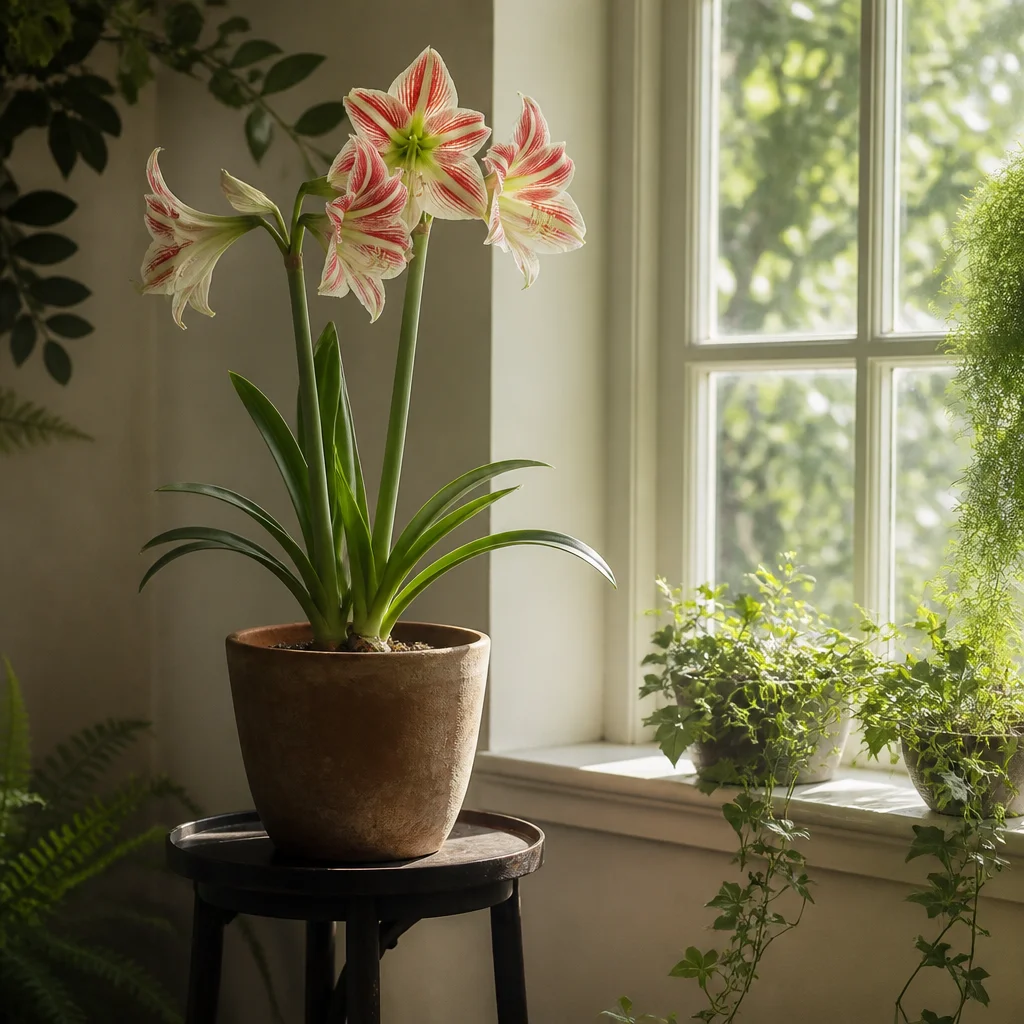
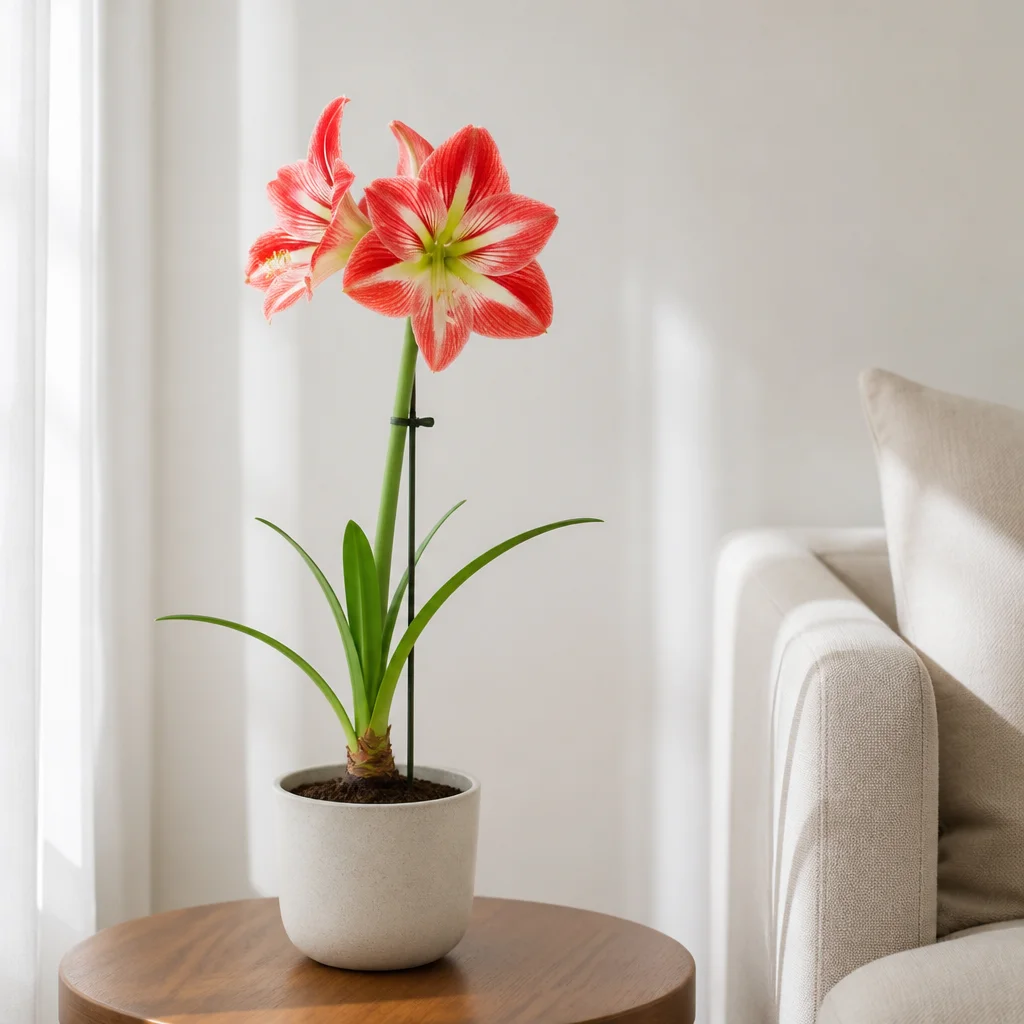
Once growth resumes, a flower stalk may appear before, alongside, or after the leaves. The wait varies by bulb and conditions, so allow several weeks and treat any target date as an estimate. Turn the pot as the stalk grows to encourage a more upright display, and add a slender stake if the developing flowers make it top-heavy. Keep the plant in bright light and away from drafts or strong heat that may shorten the display. For a simple arrangement, give the pot a clear place on a side table or plant stand where the flowers can open without pressing against a wall. A few bulbs started at intervals can extend the season, although their flowering times may overlap. If a bulb produces only leaves, continue its growing-season care: healthy foliage now is an investment in another chance to flower later.
How did this story make you feel?
Choose one reaction. You can change it later.