Flowering Bulbs8 min read
Naturalizing Flowering Bulbs for a Relaxed, Meadow-Inspired Garden Look
A garden planted with naturalized bulbs has a generosity that formal bedding rarely matches. Flowers appear in loose ribbons and soft clusters, weaving through grass, brightening the ground beneath trees, and catching the edge of a path with color that feels spontaneous rather than staged. The effect is romantic, but it is also practical: when the right bulbs are matched to the right place, they return for years with very little fuss. The secret is not to scatter bulbs randomly and hope for the best. A convincing meadow-inspired look comes from choosing reliable repeat performers, planting them in drifts that read clearly from a distance, and allowing their foliage to mature naturally after bloom. With a few thoughtful decisions about scale, timing, and maintenance, bulbs can bring that easy, informal character to many parts of the garden.

Choose bulbs that want to settle in and multiply
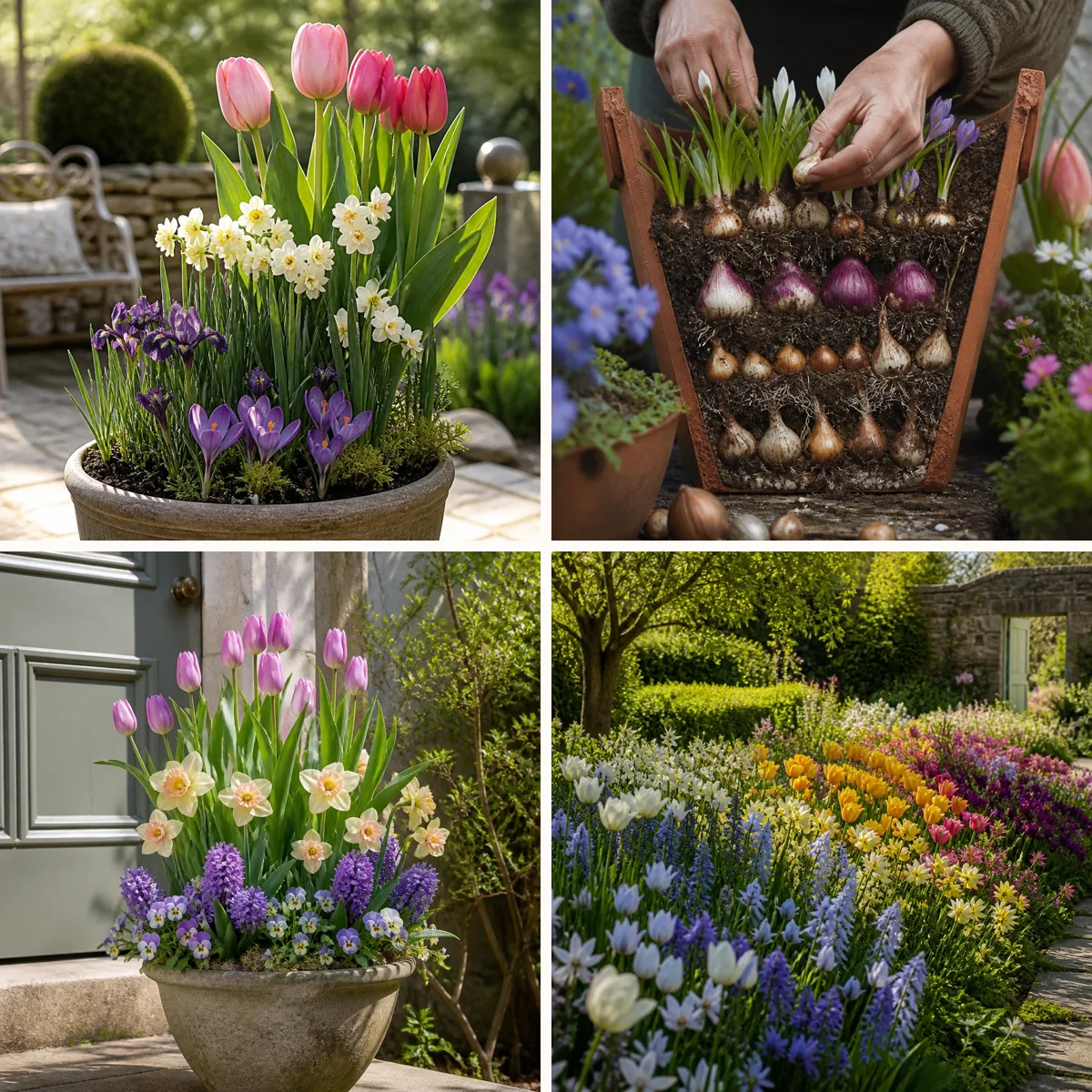
The best naturalized planting starts with bulbs that are inclined to return without coaxing. Species tulips, daffodils, crocus, grape hyacinths, snowdrops, camassia, scilla, alliums, and certain small irises are strong candidates because they cope well with ordinary garden conditions and often increase over time. In a meadow-style scheme, these dependable bulbs are more useful than short-lived showpieces, because the whole look relies on gentle expansion and repeat performance rather than one spectacular season. Think in layers of season as well as color. Snowdrops and early crocus begin the story, followed by daffodils, scilla, muscari, and small tulips, then later alliums and camassia. This sequence keeps the planting lively for longer and helps the garden feel naturally animated instead of briefly crowded. If you want the display to age beautifully, favor shapes and colors with a wild grace: nodding whites, clear yellows, soft blues, lilac tones, and simple flower forms that sit comfortably among grass and emerging perennials.
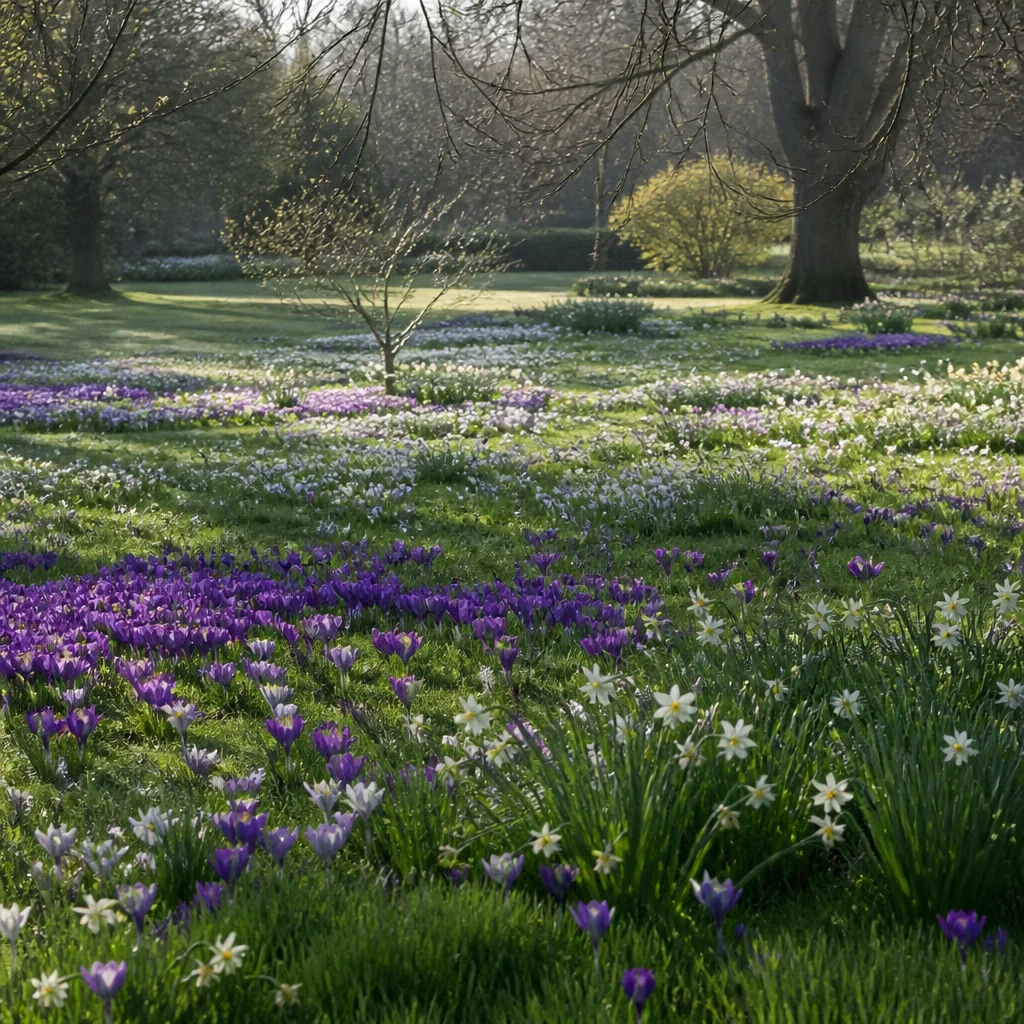
Plant in drifts, not dots, for a softer and more believable effect
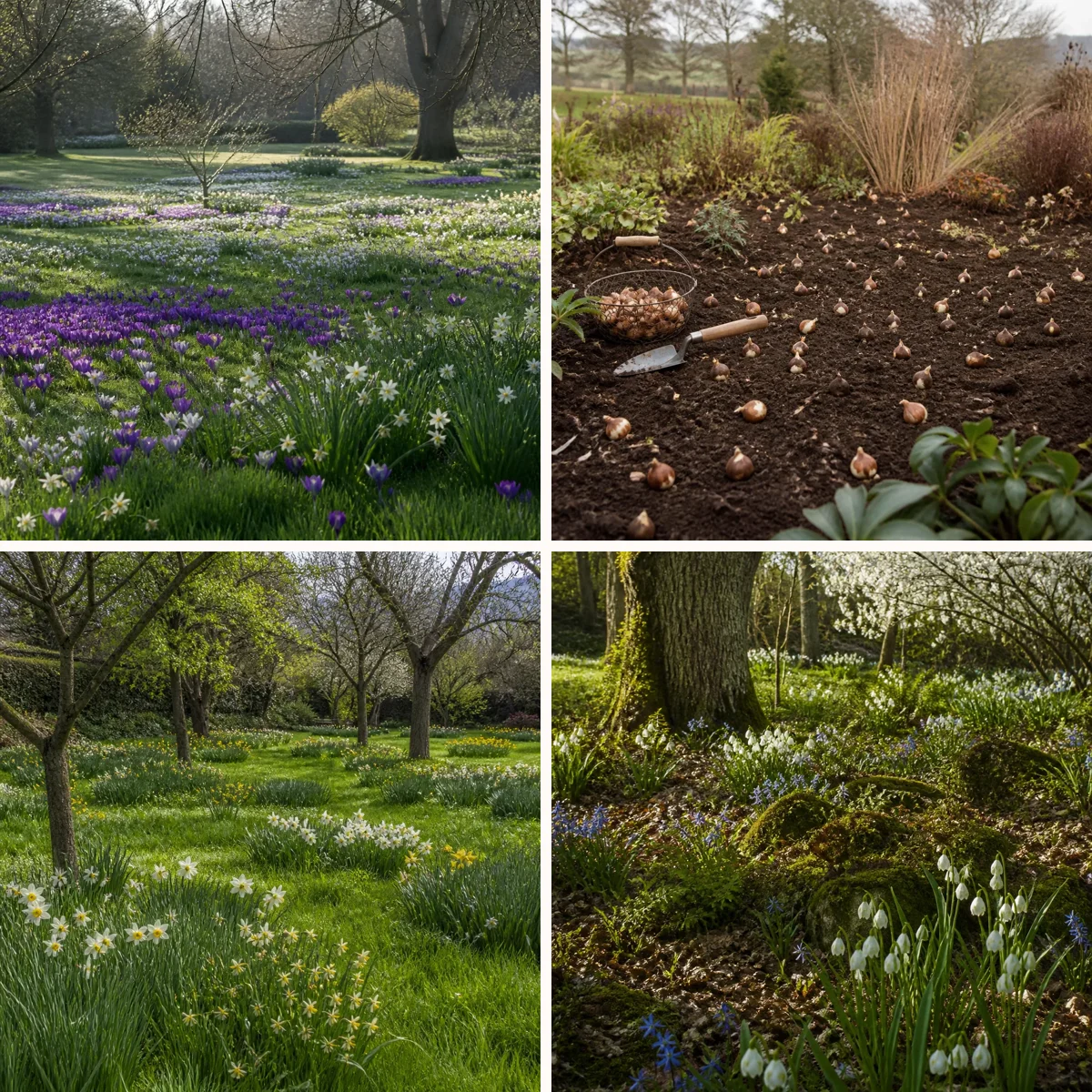
Naturalizing looks most successful when bulbs are grouped in generous, irregular sweeps rather than planted as evenly spaced singles. Small clusters repeated across a space can work, but each cluster should contain enough bulbs to register as a real patch of color. A handful of crocus disappears in a lawn; fifty or a hundred, planted in a loose pool, begins to create the painterly effect people associate with spring meadows. A simple method is to set bulbs down where they fall, then adjust them slightly so they sit in uneven concentrations with open pockets between. This prevents rigid spacing while still avoiding a spotted, accidental look. Try using one dominant bulb over a broad area and then threading a second through it in smaller amounts. For example, a wide drift of narcissus with a lighter scattering of blue scilla creates rhythm without looking busy, and the contrast reads clearly from a distance.
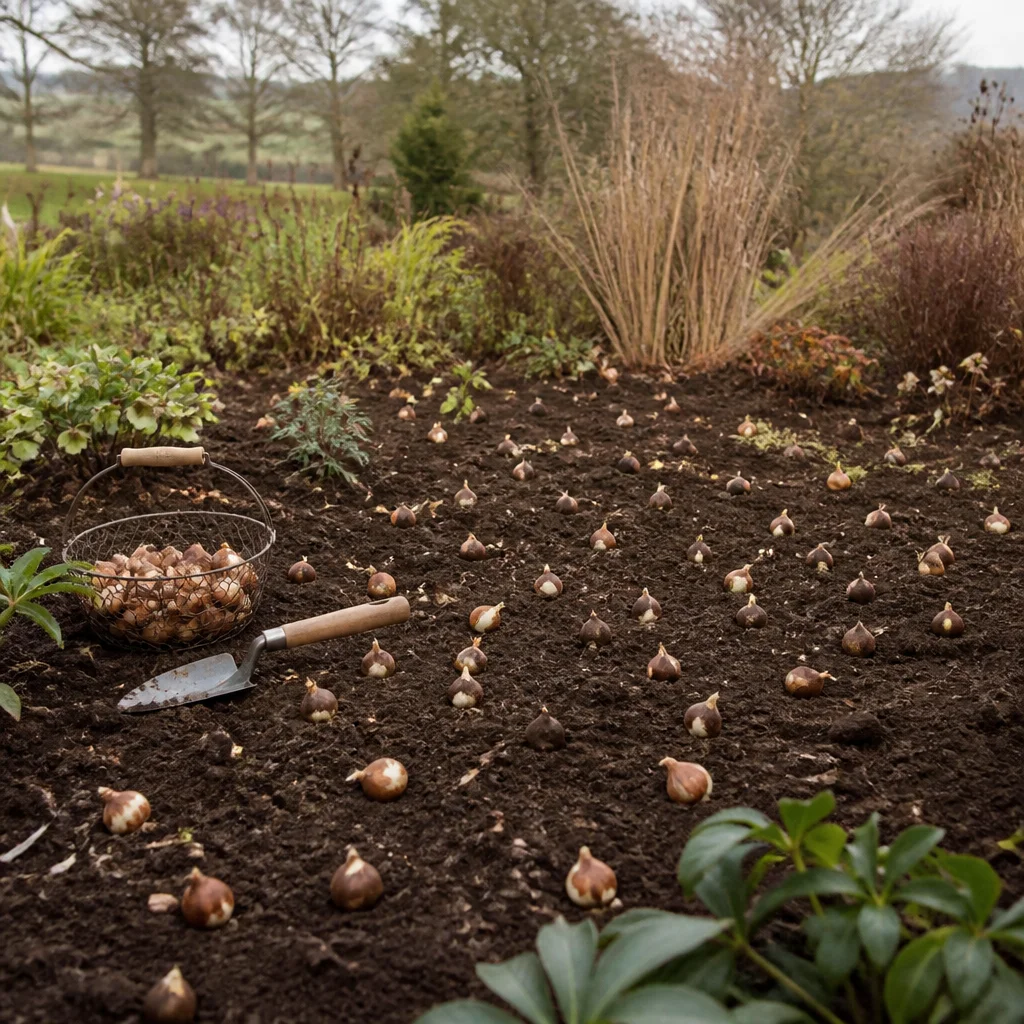
Naturalize in lawns only where the mowing schedule supports the bulbs
Bulbs in grass can be magical, but only if the lawn is managed with flowering and foliage dieback in mind. Early bulbs are easiest here because they bloom before the grass grows fast, yet even they need several weeks after flowering for their leaves to feed the bulb for next year. If a lawn must be clipped weekly from early spring onward, it is not a good site for naturalizing. Reserve bulb lawns for edges, orchard-style spaces, or secondary areas where mowing can pause until the foliage yellows and collapses naturally. Choose low, early varieties that sit comfortably among grass blades: crocus, snowdrops, species narcissus, and small botanical tulips are especially effective. Plant them in broad drifts rather than narrow strips, and avoid the center of heavily used play areas where trampling can spoil both flowers and leaves. To make the waiting period after bloom look intentional, allow nearby grass to grow a little longer everywhere in that zone. The result feels more like a spring meadow and less like a lawn being neglected.
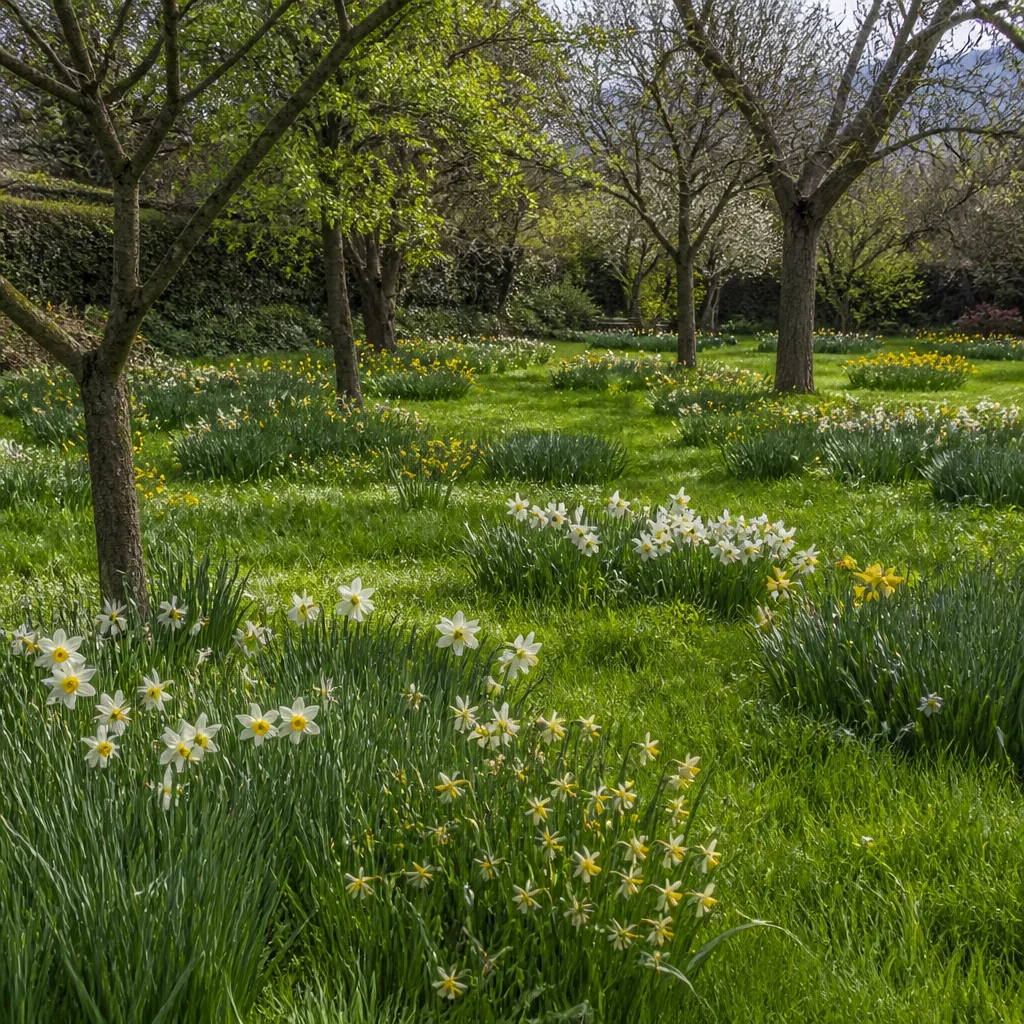
Use the light beneath deciduous trees for a woodland-meadow transition
Under deciduous trees, many bulbs enjoy the ideal sequence of bright spring light followed by cooling shade. This makes the area beneath open-canopied trees one of the most rewarding places to naturalize bulbs, especially if the soil is not densely packed with thirsty surface roots. Snowdrops, scilla, crocus, chionodoxa, anemone blanda, narcissus, and camassia can all help turn a bare patch under branches into a luminous spring layer. The key is to work with the tree, not against it. Plant between major roots rather than forcing bulbs into crowded pockets, and improve the planting area with leaf mold or compost if the ground is dry and thin. Visually, keep the palette calm so the planting feels integrated with bark, moss, and emerging foliage. Whites, blues, and pale yellows are especially elegant here, and they glow in the dappled light far better than an overmixed rainbow of colors.
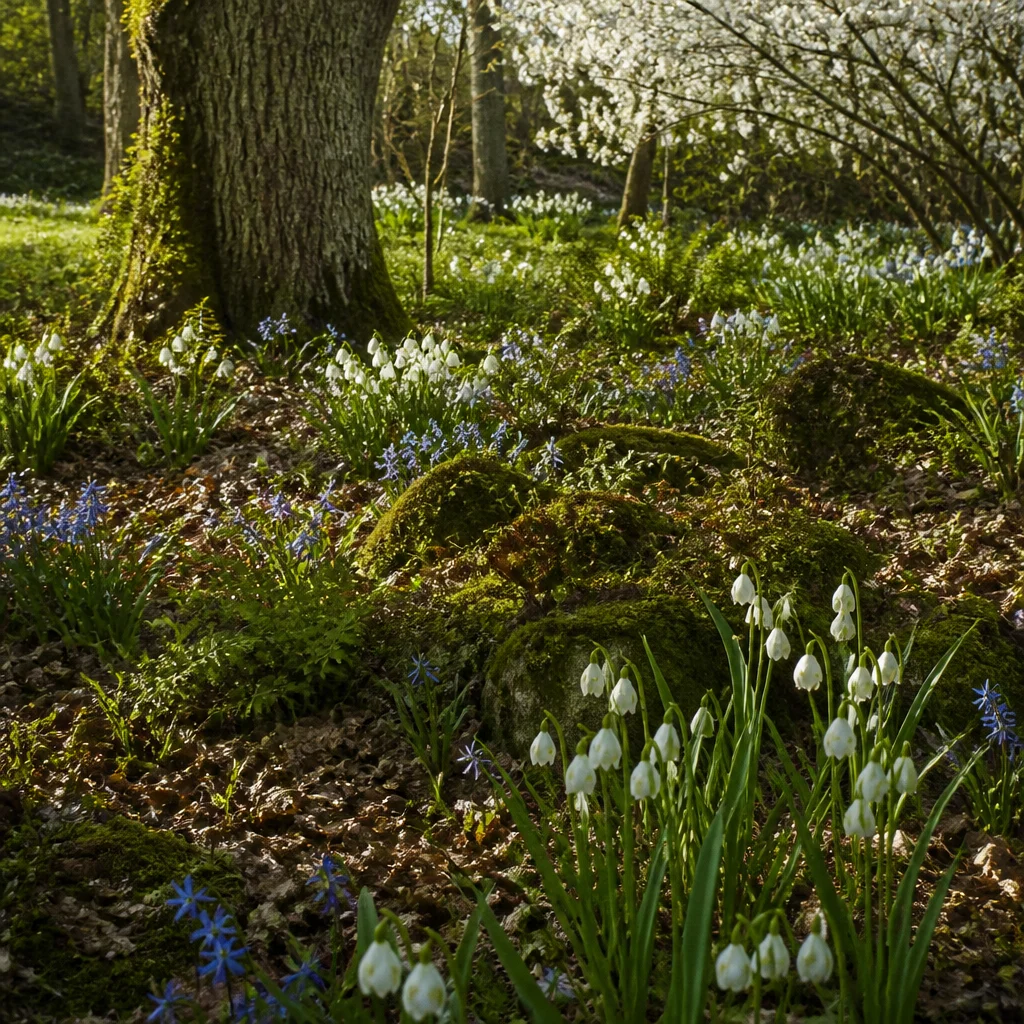
Frame paths with relaxed ribbons of bulbs instead of stiff borders
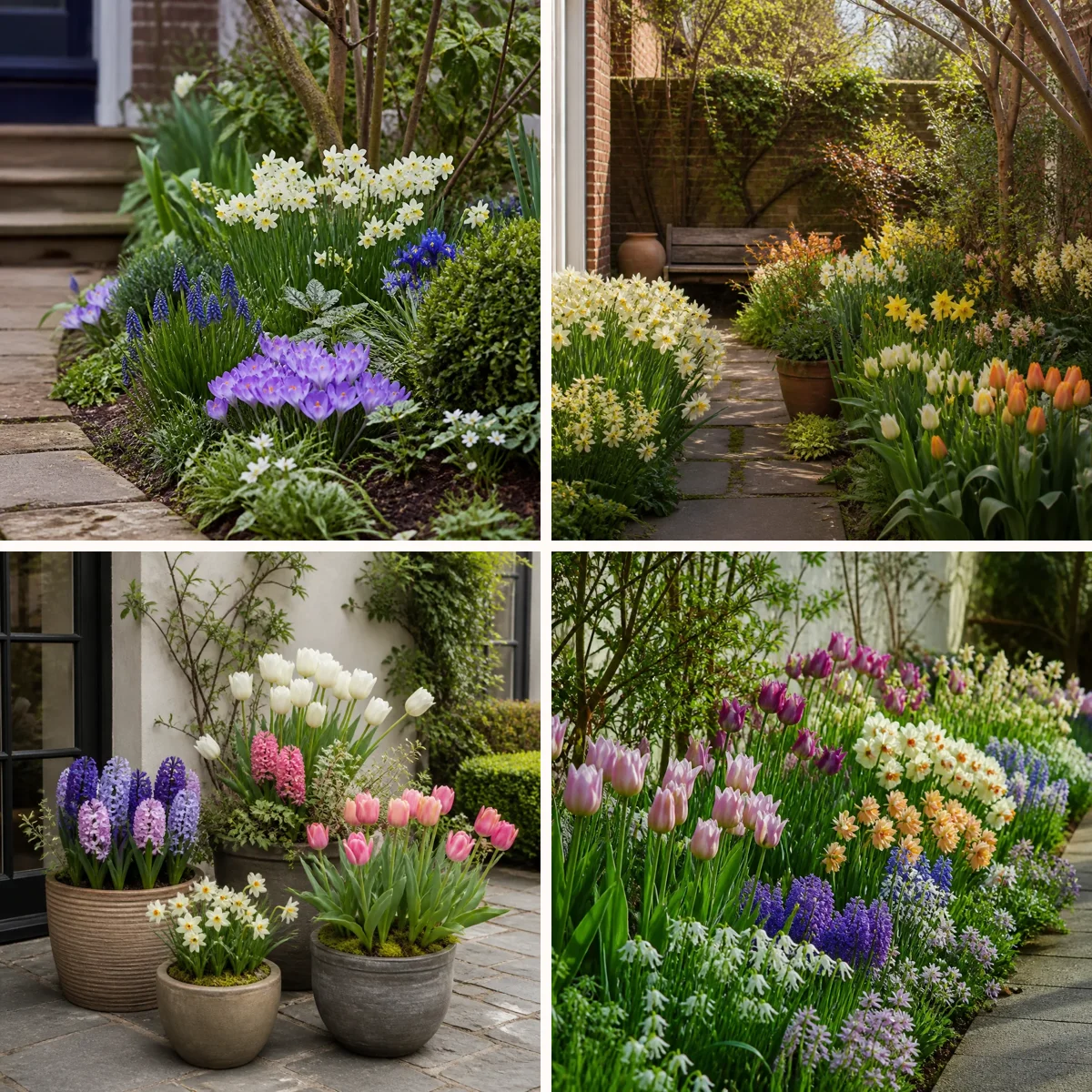
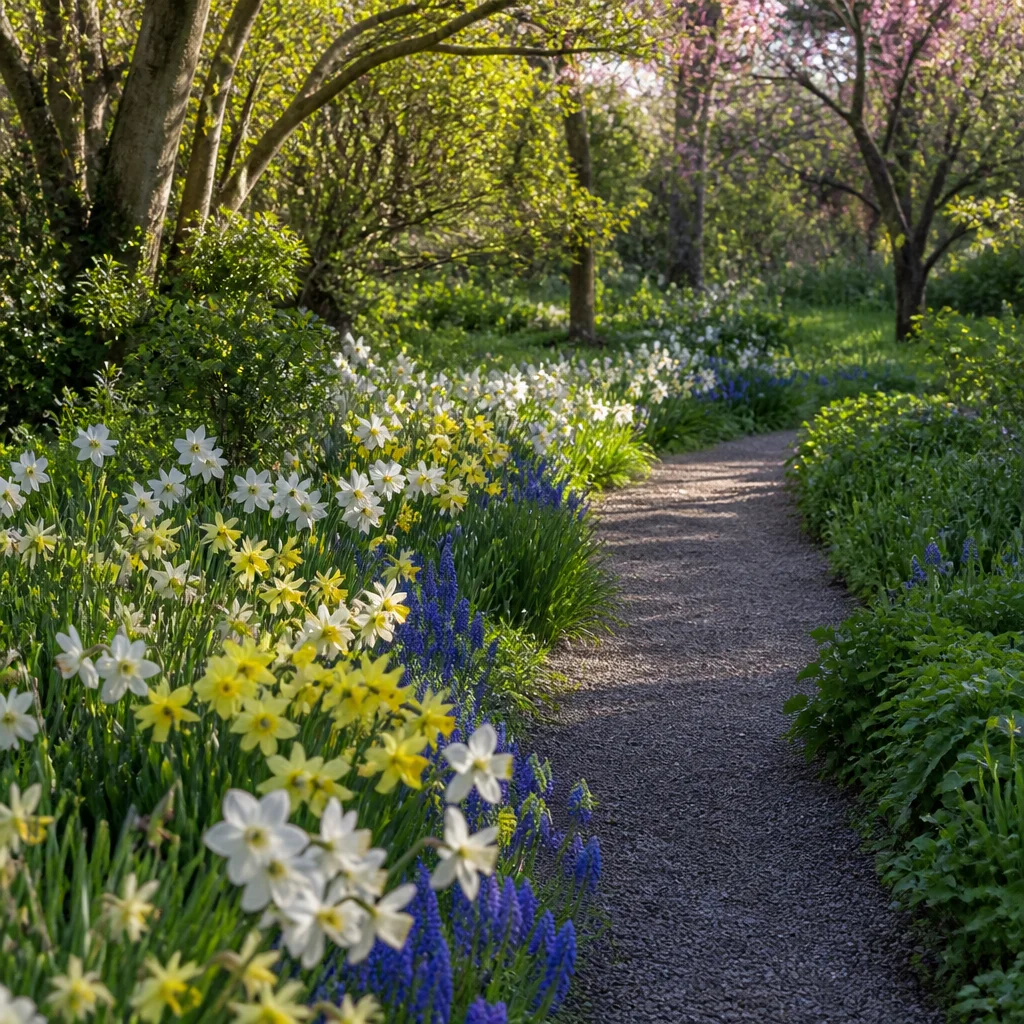
Path edges are perfect for naturalized bulbs because they bring flowers close to eye level and make seasonal change feel immediate. Rather than creating a narrow, formal border, let bulbs spill in loose ribbons that widen and narrow as they follow the line of a walk. This gives the path a softer outline and helps connect it to the surrounding planting, especially in cottage, prairie, or woodland-inspired gardens. To keep the effect easy and useful, choose bulbs that pair well with the perennials and groundcovers that will later conceal fading foliage. Daffodils can rise through hardy geraniums, alliums can emerge among ornamental grasses, and muscari can knit through low spring greenery near stepping stones. Repeating one or two bulbs along several stretches of path gives the garden a cohesive thread, while slight variations in density prevent the design from looking engineered.
Hide the fading leaves by partnering bulbs with later-growing plants
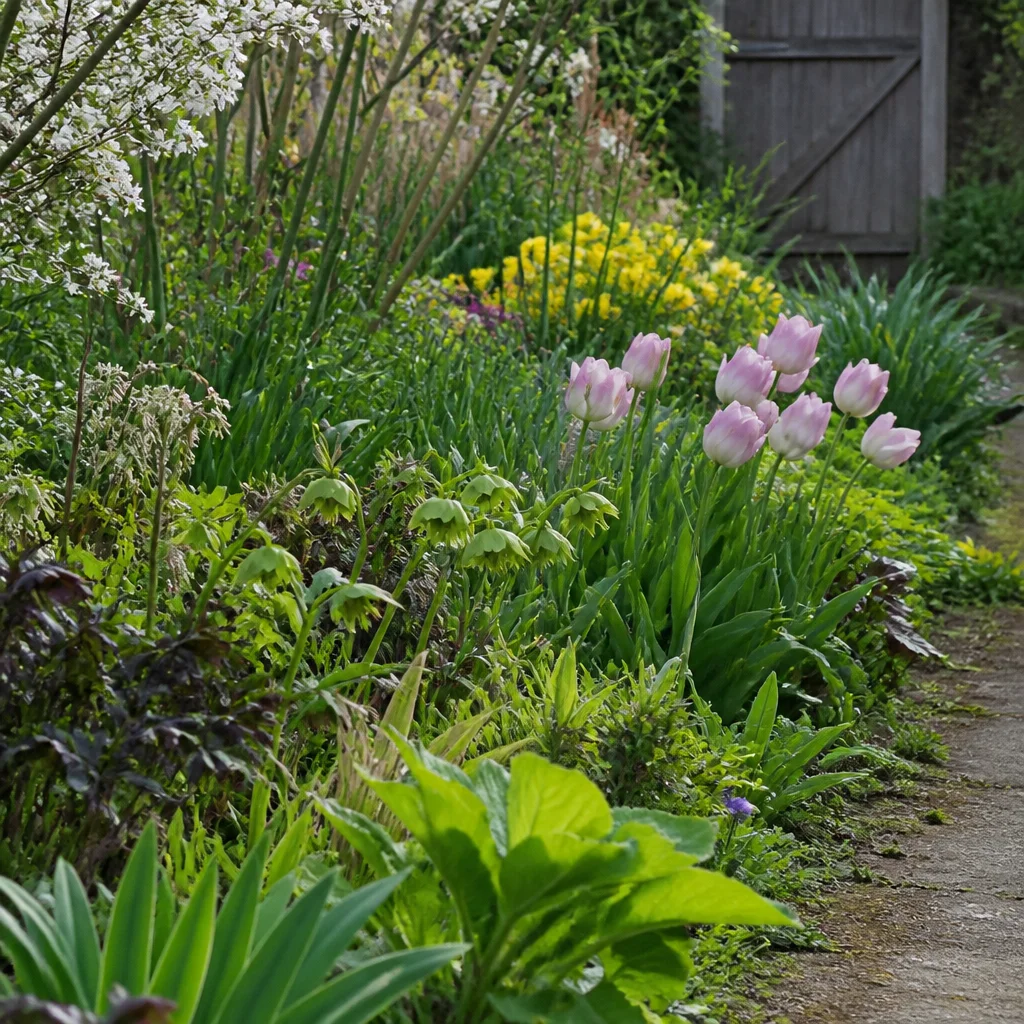
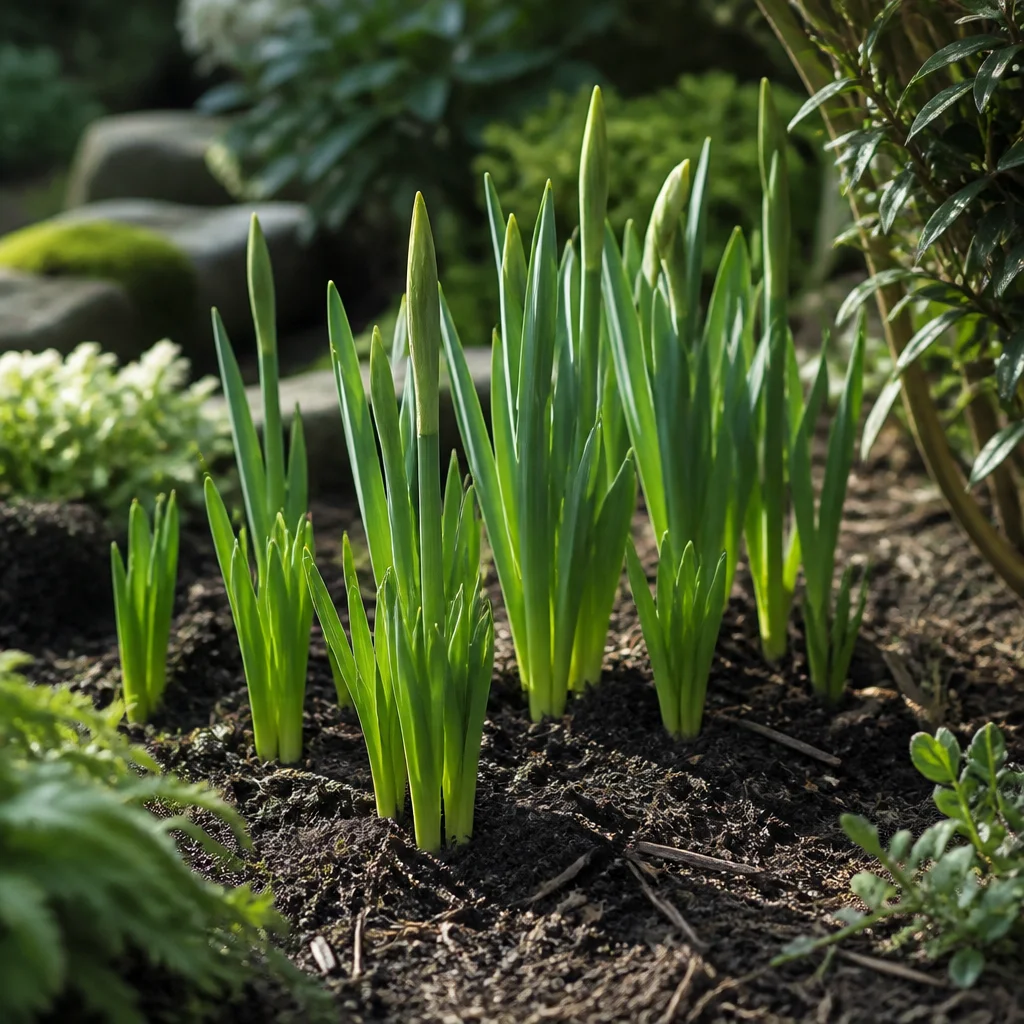
One reason naturalized bulb plantings fail aesthetically is that the flowers are considered, but the aftermath is not. Bulb foliage must remain in place until it has yellowed, and this period is much easier to live with when later-growing companions expand around it. Good partners are plants that emerge after bulbs flower or bulk up gradually through spring: hostas, lady’s mantle, hardy geraniums, ferns, epimedium, catmint, and many ornamental grasses all help soften the transition. This is especially important in visible places such as path edges and mixed borders. Instead of tying leaves into bundles or cutting them back early, use neighboring plants to do the visual work. The planting then reads as a continuous tapestry rather than a burst followed by decline. In a meadow-style garden, this overlap is what creates that relaxed abundance: one layer rises as another recedes, and the eye notices freshness rather than fade-out.
Repeat a restrained palette for a more natural and enduring style
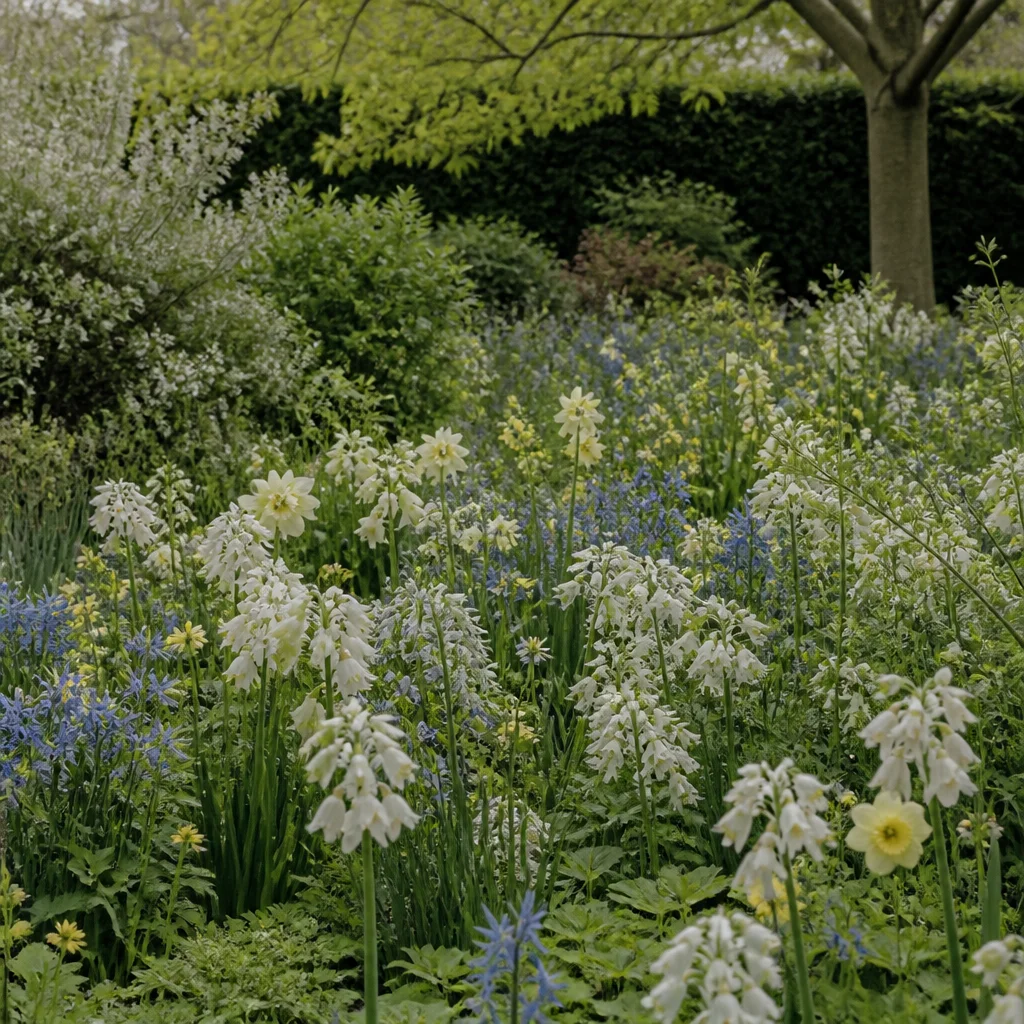
A meadow-inspired bulb display usually becomes more convincing when the color palette is edited. Too many bright, unrelated shades can make informal planting look cluttered instead of effortless. Limiting yourself to a family of colors gives drifts room to breathe and allows shape, timing, and texture to do more of the work. Cream and soft yellow with blue is a classic combination; white and green feels calm and luminous; purple with dusky pink can be wonderfully rich when used sparingly. Restraint is also helpful across years, because a simpler palette absorbs small shifts in bulb populations more gracefully. As clumps expand, thin out, or seed gently into nearby spaces, the garden still looks coherent. If you want a little extra excitement, add it through contrast in form rather than a burst of unrelated color. Spires, cups, stars, and globes all bring variety while keeping the overall mood settled and harmonious.
Plant generously at the start, then allow the garden to evolve
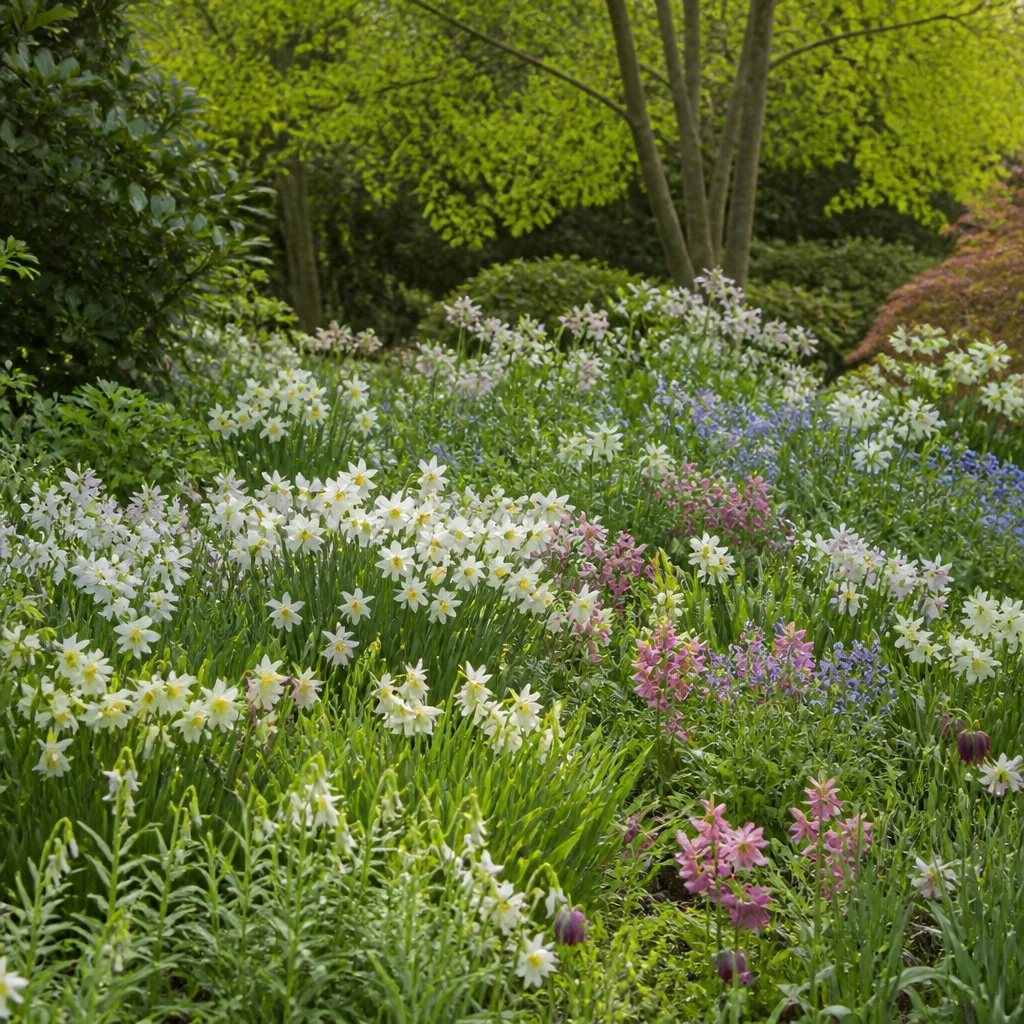
Naturalized bulbs rarely look abundant in their first season if they are planted too thinly. A meadow effect depends on generosity, so it is worth planting more bulbs in fewer places rather than stretching a small quantity across the whole garden. Dense drifts create immediate presence, hold their own among grass and perennials, and still leave room for natural expansion at the edges over time. Once established, resist the urge to keep everything fixed. Some bulbs will multiply, some will self-seed lightly, and some may fade in areas that become too shaded or competitive. Treat these changes as information. Lift and divide where clumps have become crowded, add more of a successful variety to strengthen a drift, and quietly abandon combinations that never looked at ease. An informal garden improves when it is edited in response to how plants actually behave.
Support long-term repeat performance with simple, seasonal care
Naturalizing is low maintenance, but it is not no maintenance. For the best return, bulbs need decent drainage, enough light at the right season, and freedom to ripen their leaves after flowering. Avoid overwatering summer-dormant bulbs, and be cautious with high-nitrogen feeding, which encourages lush top growth at the expense of long-term resilience. In many gardens, a yearly top-dressing of compost or leaf mold is enough to maintain soil structure and gentle fertility. Pay attention to where each area succeeds or struggles. Lawns that stay wet in winter may suit some bulbs but rot others. Under trees, competition may increase as roots thicken. Along paths, bulbs may need topping up if neighboring plants become too vigorous. A small amount of observation each season keeps the display dependable. The beauty of naturalized bulbs lies in this balance: they look carefree, yet they reward the gardener who quietly supports the conditions that let them return.
How did this story make you feel?
Choose one reaction. You can change it later.