Roses9 min read
Rose Garden Color Pairings That Bloom Beautifully From Spring to Frost
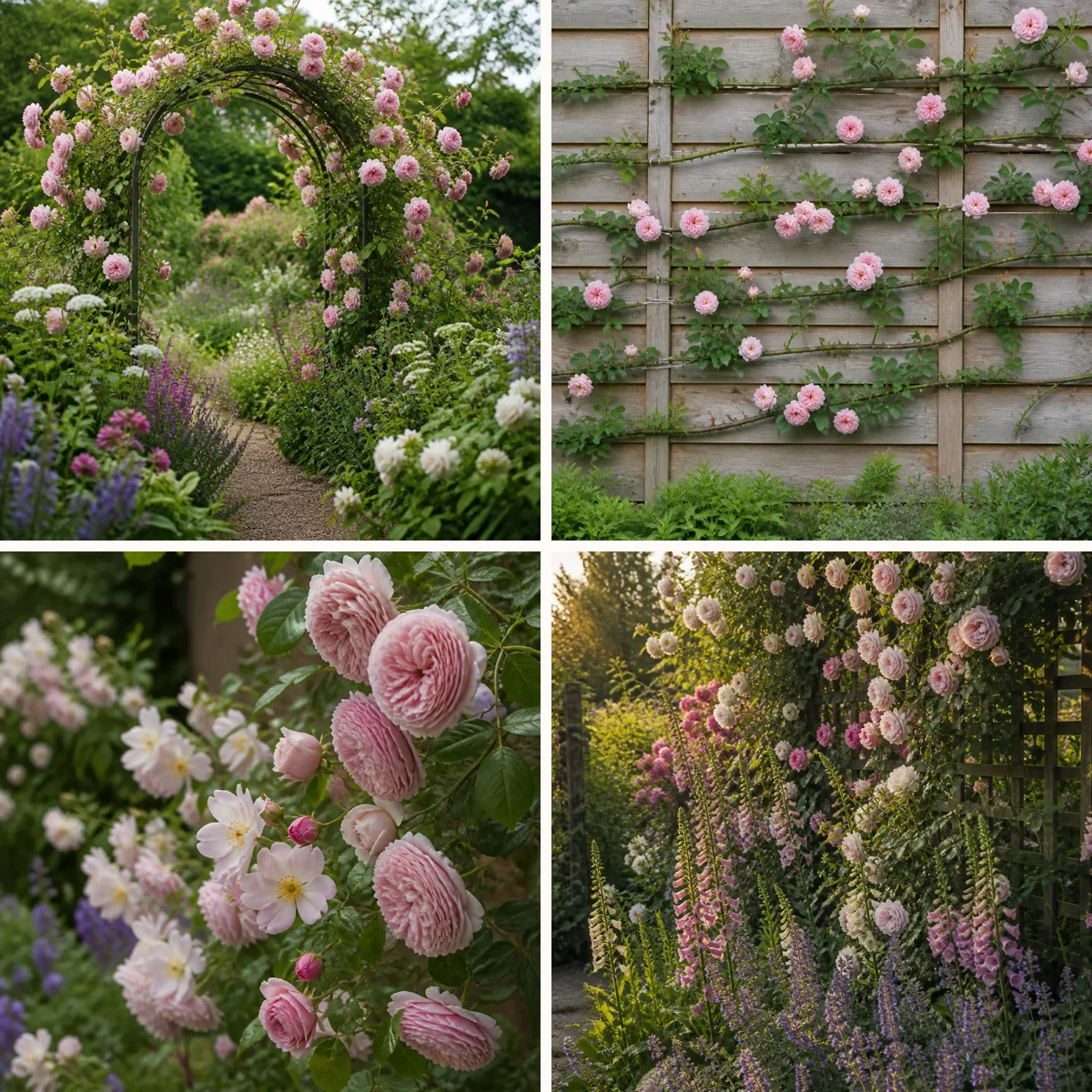
A rose garden feels most satisfying when its colors flow naturally from the first spring buds to the last flowers before frost. The secret is not simply choosing favorite shades, but pairing rose colors with bloom timing, foliage texture, and a few dependable companion tones that hold everything together between flushes. A good palette can make a small border look composed, a mixed bed feel intentional, and a cutting garden produce armfuls of stems that already harmonize in the vase. When planning combinations, think in layers rather than isolated plants. Start with two or three dominant rose colors, then support them with foliage in silver, blue-green, deep green, or burgundy. Repeat the same tones across beds so the garden reads as one story even when different roses peak at different moments. These ten pairing ideas are designed to help you build that kind of season-long cohesion, with practical approaches for borders, mixed beds, and flower-cutting spaces.

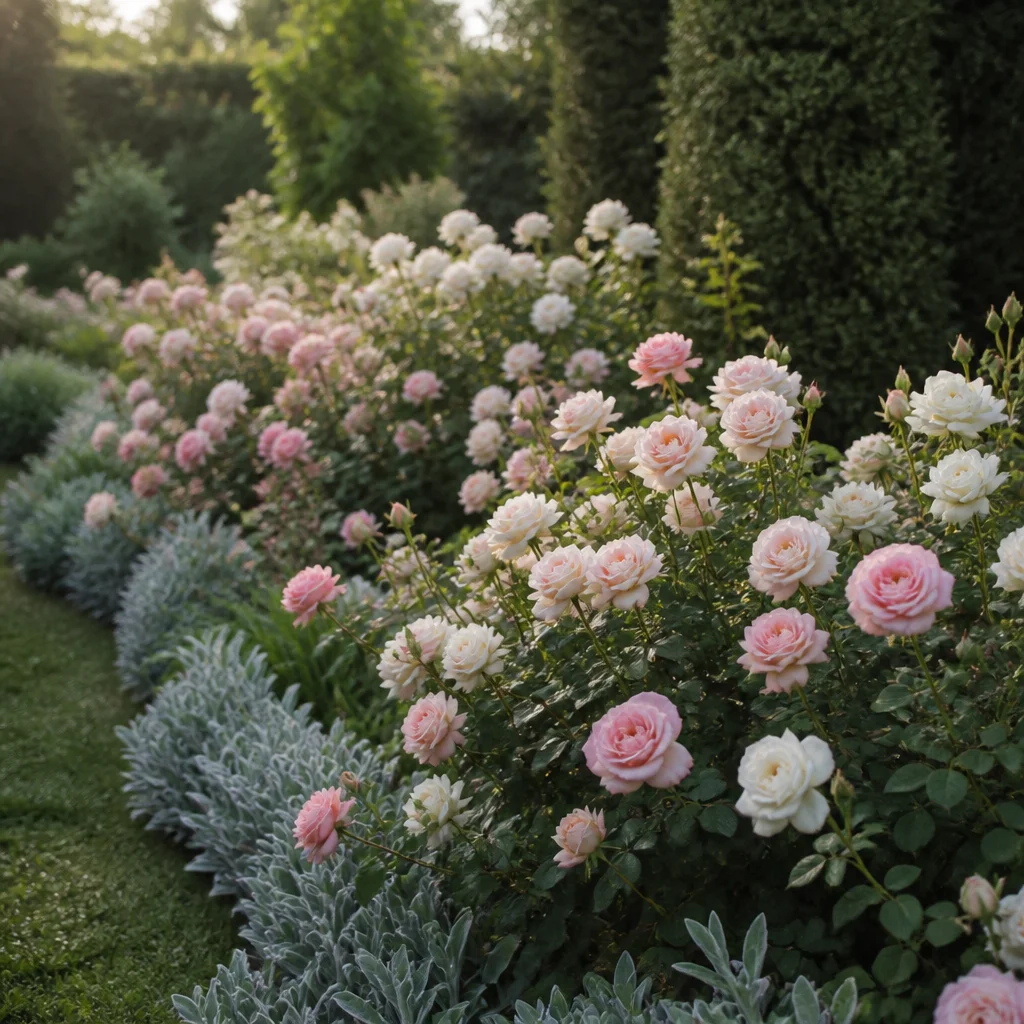
Blush Pink and Cream for a Soft, Long-Season Foundation
Blush pink and cream is one of the easiest rose pairings to carry from spring into autumn because it never feels tied to a single season. In spring, the combination looks fresh and luminous beside new green growth. In summer, it softens hotter garden colors. By autumn, it still feels elegant rather than tired. This makes it a strong backbone for front-yard beds, entry borders, and cutting gardens where you want flowers that blend effortlessly indoors. Choose one clear blush and one warm or neutral cream rather than several similar pale shades, so the contrast remains visible from a distance. To keep the planting from looking washed out, anchor these roses with cool foliage. Blue-gray edging plants, soft green perennials, or a clipped dark evergreen nearby will sharpen the flowers and help each flush stand out. Repeat blush and cream in at least three points across the bed instead of clustering all one shade together. That rhythm keeps the palette cohesive even when one variety pauses between bloom cycles and another takes over.
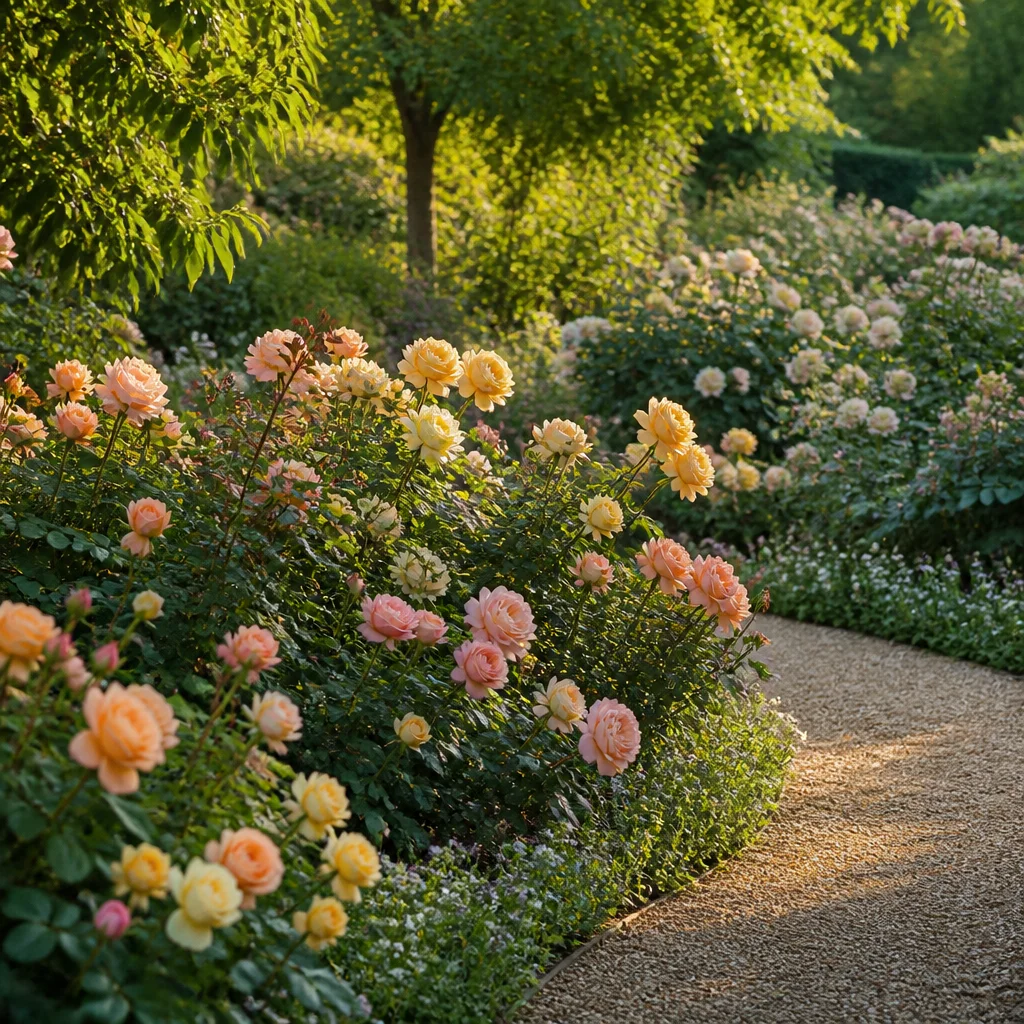
Apricot, Peach, and Soft Yellow for Warmth Without Harshness
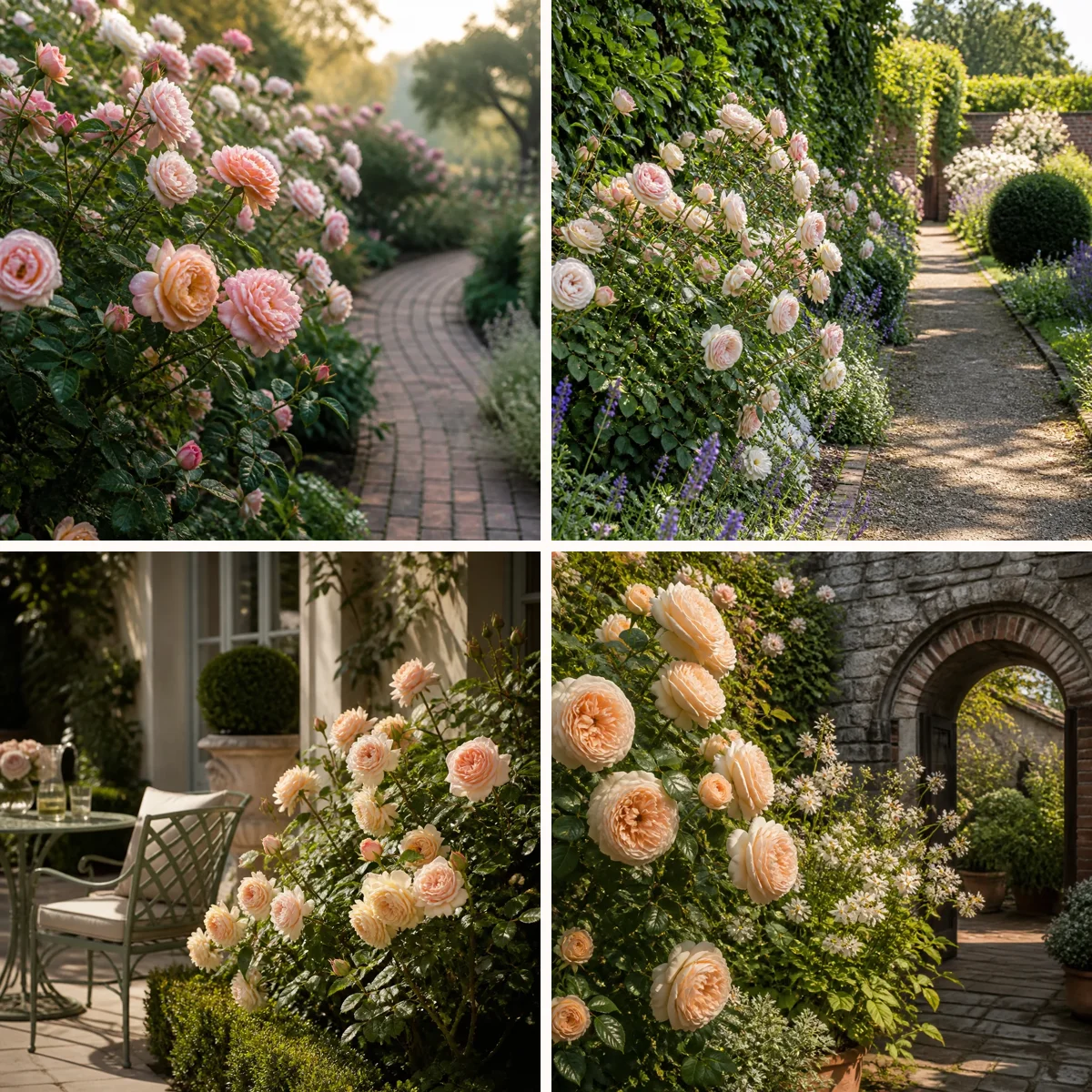
If you love warm colors but want something gentler than orange and red, apricot, peach, and soft yellow create a glowing progression that reads beautifully from morning light to dusk. This trio is especially effective in borders along paths or seating areas because the subtle shifts in tone reward close viewing. Early in the season, yellow-leaning roses often brighten the bed first, while apricots and peaches deepen the display as temperatures rise. The blend feels abundant without becoming visually heavy. The key to success is controlling intensity. Avoid adding too many saturated oranges unless you want the garden to turn distinctly hot in midsummer. Instead, use soft yellow as the lightest note, peach as the bridge, and apricot as the richest accent. Pair them with medium green foliage rather than very dark leaves, which can make pale warm tones look dull. For cutting gardens, this combination is particularly useful because stems from different plants can be gathered together throughout the season and still appear naturally matched.
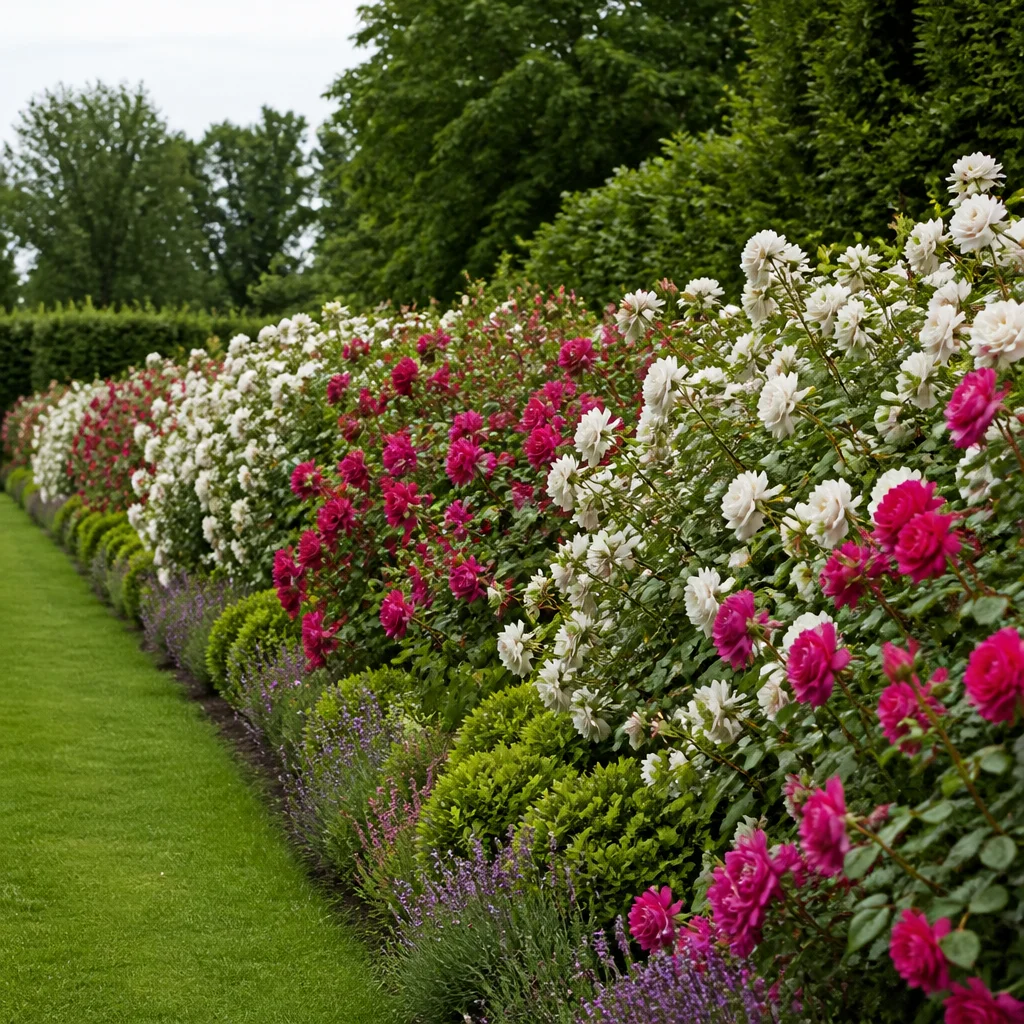
White and Deep Pink for Crisp Contrast That Repeats Well
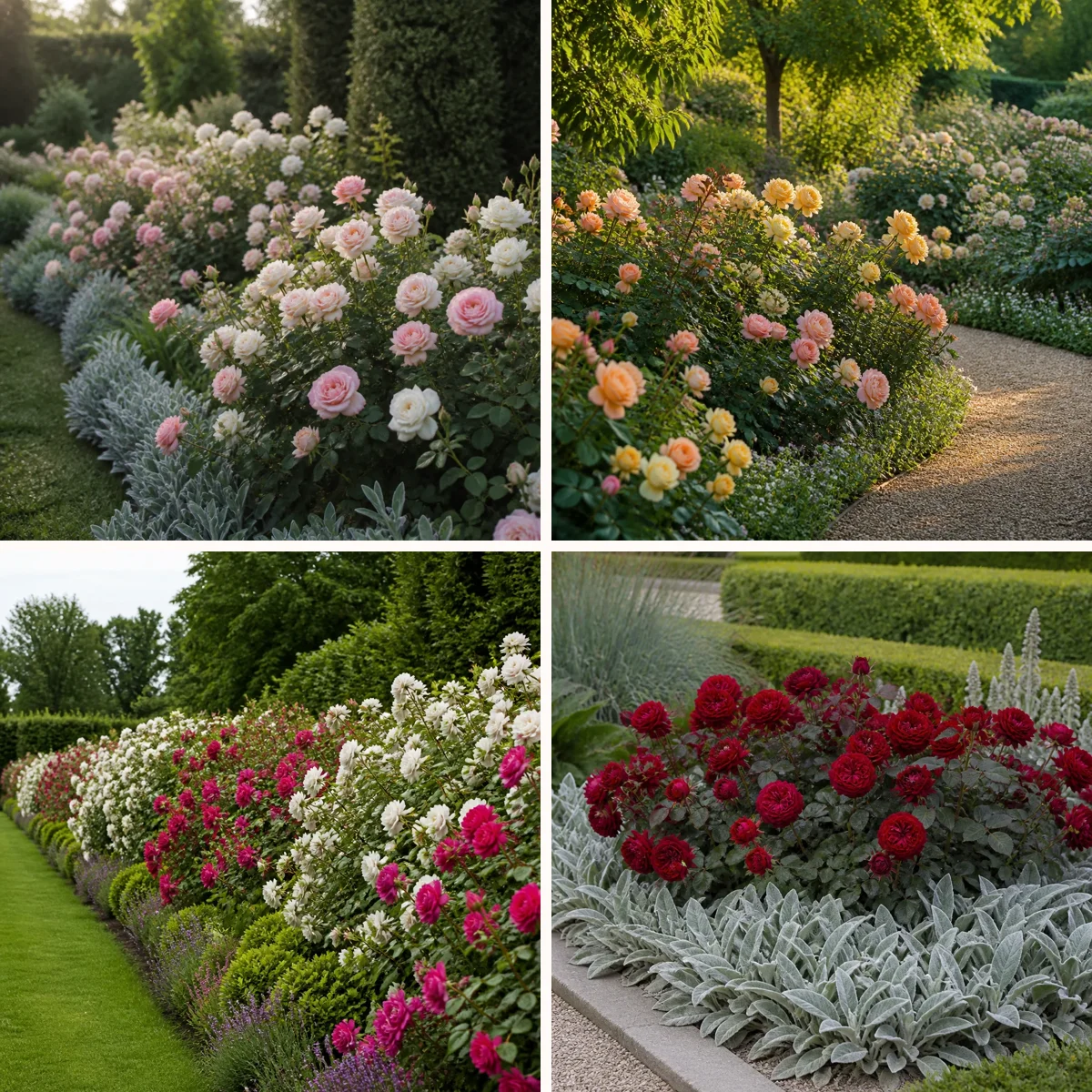
A pairing of white and deep pink offers clarity, energy, and reliable visibility in nearly any garden layout. White roses catch low light and brighten shady edges, while deep pink brings enough color to prevent the bed from feeling flat. This contrast works especially well in long borders where repeated drifts are needed to create momentum. White can be spaced through the full length of the planting, with deep pink used as punctuation at regular intervals to guide the eye. Because white roses can look sparse between flushes, support them with plants that have tidy shapes or long-lasting foliage presence. Deep pink is forgiving and usually reads strongly even in mixed company, so it helps the composition hold together when bloom levels vary. For a cutting garden, white and deep pink are useful because they can be cut separately for clean monochrome bouquets or combined for a classic arrangement with built-in contrast.
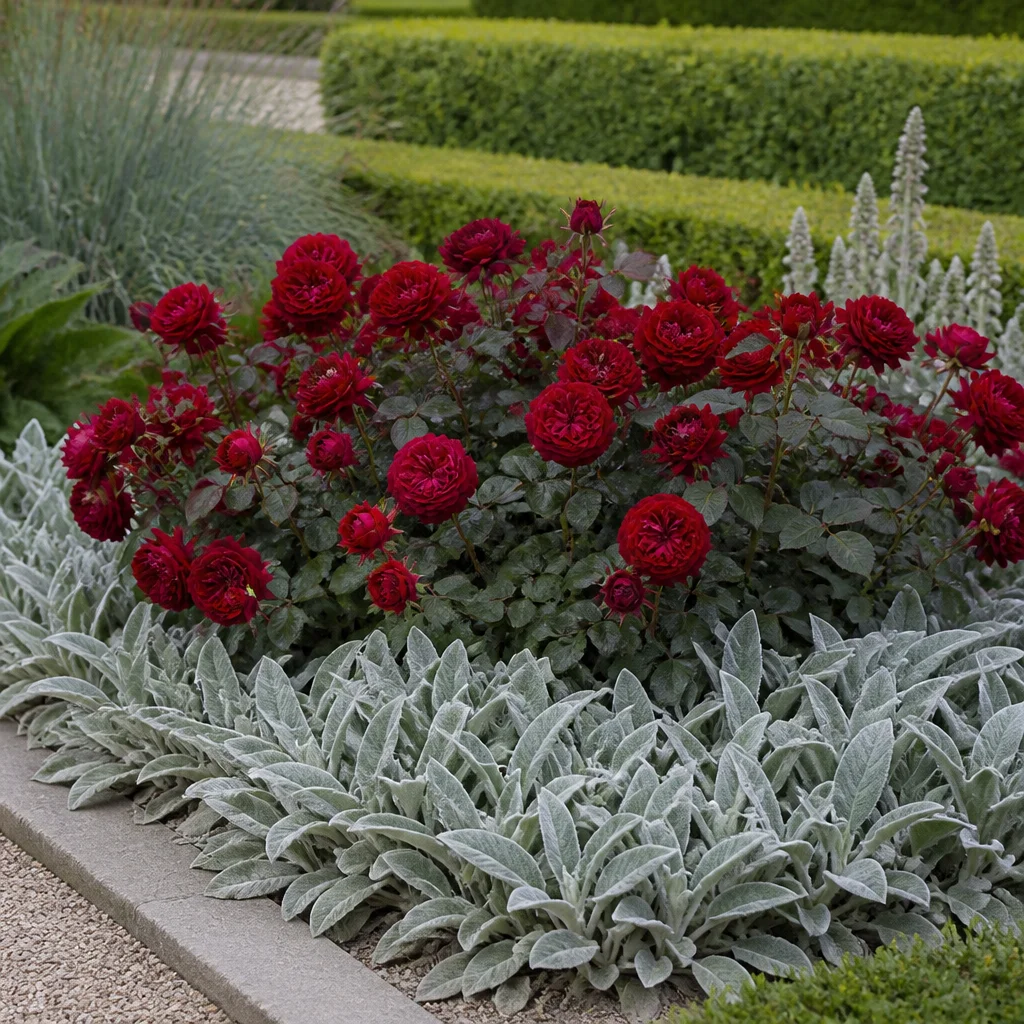
Red and Silver-Leaf Companions for a Rich, Controlled Statement
Red roses can be magnificent, but they need discipline around them or they quickly dominate a bed. One of the most effective ways to refine red is to pair it with silver foliage and a narrow supporting color range. The cool, matte quality of silver leaves tones down the visual heat and gives red blooms a velvety richness. This is an excellent strategy for formal borders, street-facing beds, or small gardens where every color decision reads strongly. Keep the composition simple. Use red as the star, silver as the stabilizer, and limit any additional flowers to white or the faintest blush if needed. Too many extra shades can make red look disconnected from the rest of the garden. Bloom timing matters here as well: silver foliage performs steadily from spring through frost, so it keeps the bed intentional when the roses are between waves. In cutting gardens, a handful of red stems mixed with silvery foliage already looks arranged before it reaches the house.
Lavender-Pink and Plum Tones with Burgundy Foliage
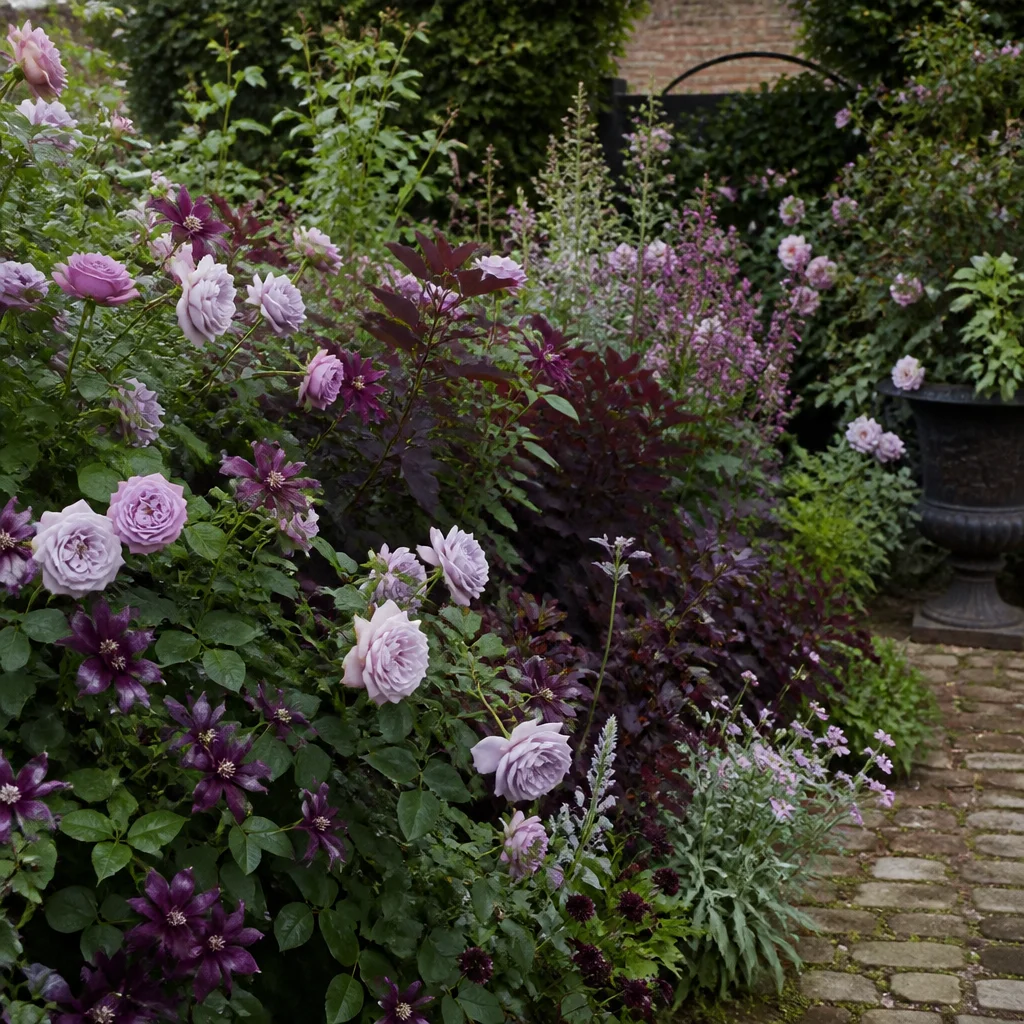
For gardeners who want something romantic but less sugary than pastels, lavender-pink roses paired with plum-toned flowers and burgundy foliage create depth and atmosphere. This palette suits intimate spaces, enclosed courtyards, and mixed perennial borders where color layering matters more than sheer brightness. The cool floral tones can look especially beautiful in spring and early summer, while the dark leaves keep the scheme grounded as the season matures. The success of this combination depends on balancing softness with structure. Lavender-pink blooms alone can fade into the distance, so burgundy foliage acts like an outline, helping the roses read more clearly. Plum accents should be used sparingly, as echoes rather than blocks of color. If every plant is dark, the bed can become moody and heavy. In a cutting garden, these tones produce arrangements with subtle sophistication, especially when a few pale blush stems are added to lift the mix.
Coral and Cherry Pink for Energetic Summer Borders
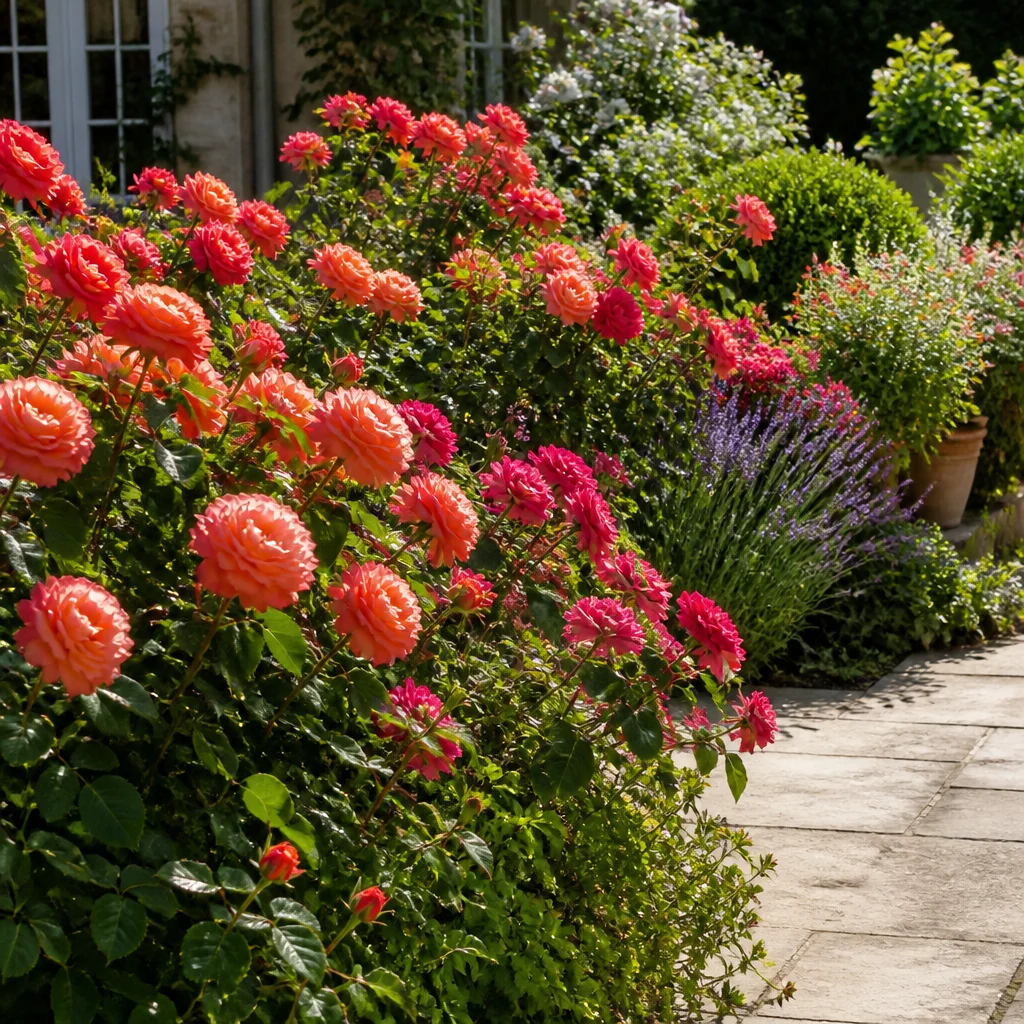
Coral and cherry pink make a lively pairing for gardeners who want a border to feel bright, generous, and unmistakably summery. These colors are strongest from late spring into high summer, when the warmth in coral and the punch of cherry pink echo the season’s energy. They are ideal near patios, vegetable gardens, and casual mixed beds where a cheerful mood matters more than restraint. Used well, this pairing feels joyful rather than chaotic. The trick is to give these vivid hues some breathing room. Surround them with clean green foliage and avoid competing flower colors nearby, especially strong orange-reds or magentas that can muddy the effect. If you want to extend the palette toward autumn, introduce a few softer pink roses elsewhere in the same bed so the transition into cooler weather feels smoother. For cutting, coral and cherry pink are productive companions because even short, informal bunches look full of life.
Butter Yellow and Blue-Green Foliage for Cool Balance in Heat
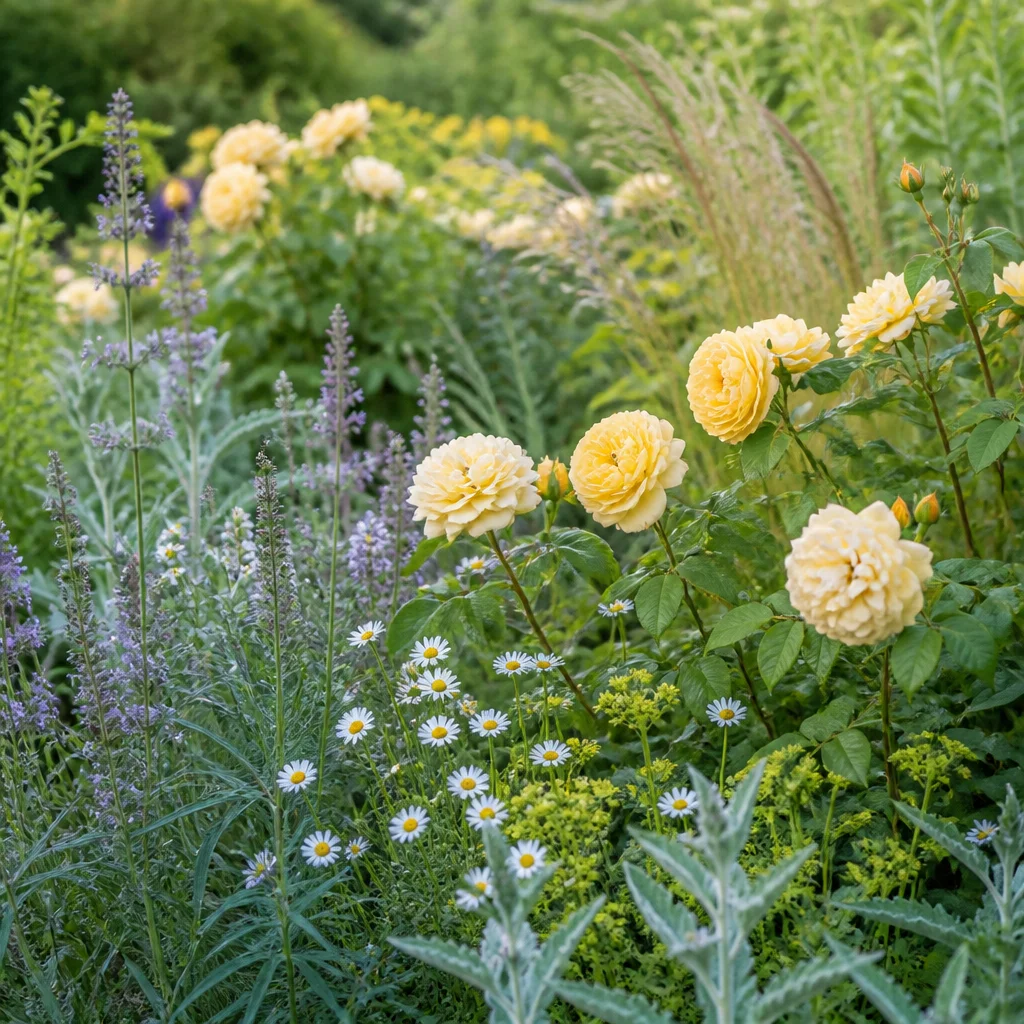
Butter yellow roses can be difficult in hot weather if the surrounding planting is too bright or too dry-looking. Pairing them with blue-green foliage keeps the effect fresh and composed, especially in exposed borders where midsummer sun can intensify every color. This combination has a calm, almost airy character that works beautifully in cottage-style plantings, transitional spaces between formal and informal beds, and cutting rows where you want a soft harvest palette. Choose yellow roses with a gentle, creamy cast rather than acid tones if your goal is season-long harmony. Blue-green foliage provides consistency even when yellow flowers bleach slightly in heat or fluctuate between flushes. It also helps bridge to other rose colors nearby, especially white, blush, or apricot. In a mixed garden, this pairing can serve as a cooling zone between stronger color groupings, preventing the overall design from becoming visually exhausting by midsummer.
White, Green, and Hint-of-Blush for a Cutting Garden That Always Matches
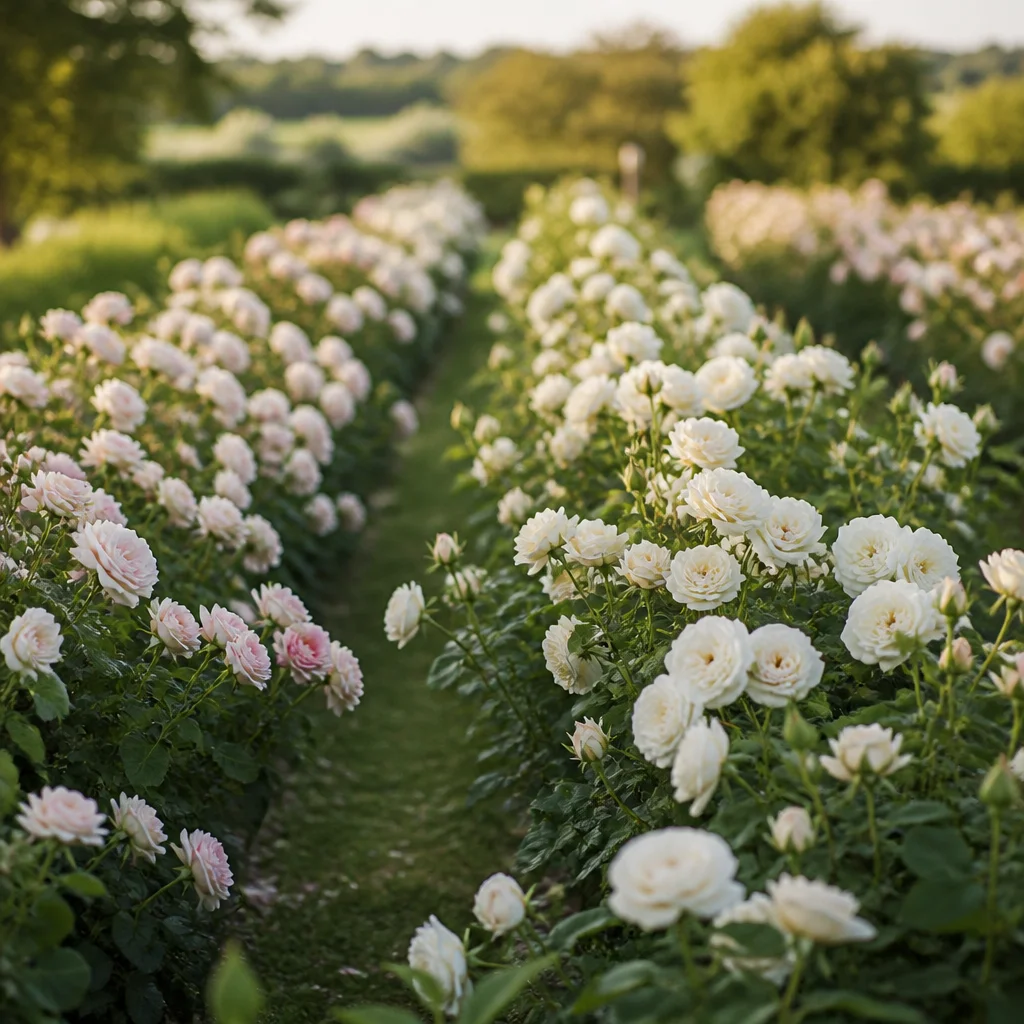
For gardeners who primarily grow roses to cut, a restrained palette of white, green, and just a hint of blush is one of the most practical schemes possible. It gives you flexibility all season, because nearly every stem harvested from the area will blend without much sorting. White roses provide brightness, blush adds warmth and softness, and green foliage or green-tinted companion flowers create the quiet framework that makes bouquets look abundant rather than busy. In the garden itself, this palette feels restful and polished. It is particularly effective in rectangular cutting beds or organized rows where repetition matters more than dramatic contrast. Because the color range is narrow, texture becomes important: mix different flower forms, stem lengths, and leaf surfaces so the planting remains interesting from spring to frost. If a stronger rose color elsewhere in the garden catches your eye, you can still cut a stem or two and fold it into arrangements without disrupting the basic harmony of this scheme.
Hot Pink and White in Repeating Blocks for Clear Garden Rhythm
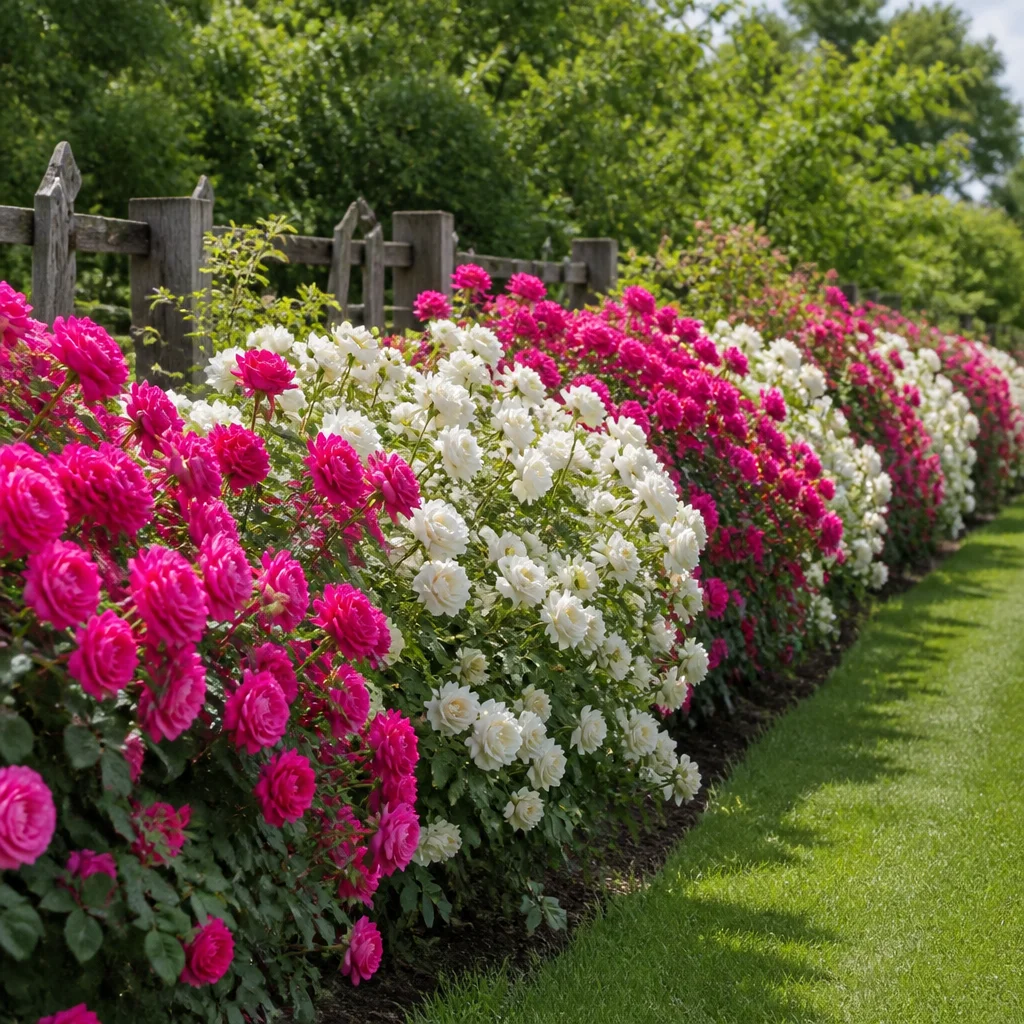
Hot pink can overwhelm a planting if it is sprinkled randomly, but it becomes highly effective when grouped in repeating blocks with white. This layout works especially well in long foundations, fence-line borders, and larger beds viewed from a distance. The white sections act as visual pauses, while the hot pink sections create emphasis and movement. Together they make the border legible and lively from spring onward, even when some plants bloom more heavily than others. Think in terms of pattern rather than mixture. Instead of blending hot pink and white plant by plant, place them in neighboring groups and repeat that sequence down the bed. The result feels cleaner and more deliberate. Green foliage should remain the dominant background, with any additional companion flowers kept minimal. For season-long cohesion, choose at least one repeat-blooming rose in each color so the pattern continues to reappear after the first flush fades.
A Unifying Foliage Thread to Tie Every Rose Color Together
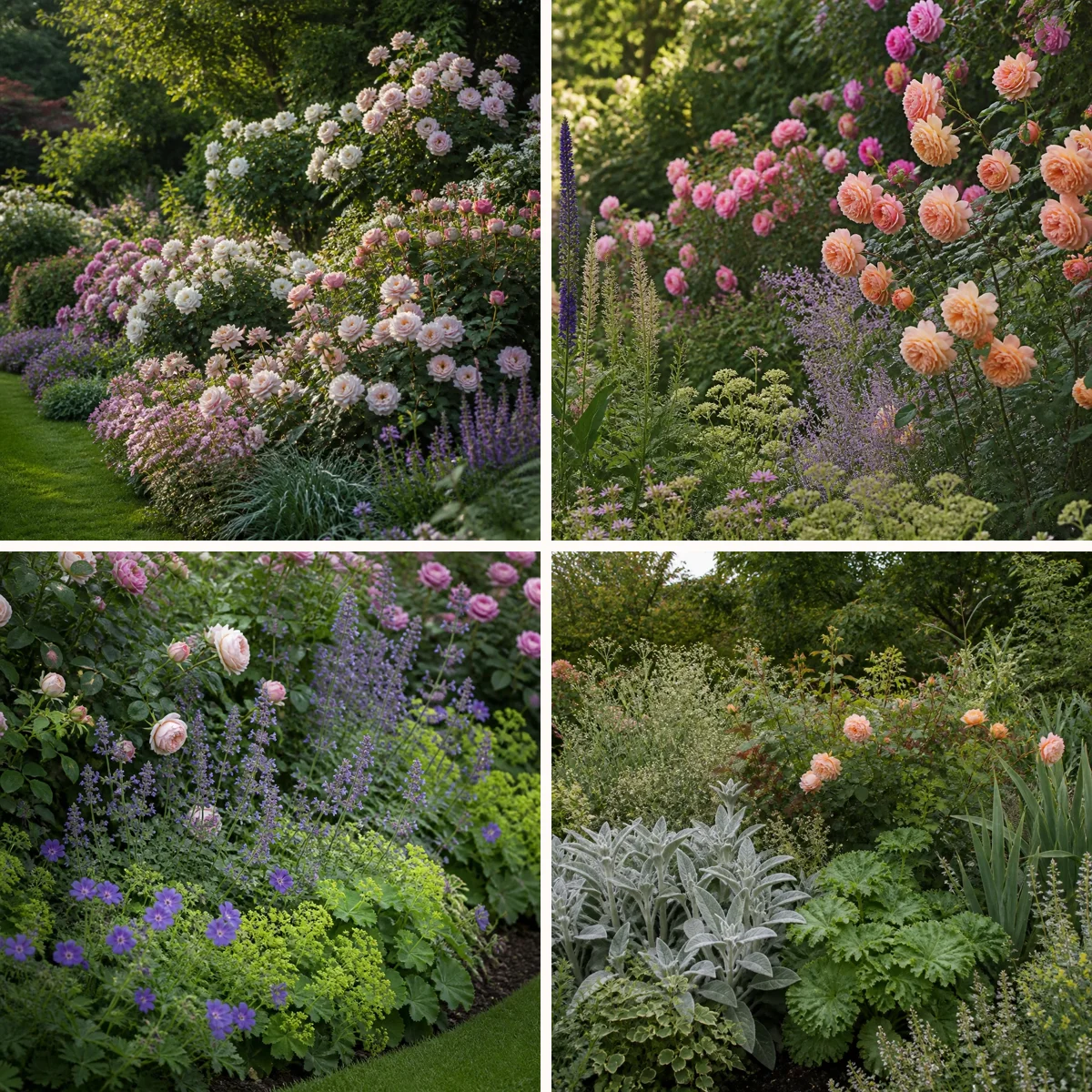
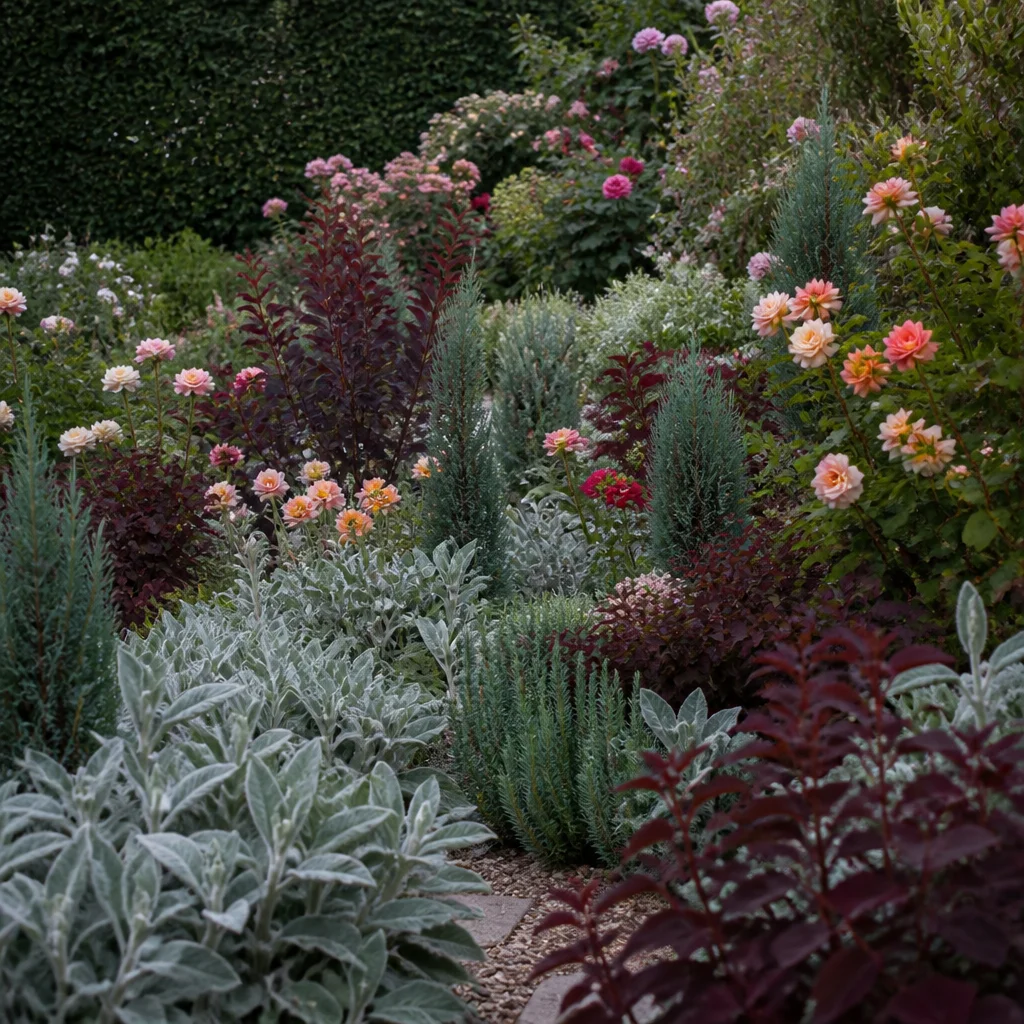
The most successful rose color pairings are often held together less by bloom color than by foliage continuity. If you want spring pastels, summer corals, and autumn-rich tones to coexist, repeat a consistent foliage thread through the whole garden. That might mean silver leaves at intervals, a steady presence of blue-green mounds, dark evergreen structure, or occasional burgundy foliage to echo deeper flowers. This repeated leaf color becomes the quiet design element that lets multiple rose shades belong to the same place. Use this strategy when your collection includes roses you already love but that do not naturally match. Rather than forcing all blooms into one strict palette, connect them with recurring leaf tones and predictable spacing. The result is especially useful in mixed borders where bloom timing shifts from month to month. Flowers come and go, but foliage remains. When the leaves tell a consistent story, the roses can change through the season while the garden still feels composed from spring to frost.
How did this story make you feel?
Choose one reaction. You can change it later.