Roses8 min read
Fragrant Roses Worth Growing Near Paths, Patios, and Seating Areas
A fragrant rose earns its place best where people naturally pause: beside a front path, near a bench, outside a back door, or around a terrace where warm air holds perfume in the evening. Choosing roses for these close-viewing spots is not only about picking the strongest scent. It is also about matching fragrance style, bloom form, plant size, and flowering habit to the way a space is used, so the rose feels welcoming rather than awkward or overwhelming. Some roses release a rich old-rose perfume that suits a quiet sitting corner, while others lean toward citrus, fruit, spice, tea, or myrrh and can freshen a narrow walkway without feeling heavy. Bloom style matters too: large romantic flowers invite lingering, while looser clusters can look more relaxed and repeat more freely. By thinking about both scent and placement, gardeners can create moments where perfume is noticed at exactly the right height and distance.

Choose fragrance character, not just fragrance strength
The first useful step is to decide what kind of rose scent you want to experience up close. Strong perfume is wonderful, but two highly scented roses can feel completely different. Old-rose fragrance is deep and classic, often best in still seating areas where the scent can settle around you. Fruity or citrus notes feel brighter and often suit paths and doorways, where people catch the fragrance in passing. Tea and myrrh scents can be refined and unusual, making them especially rewarding beside a favorite chair or a place used for morning coffee. When visiting a nursery or reading plant descriptions, think of the rose as part of the mood of the space. A narrow side path may benefit from a fresh, lively scent that does not feel dense, while a sheltered patio can carry something richer and more layered. If possible, avoid placing several very different powerful fragrances shoulder to shoulder in one small area. Giving each rose room to be noticed makes the perfume more memorable and prevents the garden from feeling muddled.
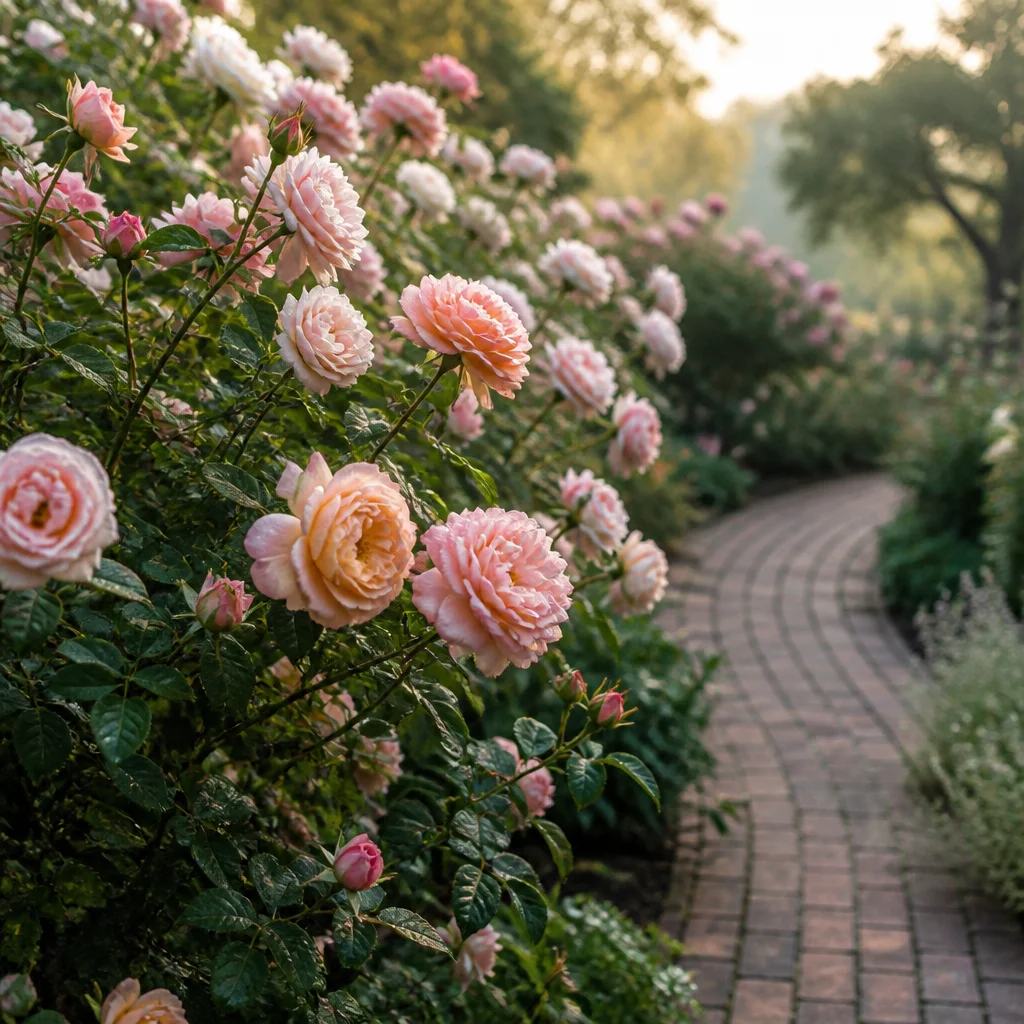
Match plant size to the width of the path or terrace edge
A highly fragrant rose is only enjoyable near a path if it fits comfortably without snagging clothing or forcing people to brush past thorns. For narrow walkways, compact shrub roses or neatly trained short climbers are often better choices than broad, arching shrubs. Reserve larger fragrant varieties for wider borders, corners of patios, or the outer edges of seating spaces where their flowers can drift toward people without blocking movement. As a practical guide, leave enough room for the rose at mature size rather than its size in the pot. A rose that eventually spreads generously can make a path feel cramped, reduce air flow, and turn flower appreciation into garden maintenance. Near paving, it also helps to choose a variety with good repeat flowering, so the space feels inviting over a long season instead of giving one spectacular flush followed by weeks of plain greenery.
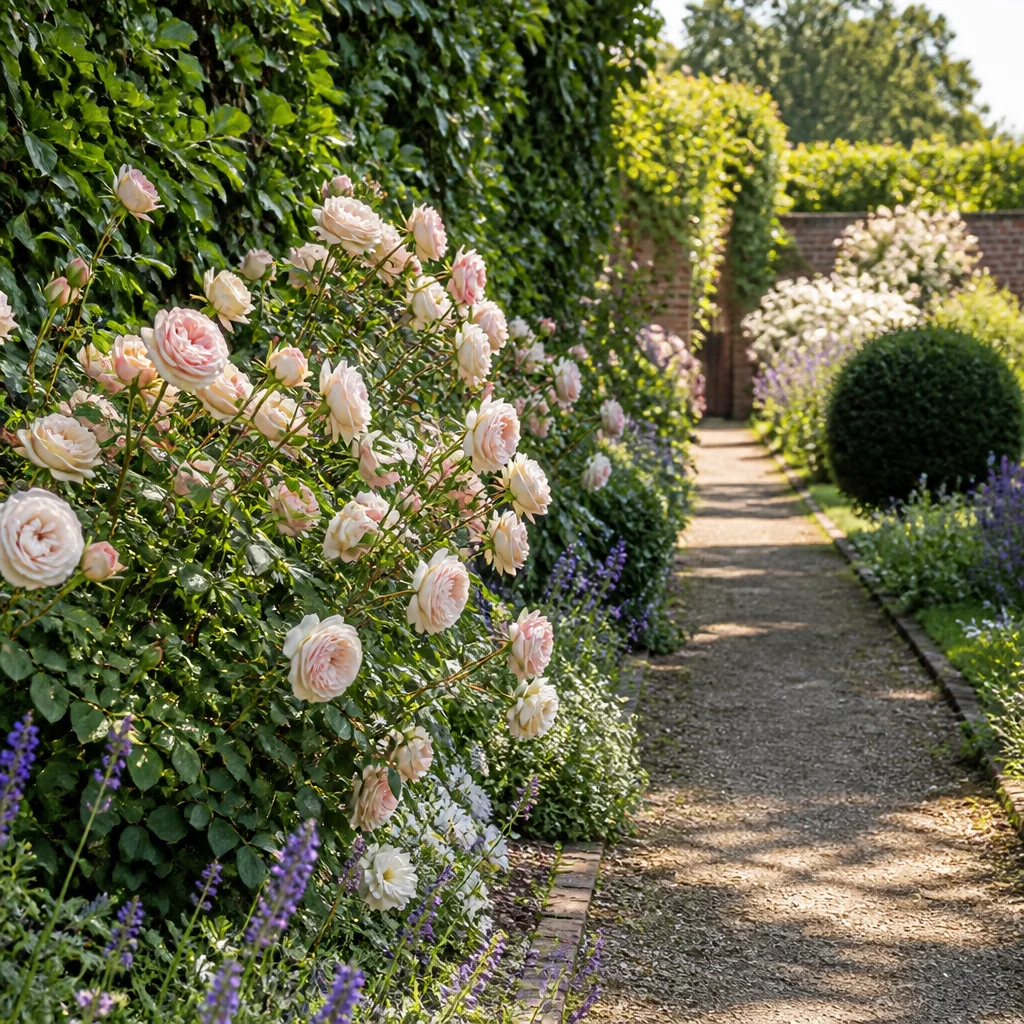
Use bloom height to bring perfume to face and hand level
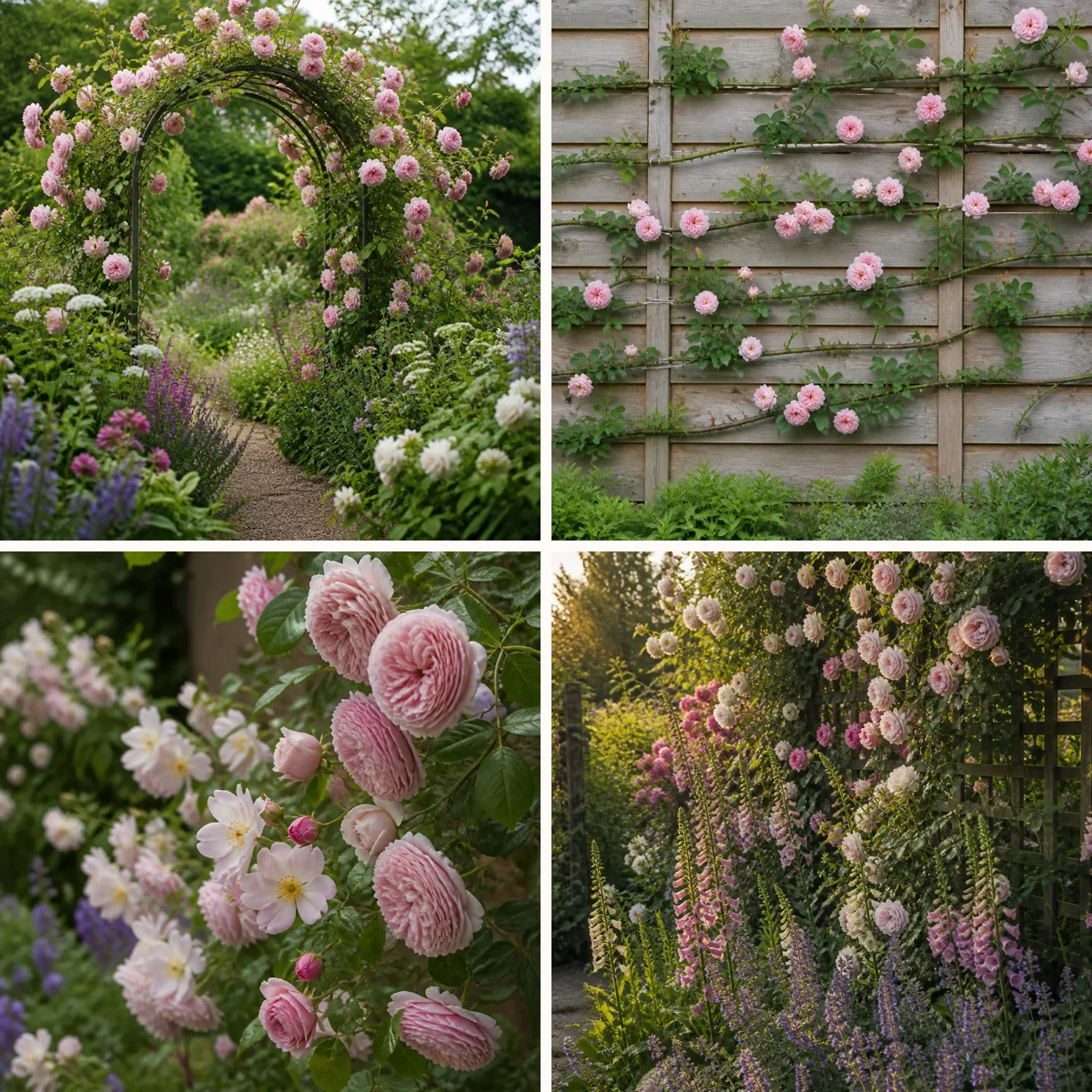
One of the easiest ways to make a fragrant rose more enjoyable is to place the flowers where people naturally encounter them. Roses set too low may release lovely scent that goes unnoticed, especially beside broad paving where fragrance disperses quickly. Around patios and seating areas, varieties that carry blooms at mid-height often perform beautifully because the flowers are close enough to lean toward, cut for a small vase, or enjoy while seated. This is where habit matters as much as scent. Upright shrubs with blooms held above the foliage can suit a terrace border, while a pillar rose or small climber can lift fragrant flowers to nose level beside an archway, gate, or wall near a bench. In a seating nook, even one well-placed rose positioned to the side of a chair often works better than a mass planted behind it, where the scent may be trapped or the flowers hidden from view.
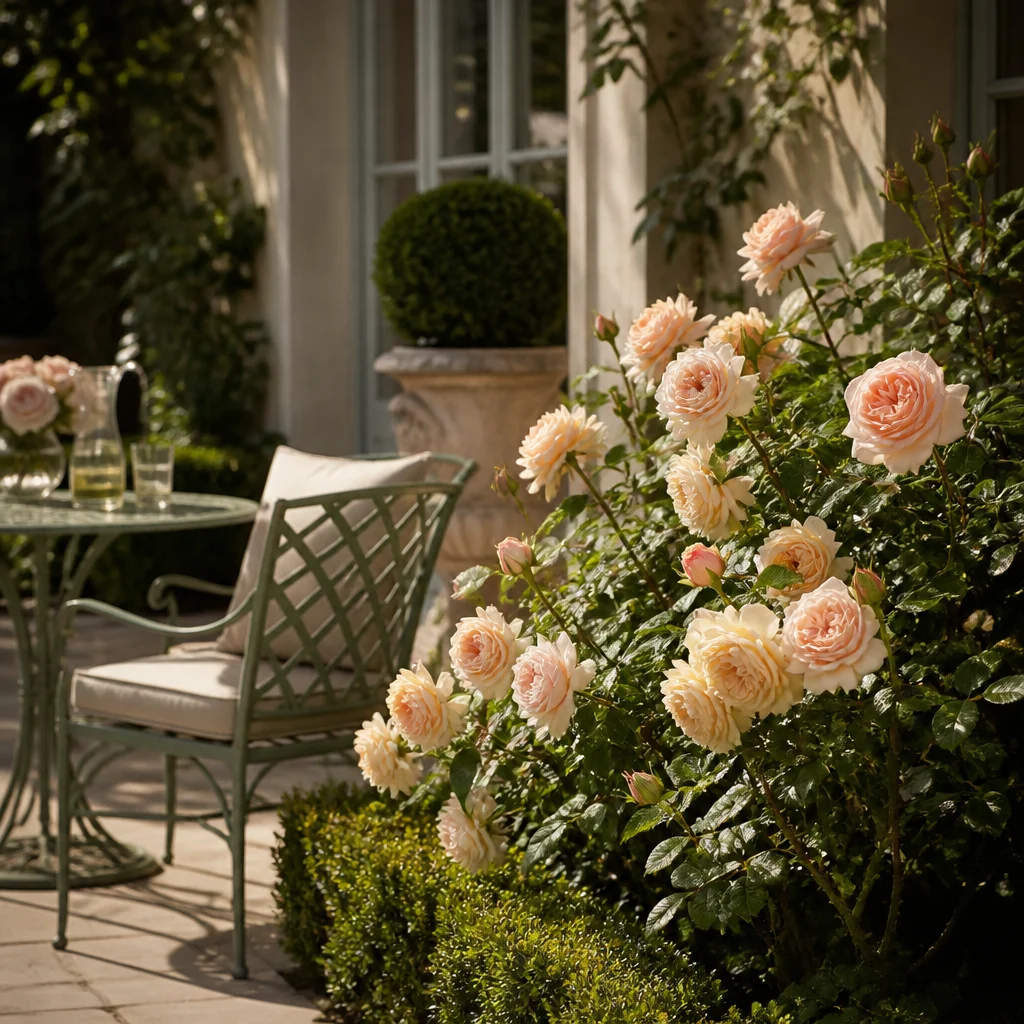
Pick bloom style to suit the formality of the space
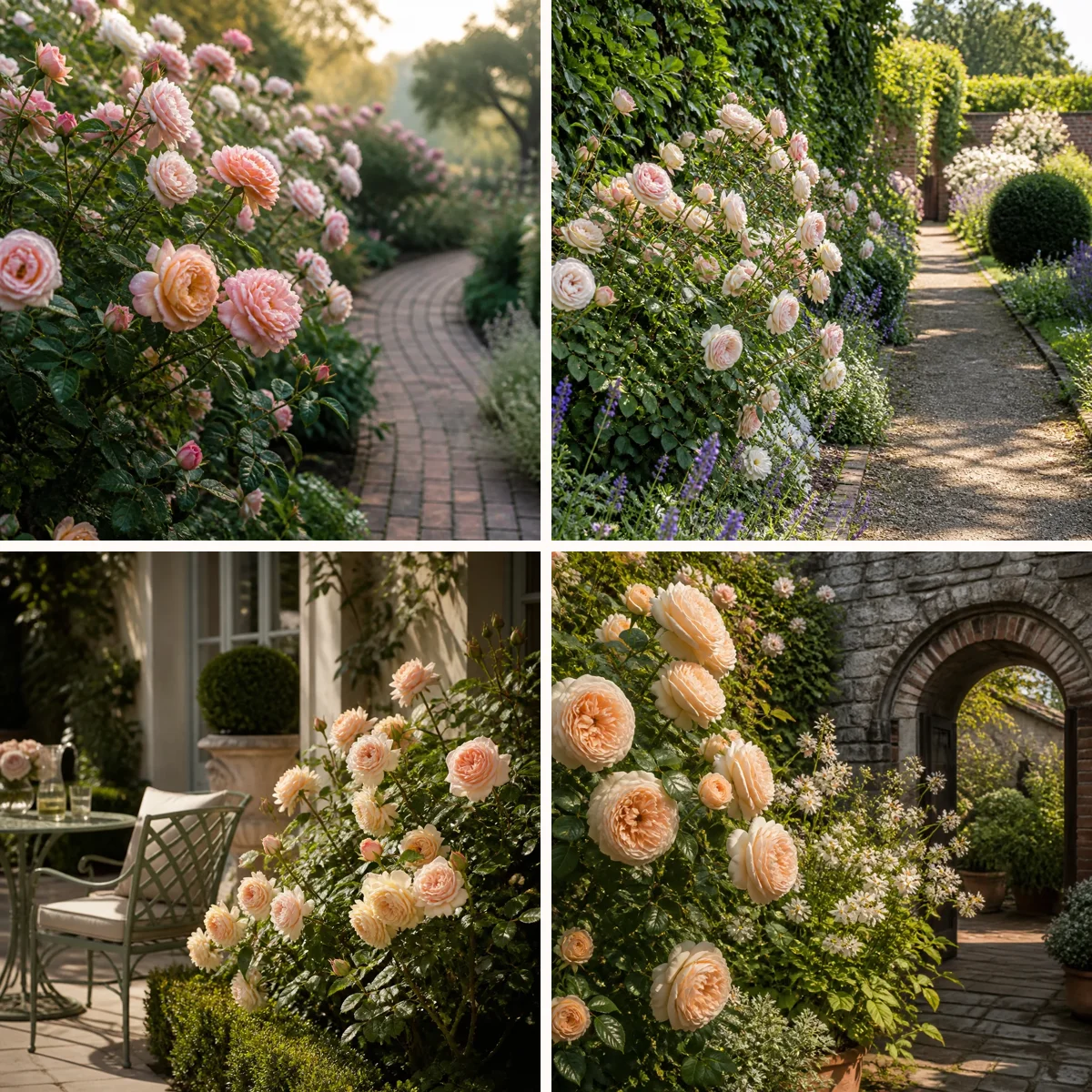
The shape and fullness of the flowers affect how a fragrant rose feels in use. Very full, cupped, or rosette blooms bring romance and softness, making them ideal near intimate seating areas, courtyards, and traditional patios. Their lush appearance invites closer inspection and pairs naturally with stone, brick, painted benches, and classic containers. In these settings, a richly scented rose can become part of the atmosphere rather than just another flowering shrub. By contrast, semi-double or clustered blooms can look lighter and less ceremonious along informal paths and family garden routes. They still offer fragrance, but with a looser visual rhythm that sits well among perennials and relaxed planting. If your outdoor space is modern or simple, choose roses whose flowers are elegant without looking too fussy. The goal is for the plant to echo the style of the setting, so scent and appearance feel equally intentional.
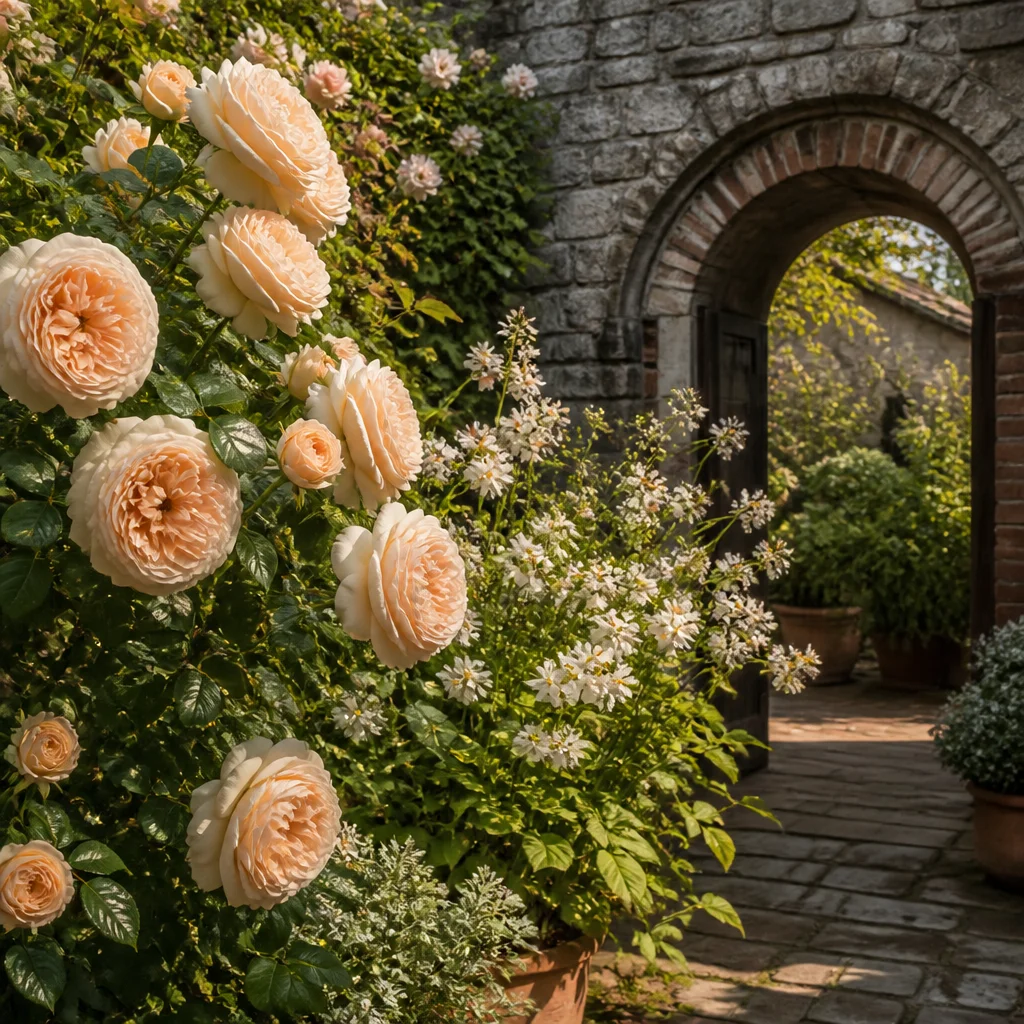
Plan for repeat flowering where people linger often
A bench, dining area, or route to the front door deserves a rose that performs beyond a single seasonal peak. In places used daily, repeat flowering is almost as important as fragrance because regular bloom keeps the relationship between plant and place alive. A rose that opens successive flushes from early summer onward gives repeated opportunities to enjoy scent, gather a stem, or greet guests with a garden that feels active and cared for. To support that long display, choose a site with adequate sun, feed and water consistently, and deadhead if the variety responds well to it. The best fragrant planting near seating is often not the most demanding diva but the rose that flowers generously and predictably. Reliable repeat bloom also helps when combining roses with herbs, nepeta, salvias, or lavender, because the surrounding planting will continue to frame the rose attractively between flushes.
Let warmth and shelter help the perfume travel
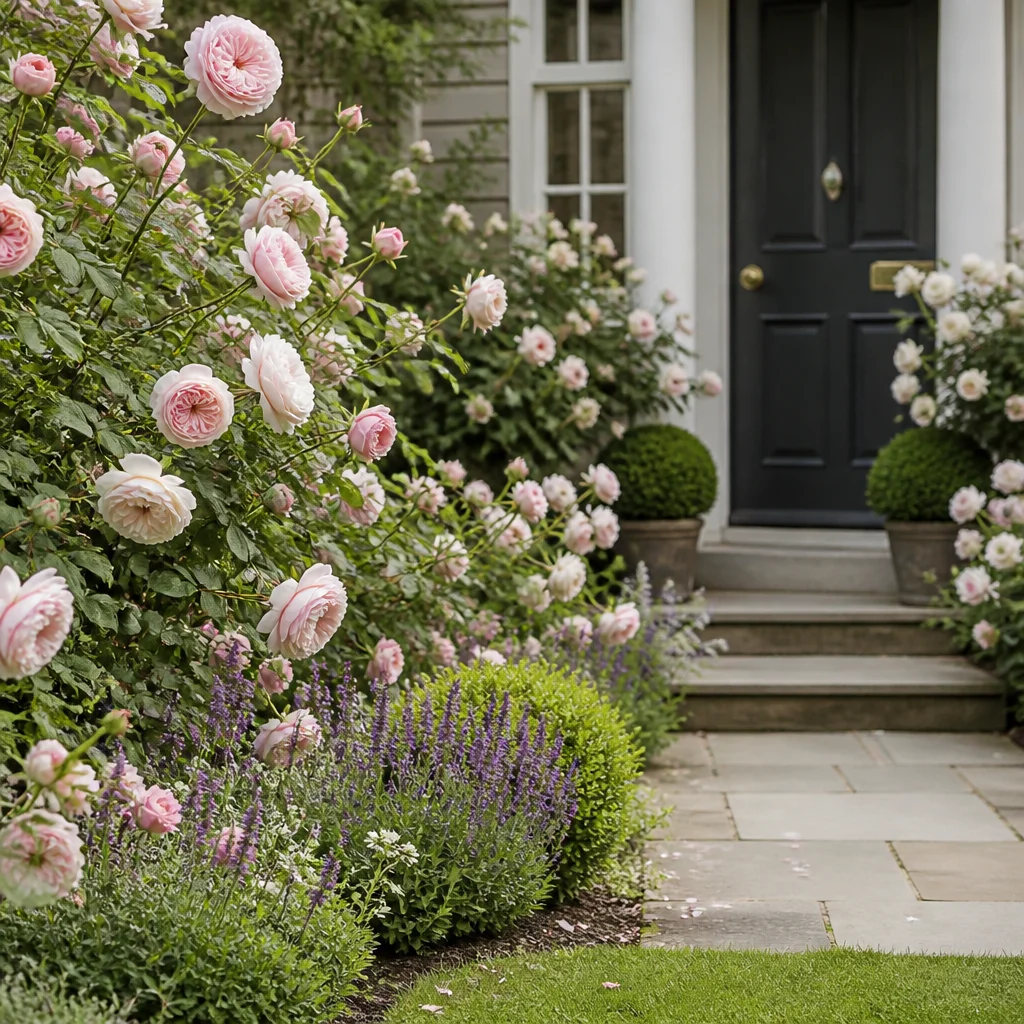
Fragrance is shaped by microclimate as much as by variety. A rose planted where afternoon warmth gathers, such as beside a south- or west-facing terrace, often releases scent more freely than the same rose in an exposed windy corner. Walls, fences, and hedges can help hold fragrance in the air, making a modestly scented rose feel far more noticeable. That said, shelter should not mean stagnant conditions; roses still need enough air movement to stay healthy. Use this to your advantage when placing roses near seating. Put the most fragrant kinds where warmth builds gently and people sit still long enough to notice the changing scent through the day. For exposed paths, choose roses known for clear fragrance even in breezier conditions, and plant them where passersby can brush close without crowding. Often, moving a rose just a meter or two into a sunnier, calmer pocket makes a surprising difference in how often its perfume is enjoyed.
Style fragrant roses with simple companions that do not compete
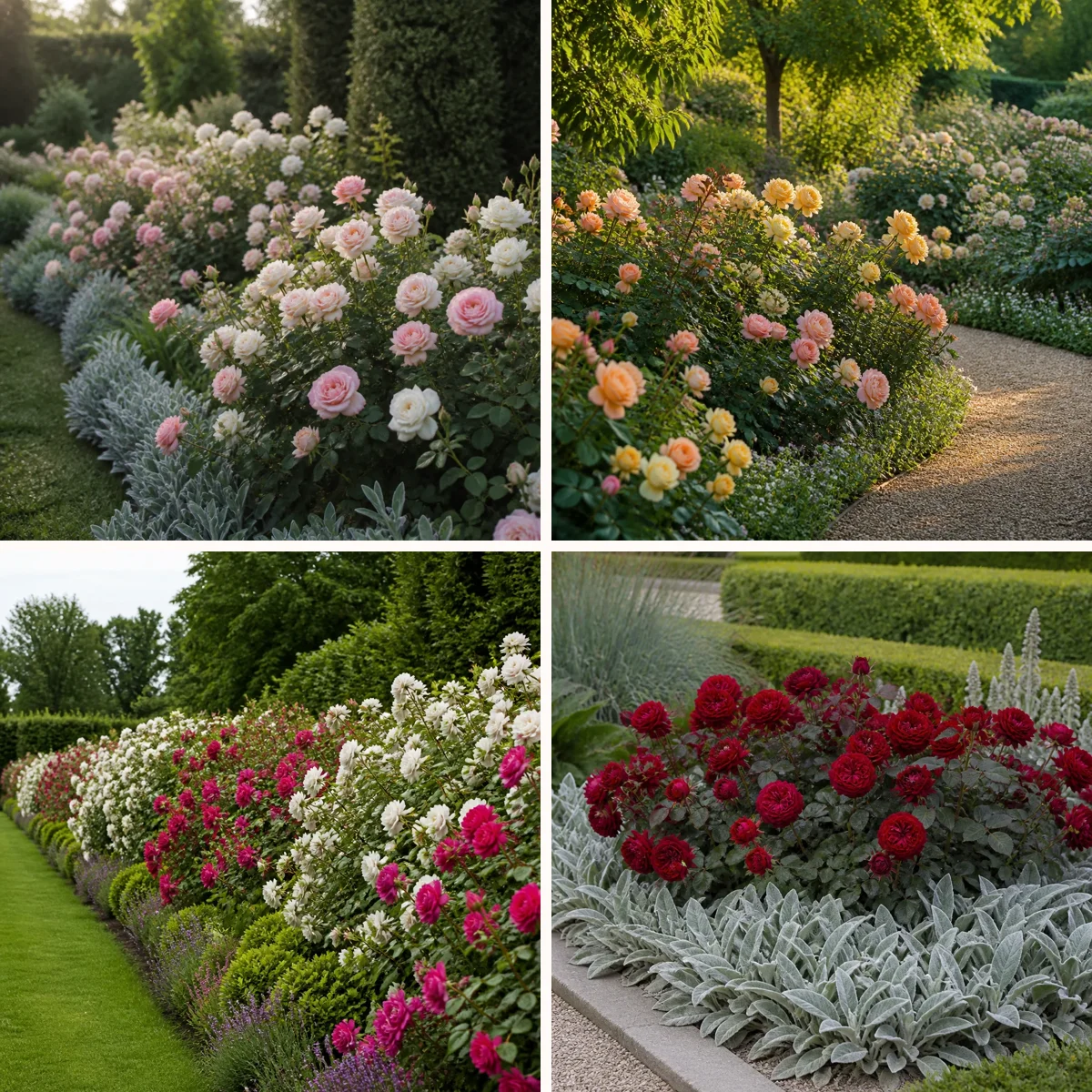
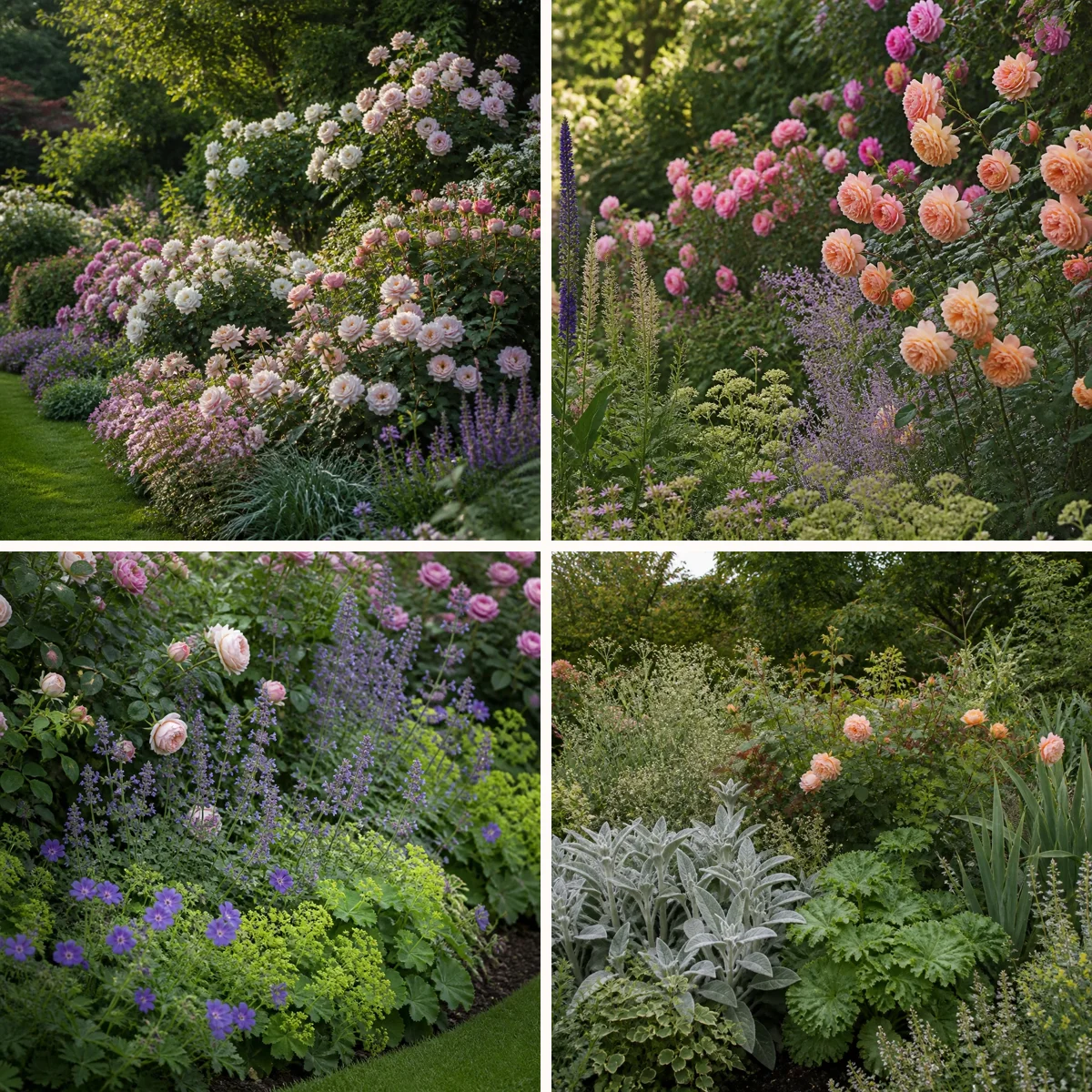
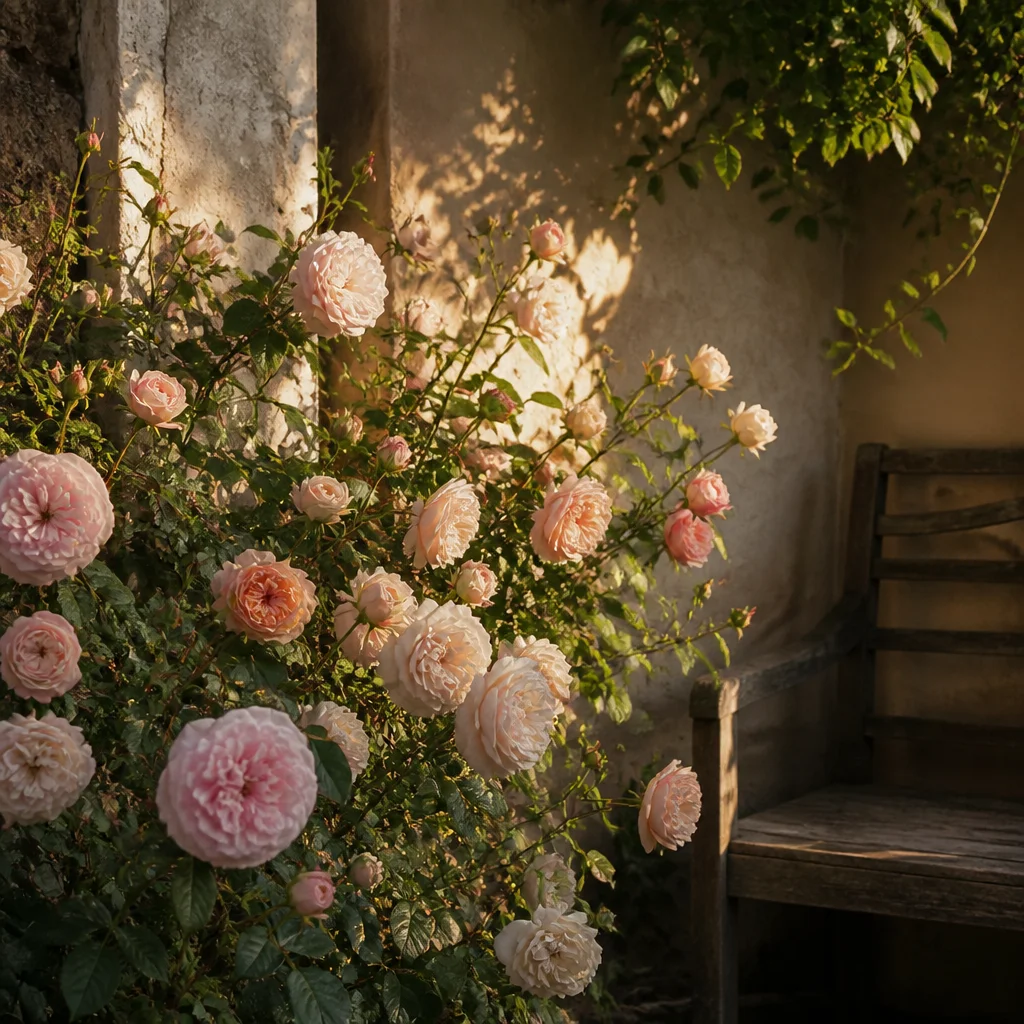
Near paths and patios, fragrant roses usually shine brightest when the surrounding planting is restrained. Overly bold neighbors can distract from the scent or visually smother the blooms. A calm framework of silver foliage, small mounding perennials, soft grasses, or clipped evergreen structure allows the rose to remain the focus. This is especially helpful in small spaces, where too many strong flower colors and forms can make a seating area feel busy rather than restful. Companions should support the rose in both look and maintenance. Low edging plants can soften paving and keep the base from appearing bare, while upright perennials can fill seasonal gaps without crowding the rose’s center. Consider color as part of the fragrance experience: pale pinks, apricots, creams, and soft whites often feel especially harmonious close to sitting areas because they read as cooling and calm. Rich reds and saturated oranges can be striking too, but they generally work best where there is enough space for their visual weight.
Treat close-to-house roses as part of everyday living
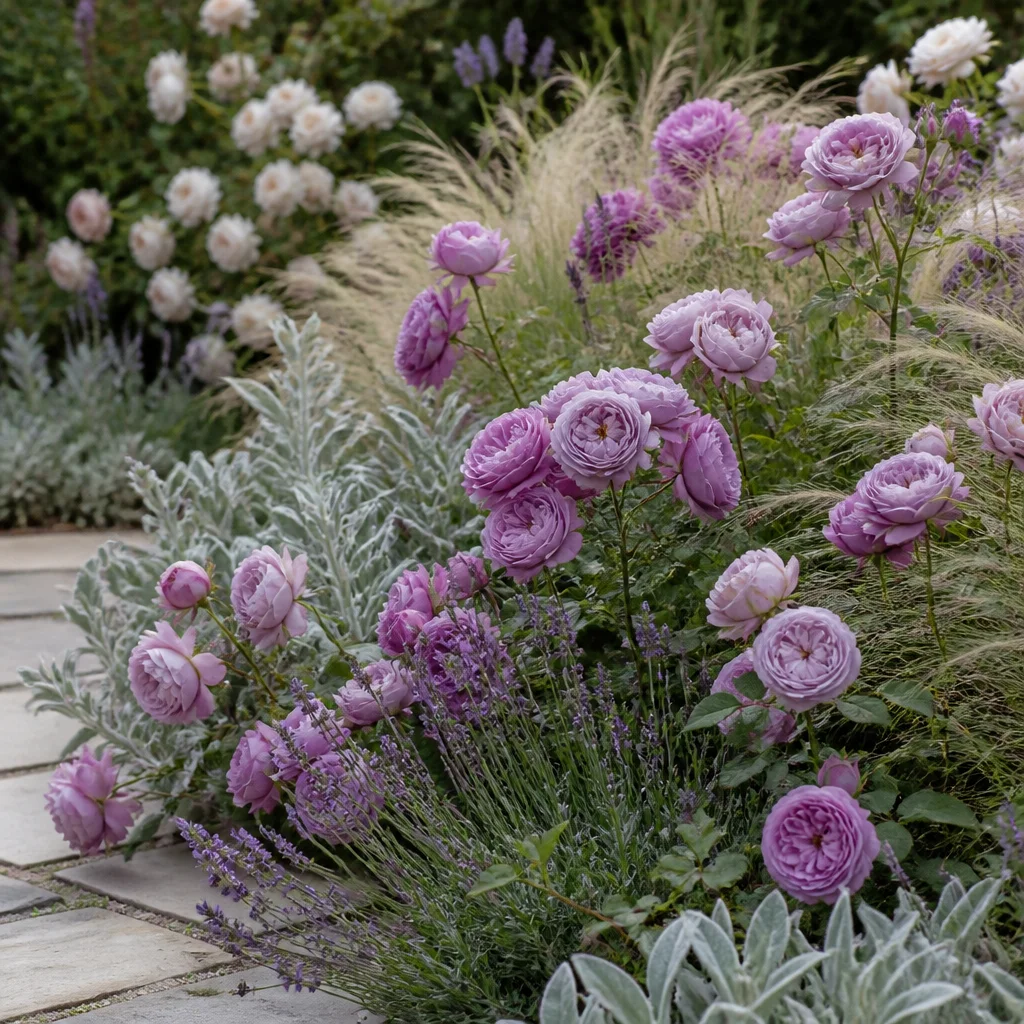
The most successful fragrant roses near seating areas are chosen as lifestyle plants, not only display plants. Think about when and how you use the space. If you step outside with coffee in the morning, a rose with fresh, bright fragrance near the door may be ideal. If you mostly sit outdoors in the evening, choose a variety whose scent deepens in warm late-day air. Where children, pets, or frequent guests move through, thorniness, width, and petal drop become practical considerations as important as bloom beauty. Finally, give yourself permission to plant fewer roses but place them better. One exceptional fragrant shrub by a gate, one climber beside a sunny bench, or a pair of matching roses framing a patio can have more impact than a larger mixed planting set too far away to appreciate. Fragrant roses reward closeness, and when they are positioned with daily life in mind, their perfume becomes part of the rhythm of the garden rather than an occasional bonus.
How did this story make you feel?
Choose one reaction. You can change it later.