Roses8 min read
How to Plan a Rose Border With Companion Plants That Extend the Show
A rose border can be generous for weeks rather than spectacular for a moment if you plan it as a layered planting instead of a single-season display. Roses bring shape, perfume, and repeated flowers, but they look even better when neighboring plants soften their bare lower stems, echo their colors, and step in with foliage or bloom before, between, and after each flush. The most successful borders mix structure with spontaneity. That means choosing roses with a clear role, then weaving in companion plants that offer contrasting leaf shapes, a staggered flowering calendar, and enough substance to keep the bed attractive when the roses are resting. With a few practical decisions about height, spacing, color, and maintenance, you can build a border that feels lively from spring into autumn.

Begin With the Border’s Backbone
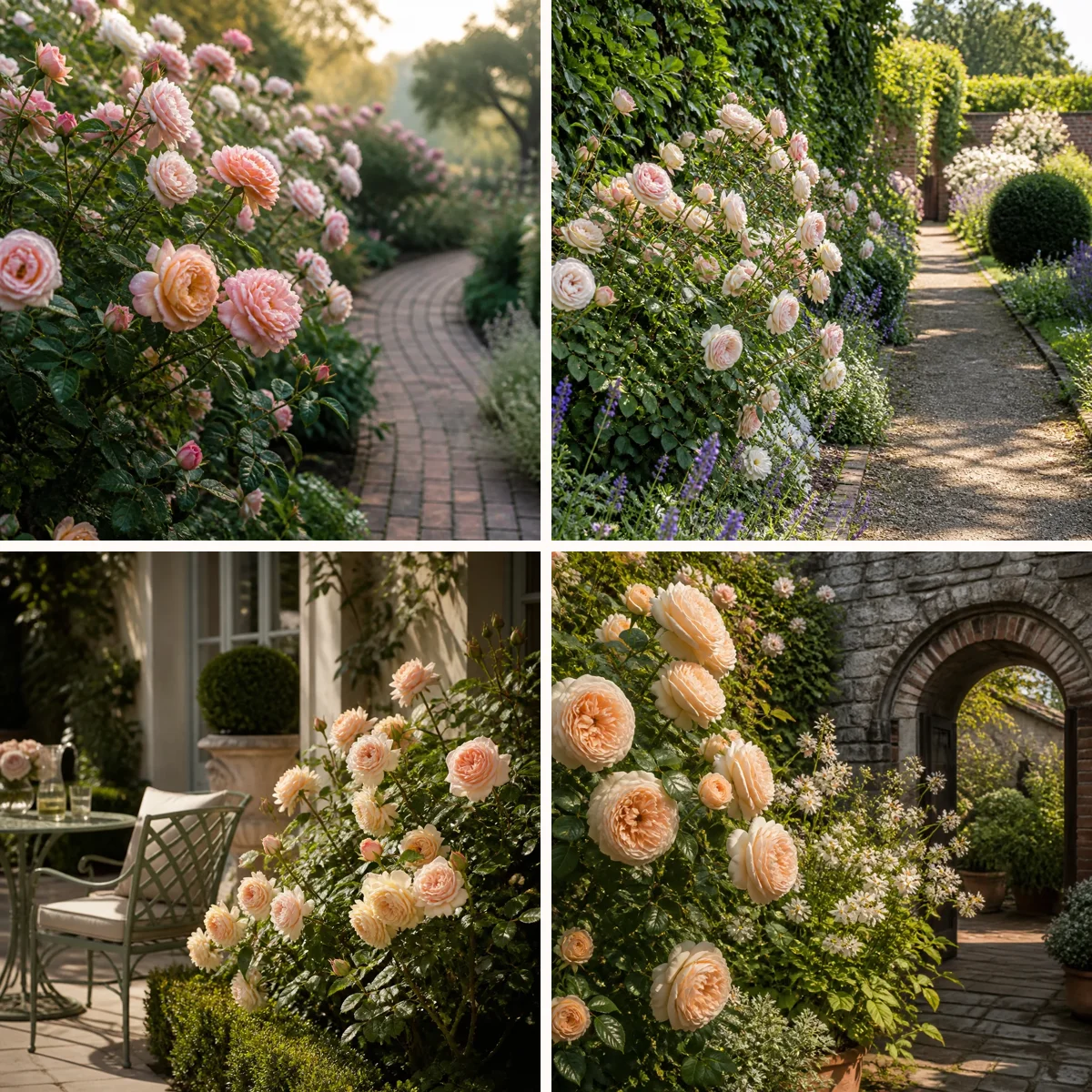
Start by deciding what your rose border must do from a distance. A long border usually needs a repeating backbone so the planting reads as one composition rather than a collection of separate clumps. Choose two or three main rose varieties and repeat them rhythmically through the bed instead of using many one-off selections. This repetition creates calm and gives companion plants something coherent to work around. Think in layers from back to front or center to edge, depending on where the border is viewed. Taller shrub roses can anchor the rear, medium repeat-flowering roses can make the middle layer, and lower companions can knit the front together. If you are planning an island bed, place the tallest forms near the center and graduate downward. A strong framework makes every seasonal addition feel intentional.
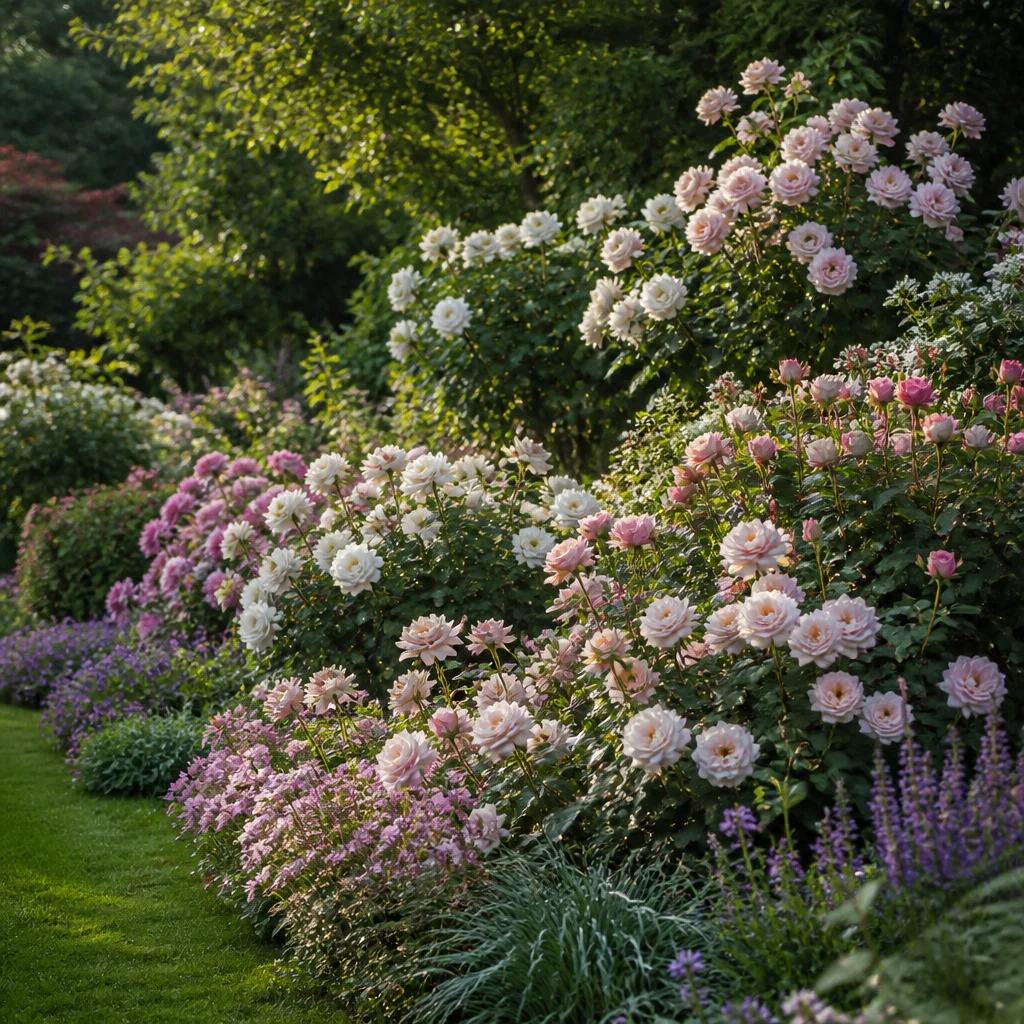
Choose Roses for Shape as Well as Color
Not every rose behaves well in a mixed border, so habit matters as much as flower color. Upright, vase-shaped shrub roses pair neatly with mounded perennials, while looser arching roses look best with airy companions that can move around them. If all your roses are the same height and shape, the border can become flat, so mix a few forms while keeping the palette disciplined. Also consider how often each rose repeats. A border that relies on short, dramatic flushes needs more support from companions than one planted with steady repeat bloomers. Fragrant shrub roses, cluster-flowering floribundas, and healthy landscape roses often make the easiest partners because they hold their presence even when not fully in flower. Build around reliable performers, then let more theatrical roses play accent roles.
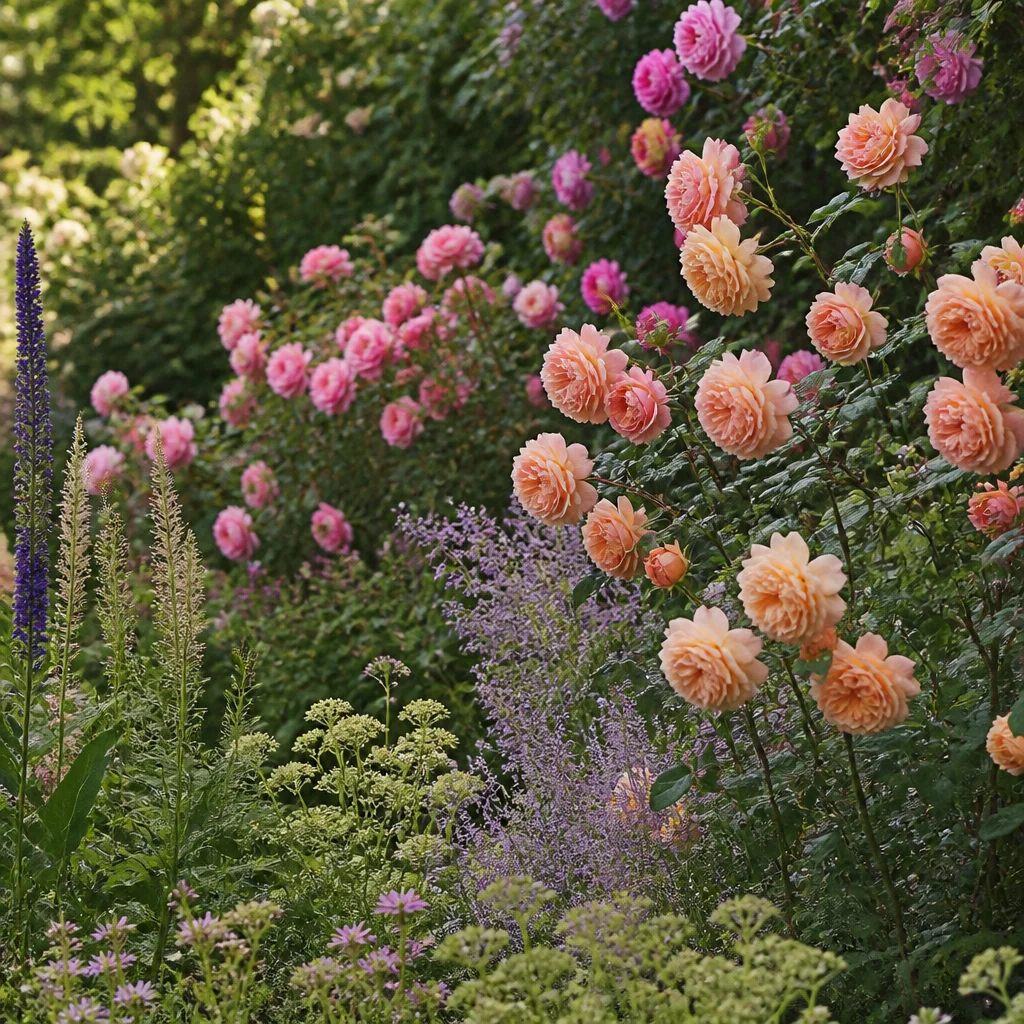
Hide Bare Stems With a Soft Front Layer
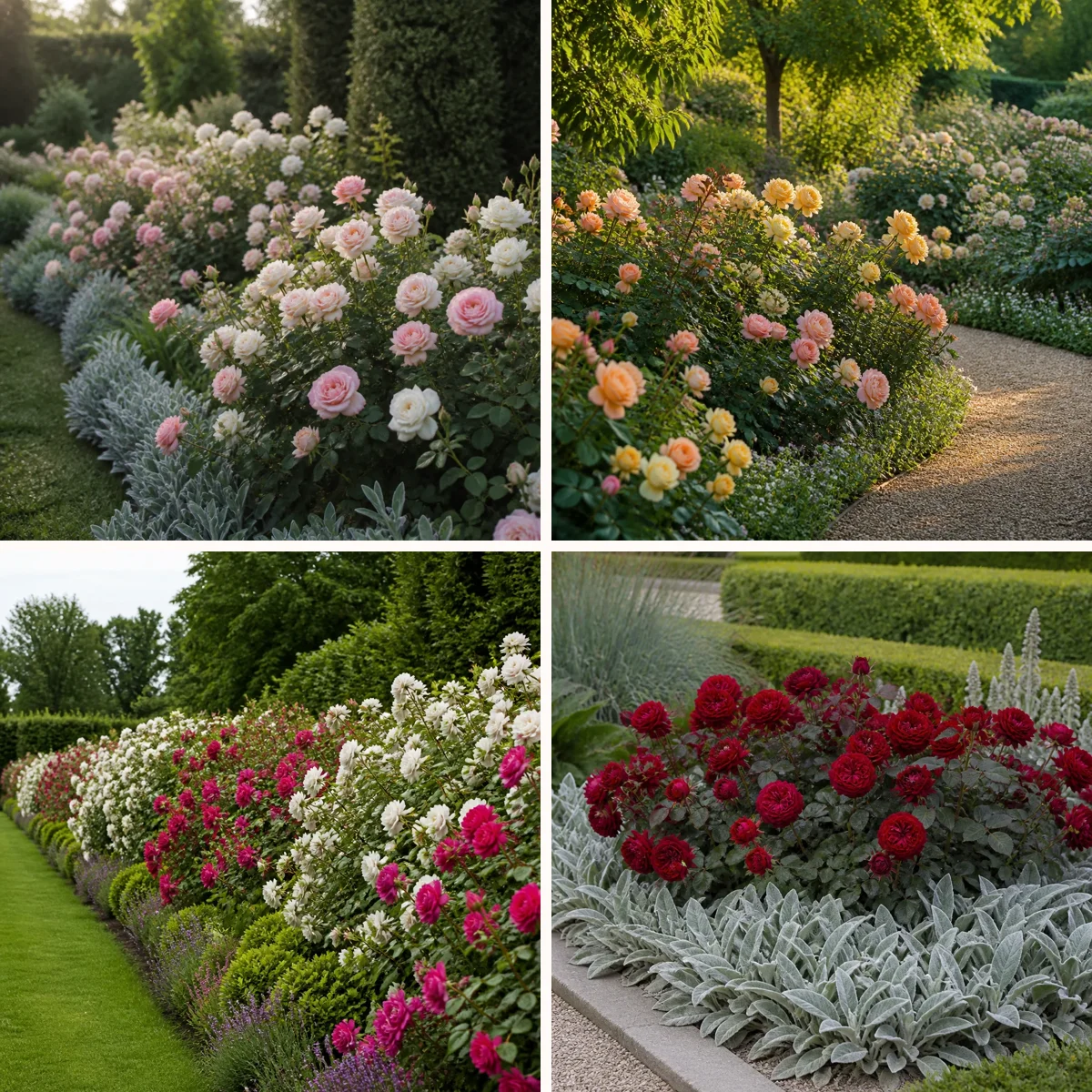
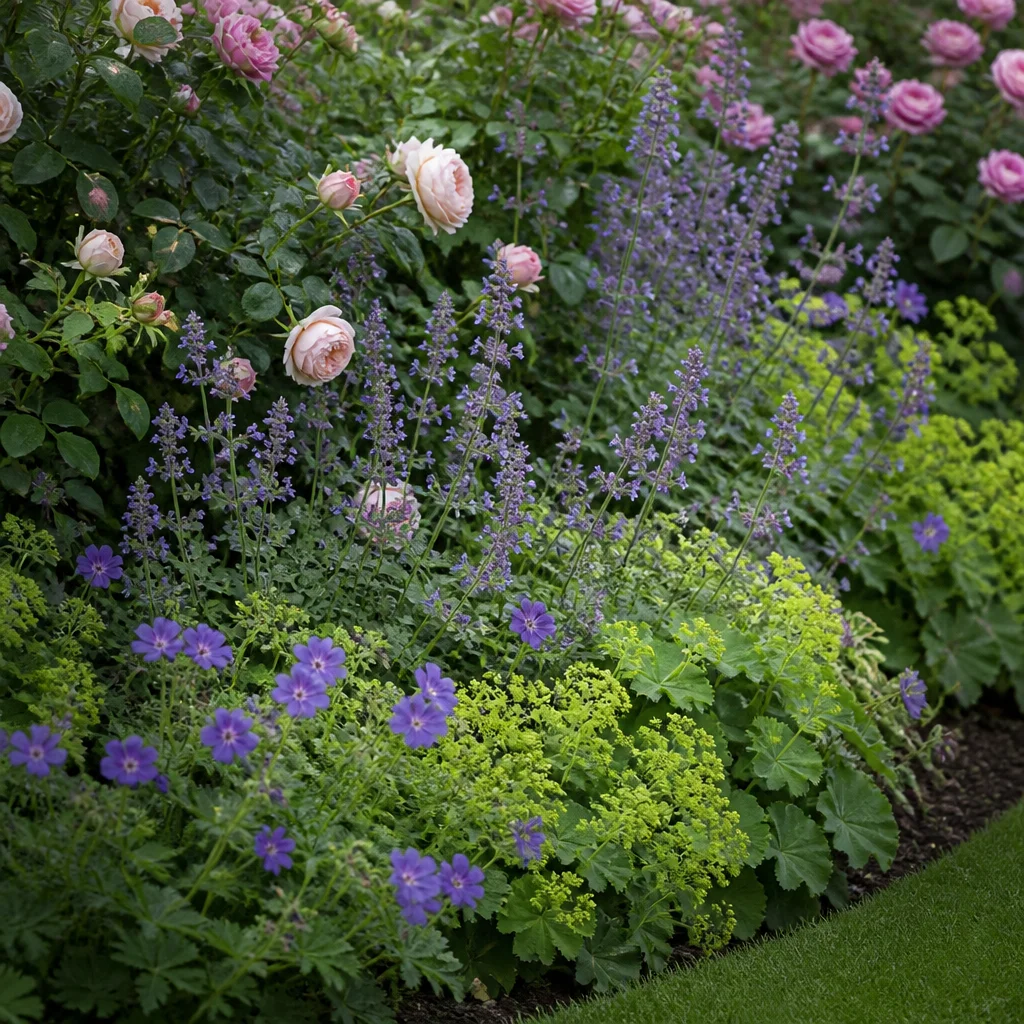
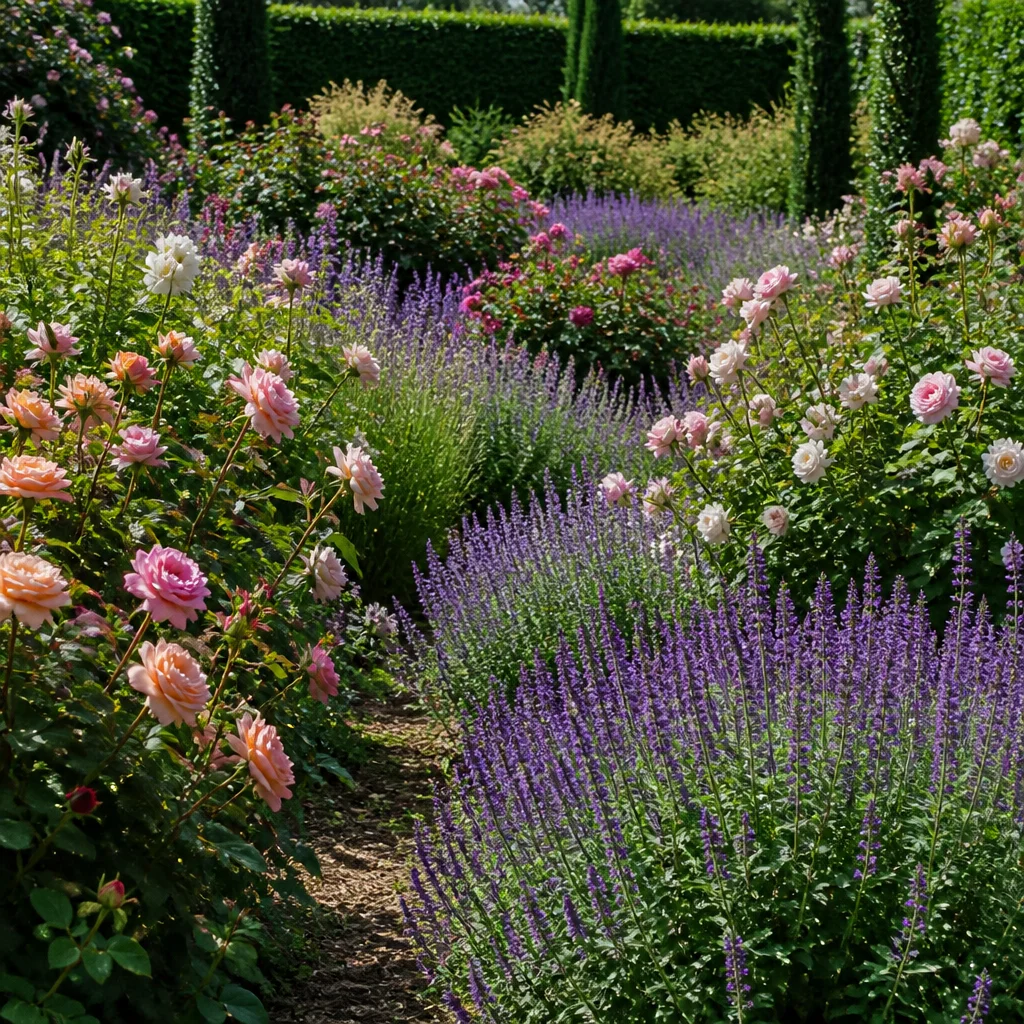
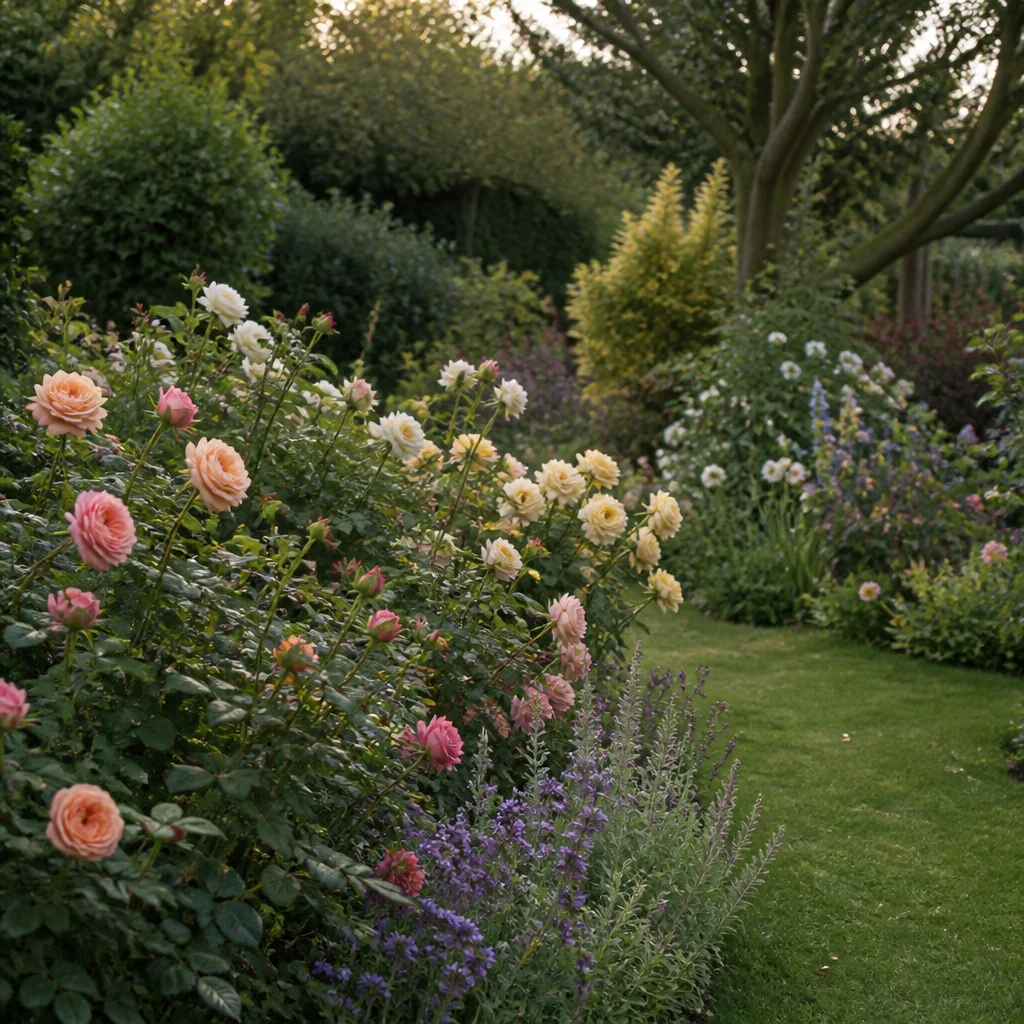
One of the classic challenges with roses is that many are loveliest at eye level and plain near the ground. A front layer of low companions solves this instantly. Mounding plants such as catmint, hardy geranium, lady’s mantle, heuchera, or low salvias soften the transition from soil to rose and make the whole border look fuller from early summer onward. Keep this layer loose rather than clipped. The best edging companions spill gently over the front of the bed and visually connect one rose to the next. Choose plants that will not smother new shoots or block airflow at the base. Repeating the same front-layer plant along much of the border is a simple way to unify mixed rose colors and create a polished, garden-designer look.
Use Contrasting Foliage to Keep Interest Between Bloom Flushes
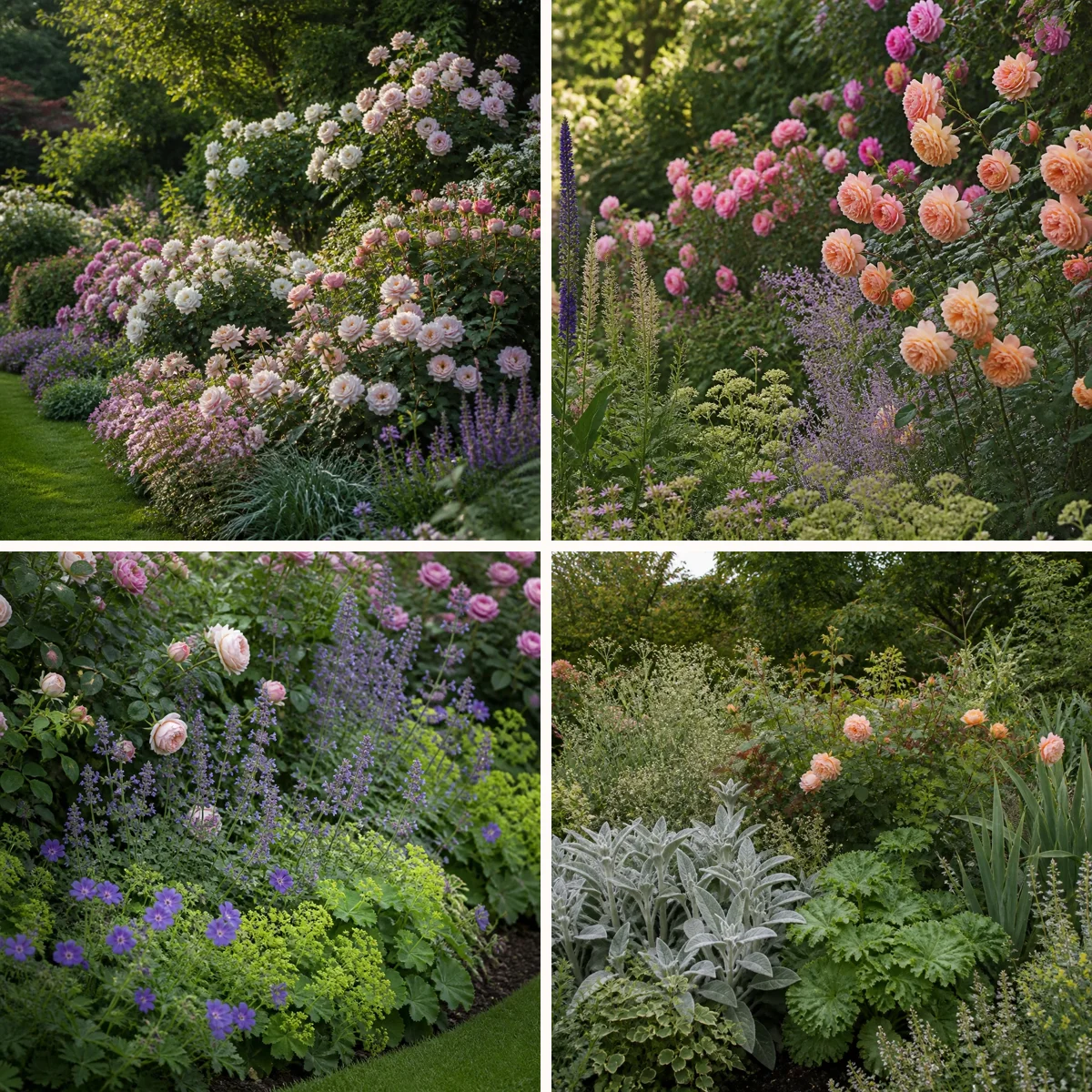
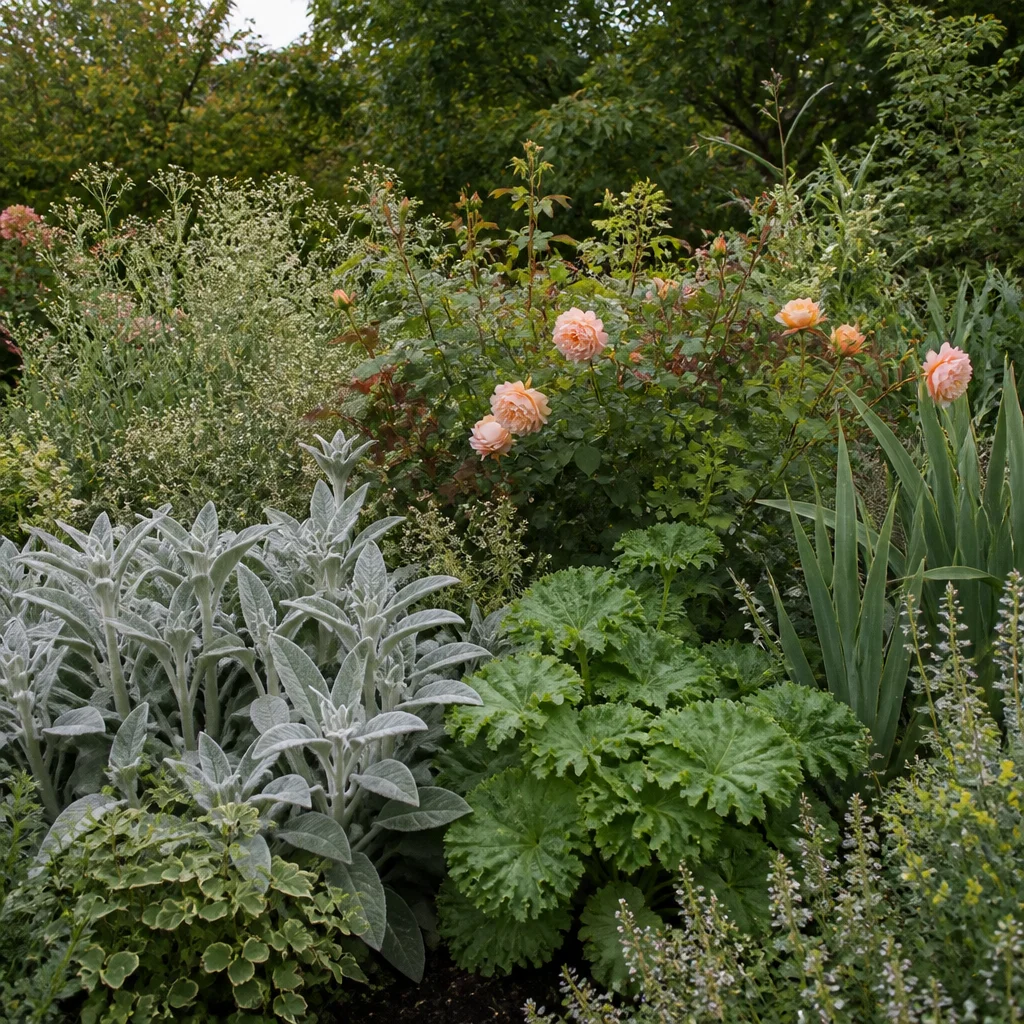
Flowers come and go, but foliage holds a border together every day. To make the planting interesting between rose peaks, combine leaf textures deliberately. Fine leaves from lavender, Russian sage, or fennel create a feathery veil around broader rose foliage, while ruffled or rounded leaves from hardy geraniums, alchemilla, or hostas add weight and contrast. Color in the leaves matters too. Silver foliage cools warm rose tones and brightens the border in dull weather. Deep burgundy or smoky purple foliage can sharpen soft pinks and apricots. Even plain green can be varied usefully, from glossy to matte and from lime to deep forest. When you plan for leaf contrast, the bed feels active even when relatively few plants are blooming.
Build a Staggered Bloom Calendar
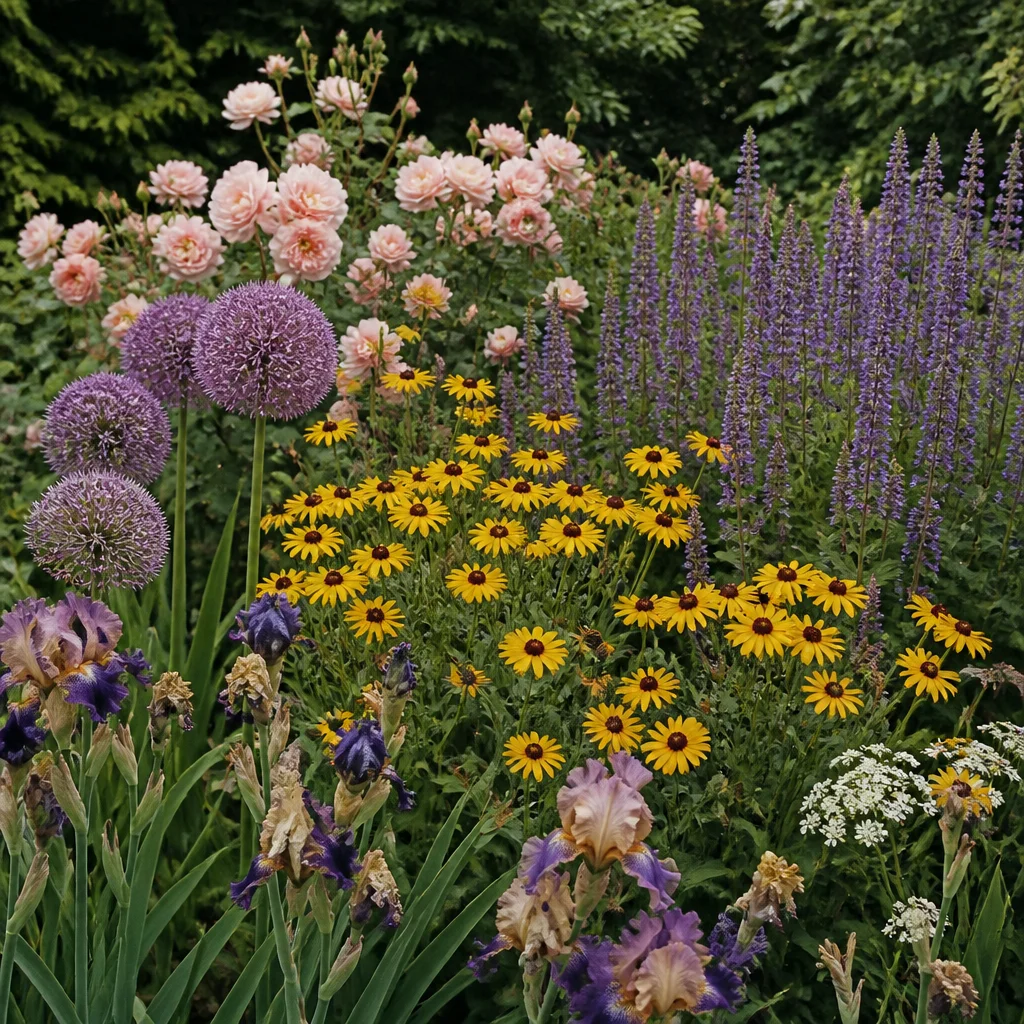
A rose border that extends the show depends on timing. Include bulbs or early perennials for spring, strong companions for the gaps between rose flushes, and late performers for the descent into autumn. Alliums, bearded iris, and early geraniums can carry the border into the first roses. Nepeta, salvias, and coreopsis can bridge the midsummer pauses. Later, asters, Japanese anemones, and autumn-flowering salvias help the border finish with confidence. When planning, think in waves rather than isolated highlights. Each wave should overlap slightly with the next so there is no empty period. A simple sketch with months beside each plant can reveal whether your choices cluster too heavily in early summer. The goal is not nonstop maximum bloom, but a sequence in which something always feels fresh, whether that is flower, seedhead, foliage, or scent.
Match Companion Colors to the Mood You Want
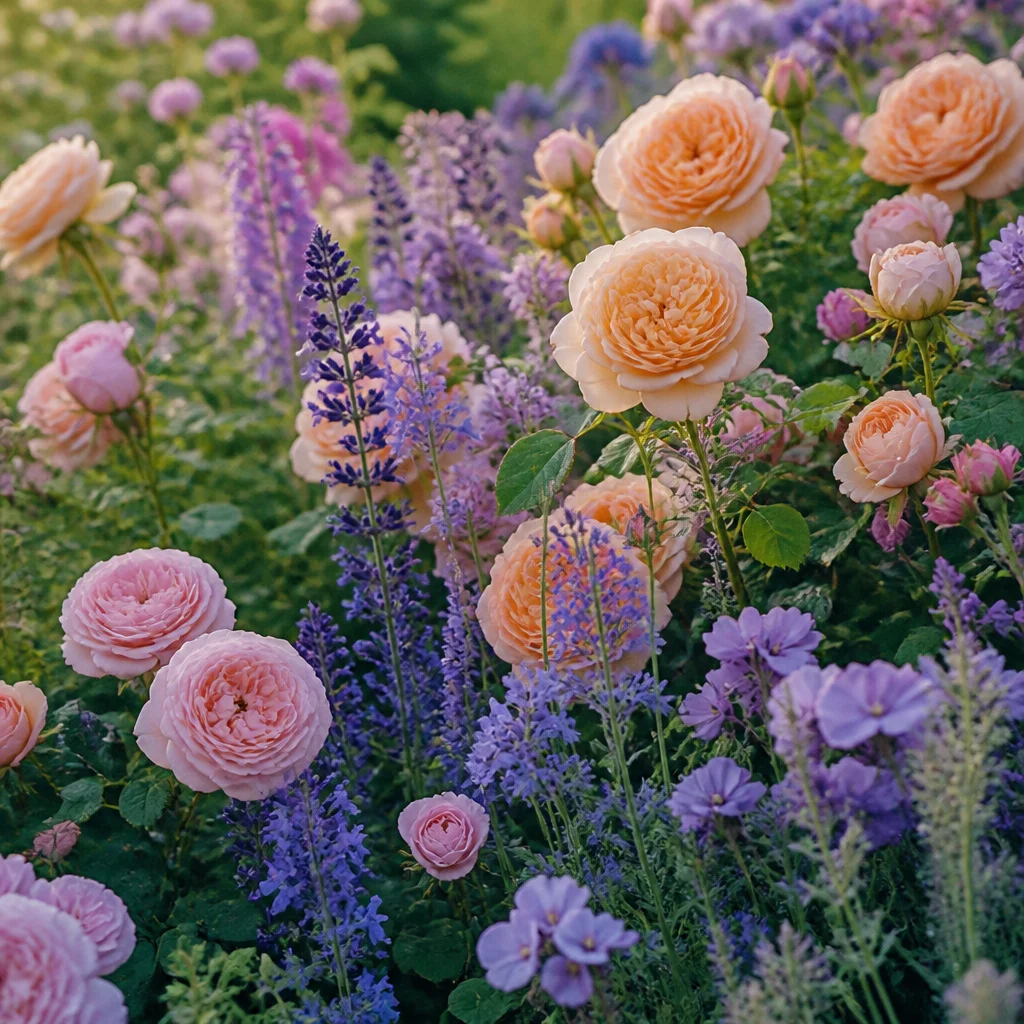
Companion planting works best when the color scheme supports the roses rather than competes with them. Blue and violet companions are famous partners because they cool and frame almost every rose shade, especially pink, cream, white, and apricot. Plants like salvia, nepeta, and lavender create restful contrast and make roses appear richer. For a warmer, more abundant look, use companions in soft yellow, burgundy, dusky peach, or plum. Lady’s mantle can brighten a border filled with blush roses, while bronze fennel or dark heuchera can deepen the mood around crimson flowers. Try to avoid too many loud, unrelated tones in one bed. Limiting the palette gives the border elegance and lets texture and shape do more of the work.
Thread Vertical Accents Through the Border
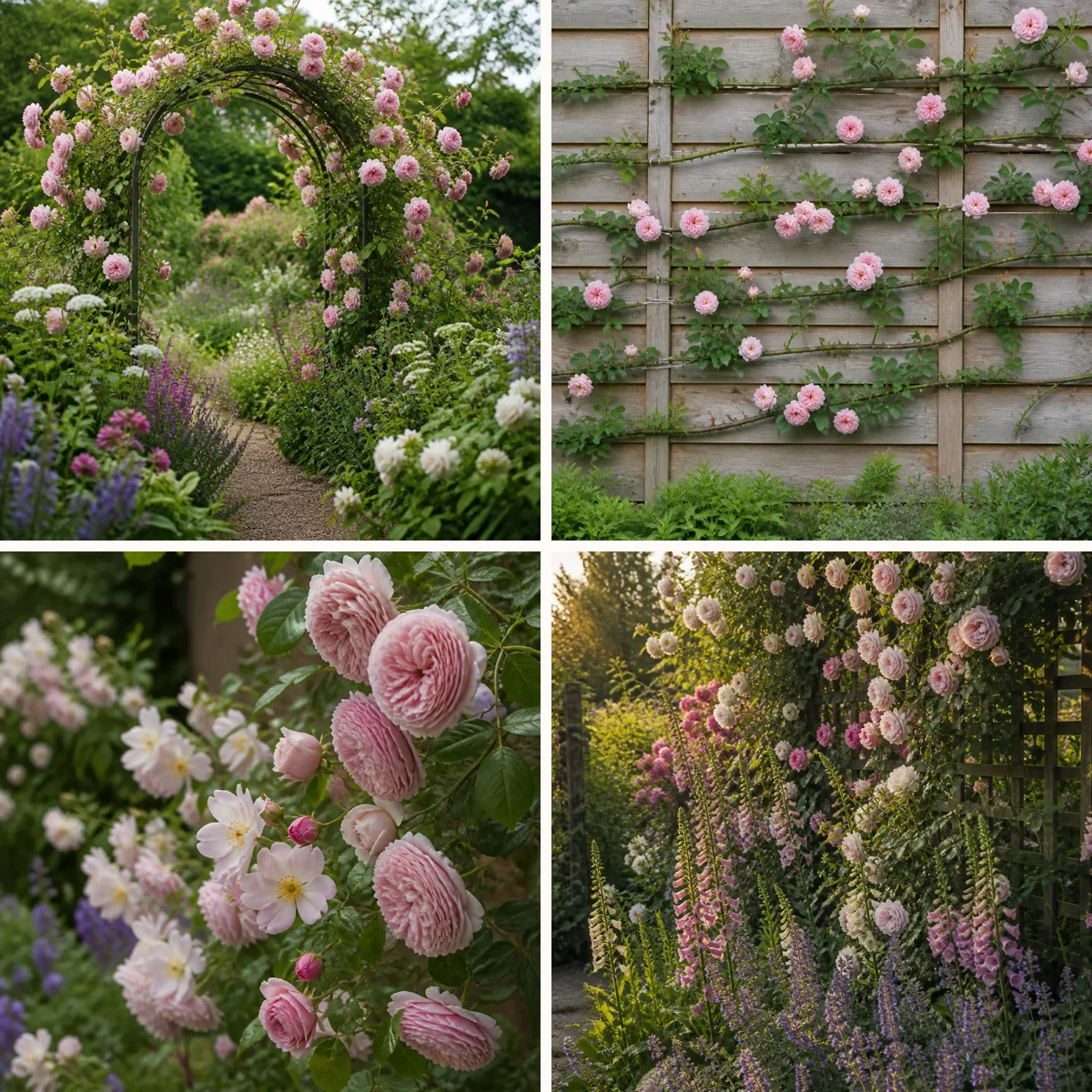
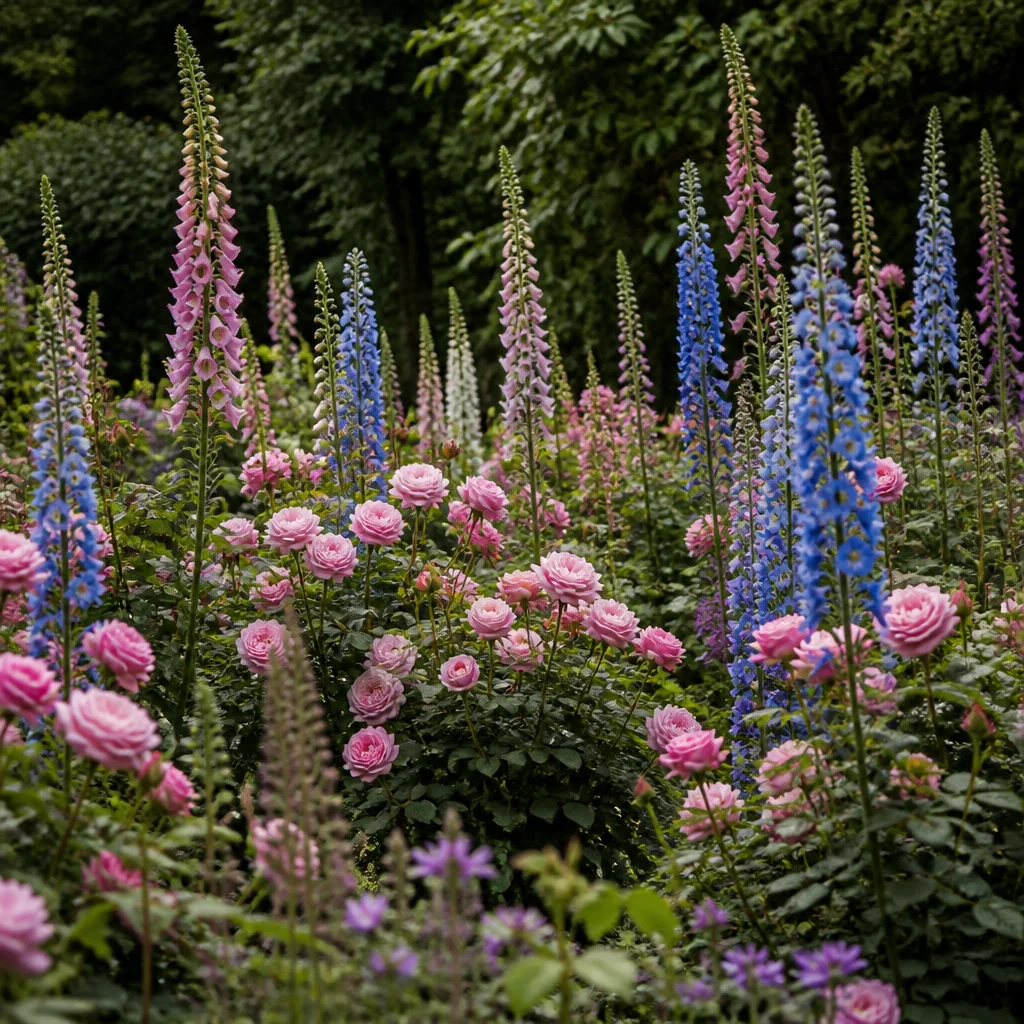
Roses often occupy the middle visual band of a border, so upright companion plants are useful for lifting the eye. Spires of delphinium, foxglove, verbascum, or salvia create punctuation among rounded rose forms and make the planting feel dynamic. These vertical notes are especially effective if your roses are mostly mounded shrubs or floribundas. Use them sparingly and repeat them enough to look deliberate. A few well-placed spires can stop the border from becoming a continuous dome of flowers. They also extend seasonal interest because many vertical companions flower just before or just after a main rose flush. Even after blooming, some leave seedheads or architectural stems that continue to contribute shape.
Leave Enough Space for Air, Light, and Maintenance
A lush border should never become a congested one. Roses need airflow and light, and companion plants should frame them rather than press tightly against every stem. Overcrowding can make pruning awkward, reduce circulation, and leave the planting looking tired by midsummer. Check the mature width of both roses and perennials before planting, not just their nursery-pot size. A practical approach is to place roses first, then set companion plants in drifts with pockets of open soil hidden beneath their future spread. This may look sparse in the first season, but it prevents the border from becoming a tangle later. Leave room to deadhead, feed, mulch, and inspect plants easily. Borders that are comfortable to maintain are more likely to stay beautiful.
Use Repetition to Make Mixed Planting Look Intentional
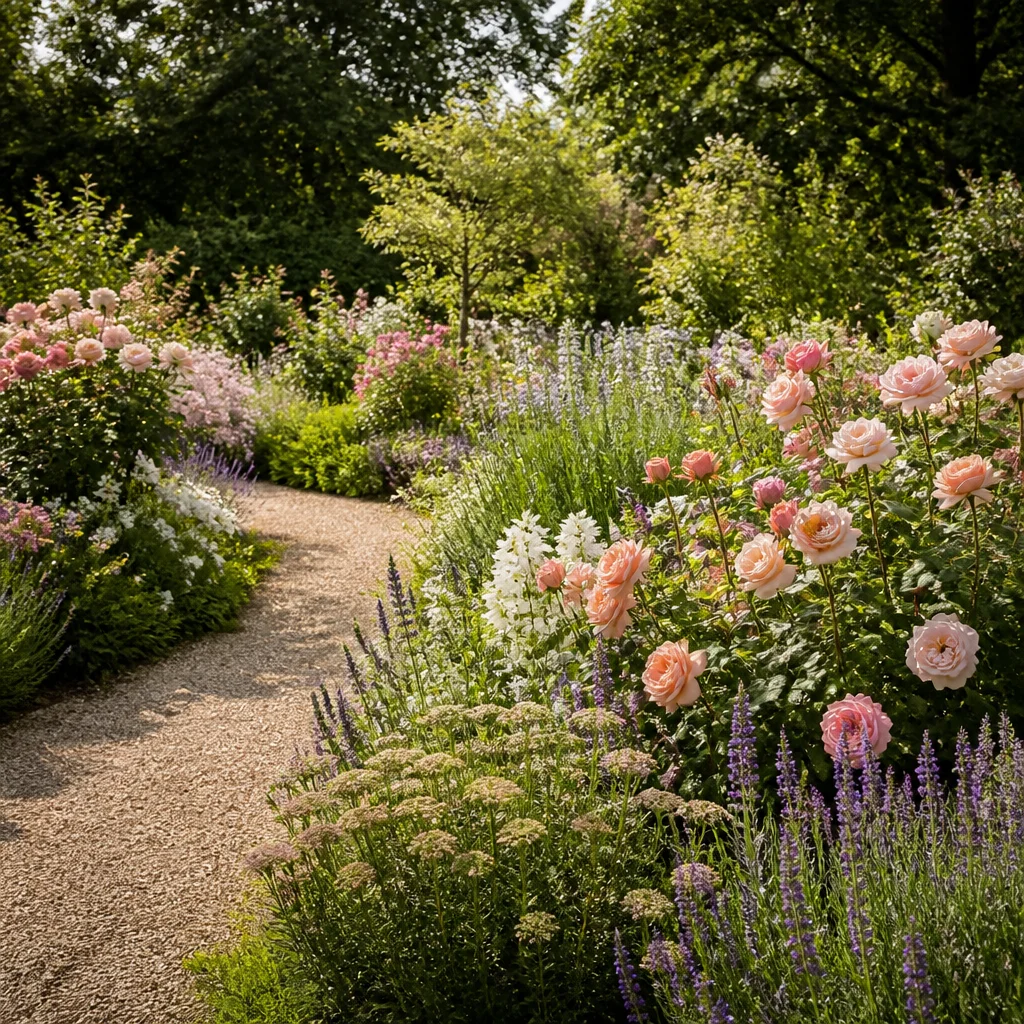
The difference between a romantic border and a messy one is often repetition. Even if you love variety, repeat key companion plants in several places so the eye can travel comfortably through the scheme. One ribbon of catmint, several clumps of salvia, or a recurring haze of lady’s mantle can pull unlike roses into a single composition. Repeat more than color. Repeat shapes too: perhaps rounded rose shrubs, then recurring spires, then recurring mounds at the edge. This visual rhythm creates order without stiffness. If every section of the bed contains completely different plants, the design can feel fragmented. Repetition is what makes a long flowering season look curated instead of accidental.
Plan for Beauty After the Flowers Fade
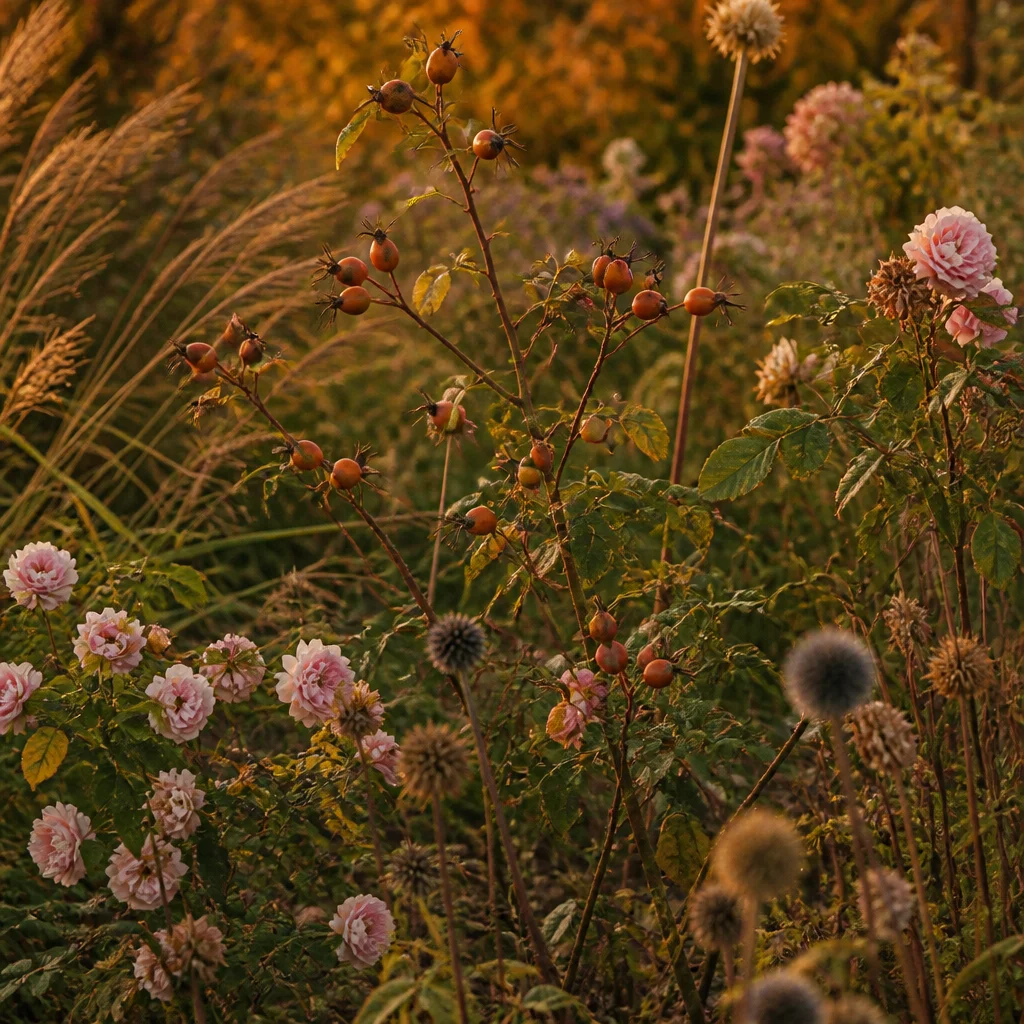
To extend the show, include plants that remain attractive once flowering has passed. Some companions offer handsome seedheads, persistent structure, or foliage that improves with the season. Grasses, astrantias, salvias after trimming, and many hardy geraniums continue to support the border visually after their main display. Rose hips can also become part of the later-season picture if you allow some blooms to set. This is where texture becomes especially important. Airy grass heads, bronzing leaves, and strong mounds can carry a bed gracefully into autumn. Consider whether each plant earns its space outside its peak moment. If a companion only looks good for two weeks and then collapses, place it sparingly or pair it with neighbors that can cover its decline.
Edit and Refresh the Border Each Year
No rose border is perfect in its first season, and that is part of the pleasure. Watch which combinations sing and which compete too strongly. You may find that one companion flowers exactly when a rose rests, or that another grows taller than expected and hides a favorite variety. Small annual adjustments help the border become more balanced and more personal over time. Deadheading, cutting back early perennials for a second flush, staking discreetly, and dividing vigorous clumps are all part of extending the show. Keep notes on bloom times, gaps, and color pairings you enjoy. A rose border evolves as plants mature, and a gardener who edits thoughtfully can turn a good planting into one that feels abundant, seamless, and alive for much longer than the roses alone could manage.
How did this story make you feel?
Choose one reaction. You can change it later.