Roses9 min read
Climbing Roses for Arches, Fences, and Trellises: Varieties by Garden Style
Climbing roses can turn a plain structure into the defining feature of a garden, but the best result comes from matching the rose not only to the support, but also to the mood of the landscape around it. A rose that looks perfectly at home spilling over a weathered arch in a cottage border may feel too loose for a clipped formal design, while a rose chosen for strict symmetry can look stiff in a relaxed planting. Habit, flower form, vigor, and the scale of the support all matter just as much as color. When choosing a climbing rose for an arch, fence, or trellis, it helps to think like a designer first and a collector second. Consider whether you want soft abundance, disciplined structure, or easy informality. Then look at how the rose grows, how often it flowers, how heavy its canes become, and how much training it will need. With the right pairing, the support and the plant work together to create height, rhythm, and a strong focal point.

Start with garden style before you start with color
Many rose choices go wrong because color is chosen first and habit is considered later. In a cottage garden, climbing roses usually look best when they feel generous and lightly untamed, with many blooms and a soft outline that mingles with nearby perennials. In a formal garden, stronger structure matters more: cleaner flower shapes, a predictable outline, and a support placed on axis or repeated to create rhythm. In a relaxed landscape, the aim is often ease rather than perfection, so roses with a natural drape, softer repeat flowering, and a less rigid training pattern tend to sit comfortably. This style-first approach helps narrow the field quickly. For cottage schemes, look for romantic, full-petaled or semi-double flowers in gentle tones and a plant that can be allowed some freedom. For formal settings, select varieties with balanced growth, clear flower color, and enough repeat to keep the structure looking intentional through the season. For looser landscapes, choose a climber that looks good even when every cane is not perfectly tied in place. The right visual character matters as much as bloom count.
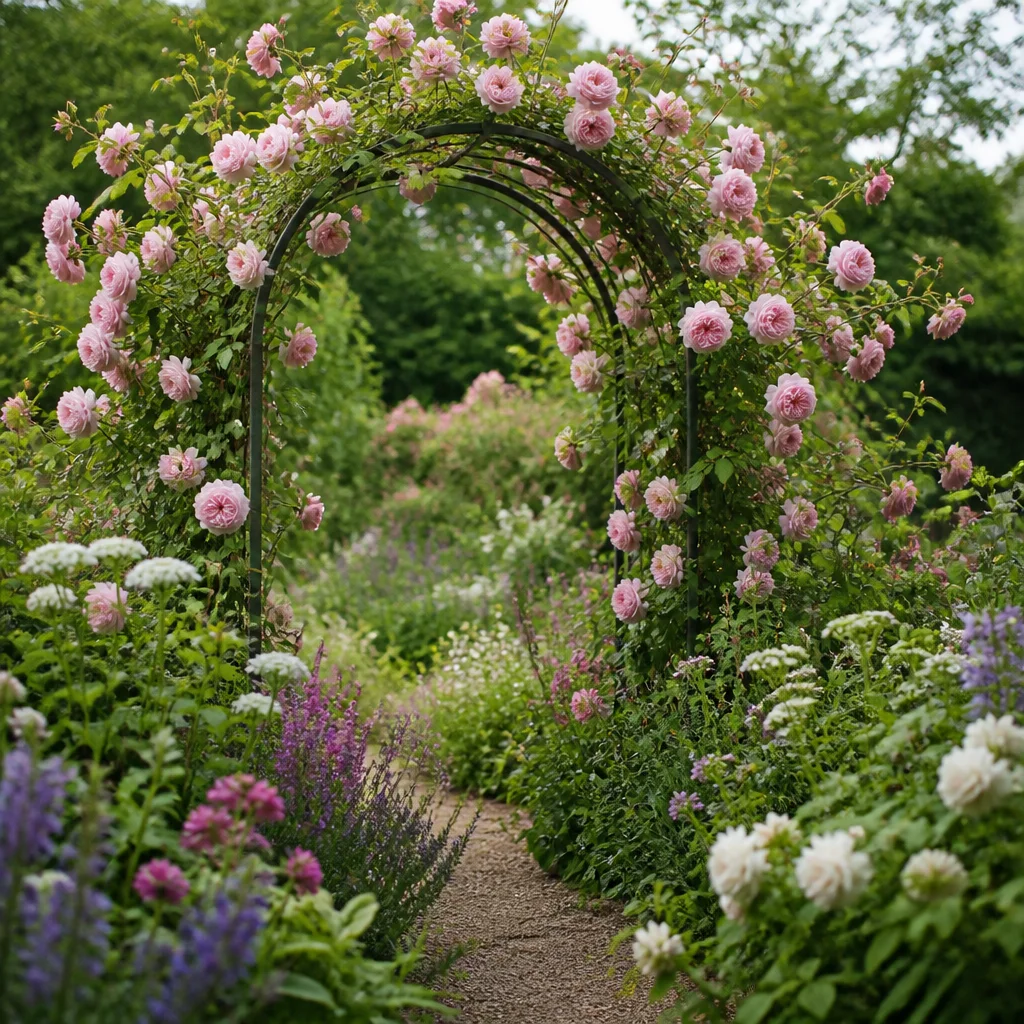
Match the climbing habit to the size and shape of the support
Not every climbing rose climbs in the same way. Some produce long, flexible canes that are easy to fan out on a fence or wrap around an arch, while others are upright and stiff, making them better suited to a flat trellis or pillar-like support. A small arch can be overwhelmed by a very vigorous rose, creating a bulky top and a narrow passage below. On the other hand, a large fence can look sparse for years if planted with a modest climber that never develops enough reach. Before planting, picture the mature framework rather than the first-year plant. Arches need canes long enough to travel up and over, with enough flexibility for training; medium to vigorous climbers are often the easiest fit. Fences benefit from roses that can be spread horizontally to encourage more flowering side shoots. Trellises work best when the rose can be tied in an orderly fan, especially in tighter spaces. If the support is delicate, avoid a rose known for very heavy growth. If the support is substantial, use that strength to carry a variety with presence and reach.
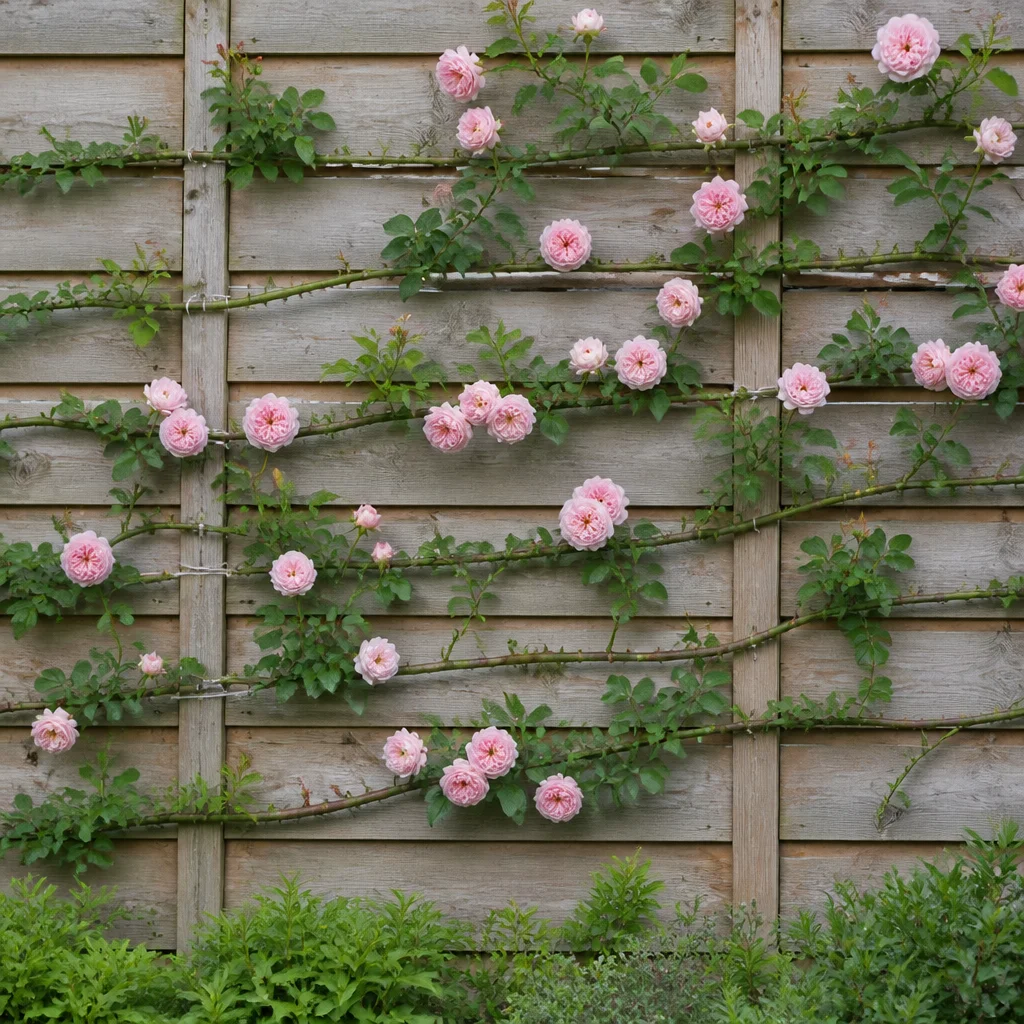
Choose flower form to reinforce the mood of the planting
Flower form has a powerful effect on style. Deeply cupped, rosette-shaped, or loosely quartered blooms often read as romantic and old-fashioned, making them ideal for cottage borders and mixed plantings with foxgloves, catmint, salvia, and nepeta. Semi-double flowers can also work beautifully in informal gardens because they feel airy and less ceremonious. By contrast, a more regular bloom shape and a clearer presentation of each flower can feel sharper and more deliberate, which suits formal layouts. This does not mean formal gardens need stiff or plain roses. Rather, they benefit from flower forms that remain legible at a distance and do not dissolve into visual clutter against clipped hedges or geometric hardscaping. In relaxed landscapes, flower form can be used to soften bolder shrubs, timber fencing, or gravel areas; simpler blooms often keep the effect light. If you want the rose to be the star, choose a fuller bloom with a distinctive silhouette. If the rose is part of a broader tapestry, a lighter flower form may integrate more gracefully.
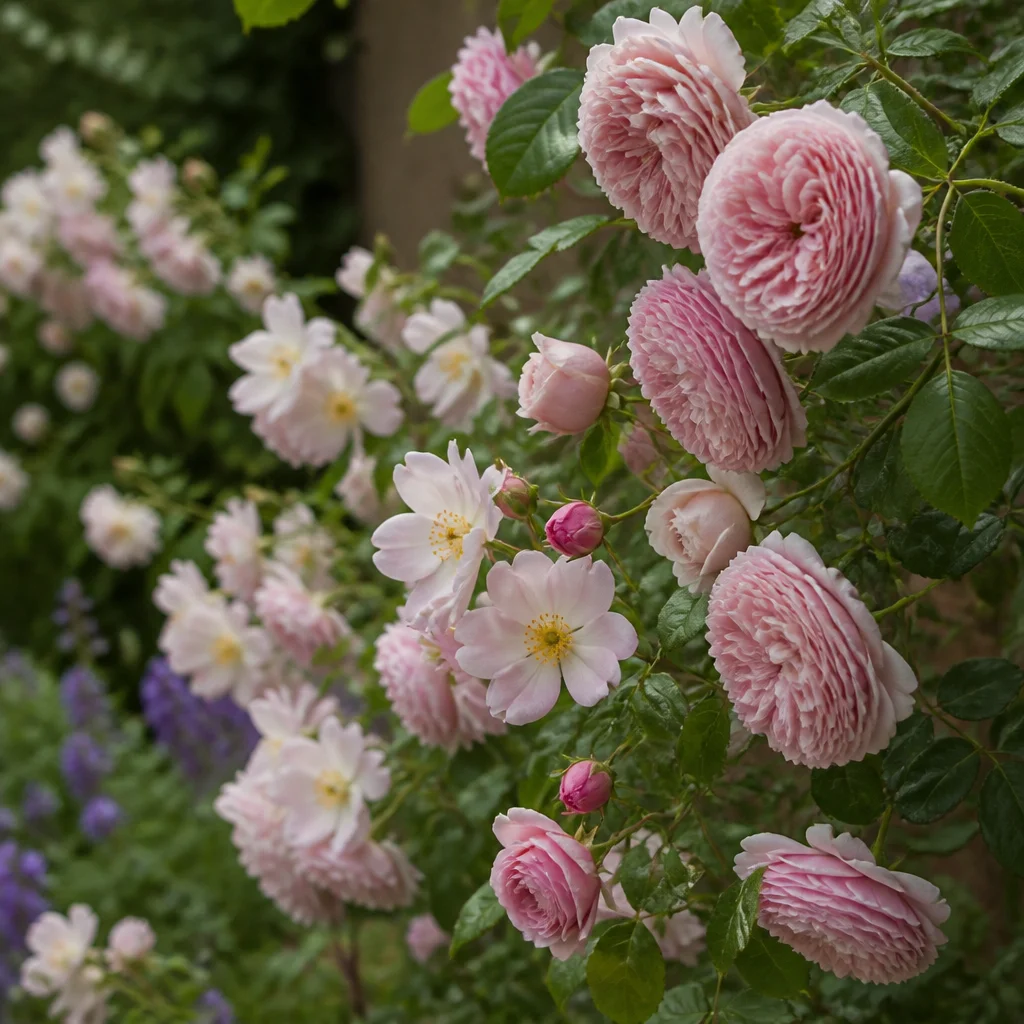
Use cottage-style climbers to create softness and abundance
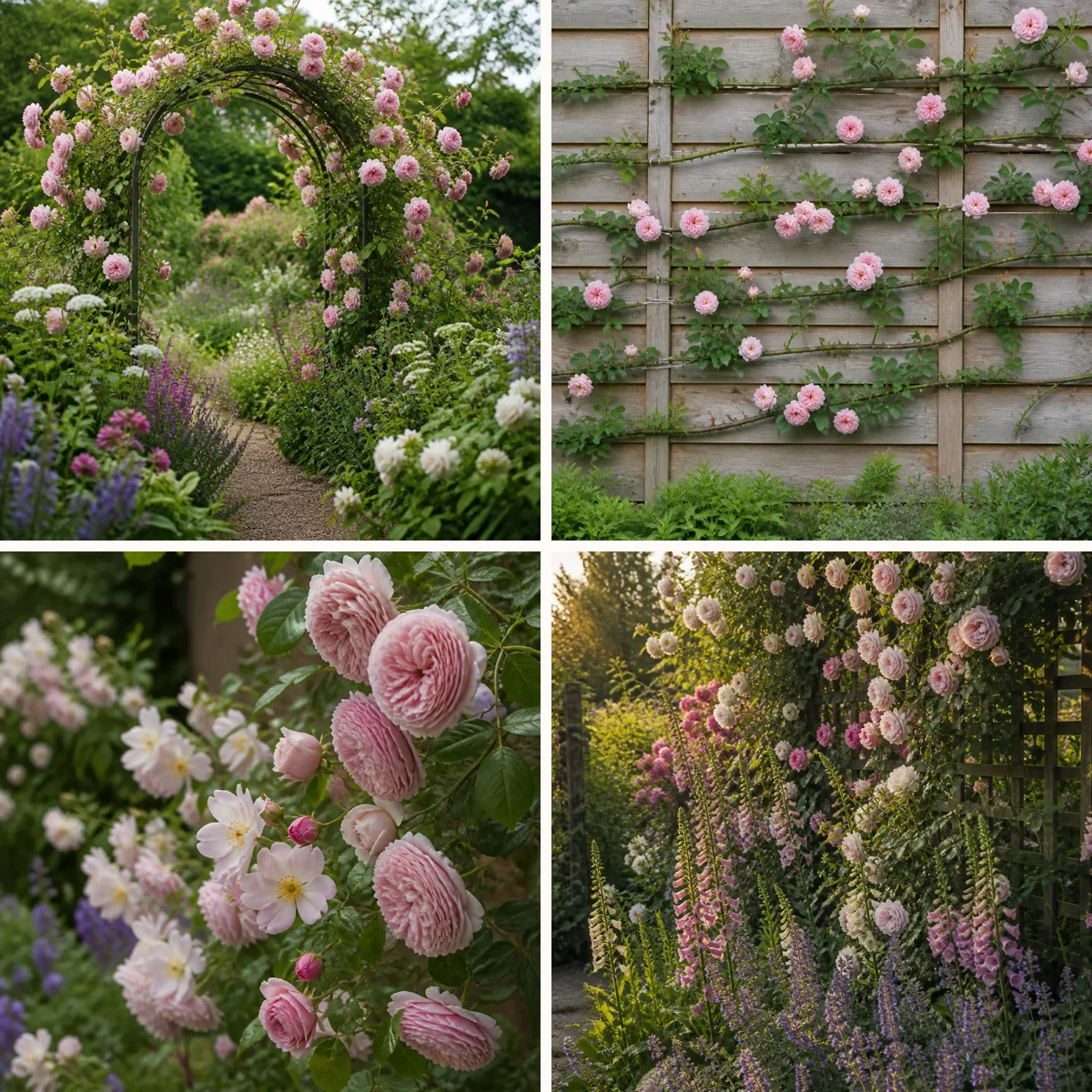
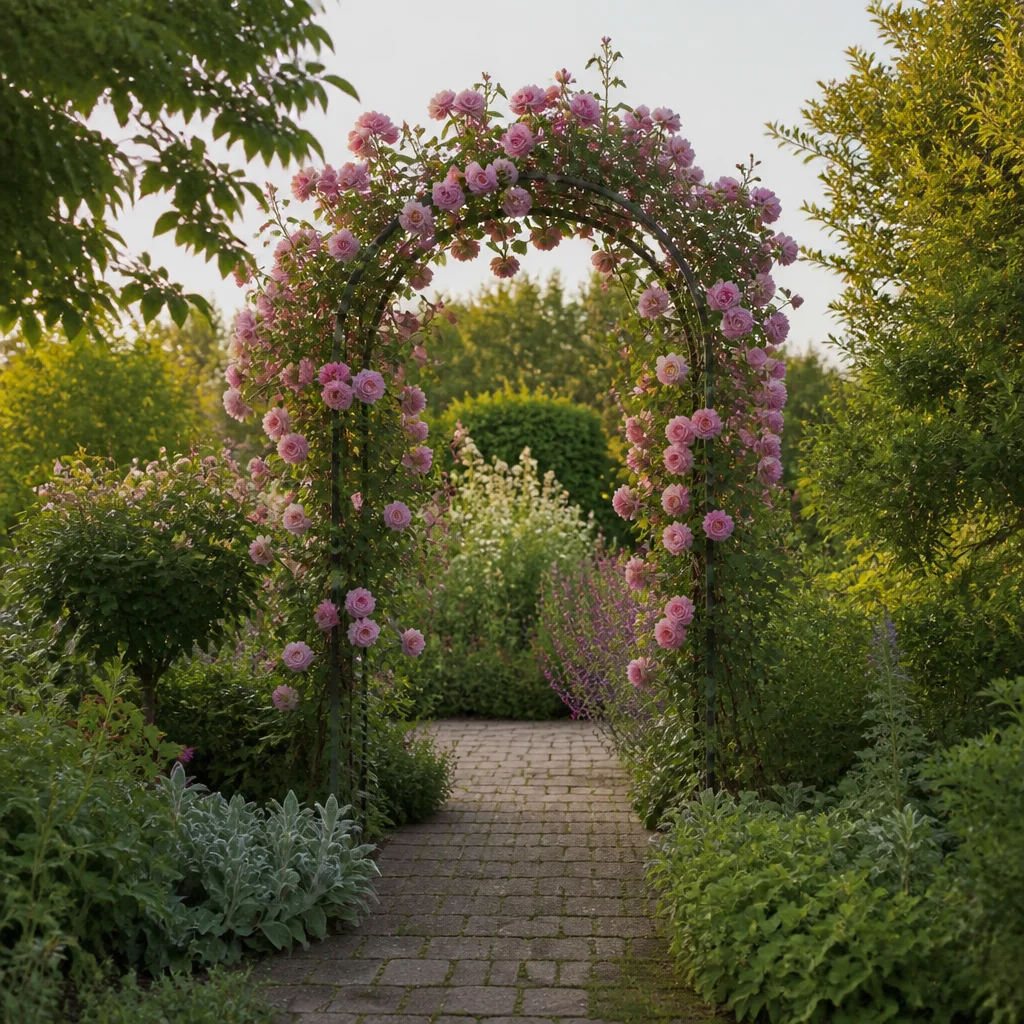
For a cottage effect, the most successful climbing roses usually have a generous flowering habit, a soft color range, and canes that can be allowed to wander slightly without looking messy. Think blush pinks, creamy whites, warm apricots, and gentle mauves rather than hard, high-contrast tones. A rose trained over a simple metal arch or rustic wooden trellis can become more convincing when underplanted with billowing companions that hide the bare lower stems and extend the flowering season. Placement is especially important in this style. Set an arch at the entrance to a kitchen garden, between two mixed borders, or where a path narrows to create a sense of discovery. Along a fence, let the rose share space with clematis or tall herbaceous plants so the transition feels layered rather than flat. On a trellis against a wall, soften the edges with surrounding shrubs or mounded perennials. The visual goal is not strict control but a feeling that the rose belongs to an evolving, flower-rich scene.
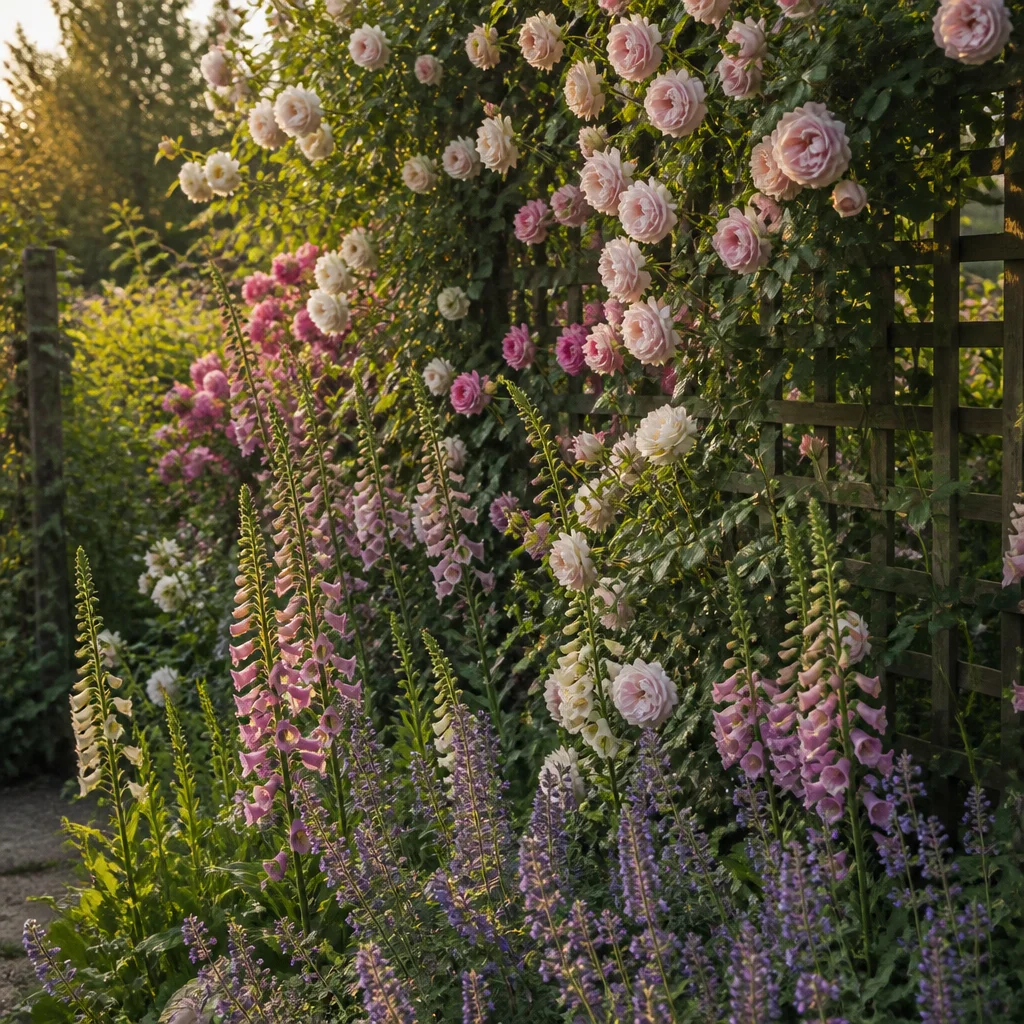
Use formal-style climbers to emphasize symmetry and structure
In formal gardens, a climbing rose often works best as an architectural element first and a flower display second. This is where repeated trellises, matched arches, or fence panels divided into equal bays can make roses look composed and intentional. Choose varieties with a disciplined habit or at least canes that respond well to regular training. Clear whites, rich crimsons, soft shell pinks, and even single-color plantings can be particularly effective when repeated rather than mixed too freely. Strong visual impact comes from restraint. One rose variety repeated on several supports often feels more elegant than a collection of many different shades and bloom forms. Keep the outline crisp by tying in main canes early and spacing them evenly, then remove weak or congested growth so the framework remains readable. On a formal trellis near a terrace or central axis, select a rose with reliable repeat flowering so the structure never feels abandoned after the first flush. A well-trained climber can function almost like a flowering wall.
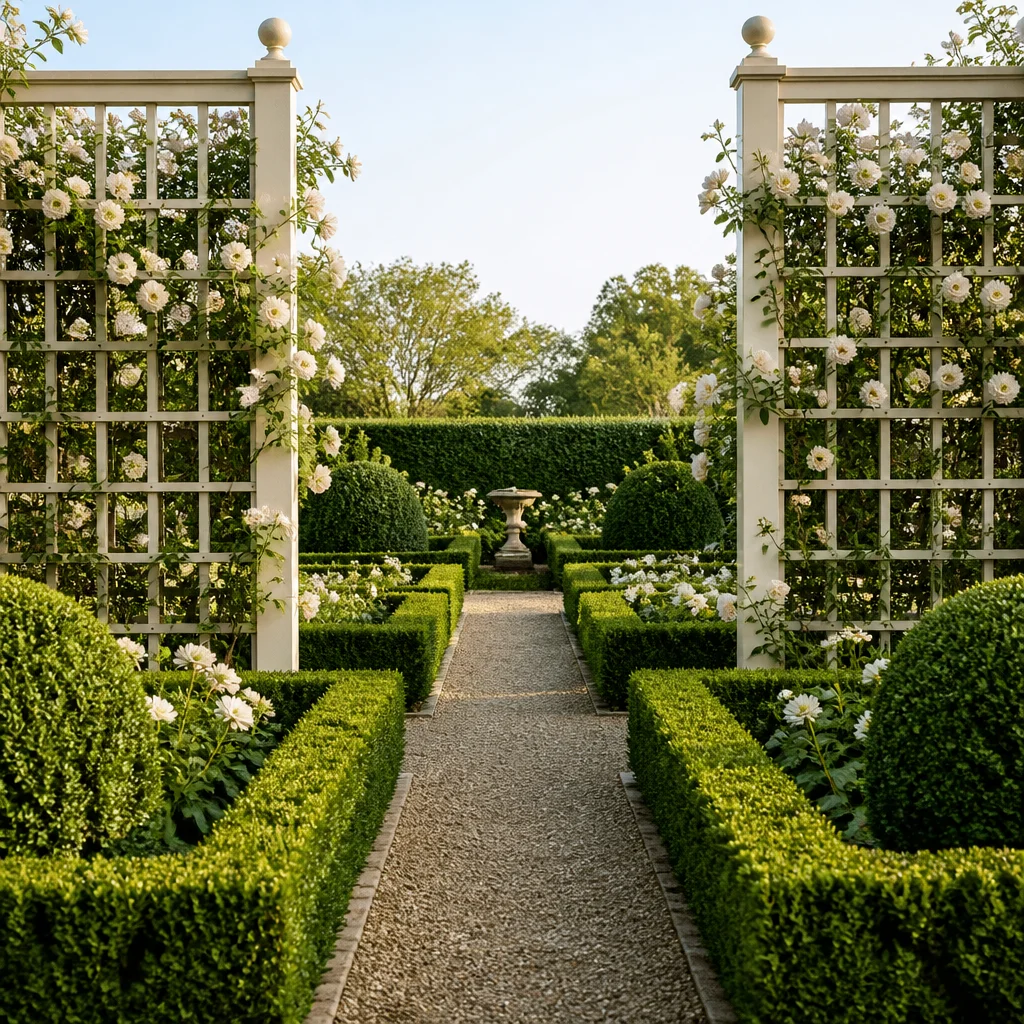
Use relaxed landscape climbers for natural flow and easy transitions
A relaxed landscape sits between cultivated garden and naturalistic planting, so the right climbing rose should bridge that gap rather than dominate it. Roses with an open, graceful habit and a softer repeat of bloom often work better here than highly formal varieties or very heavy, rigid climbers. Colors can be more earthy or sun-faded in character: dusty pink, warm white, peach, soft yellow, or red used sparingly. The aim is a rose that settles into the scene and draws the eye without forcing attention. These roses are especially effective on boundary fences, post-and-wire supports, and simple timber trellises where the planting can feather outward into grasses, shrubs, or loosely arranged perennials. Instead of covering every inch of the support, allow some breathing room so the framework and surrounding planting are both visible. This style also benefits from asymmetry. A rose climbing one side of a gate, or a fence section interrupted by shrubs and repeated rose groupings, can feel more natural and spacious than a perfectly filled panel.
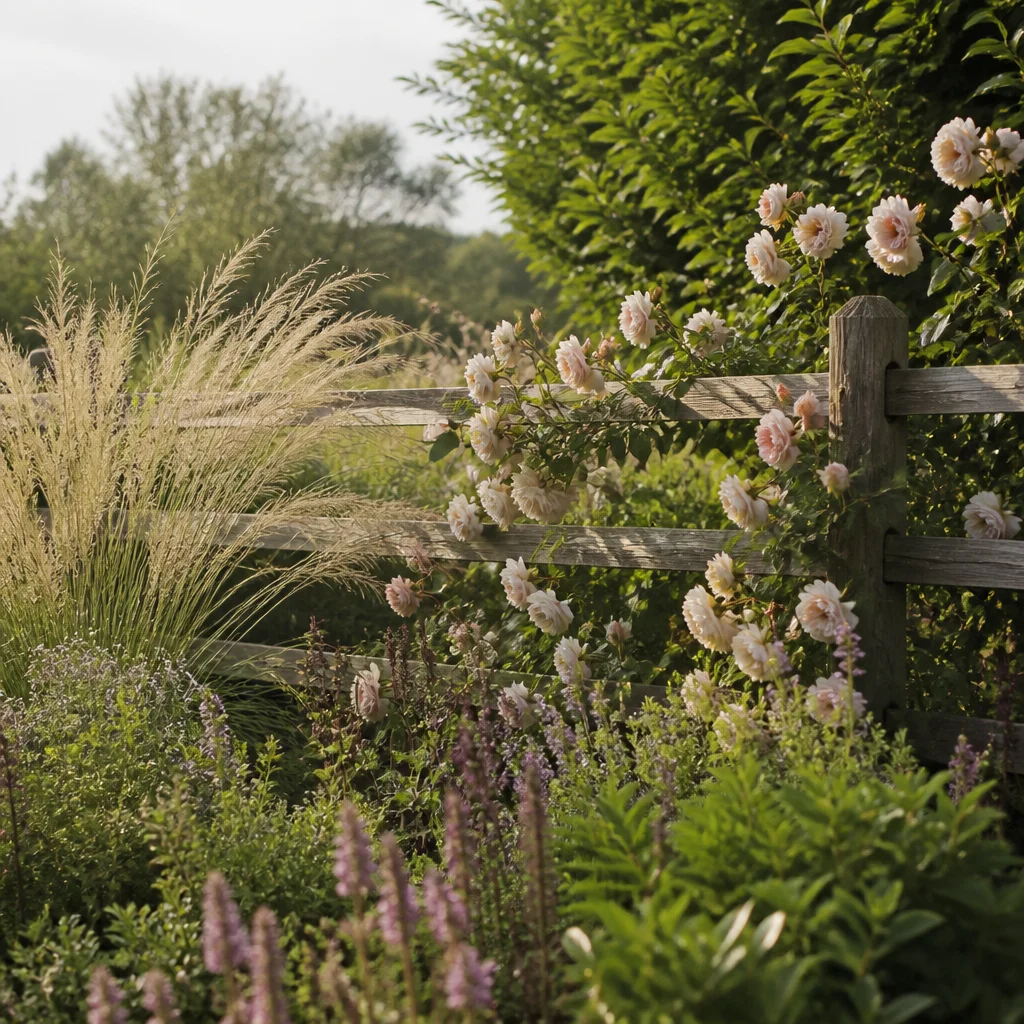
Train canes horizontally for more flowers and a fuller display
One of the most useful practical tricks with climbing roses is to guide the main canes as close to horizontal as the support allows. When upright canes are bent and tied at a lower angle, they usually produce more flowering side shoots along their length. This leads to better coverage and a more even spread of blooms, especially on fences and trellises where a rose can otherwise end up flowering mostly at the top. It also helps the plant look integrated with the support instead of simply sitting in front of it. On arches, spiral or arc the canes gently rather than sending them straight upward. On fences, fan them out left and right to cover the panel in layers. On trellises, build a simple framework first, using the strongest canes as the backbone. Tie with enough space to prevent rubbing as stems thicken. This method is useful in every style, but it is especially important where visual impact matters from a distance. Better cane placement usually gives more flowers than extra feeding alone.
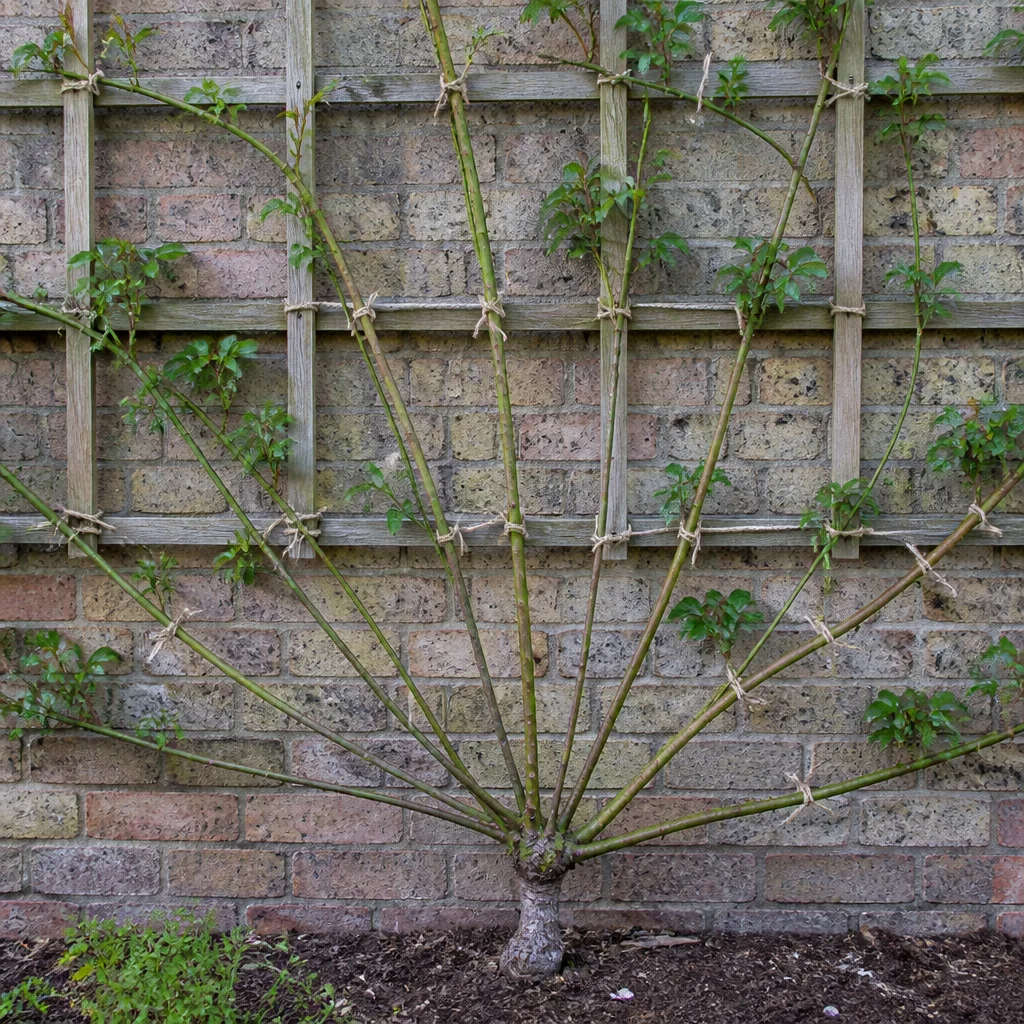
Hide the awkward base and stage the rose at eye level
Even beautiful climbing roses often have a less attractive lower section, especially as the plant matures and the upper growth becomes the main show. Good placement solves this. Use low shrubs, billowing perennials, or neat edging plants to soften the base without smothering the crown. In cottage gardens, this might mean catmint, geraniums, lady's mantle, or campanulas. In formal settings, clipped germander, lavender, or low box alternatives can provide a clean frame. In relaxed landscapes, airy grasses or informal mounds of perennial foliage can make the transition feel easy. Think about viewing height as well. The finest blooms are wasted if they are all above eye level on a very tall support. Where possible, place a rose where part of its flowering framework can be appreciated up close: beside a path, near a seating area, or along a boundary seen from indoors. An arch is most effective when blooms can be seen both overhead and from the side. A trellis beside a doorway or bench creates a more intimate experience than the same rose placed far away on an unused boundary.
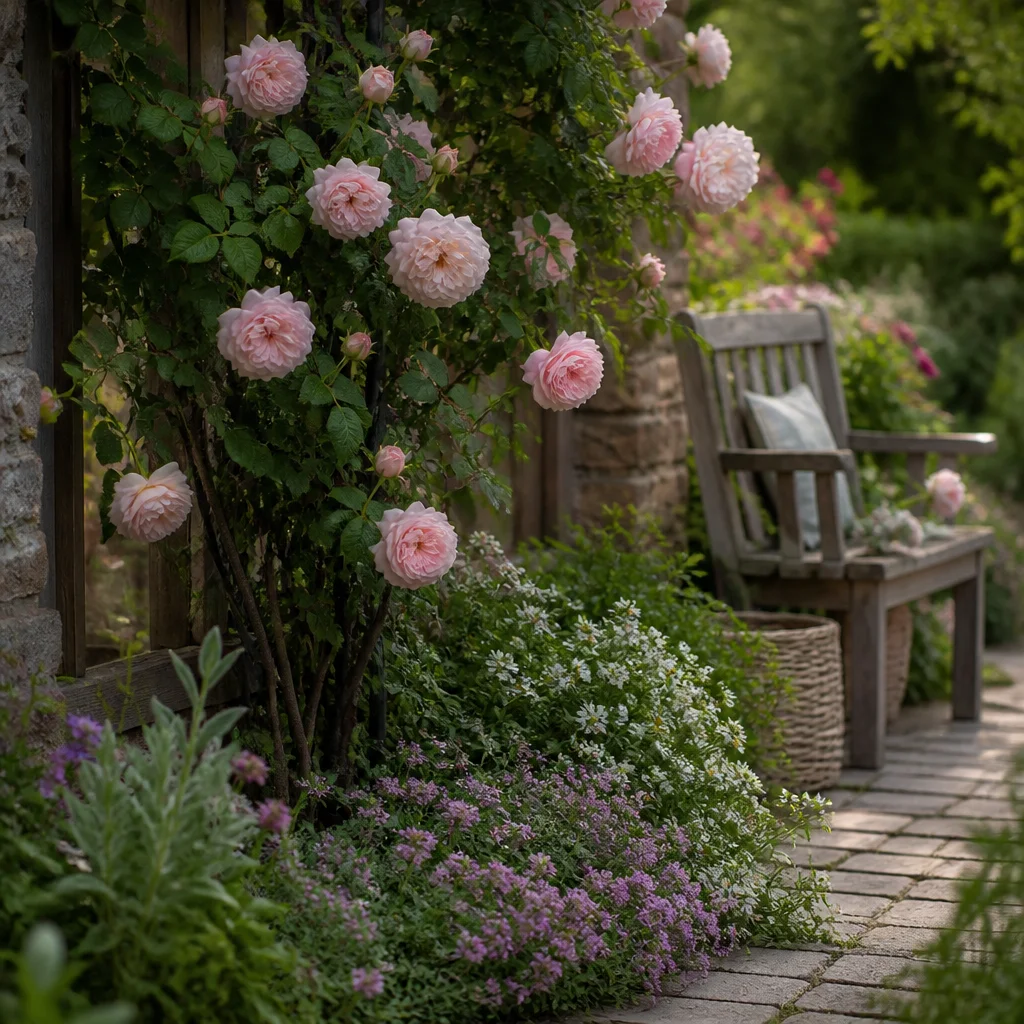
Plan for long-term balance, not just the first season
The most striking climbing rose displays are rarely the result of a quick planting decision. They come from matching vigor to space, allowing time for the framework to develop, and editing the growth each year so the support never disappears under a tangle. When choosing between varieties, think about how much maintenance suits your style. A formal rose feature usually needs the most regular tying, pruning, and shaping. A cottage planting can absorb some looseness, but still benefits from annual structure work. A relaxed landscape may require less exactness, yet it still needs occasional thinning to keep the rose healthy and visually light. A final useful rule is to let one strong idea lead. That might be a pair of pale climbers framing a gate in a formal design, one abundant pink rose tumbling over an arch in a cottage garden, or a soft apricot climber lifting a simple fence in a relaxed setting. When the variety, support, and garden style all agree, the effect is far more powerful than any single feature on its own. Climbing roses are at their best when they feel inevitable in the place where they grow.
How did this story make you feel?
Choose one reaction. You can change it later.