Flowering Bulbs8 min read
Flowering Bulbs for Small Gardens: Big Seasonal Color in Compact Spaces
Small gardens reward choices that do more with less, and flowering bulbs are among the best tools for creating that sense of abundance without crowding precious space. Tucked into pots, threaded through slim borders, or gathered in bold pockets near a doorway, bulbs can turn a compact plot into a garden with clear seasonal rhythm and memorable bursts of color. The secret is not simply to plant more bulbs, but to match bulb size, flower character, and bloom timing to the scale of the space. In a courtyard or narrow border, every clump matters. Thoughtful combinations can make a tiny area feel layered, lively, and surprisingly generous from late winter into early summer. The ideas below focus on practical bulb choices and layout strategies that help small gardens look fuller, longer, and more intentional.

Choose Bulbs That Fit the Scale of the Space
In small gardens, proportion matters as much as color. Large, heavy flowers can overwhelm a narrow path or tiny courtyard, while very delicate blooms may disappear unless they are planted in generous numbers. Start by matching the bulb to the viewing distance. Near a front step or beside seating, compact bulbs with refined detail such as crocus, species tulips, dwarf narcissus, grape hyacinths, and miniature iris can be appreciated up close. In slightly larger pockets, hyacinths, mid-height tulips, and small-headed daffodils provide more visual weight without making the space feel crowded. A useful rule is to repeat a limited palette of forms instead of collecting one of everything. In a tight area, three drifts of the same bulb often look richer than many single varieties scattered thinly. Short stems also cope better with reflected heat and wind in enclosed urban spaces. When in doubt, choose bulbs that top out at a moderate height and have clean, distinct flower shapes, because they read clearly in confined settings and leave room for surrounding foliage or edging plants.
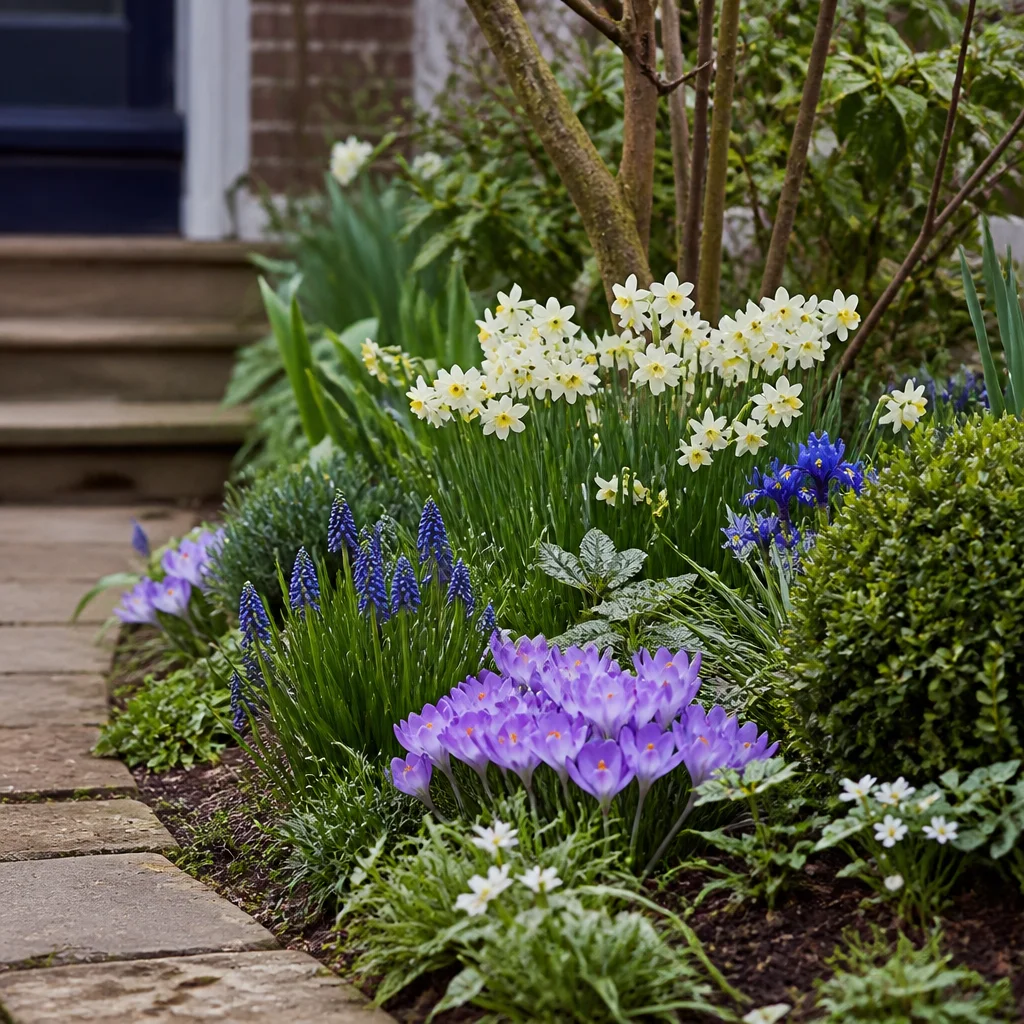
Build the Season in Layers, Not in One Peak
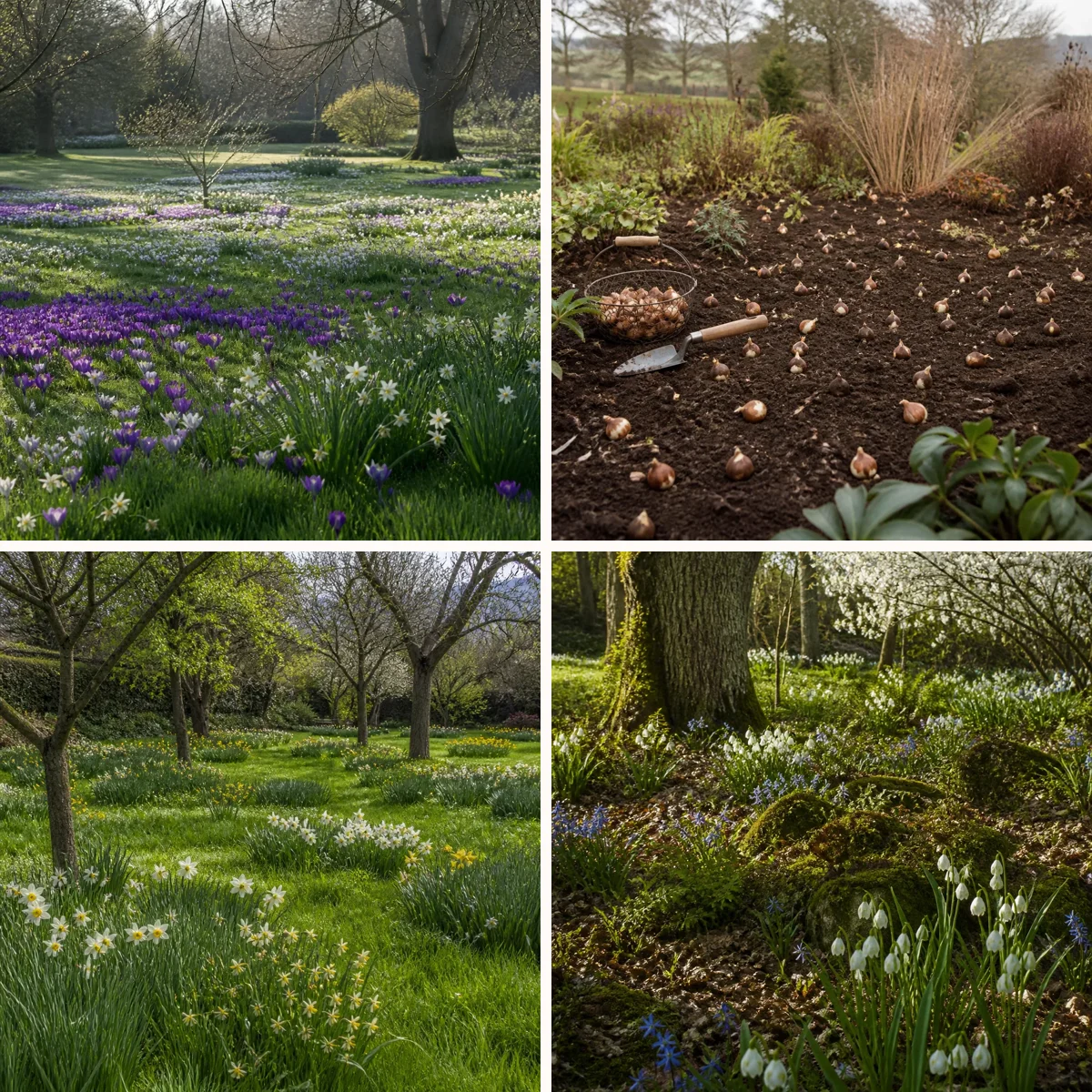
The easiest way to make a small garden feel generous is to stretch flowering across months instead of aiming for one dramatic week. Plan in sequence: earliest bulbs for the first lift of color, mid-season bulbs for the main display, and later bulbs to carry the garden onward. A compact planting might begin with snowdrops, crocus, and dwarf iris, move into narcissus and hyacinths, then finish with species tulips, alliums, and late tulips depending on local conditions. Think of each container or border section as a relay rather than a single event. This approach is especially effective where space is limited, because the same footprint keeps changing. Even two or three carefully timed stages can transform a courtyard. To keep the transitions smooth, repeat one color family through the season, such as cream to yellow to apricot, or violet to plum to deep magenta. The garden will feel coherent while still changing week by week.
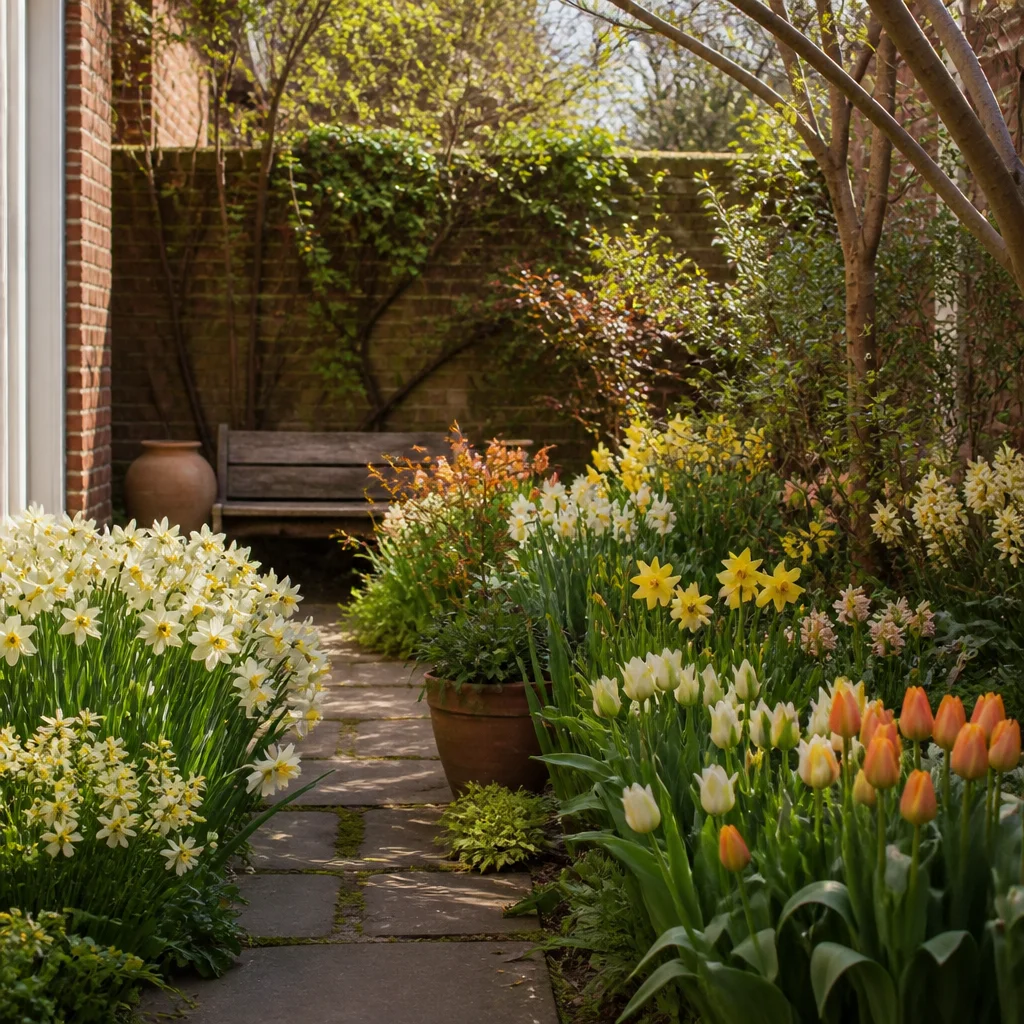
Use Containers as Moveable Color Stations
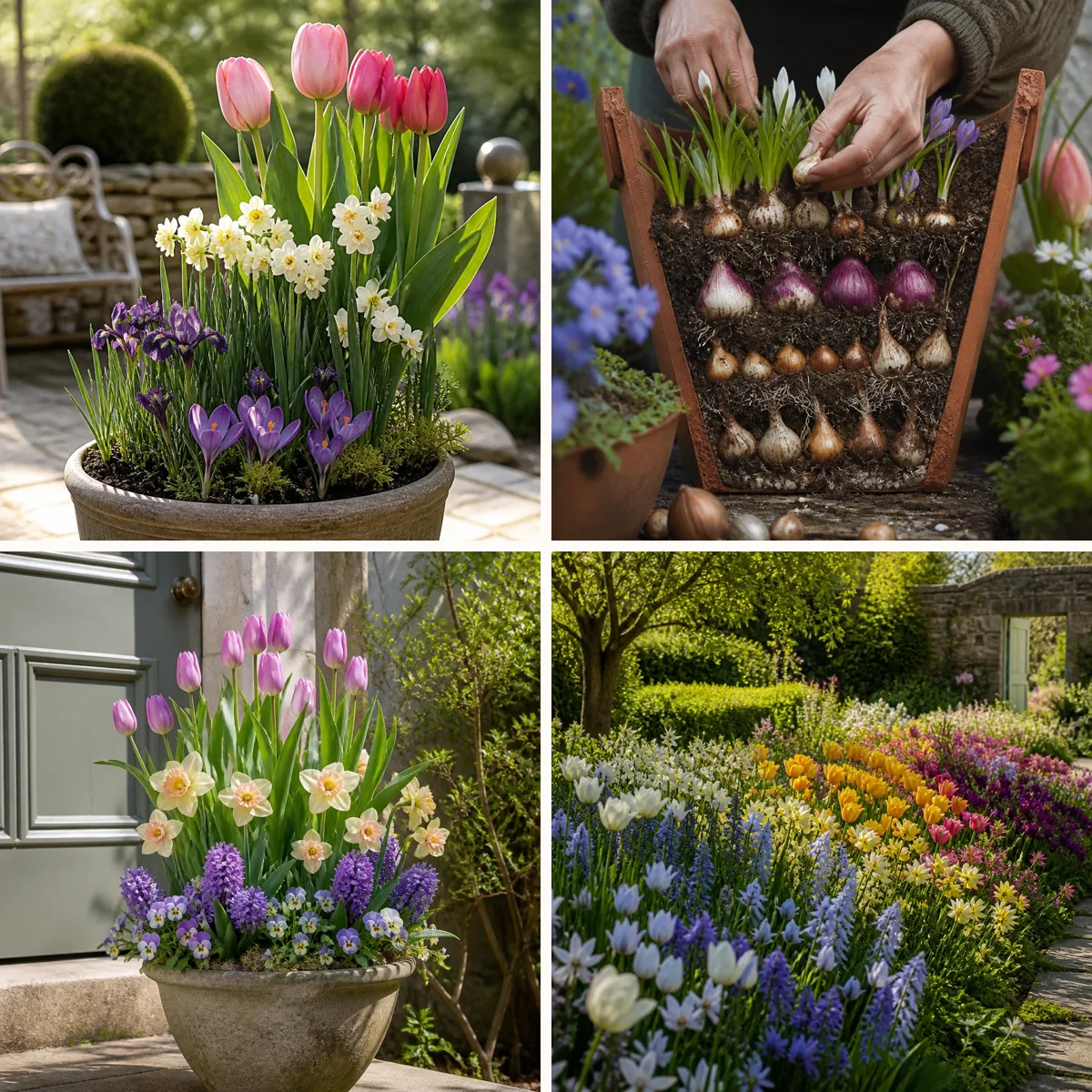
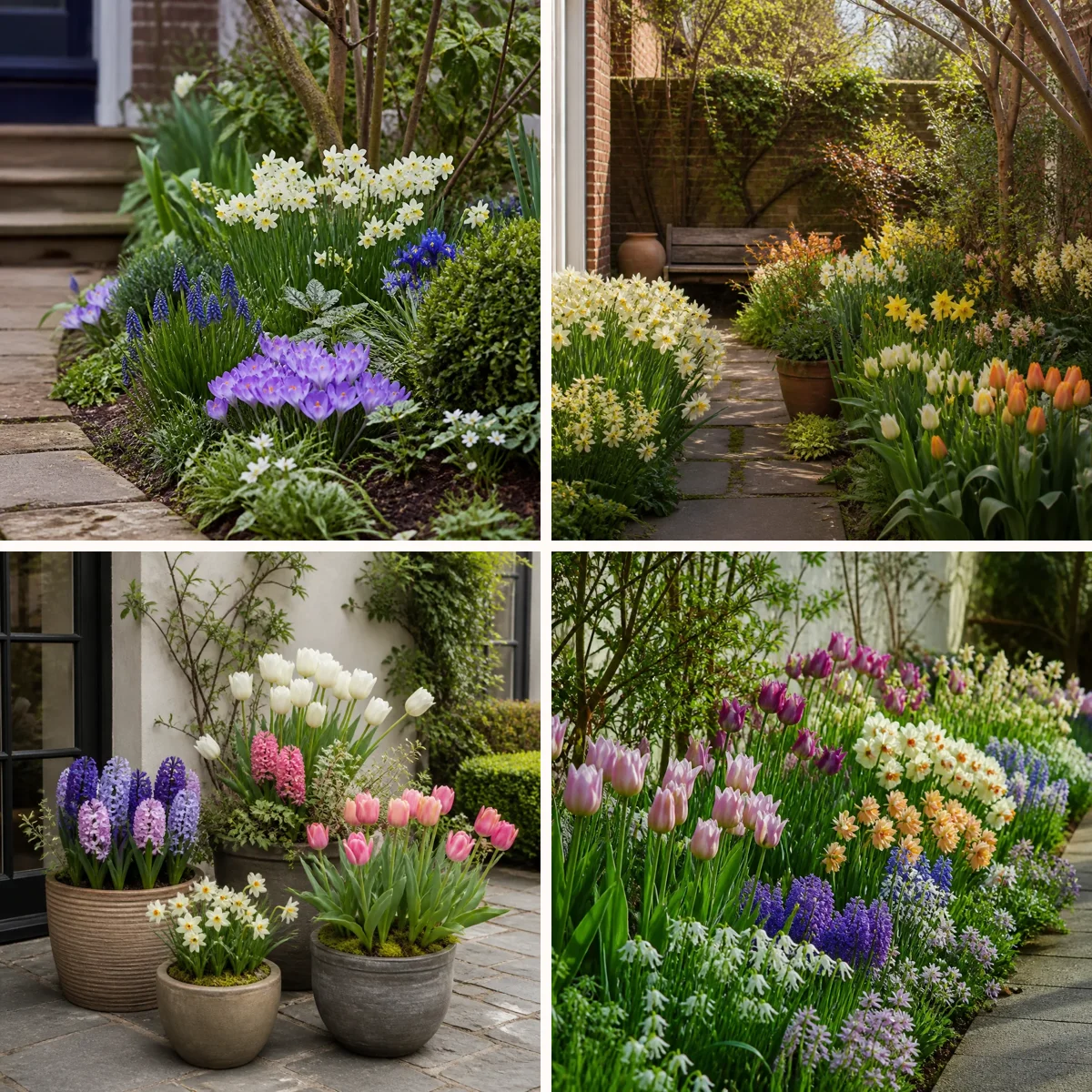
Containers are often the most powerful bulb feature in small spaces because they lift flowers to eye level and put color exactly where it will be noticed. A pair of pots by a doorway, a trough along a wall, or a cluster of different-sized containers on paving can provide a complete bulb season without using any border at all. Wide, deep containers are especially useful because they hold enough bulbs to create density, and they dry out more slowly than shallow pots. For the strongest effect, plant each container with a clear purpose. One pot might hold a single variety for a calm, modern statement, while another can mix bulbs with one dominant color and one accent. Repeating the same container shape throughout a courtyard also helps tie separate flowering moments together. If you have the room, keep a few planted pots in reserve and bring them forward as they come into bloom. This simple rotation keeps compact outdoor areas looking fresh and full without overfilling them.
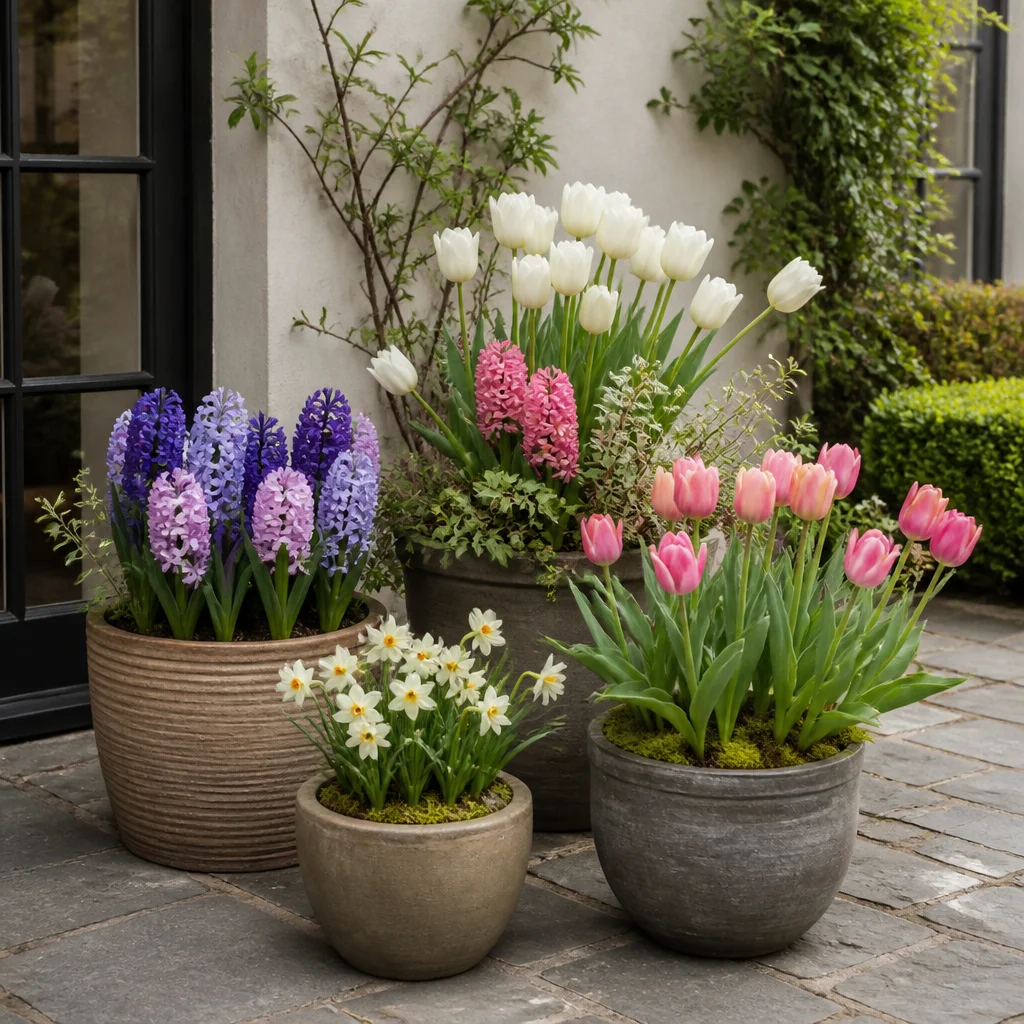
Plant Densely for Impact, but Organize the Density
Sparse planting is the main reason bulbs can look underwhelming in small gardens. Because the planting area is limited, bulbs need to be grouped with confidence. Instead of placing them in straight rows or isolated singles, plant in rounded drifts, close-knit clusters, or broad patches that read as one strong unit. This creates the fullness people often associate with larger gardens, but on a smaller footprint. The key is controlled density. Keep the spacing close enough for a lush show, but not so random that the display becomes visually noisy. In narrow borders, place taller bulbs toward the back or center line and lower bulbs along the edge so each layer stays visible. In containers, avoid mixing too many bulb heights unless you are deliberately layering for succession. A compact garden benefits from crisp design moves, and a bold block of 15 or 25 bulbs usually has more presence than a complicated mixture of many varieties planted thinly.
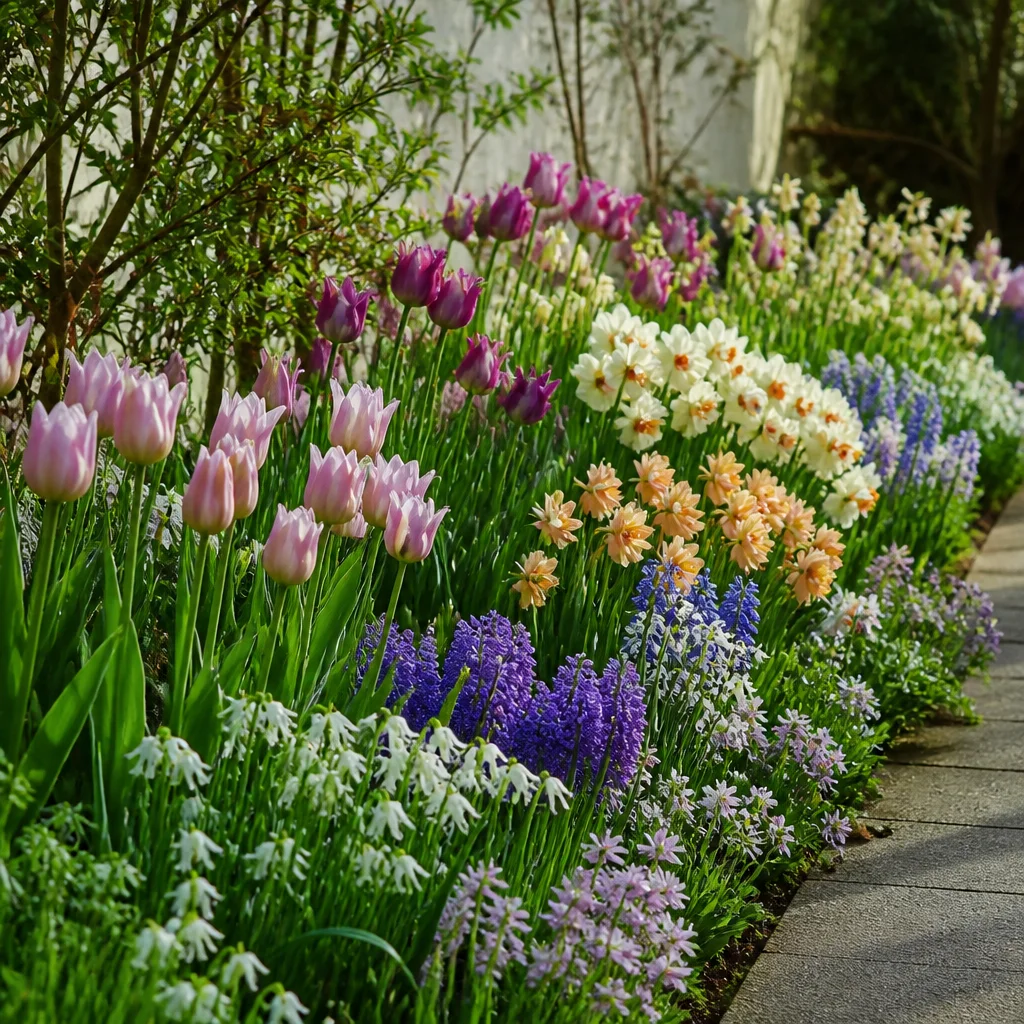
Rely on Narrow-Space Champions for Borders and Side Yards
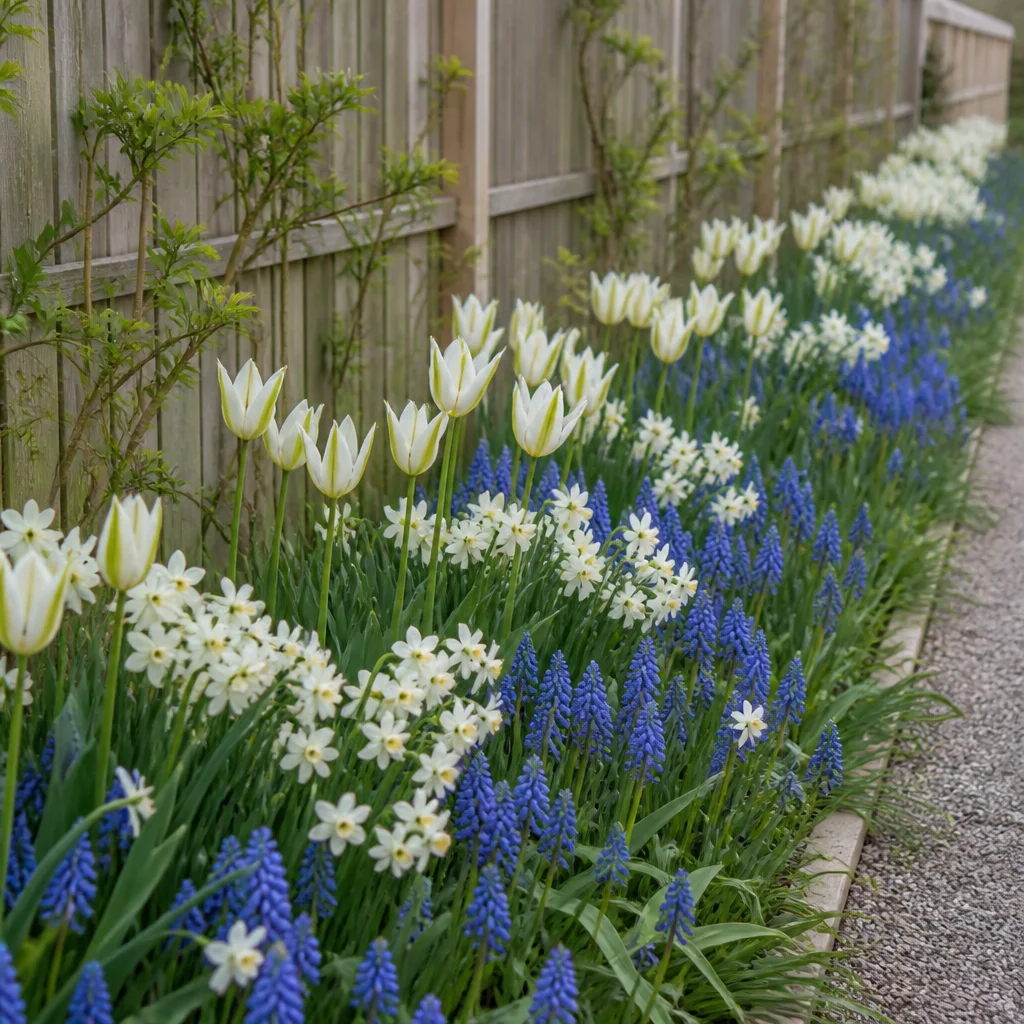
Some bulbs are especially useful where beds are long and slim or where light is limited by fences and walls. Dwarf narcissus, species tulips, crocus, muscari, anemones, and alliums with airy flower heads are all good candidates because they offer clear color without bulky foliage masses. In a side yard or narrow border, upright flowers and grassy leaves help maintain a sense of openness, while broad floppy foliage can make the space feel congested. One effective layout is to plant in repeated ribbons rather than isolated pockets. A ribbon of blue muscari weaving past clumps of white dwarf narcissus can visually lengthen a narrow bed. Another useful trick is to place brighter or paler blooms where the light is lowest, since they lift shaded corners and stand out against dark fencing or evergreen structure. By treating a narrow border as a deliberate linear composition, you can make even a passageway feel planted with purpose.
Pair Bulbs with Structural Plants That Hide the Fade
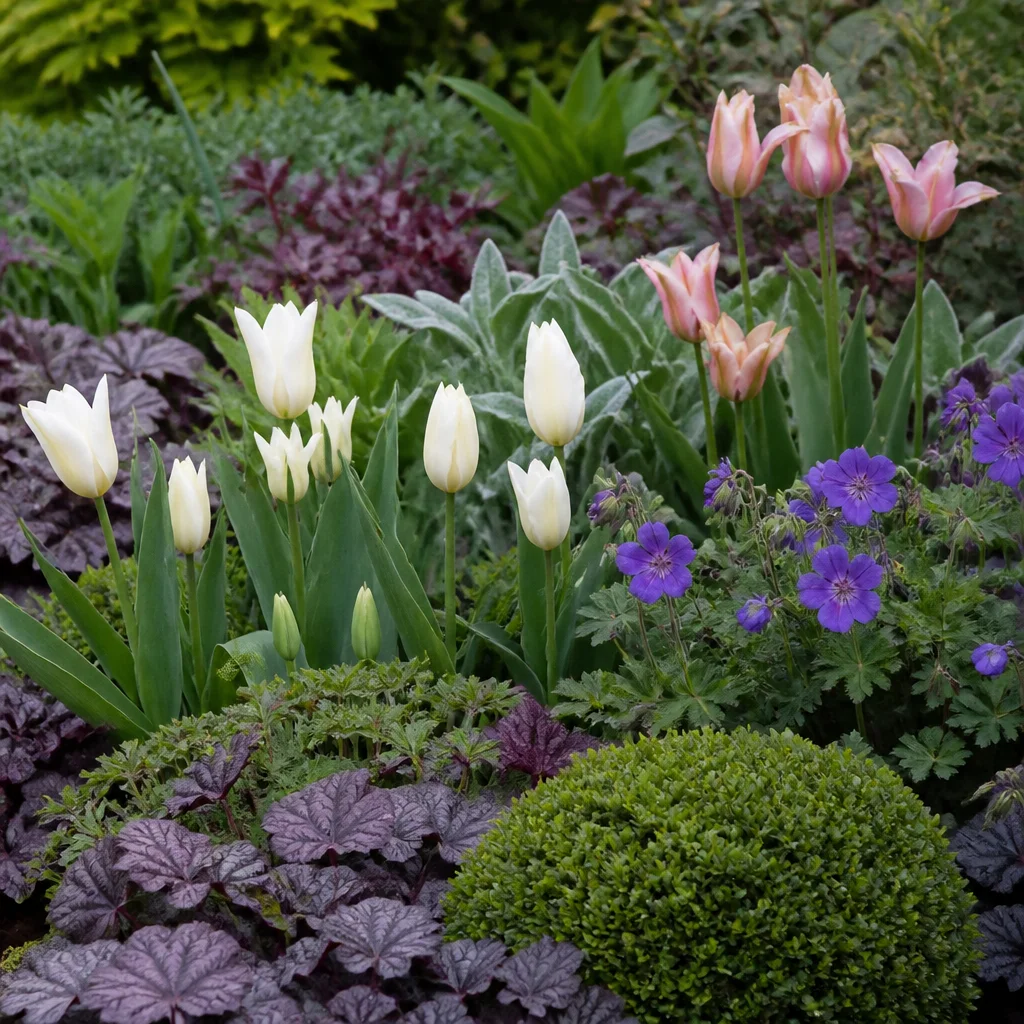
Bulbs are brilliant in flower but less attractive as foliage starts to yellow, and in small gardens that untidy phase is hard to ignore. The answer is to plant bulbs through or in front of companion plants that emerge just as bulb leaves begin to relax. Low perennials, small grasses, compact heucheras, hardy geraniums, and neat evergreen mounds can all soften the transition without competing heavily in early spring. Choose companions with tidy habits and a footprint that suits the space. In compact designs, the supporting plants should frame the bulbs rather than swallow them. For containers, trailing foliage plants or compact evergreen accents can keep the pot looking composed after the main bloom passes. In borders, a simple backbone of repeat plants makes the whole display easier to manage and gives the eye something steady between flushes of bulb color. This is one of the most effective ways to maintain polish in a small garden all season.
Use Color and Contrast to Make Small Areas Feel Bigger
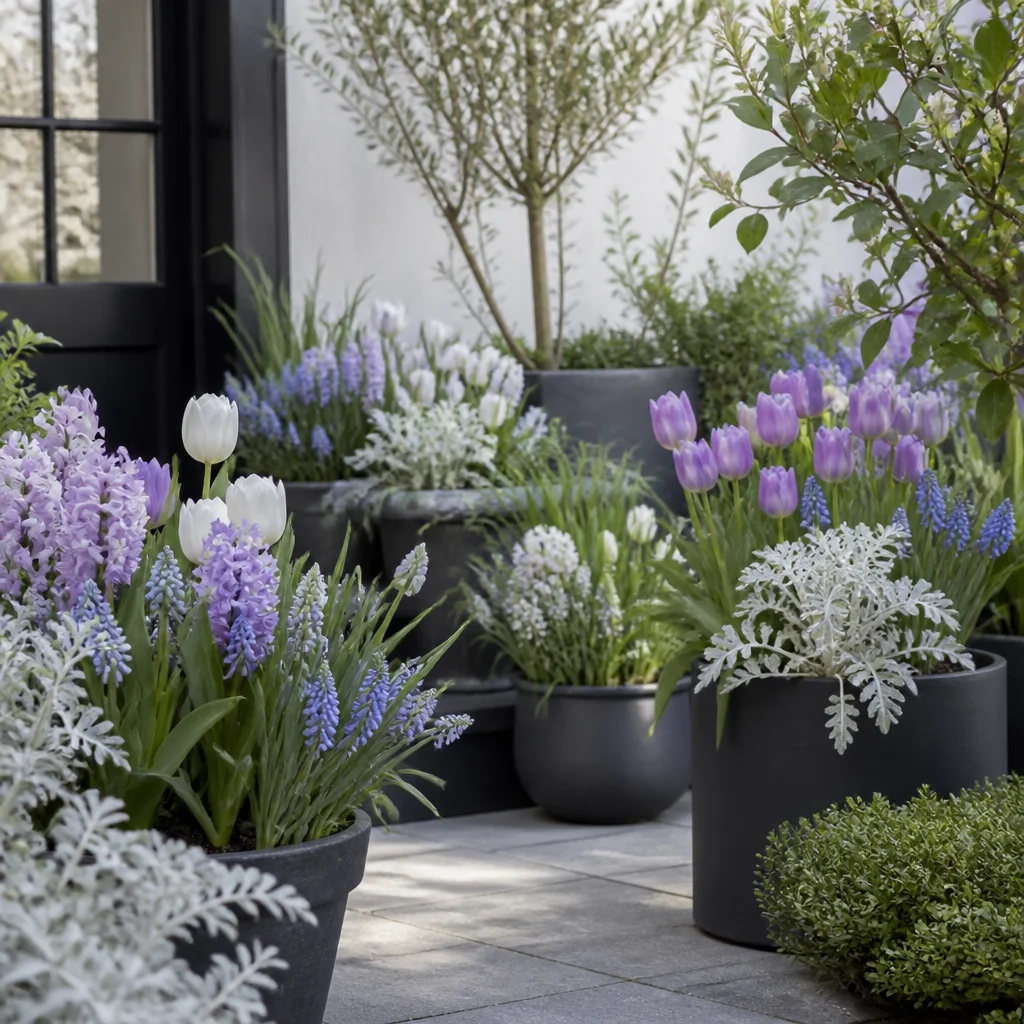
Color placement changes how a tight space is perceived. Cool shades such as white, soft blue, lilac, and pale lemon tend to feel airy and can make enclosed gardens seem more open. Saturated reds, oranges, and hot pinks bring energy, but they are most effective in small doses where they can act as focal points rather than visual clutter. In a compact courtyard, a restrained palette often feels more expansive than a multicolored mix. Contrast is equally important. Dark planters can intensify pale bulbs, while silver or gray foliage nearby can make purples and blues look richer. If you want a small garden to feel calm, limit yourself to two or three colors in one season and repeat them throughout pots and borders. If you prefer drama, concentrate the strongest shades at key viewpoints such as the entrance, seating area, or end of a path. Deliberate repetition creates unity, and unity makes small spaces feel more resolved and therefore larger.
Design for the View From Indoors as Well as Outside
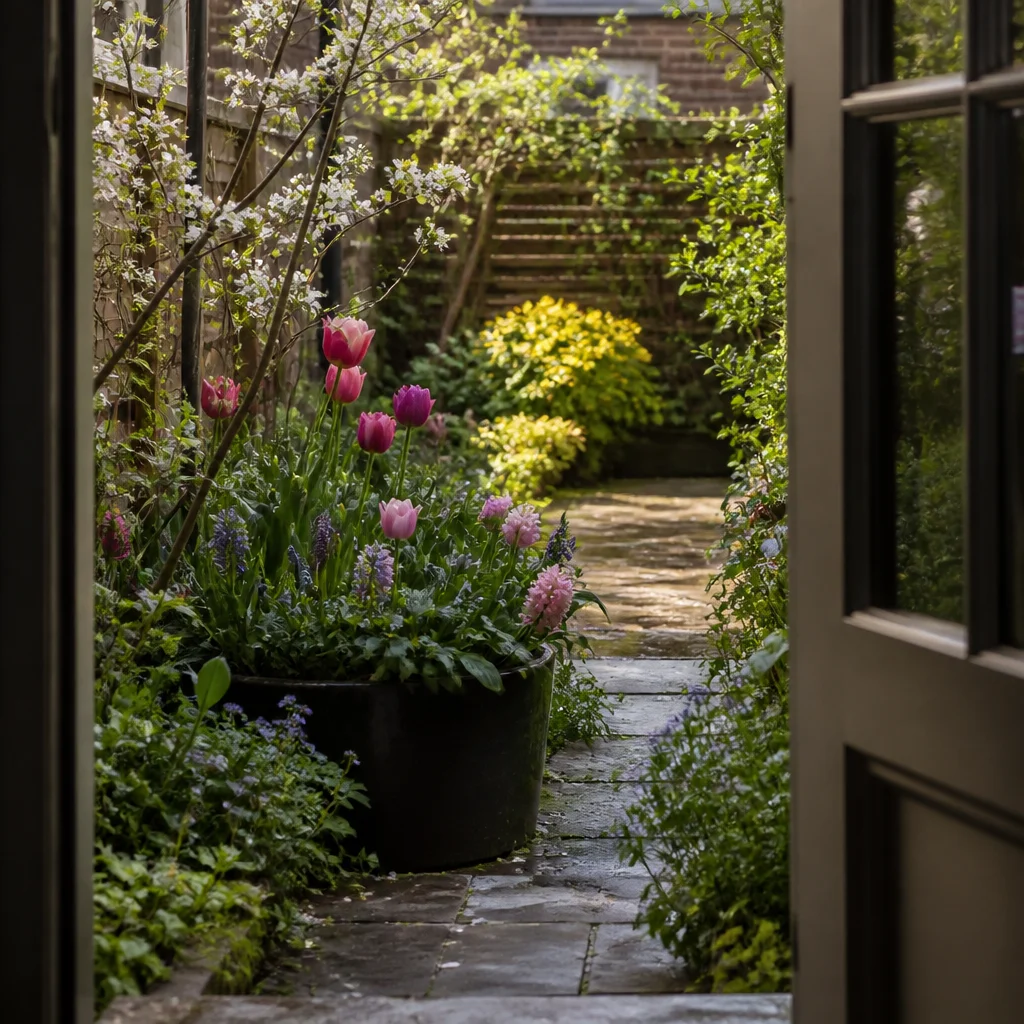
In a compact garden, bulbs are often seen as much from windows as from within the space itself, so placement should respond to sightlines. The most effective displays are usually those positioned where they catch attention from the kitchen, living area, or a frequently used door. A tight cluster near a threshold, a long container under a window, or a bright patch at the far end of a small courtyard can animate the entire space during the weeks when bulbs are in flower. Think in terms of visual anchors. One strong pot can mark a seating corner, while a repeated run of bulbs can guide the eye along a narrow path. Avoid spreading blooms so evenly that nothing stands out. Small gardens benefit from moments of emphasis. By placing bulbs where they punctuate daily routines and frame the best views, you make the garden feel more immersive and more seasonal, even when the actual planted area is modest.
How did this story make you feel?
Choose one reaction. You can change it later.