Perennials8 min read
Perennials That Keep the Border Colorful After Spring Bulbs Fade
Spring bulbs give a border its first burst of excitement, but they also leave a familiar challenge behind: yellowing foliage, gaps in the planting, and a sudden loss of momentum just as the garden should be settling into its long season. The best answer is not to cut bulb leaves too early, but to partner them with perennials that rise at exactly the right moment. Good companions expand as tulips, daffodils, and alliums begin to decline, softening the mess, carrying the color story forward, and keeping the border full of life. The most useful perennials for this job are dependable rather than fussy. They make enough leaf growth to veil fading bulb foliage, bring fresh texture when spring flowers are spent, and often provide a second wave of bloom that bridges the border into summer. By combining a few carefully chosen shapes—mounded leaves, airy stems, strong verticals, and long-flowering fillers—you can make the handover from bulbs to perennials feel seamless instead of abrupt.

Hardy Geraniums Create a Living Skirt Around Spent Bulbs
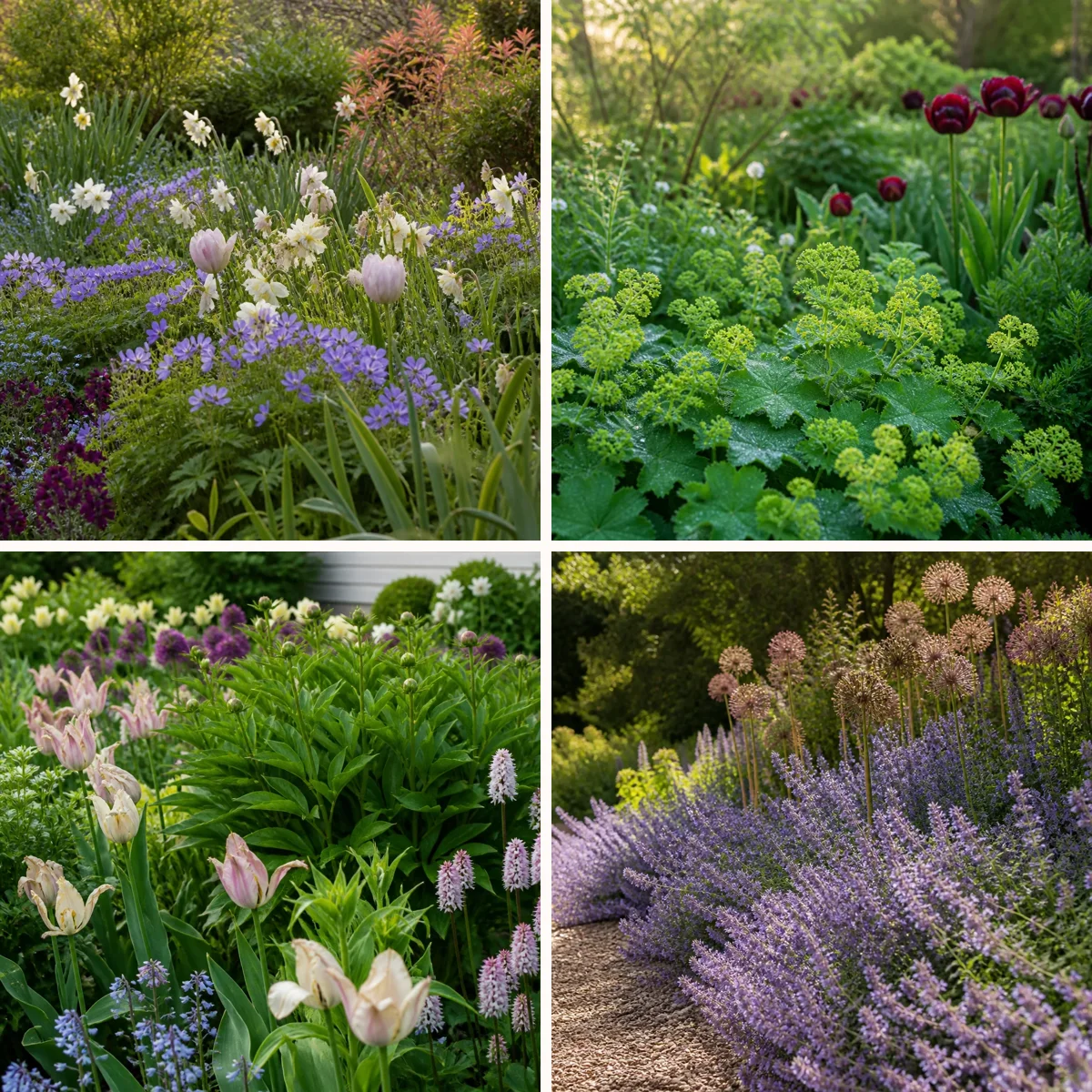
Hardy geraniums are among the most effective partners for spring bulbs because they leaf out generously and quickly, forming low mounds that hide the base of yellowing daffodil and tulip foliage. Varieties with a spreading habit can flow around clumps of bulbs without smothering them in early spring, then take over visually once the bulb display is over. Their rounded leaves also contrast beautifully with the strap-like foliage of narcissus and the upright stems of tulips. Use them near the front or middle of the border where fading bulb leaves are most obvious. Cool-toned forms work especially well after purple alliums and pink tulips, while white or magenta-blooming geraniums can lift warmer bulb schemes. After their first flush, many hardy geraniums can be lightly trimmed to encourage fresh leaves and tidier growth, which keeps the border looking intentional well into summer.
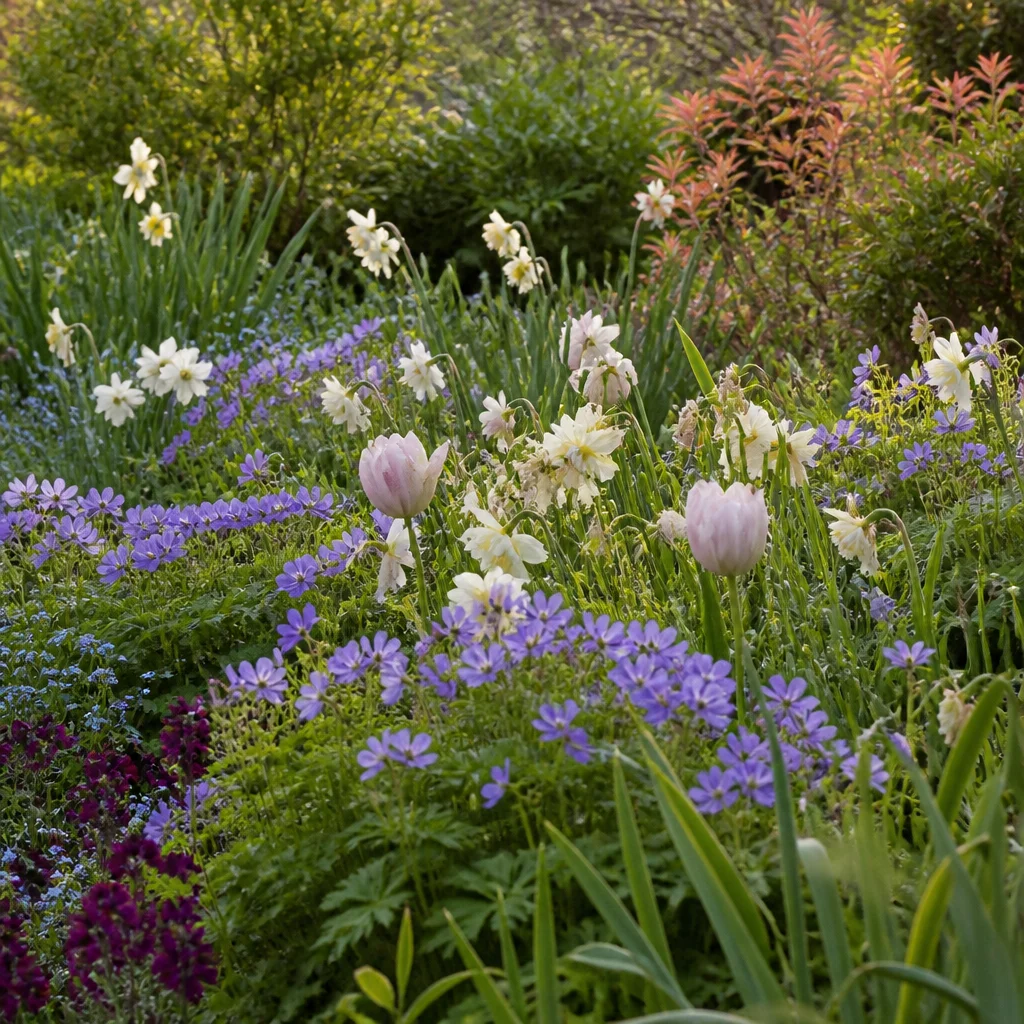
Lady’s Mantle Softens the Transition With Foam and Foliage
Lady’s mantle earns its place by doing two jobs at once: its pleated leaves make a soft, dense ground layer that conceals bulb foliage, and its misty greenish-yellow flowers act as a visual buffer between stronger colors. When tulips finish and the border risks looking patchy, this plant supplies cohesion. The foliage catches light beautifully and gives the eye something restful after the high contrast of spring bloom. Plant it where morning or late-day sun can highlight the leaves, and repeat it in drifts rather than single clumps so the effect feels woven through the border. It is particularly helpful around pastel bulbs because it prevents the planting from collapsing into a dull interval. The flower stems can be left for a light haze of color or cut after bloom if you want the leaves to remain the main feature.
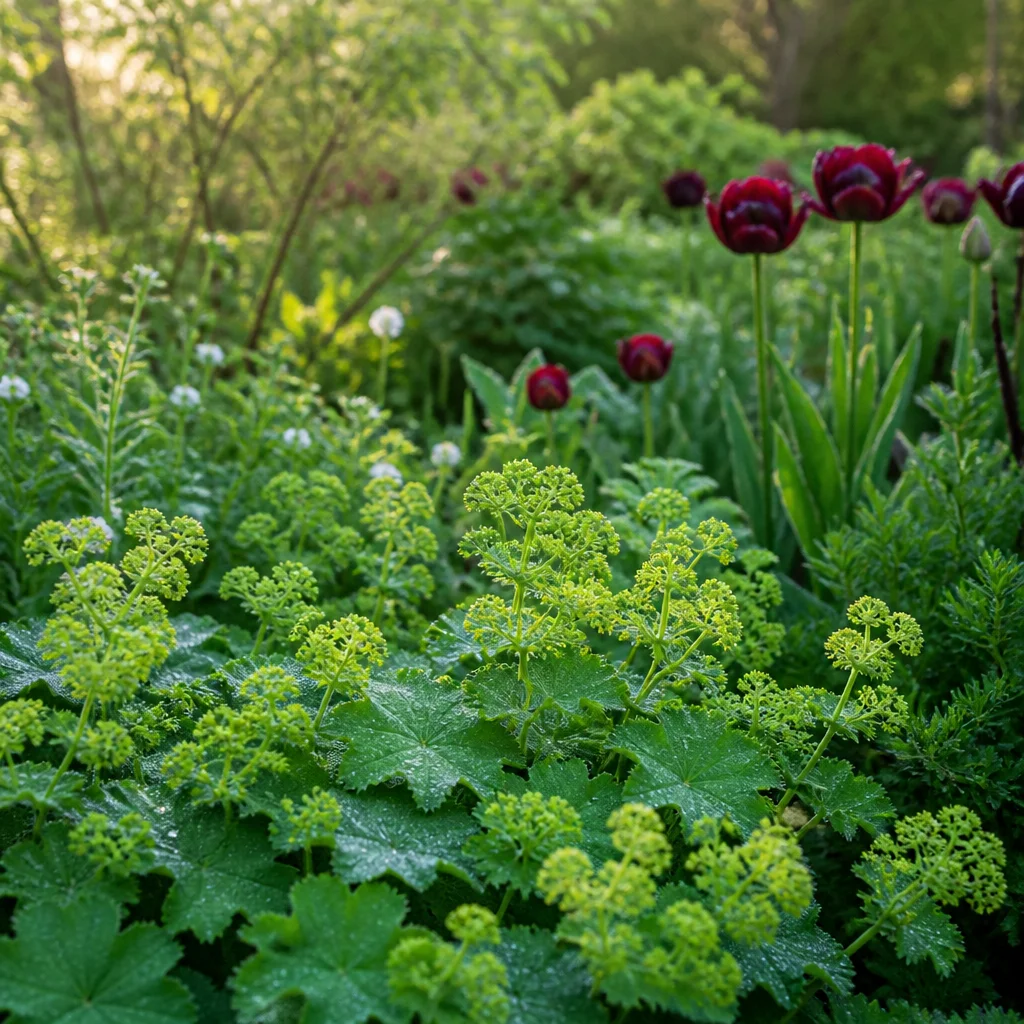
Peonies Bring Bold Leaves Before Their Flowers Even Open
Peonies are valuable long before they bloom. Their reddish shoots push up as bulbs are peaking, then quickly expand into substantial mounds of divided foliage that give the border weight and structure. By the time late tulips and larger daffodils begin to look tired, peony leaves are broad enough to distract from the decline and establish a fresh focal point. This makes peonies ideal in mixed borders where you want a strong backbone through late spring and early summer. Place bulb clumps just in front of or between peonies so the bulbs can shine early, then recede as peony growth fills the scene. Even after flowering, the foliage remains useful, anchoring looser perennials nearby and helping the border avoid the hollow look that often follows the bulb season.
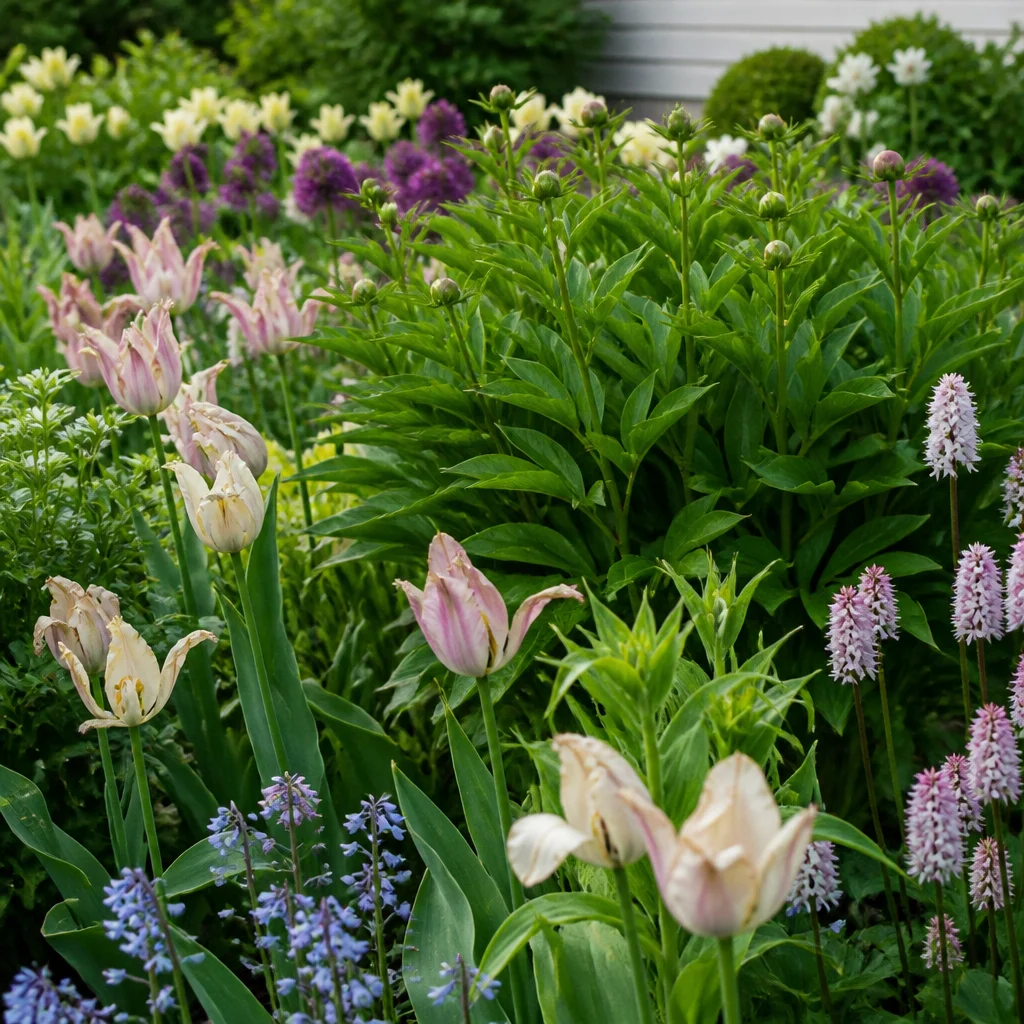
Catmint Keeps the Border Flowing With Long, Cool-Toned Color
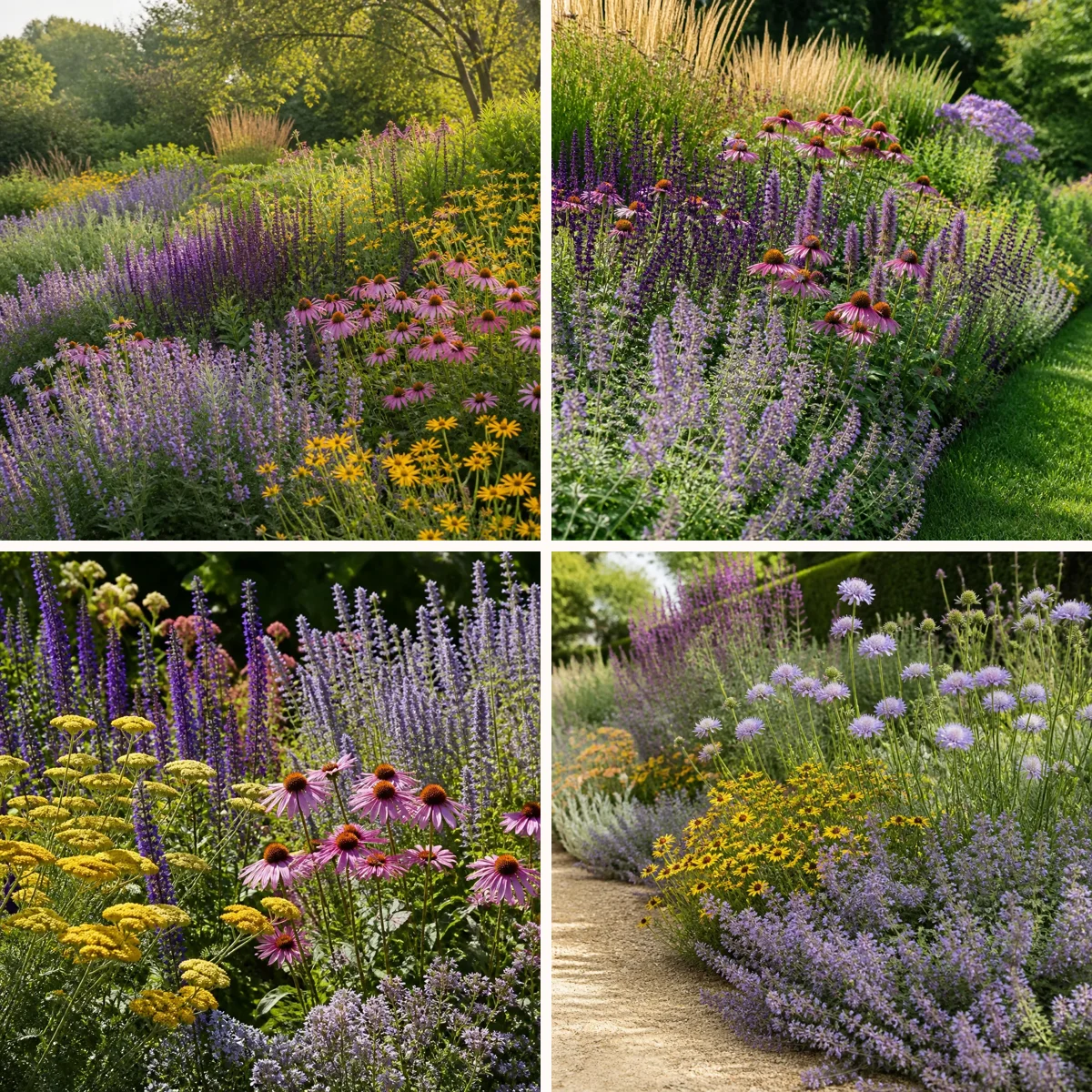
Catmint is one of the best bridge plants between spring and summer because it starts making a billowing framework just as many bulbs are winding down. Its grey-green foliage blends easily with almost any color palette, and its lavender-blue flowers echo the cool shades often used in bulb plantings. That continuity makes the shift from bulb display to perennial border feel smooth rather than abrupt. Position catmint along paths or border edges, where its relaxed habit can spill slightly and soften more upright plants behind it. It pairs especially well with alliums, late tulips, and white daffodils, picking up their tones while hiding untidy leaves at the base. If the first flowering flush begins to look tired, shear the plant lightly to encourage a neater mound and another round of bloom later in the season.
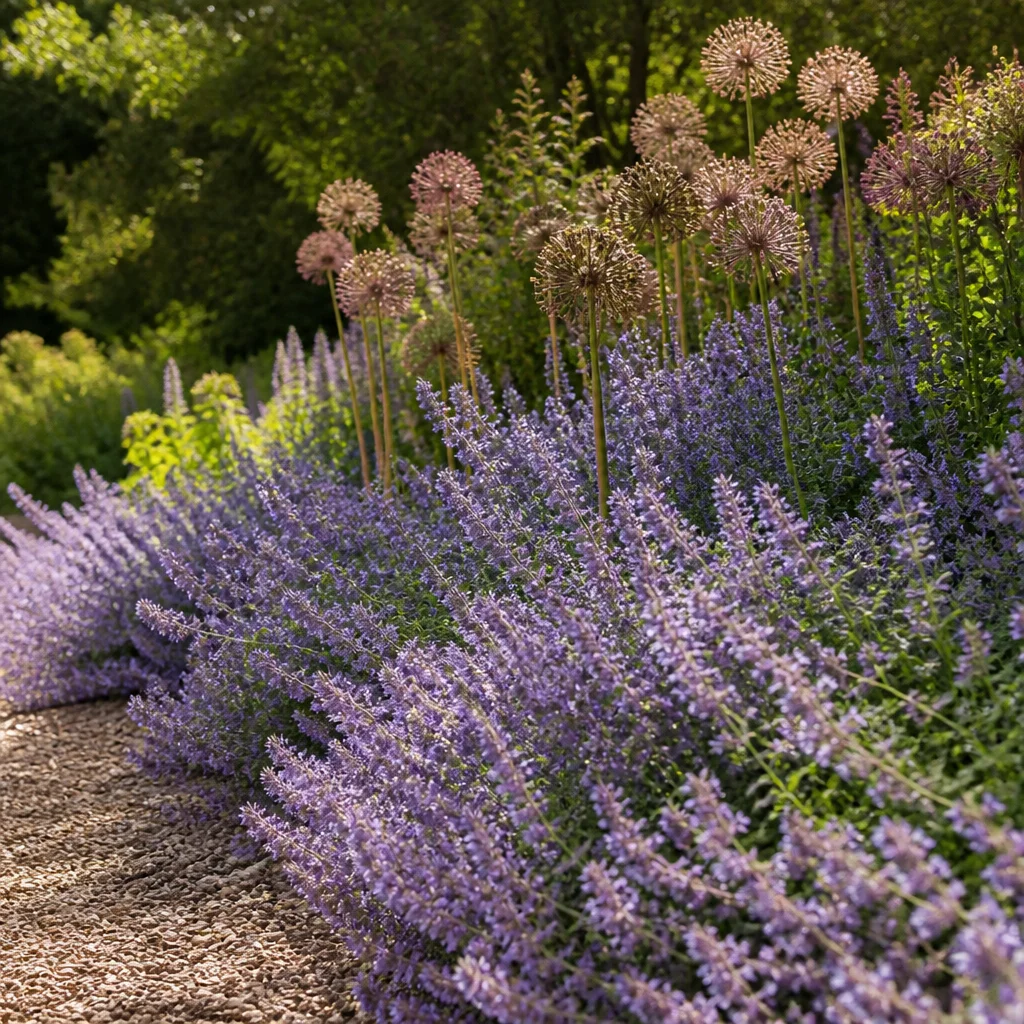
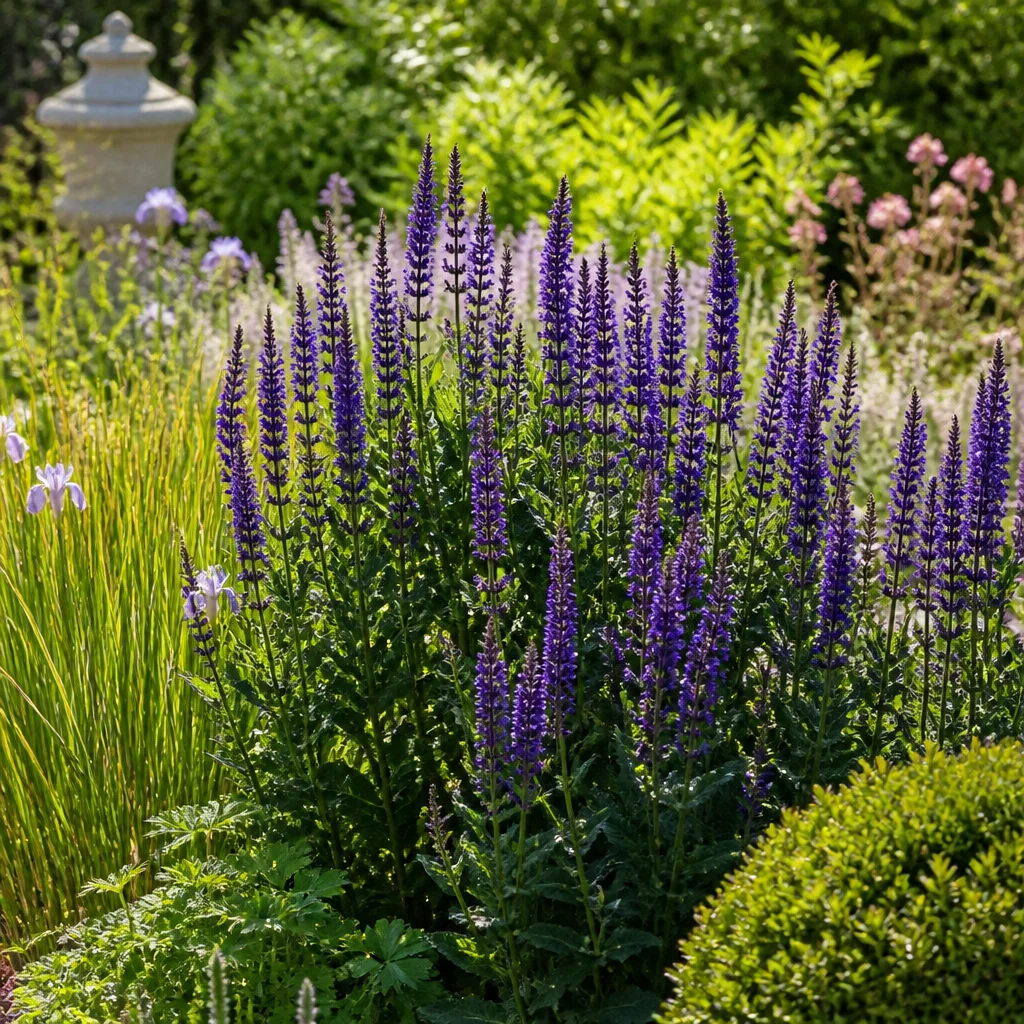
Salvias Add Vertical Rhythm When Bulb Flowers Are Gone
After spring bulbs fade, a border often loses not only color but also lift. Salvias solve that problem by sending up spires that restore vertical movement and draw the eye upward, away from any lingering bulb foliage near the soil. Their strong flower stems create punctuation through softer mounds of leaves, making the planting feel designed rather than in-between. Choose them for sunny borders where drainage is good, and thread them among earlier bulb groups to extend color in the same footprint. Blue and violet salvias continue the cool side of the spring palette, while pink-toned forms can connect with late tulips. Because their form is narrow compared with broad-leaved perennials, they are especially useful in tighter borders where you need height and bloom without adding visual heaviness.
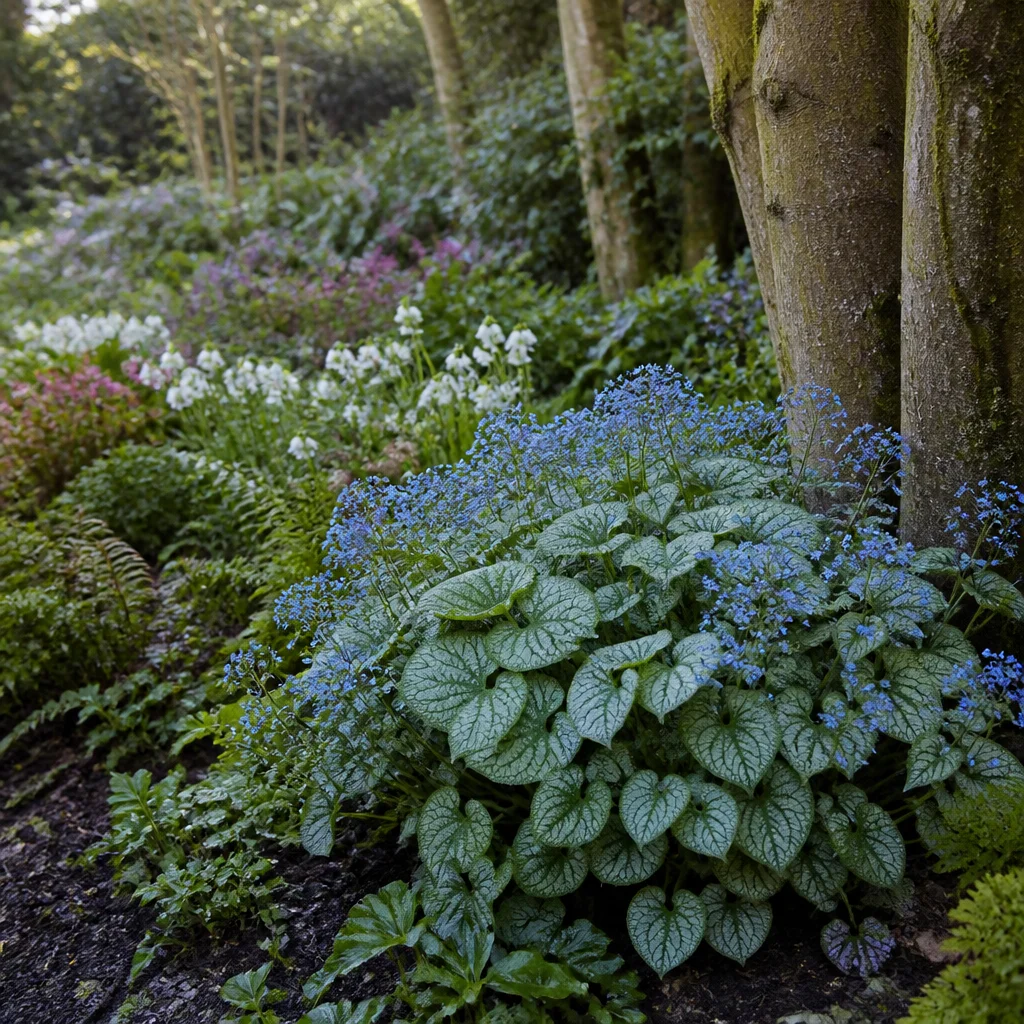
Brunnera Brightens Shadier Borders With Leaves That Last
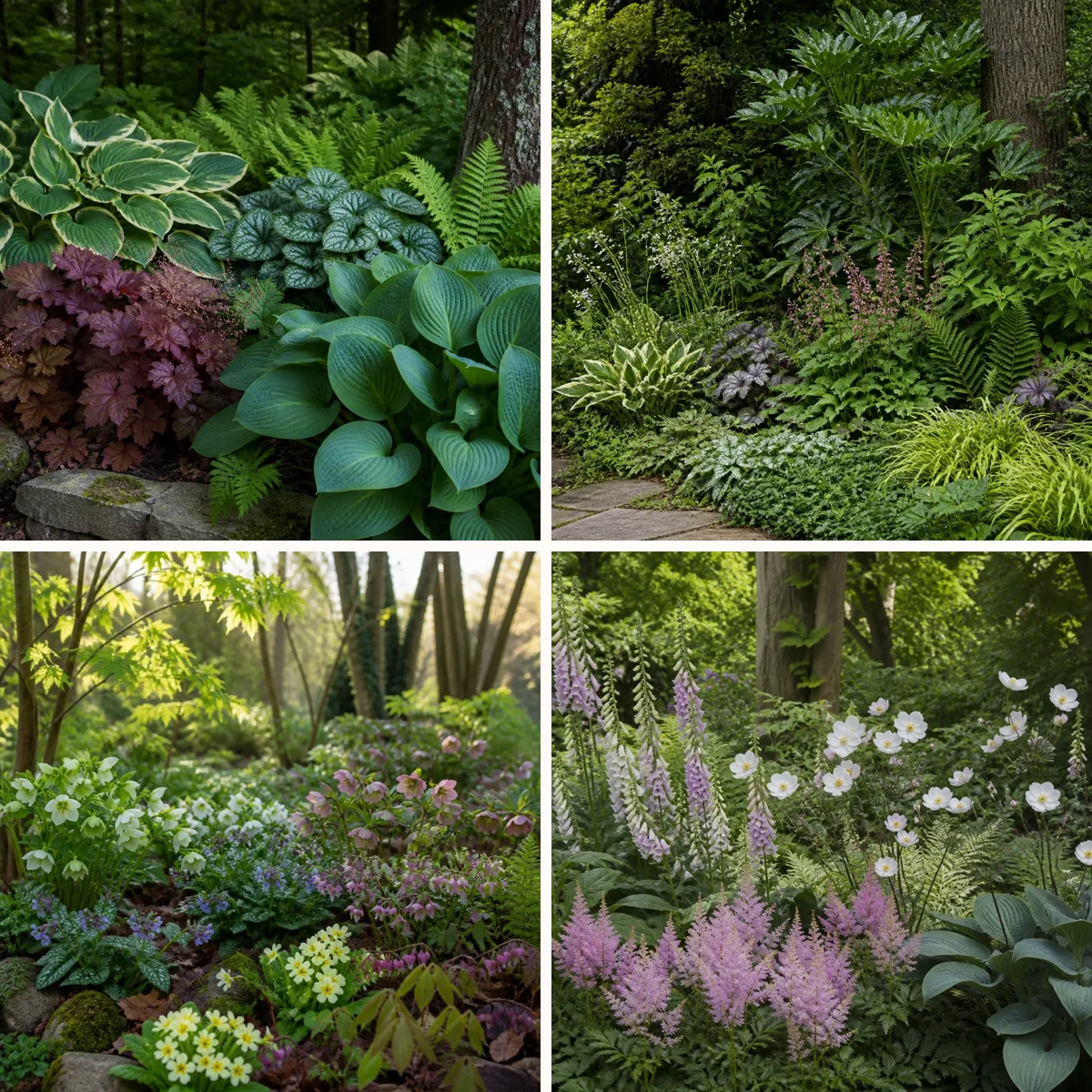
In part-shade, where bulb foliage can linger awkwardly, brunnera is a remarkably practical follow-up plant. Its heart-shaped leaves spread gradually into handsome clumps that cover the ground neatly after woodland bulbs and smaller daffodils have flowered. The early blue flowers are charming, but the foliage is the real asset, especially in forms with silvered leaves that keep darker corners lively. Use brunnera to knit together the front of a shaded border beneath shrubs or among ferns and hostas. It works well where bulbs are planted in pockets and need a later companion to erase their footprint. The broad leaves are excellent beside narrow bulb foliage, and because the plant stays attractive for months, it gives the area a settled, composed look long after spring has passed.
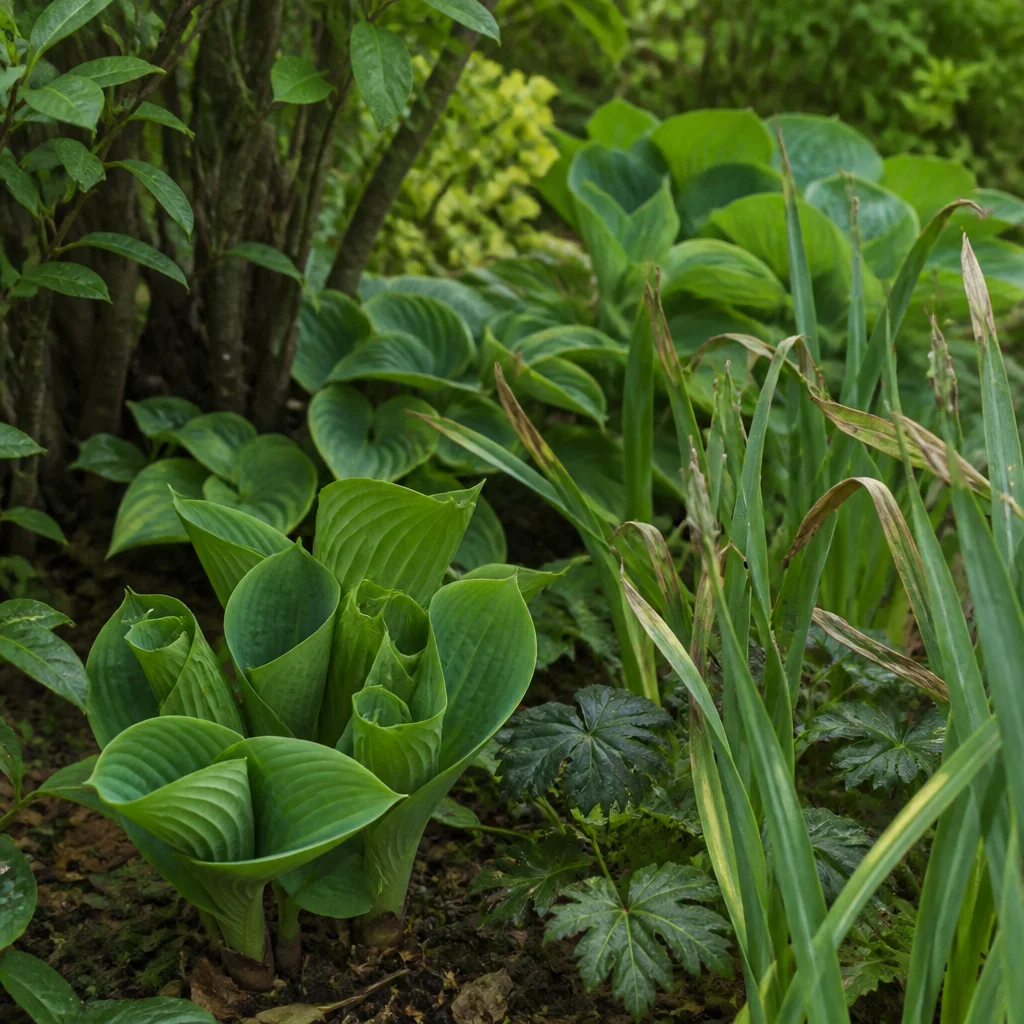
Hostas Hide Daffodil Leaves Better Than Almost Anything Else
For shade or light shade, few perennials are as effective at disguising bulb foliage as hostas. Their leaves emerge folded and modestly sized while bulbs are still flowering, then unfurl rapidly into generous mounds just as daffodil and camassia leaves begin to flop. That timing is what makes them so valuable: they do not compete too early, but they arrive exactly when cover is needed. The styling advantage is equally strong. Blue-green hostas cool down hot bulb colors, gold-leaved forms bring light after bloom has passed, and variegated selections can act almost like flowers in their own right. Plant bulbs in front of or among hosta crowns, allowing enough space for the mature leaves to expand. The result is a border that looks layered and deliberate rather than like one season has simply ended.
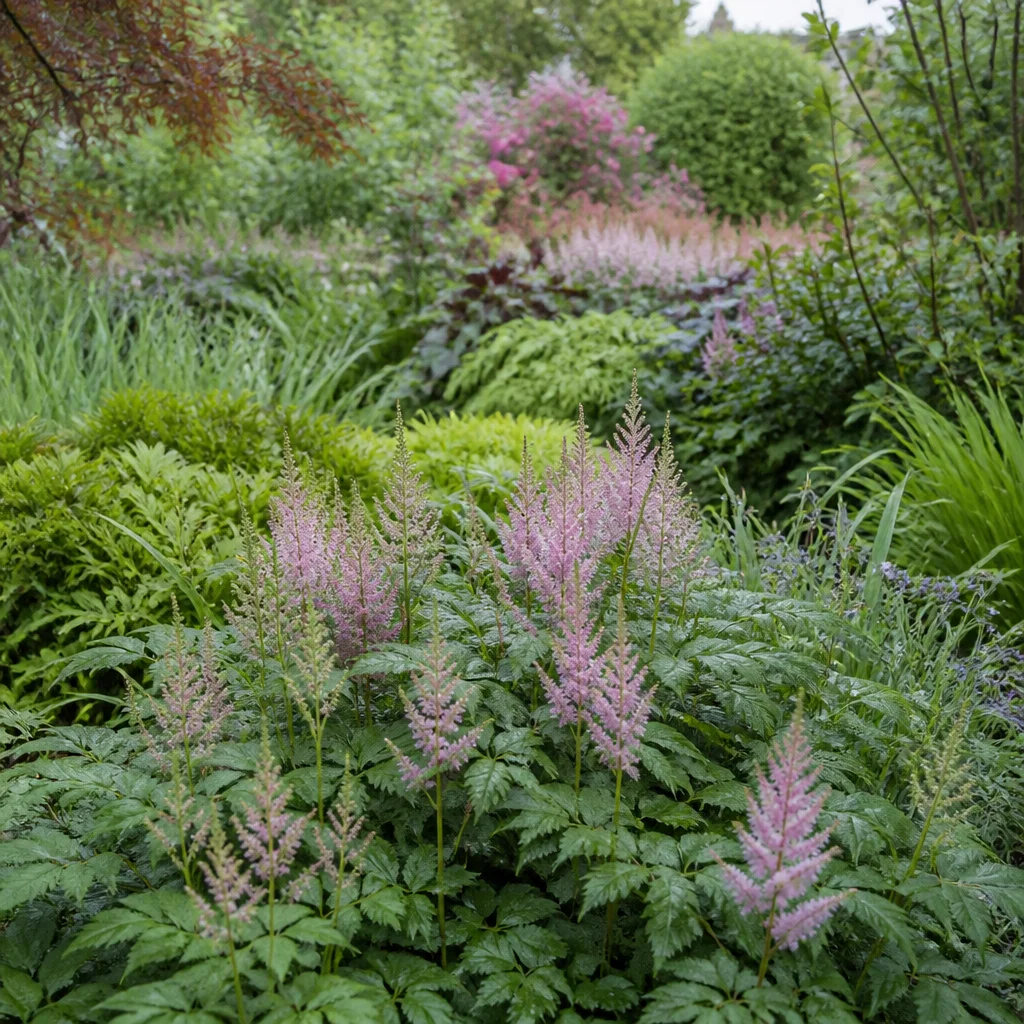
Astilbes Carry Moist Borders Into Summer With Plumes and Presence
In reliably moist soil, astilbes offer the ideal next chapter after spring bulbs. Their ferny foliage rises in fresh, crisp clumps that cover the lower border elegantly, then the feathery flower plumes arrive to provide a clear new season of interest. This is especially useful in gardens where spring bulbs dominate early and the border otherwise risks a lull before midsummer performers begin. Astilbes are most convincing when grouped in repeated drifts so their plumes create rhythm rather than isolated tufts. Soft pinks and whites keep a gentle, romantic tone after pastel bulbs, while deeper red forms can add welcome richness where spring colors have been pale. Because both foliage and flowers have substance, they help a border feel full and finished rather than transitional.
Daylilies Supply Arching Foliage and Reliable Summer Follow-Through
Daylilies may peak later than some bulb companions, but their strappy leaves emerge early enough to be very helpful in concealing spent bulb growth. The arching foliage creates fountains of green that absorb the dying leaves of tulips and daffodils into a broader texture, making the whole border look greener and calmer. Then, as summer begins, the flower stems take over with fresh color. They are especially useful in sunny mixed borders where you want a robust, low-fuss plant that can hold its own after the delicacy of spring has passed. Combine them with bulbs in repeated clusters so the daylily foliage becomes a recurring visual thread through the bed. Choosing flower colors that either echo or deliberately contrast the spring palette helps the border feel planned across seasons rather than split into separate chapters.
Use Repetition and Layering So the Handover Looks Effortless
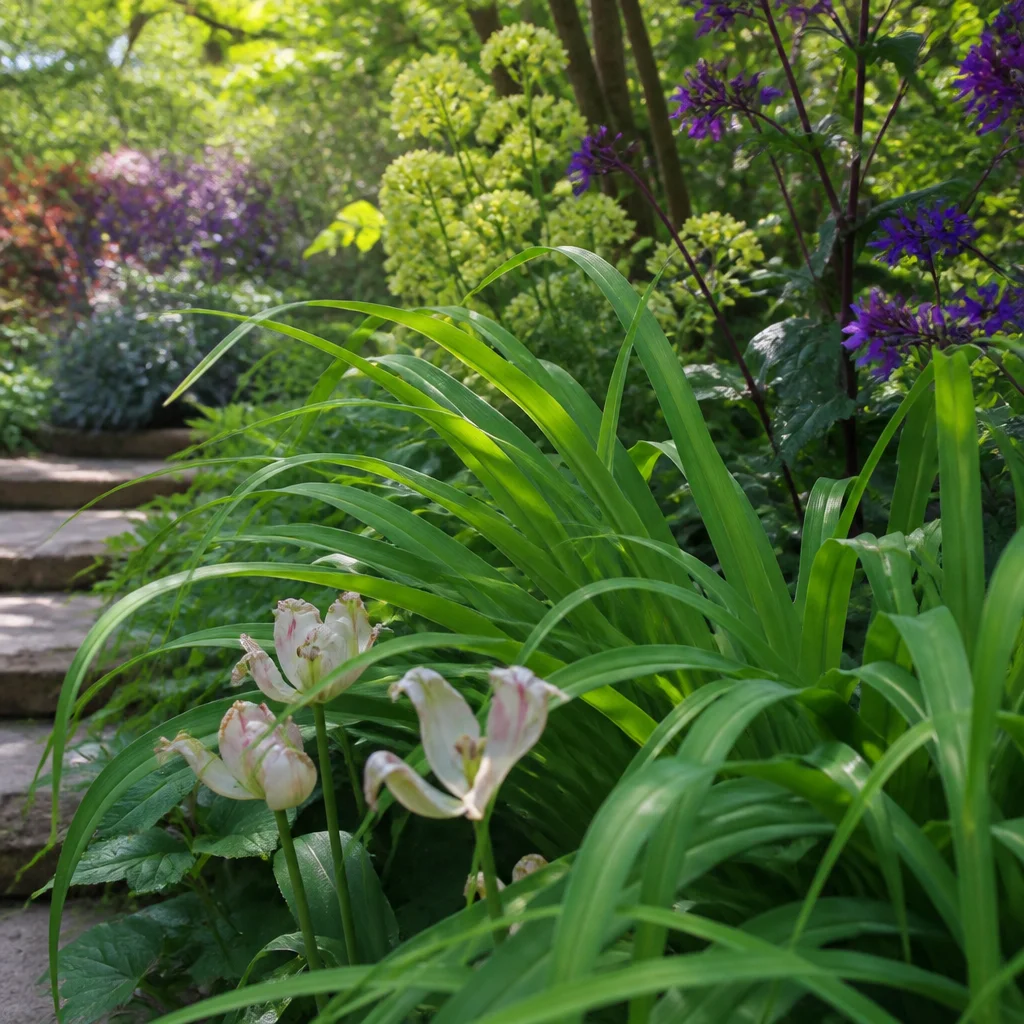
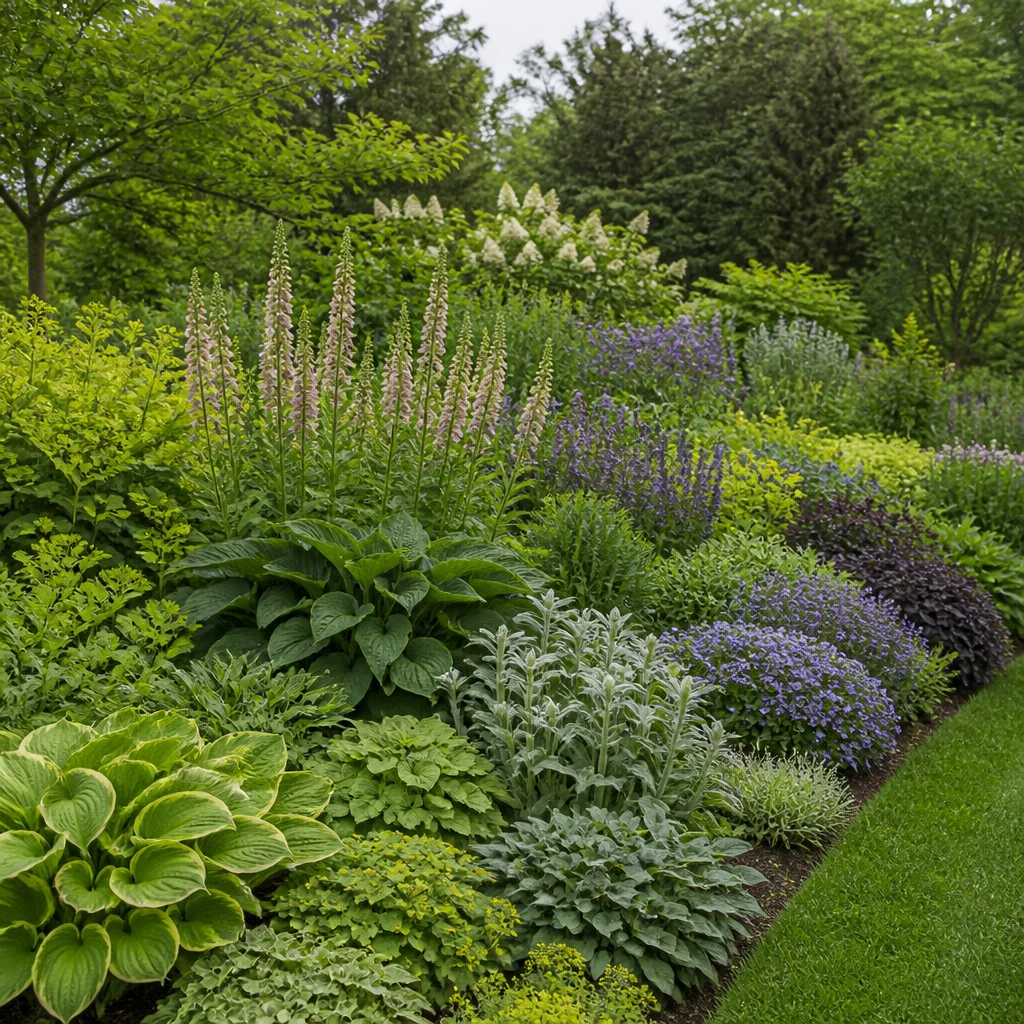
The most successful bulb-to-perennial border is not built around one heroic plant but around a pattern. Repeat two or three dependable perennials throughout the bed so the same leaf shapes and flower forms appear again as bulbs retreat. A low mounding plant, a broader foliage plant, and an upright bloomer often make an ideal trio. This layered approach gives you cover at ground level, mass in the middle, and renewed lift above. When planting, think in overlapping windows rather than separate blocks. Tuck bulbs between emerging perennial crowns, place later-growing foliage where it can rise through the bulb display without hiding it too soon, and allow enough room for mature spread. The goal is a sequence so smooth that the eye barely notices spring ending. Instead of a border with a brilliant beginning and a tired middle, you get one that stays generous, textured, and colorful from the first bulbs onward.
How did this story make you feel?
Choose one reaction. You can change it later.