Perennials9 min read
Long-Blooming Perennials for Pollinator-Friendly Beds and Sunny Borders
A sunny border can do far more than peak for a few weeks and then fade into green. With the right perennials, a bed can carry color from late spring into autumn while offering nectar, pollen, shelter, and seedheads that keep the garden lively for months. The most satisfying plantings are not just long-blooming on paper; they are built around a relay of flowers, contrasting shapes, and dependable performers that continue to look attractive even between flushes. When planning a pollinator-friendly border, it helps to think beyond individual favorites and design for continuity. Spires, daisies, domes, and airy wands all play different visual roles, and pollinators often use them differently too. A good mix of flower forms broadens the garden’s appeal, while repeating a few reliable plants creates rhythm and keeps the planting from looking busy. The ideas below focus on practical combinations and design moves that make sunny beds feel full, generous, and active over a long season.

Start with a long-season backbone of proven bloomers
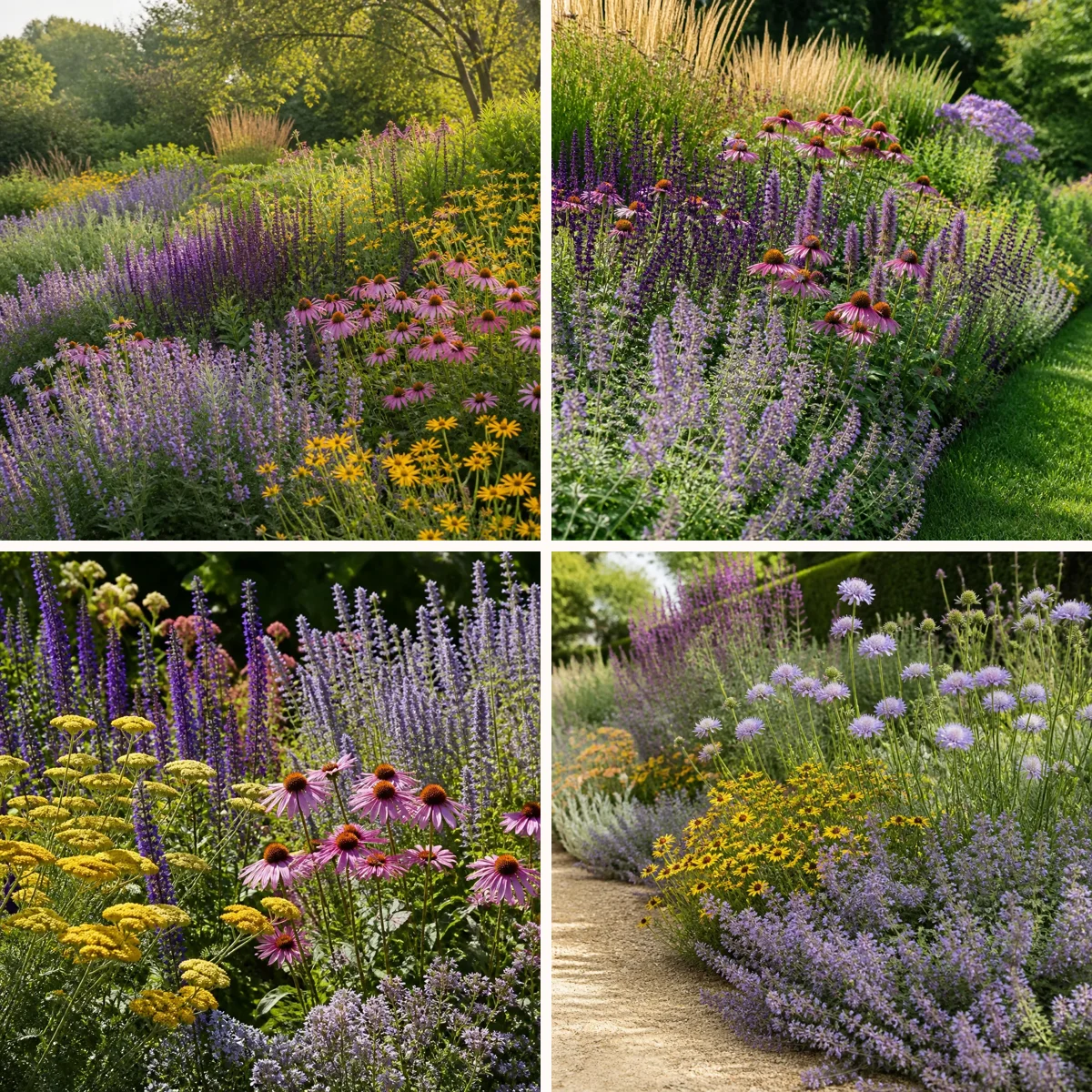
The easiest way to extend flowering is to build the bed around a few perennials known for stamina rather than brief spectacle. Catmint, threadleaf coreopsis, scabiosa, yarrow, salvia, and many modern coneflowers all offer long windows of color if they are given full sun and reasonably well-drained soil. These are the plants that keep a border looking alive even when shorter-lived highlights pause, and they provide a steady food source for visiting insects instead of a single feast. Use these dependable bloomers in repeated drifts instead of isolating one of each. Three or five clumps of the same perennial, echoed down a border, look more intentional and are easier for pollinators to find than scattered singles. Repetition also helps the planting stay coherent when many species are in flower at once. If space is limited, choose two dominant long-bloomers and one supporting filler rather than squeezing in too many varieties.
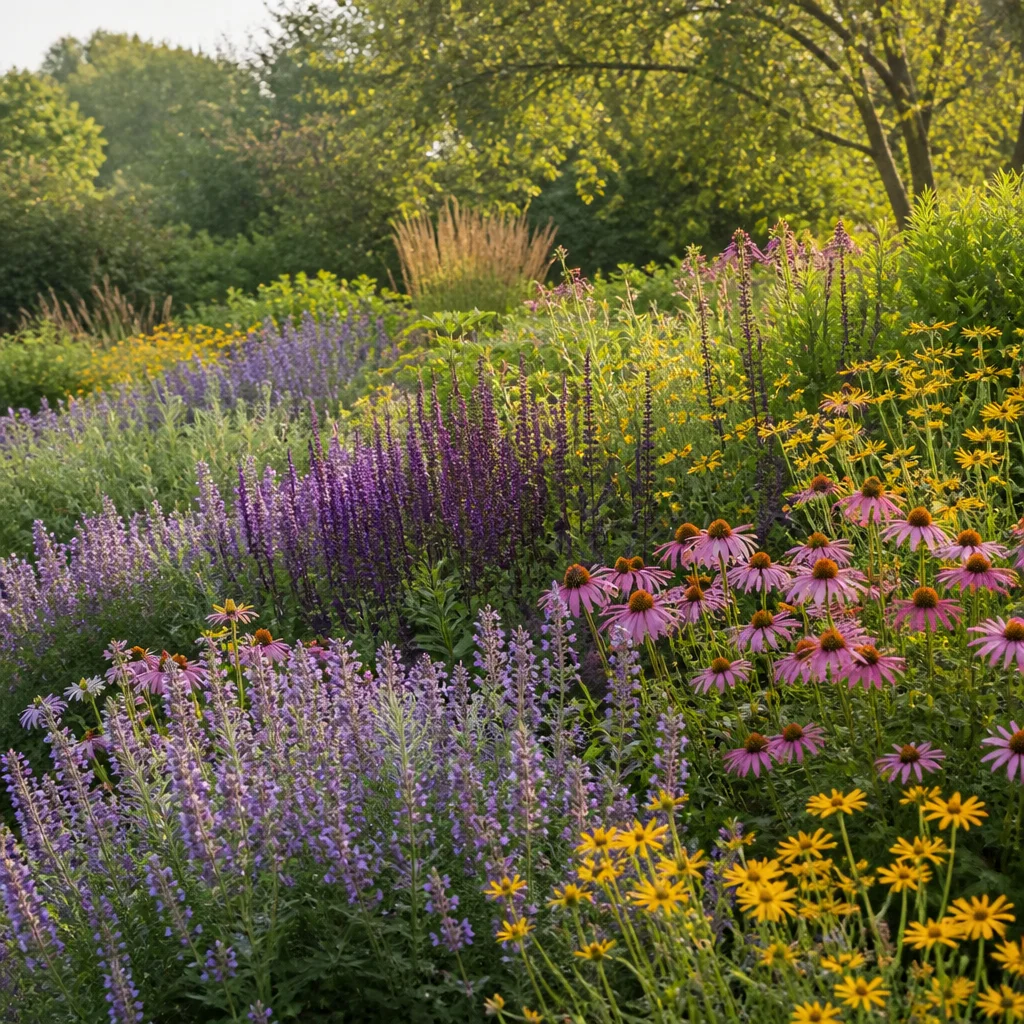
Layer flowering windows so one group rises as another slows
A bed feels active for months when flowering times overlap instead of arriving in separate blocks. Early summer salvias and catmints can carry the display into the point when echinacea, gaillardia, and agastache begin to build, followed by late-season asters and helenium. Even if each plant flowers for a generous period, the garden looks richer when different waves mingle for a few weeks rather than handing over abruptly. A practical way to plan this is to divide your border mentally into early, middle, and late performers, then make sure each area contains at least one plant from two adjacent windows. That prevents the front or middle of the border from going quiet while the back is peaking. In a sunny bed, this layered timing often matters as much as flower color, because the eye reads ongoing change as abundance.
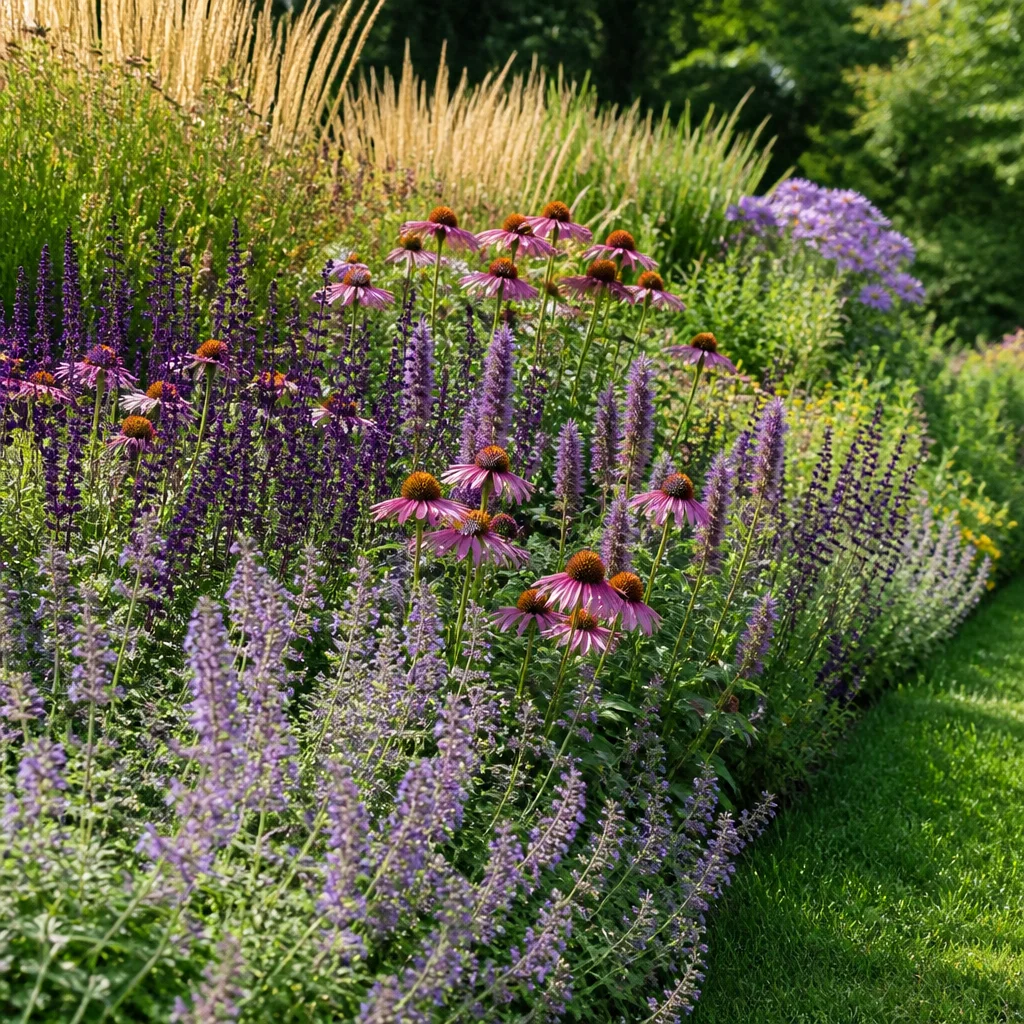
Mix flower shapes to attract more insects and create better structure
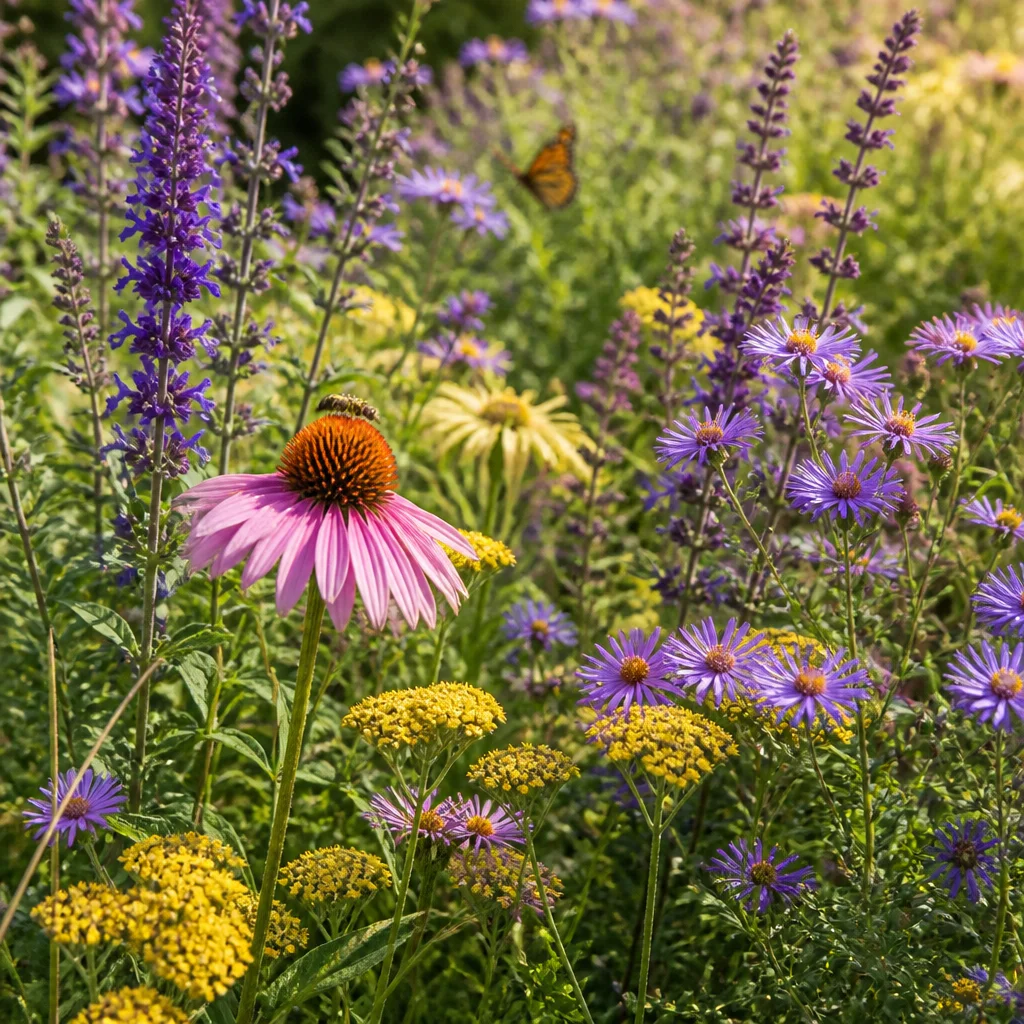
Pollinator-friendly planting is stronger when the flowers are not all the same shape. Flat landing pads such as yarrow and coneflower suit many open-pollinating insects, while tubular blooms on salvias, penstemons, and agastache add vertical energy and draw in different visitors. Daisy forms, umbels, bottlebrushes, and spikes all contribute distinct textures, making the bed more useful ecologically and more interesting visually. In design terms, shape contrast keeps long-blooming borders from becoming monotonous. A haze of small flowers looks better when anchored by a few bold discs, and upright spires gain presence when paired with rounded mounds. If a border already contains many daisies, introduce spikes and airy wands before adding more daisy forms. The result is a planting that feels balanced and animated rather than flat.
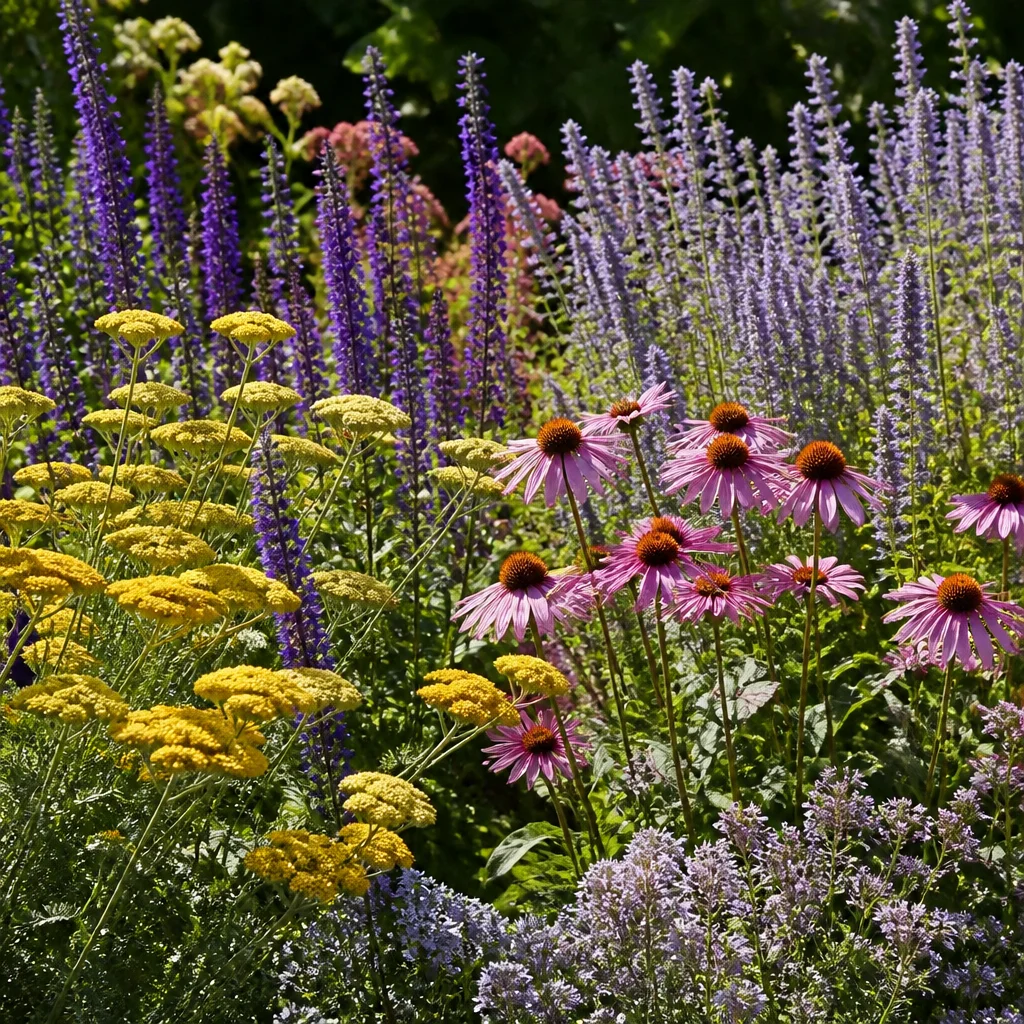
Use compact front-of-border plants that bloom for weeks without blocking the view
The front edge of a sunny border does a lot of work: it frames the planting, softens hard lines, and needs to stay attractive close up. Long-blooming low perennials such as catmint, dwarf scabiosa, hardy geraniums with repeat flowering, and compact coreopsis are especially useful here because they provide color over a long season without obscuring the plants behind them. They also create an accessible landing zone for bees and other pollinators moving through the bed. Choose front-edge plants that form tidy mounds or flowing skirts rather than sprawling mats that smother neighbors. Soft billowing shapes are particularly effective beside paving, gravel, or lawn because they blur the boundary and make the border feel fuller. Repeating one edging perennial along the length of the bed can visually knit together a more varied middle and back layer.
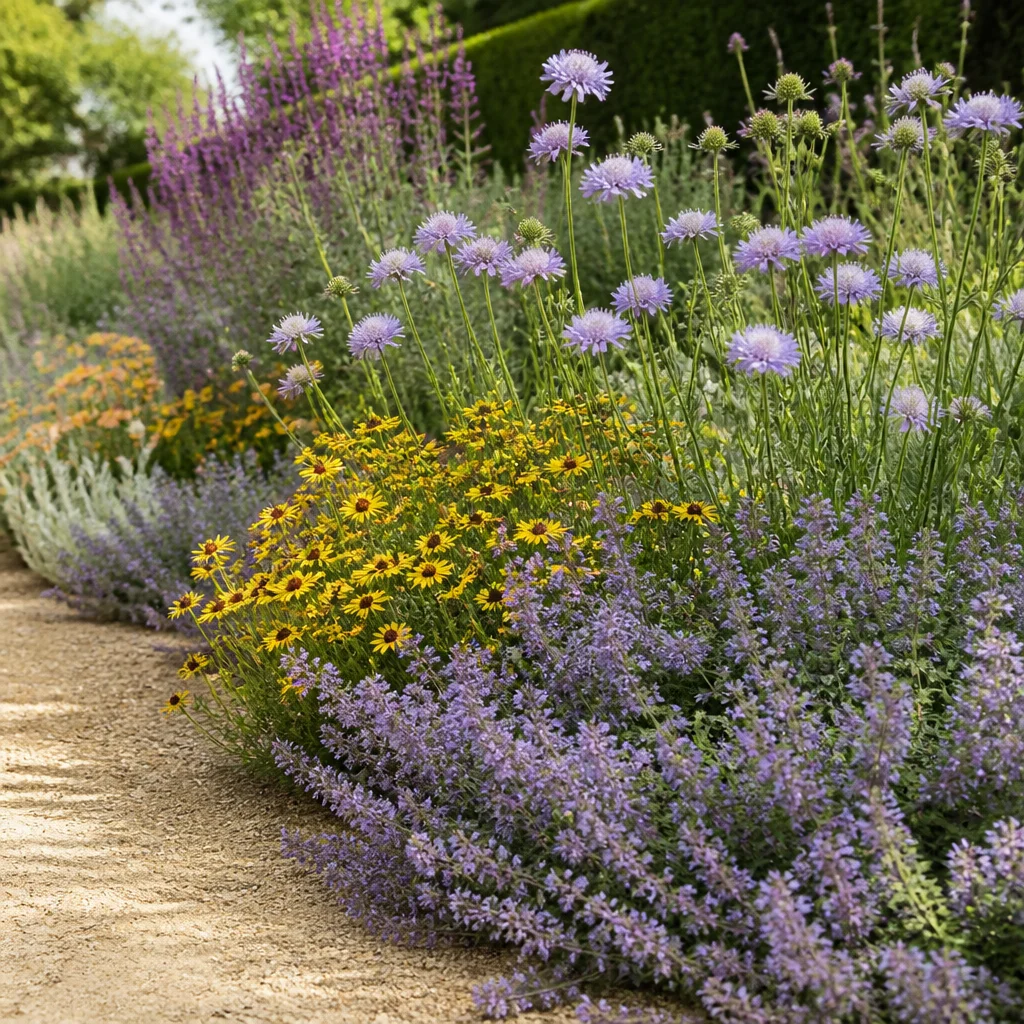
Rely on midsized mounds to keep the center of the border full
Many sunny borders lose momentum in the middle because tall plants are saved for the back and low edging plants sit neatly at the front, leaving a hollow-looking central layer. This is where long-blooming midsized perennials earn their place. Echinacea, achillea, nepeta, compact monarda, and agastache can all help occupy this visual middle ground, carrying color and pollinator activity where the eye naturally rests. Think of this central zone as the body of the planting rather than a gap to fill at the end. Rounded or upright mounds repeated through the middle give the border substance and reduce the need for constant seasonal patching. If the center still feels empty in early summer, add one or two early-flowering perennials there rather than relying only on later stars, so the bed looks settled from the beginning of the season.
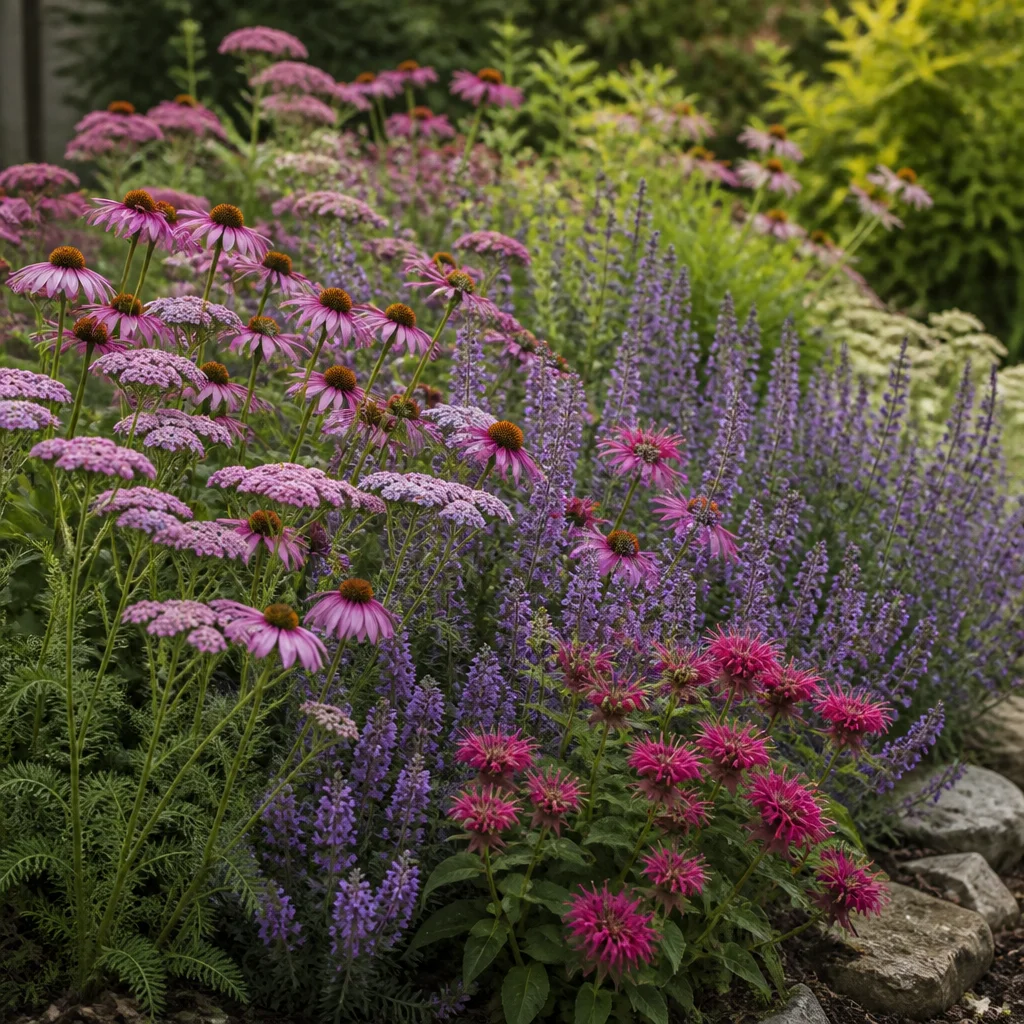
Add airy verticals to stop dense planting from feeling heavy
A border packed with long-blooming perennials can become visually dense if every plant forms a mound or broad daisy. Airier verticals such as gaura, verbena bonariensis, and slender salvias bring lift and movement without casting the whole bed into shade. Their see-through structure lets pollinators and neighboring flowers remain visible, which is especially valuable in mixed sunny borders where space is tight. These lighter forms are best threaded through more solid plants rather than planted in a single stiff row. A few stems rising through echinacea or yarrow create a loose, natural effect and extend the flowering story upward. They also catch light and breeze beautifully, helping the bed look animated even on days when fewer flowers are open.
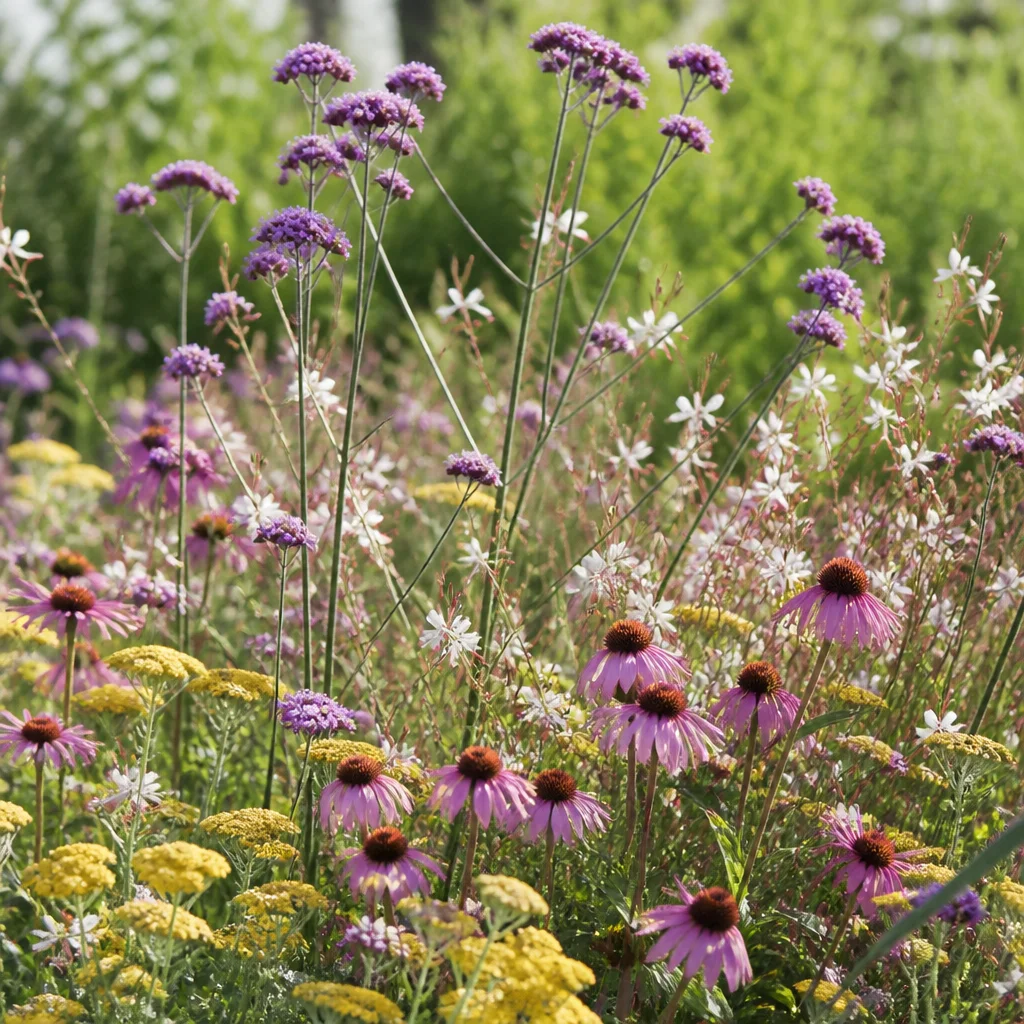
Choose a color palette that can survive a long season
Because long-blooming borders remain on display for months, color needs to stay comfortable over time. A restrained palette of purples, pinks, blues, soft oranges, and warm yellows usually ages better than an intense mix of every bright shade. Pollinator-friendly planting often looks most generous when repeated colors weave through different flower shapes, linking early and late performers into one readable composition. That does not mean the border must be muted. Strong accents are effective when they are intentional and repeated, such as a thread of hot red monarda or rich orange helenium appearing in more than one place. The key is to avoid one-off color interruptions that look accidental once the season gets busy. If in doubt, let foliage and form do some of the work so the flowers do not have to shout all at once.
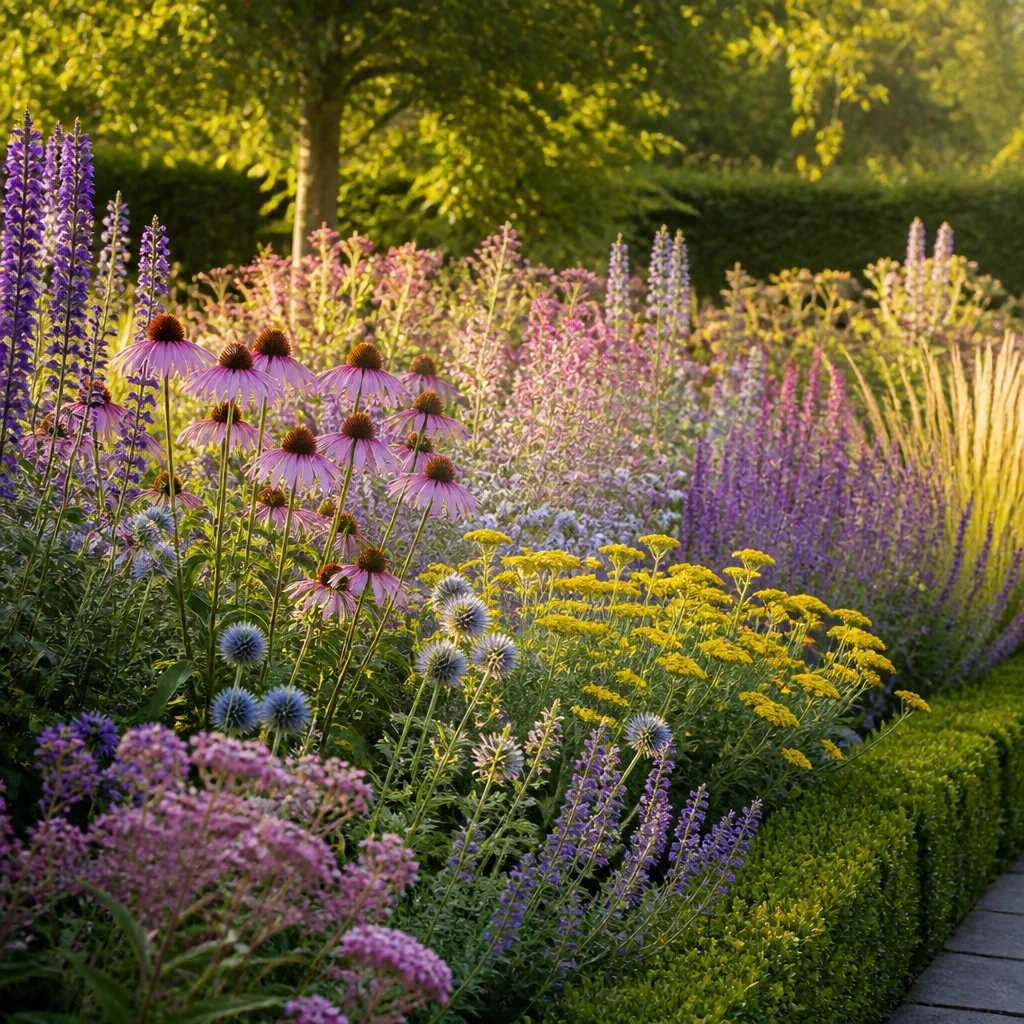
Encourage repeat flowering with timely cutting back and deadheading
Many of the best long-blooming perennials give more when they are lightly managed. Deadheading spent flowers on coreopsis, scabiosa, gaillardia, and some salvias can keep buds coming instead of allowing plants to move quickly into seed. A gentle trim after the first flush of catmint or salvia often produces fresh foliage and another wave of bloom, helping the bed regain neatness without losing its relaxed character. The trick is to be selective rather than overzealous. Leave some seedheads later in the season for structure and wildlife value, but intervene earlier when a plant is clearly exhausted and likely to respond. In a large border, work in sections so the whole planting never looks freshly cut at once. This staggered approach preserves continuity and keeps pollinators supplied while new flowers develop.
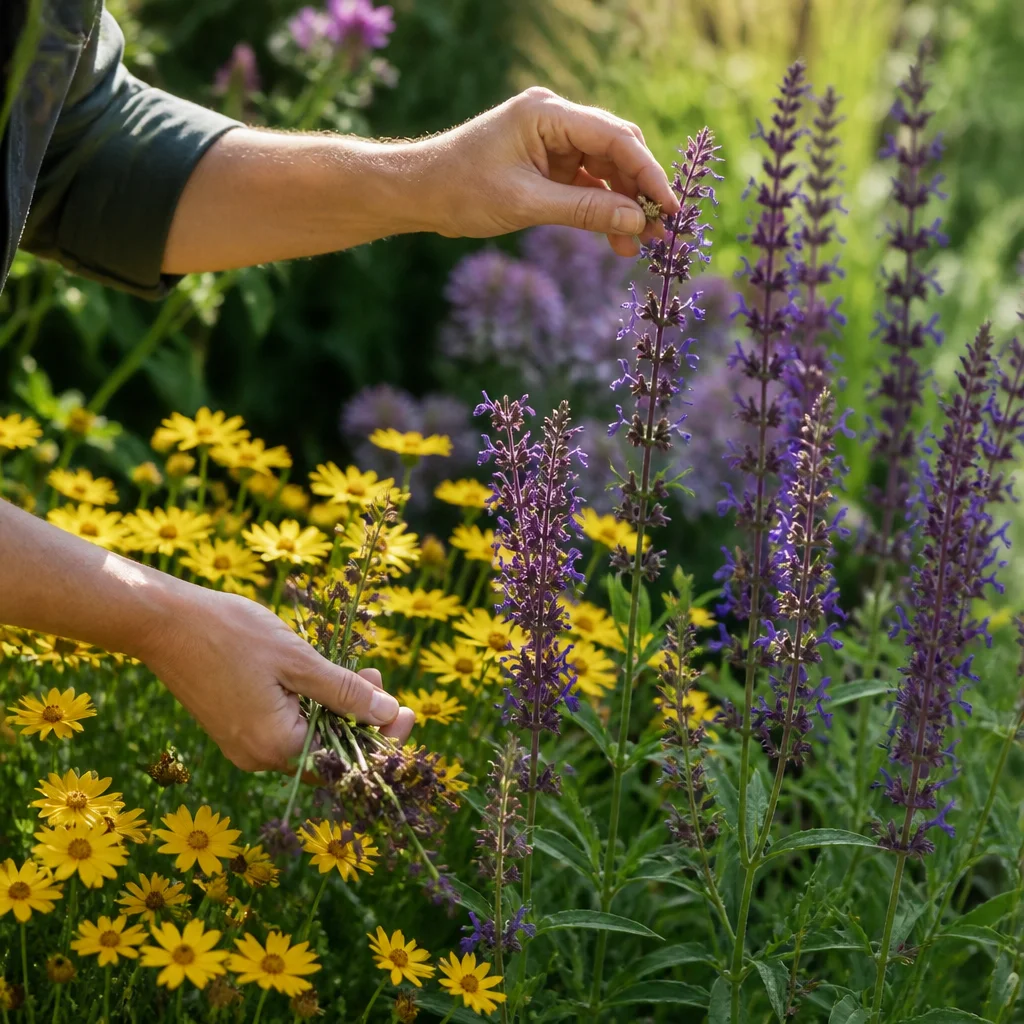
Support pollinators with simple, open flowers alongside showier forms
Double flowers and heavily ruffled blooms may have ornamental value, but a border focused on wildlife is usually more generous when many of its perennials have accessible centers. Open echinacea, single helenium, achillea, asters, and single-flowered salvias tend to be more useful than densely packed blooms that hide pollen and nectar. This also helps the bed look lighter and more natural over a long season. That does not require a strictly wild look. You can still include a few bolder ornamental forms, but let the backbone of the planting remain easy to read and easy for insects to use. If a plant is attractive for foliage or shape yet less valuable in flower, pair it with nearby nectar-rich companions so the border succeeds both as a design and as a habitat.
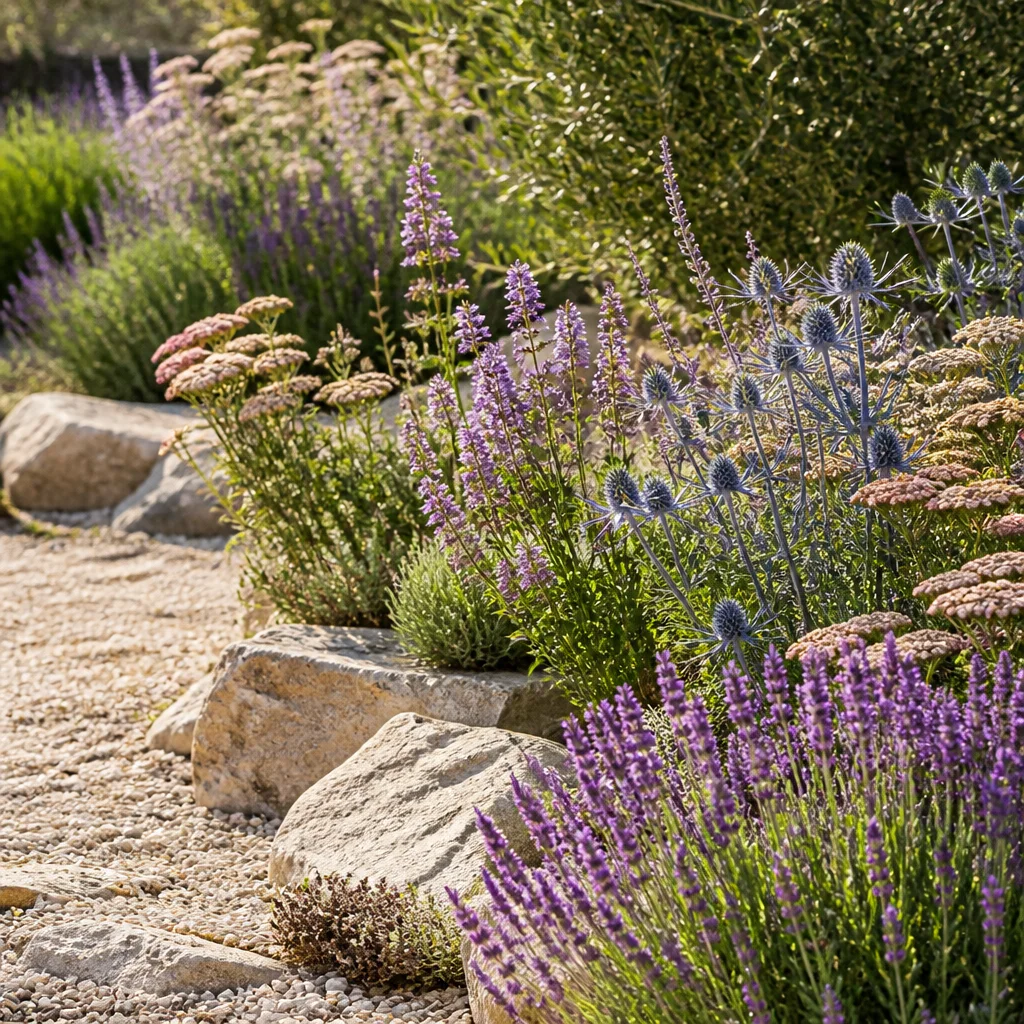
Use drought-tolerant perennials where heat and reflected sun are strongest
Sunny borders often include difficult spots near paths, walls, driveways, or gravel where reflected heat shortens flowering unless plants are adapted to it. In these areas, perennials such as lavender, nepeta, gaura, eryngium, achillea, and agastache can continue performing with less stress than thirstier choices. Their resilience helps keep the border blooming through hot spells, which is exactly when pollinator forage can become patchy. Match the toughest plants to the hardest places rather than trying to make the whole border equally lush. This creates a more stable planting and reduces the cycle of heavy watering followed by flop. Dry-tolerant combinations also tend to have a relaxed, silvery, aromatic character that suits sunny borders beautifully and adds sensory appeal for gardeners walking past.
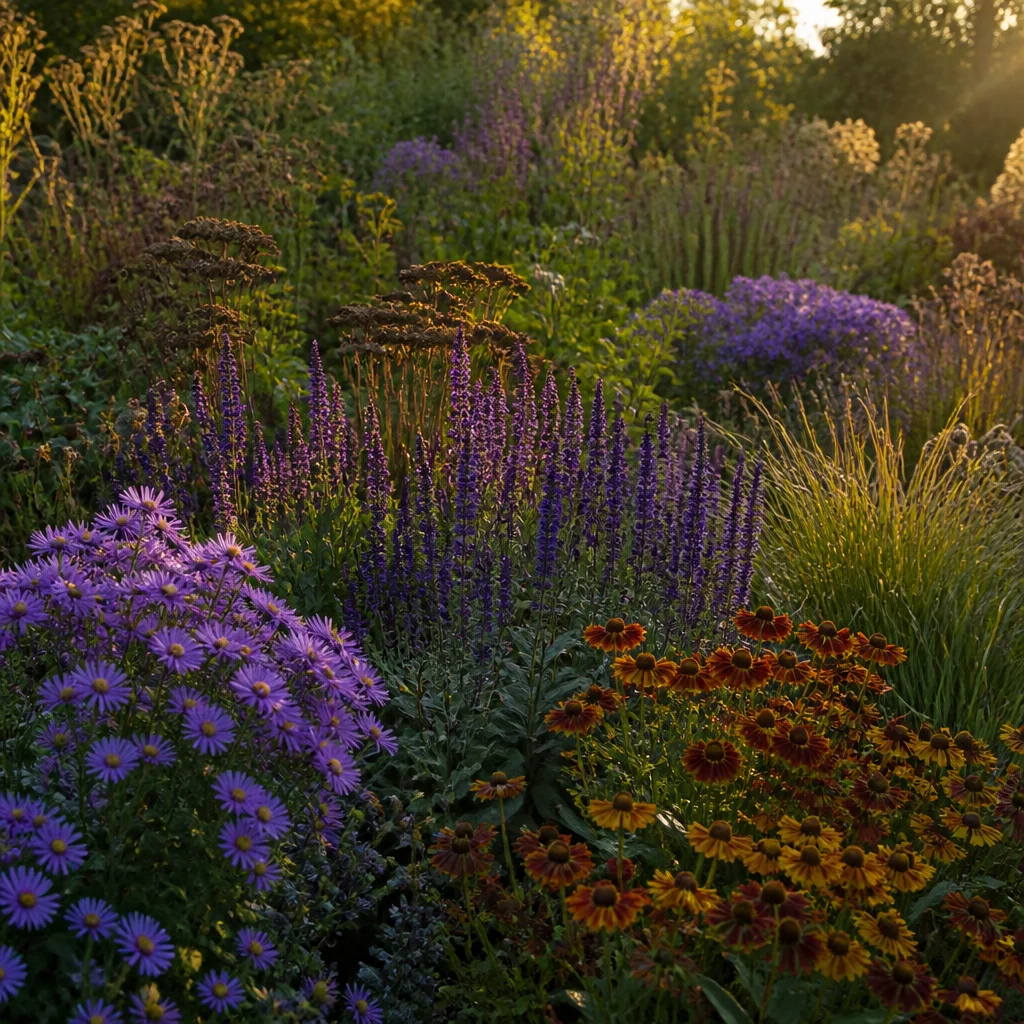
Leave room for late-season stars instead of letting summer plants smother them
A common mistake in richly planted sunny beds is allowing vigorous summer perennials to occupy every inch by midsummer, leaving no space for autumn performers to shine. Asters, late salvias, helenium, and Japanese anemones in suitable sunny positions all need light and air if they are to flower well when the season turns. Planning for their eventual spread is part of building a border that remains exciting into fall. Give late performers clear pockets among earlier plants rather than hiding them behind taller summer masses. Even a modest gap in June can be filled by neighboring foliage while a later perennial develops. By September, those reserved spaces prevent the border from looking tired or overcrowded and ensure there is still nectar, color, and movement when many gardens are winding down.
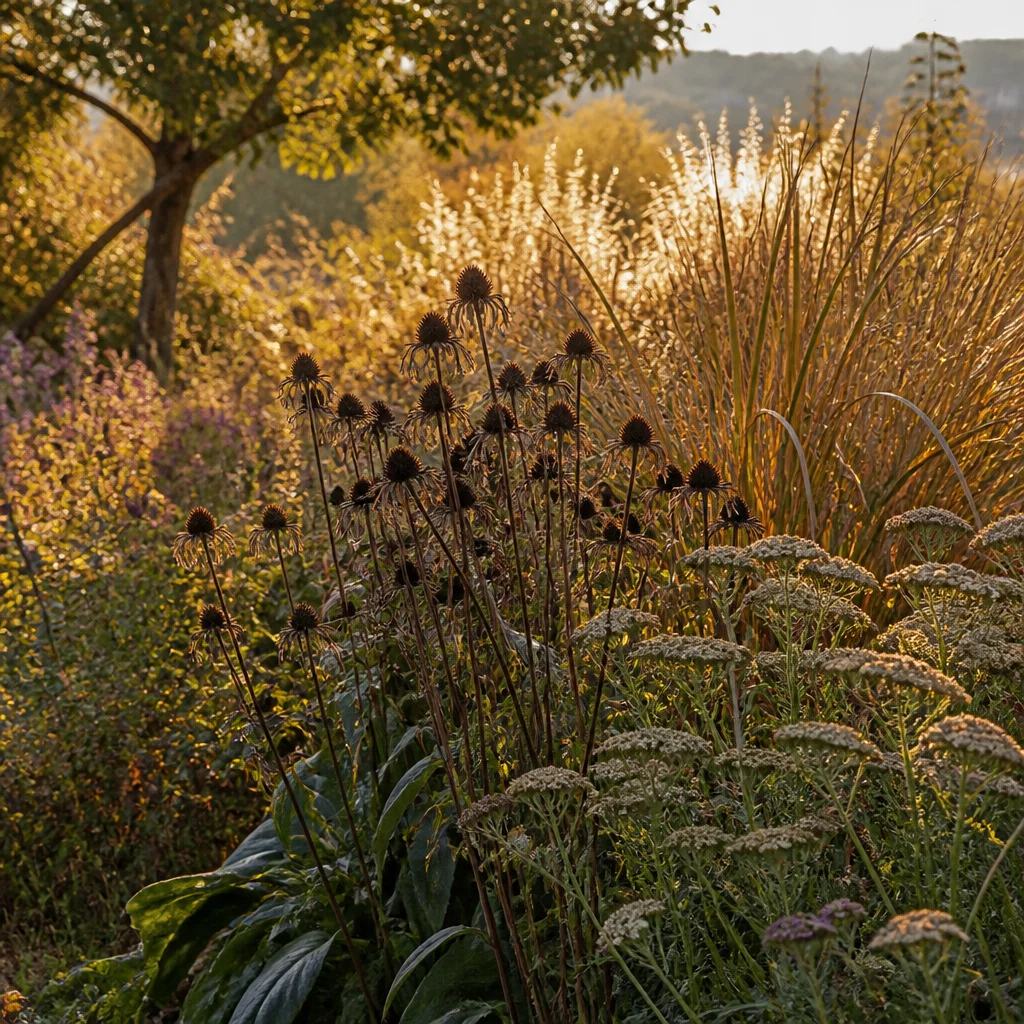
Finish with seedheads, grasses, and foliage that hold the border together
Continuous interest is not only about flowers. A truly successful long-blooming border still looks satisfying when some plants are resting, and that comes from keeping seedheads, attractive foliage, and a few compatible grasses in the composition. Coneflower seedheads, yarrow umbels, and the fading structure of salvias can all contribute texture after peak bloom, while grasses or grass-like plants add softness and connect the planting from one season to the next. This final layer of structure is what stops a pollinator border from feeling overdependent on constant flowering. It also supports wildlife beyond nectar season and gives the bed a settled, generous look. When choosing perennials, consider not only how long they bloom, but how they behave before flowering, after flowering, and through the seasonal handover into autumn.
How did this story make you feel?
Choose one reaction. You can change it later.