Perennials7 min read
Shade-Loving Perennials That Add Texture, Flowers, and Structure
A shady border does not have to fade into the background. In fact, lower-light areas often offer the richest opportunities for contrast, because leaf shape, surface, and scale become as important as flower color. When you combine strong foliage with carefully timed bloom and a few anchor plants that hold their form, a shade planting can feel generous, layered, and complete from spring to autumn. The key is to think beyond a simple collection of separate plants. A full-looking border is built in layers: ground-hugging plants that knit the soil, mounded perennials that add rhythm through the middle, and larger leaves or upright flower stems that give the planting height and structure. With the right mix of shade-loving perennials, even a difficult corner can become one of the most inviting parts of the garden.

Start with foliage that carries the border between flowering moments
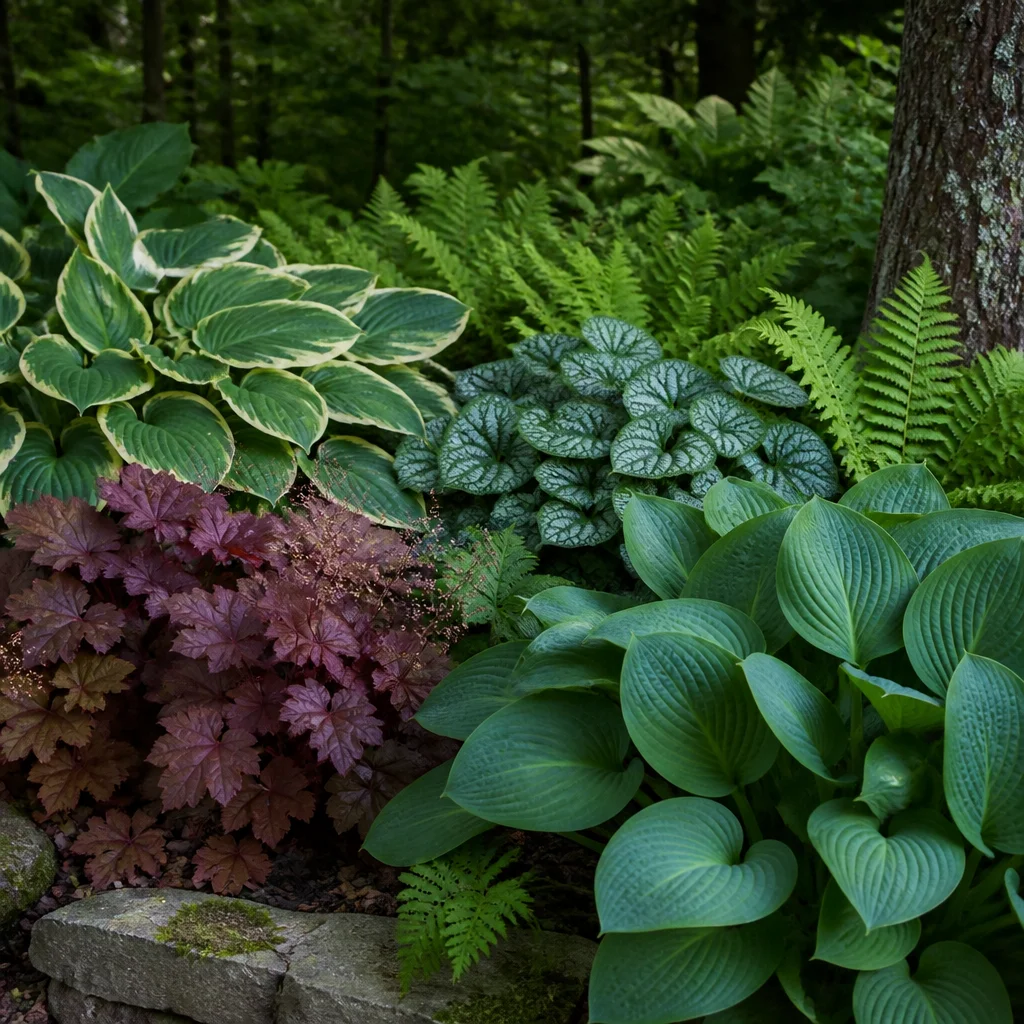
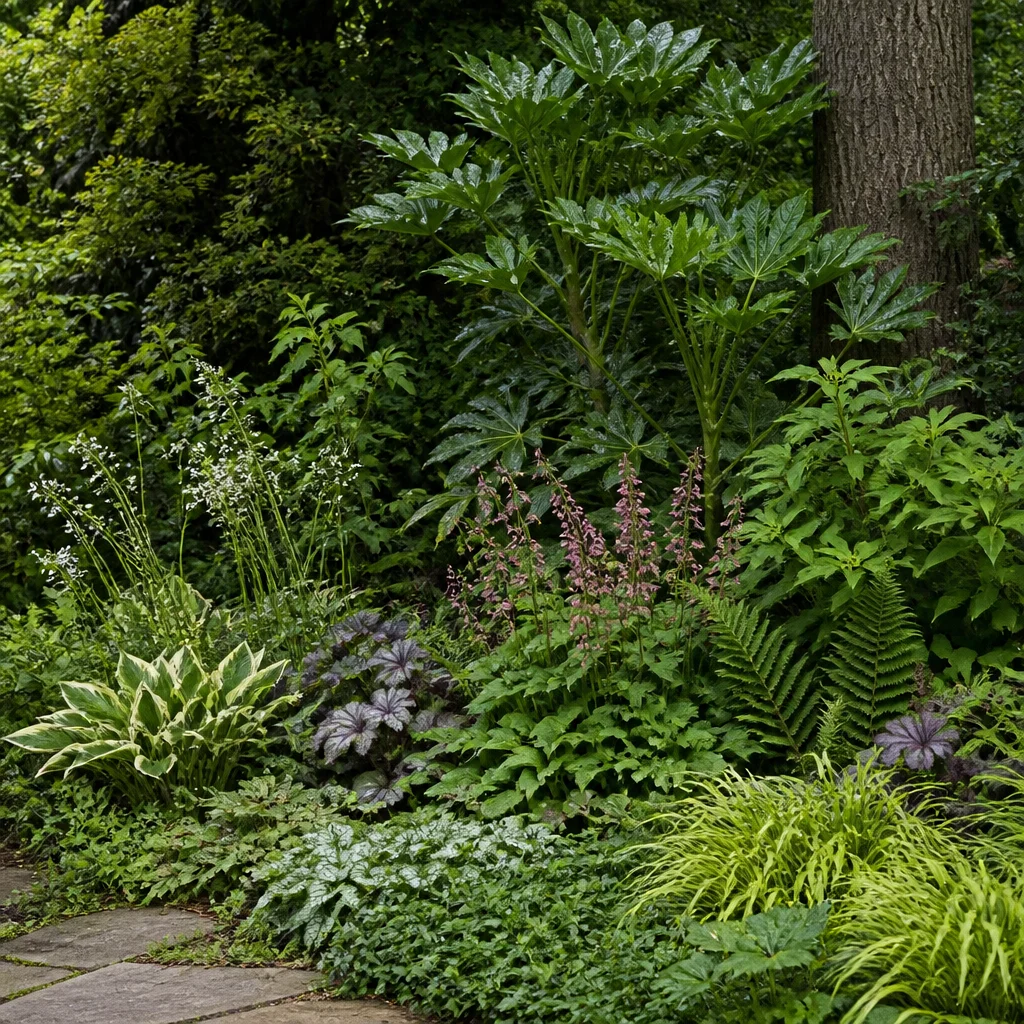
In shade, leaves do much of the visual work, so begin with perennials chosen for distinctive foliage rather than relying only on bloom. Hostas bring broad, restful shapes in blue-green, chartreuse, and variegated combinations. Heucheras add ruffled mounds in deep plum, amber, silver, or lime, while ferns introduce finely divided fronds that immediately soften heavier leaves. Brunnera contributes heart-shaped foliage, often with silver patterning that catches even dim light. When these foliage types are planted together, the border gains texture and depth before a single flower opens. Pair large leaves beside narrow or lacy ones so each form stands out clearly. Repeat one or two foliage colors through the bed, such as blue-green hostas echoed near silver brunnera, to create cohesion. This approach prevents a shady planting from looking empty after short bloom periods and gives the whole border a steady visual presence.
Use layered heights to make a shady bed feel deep rather than flat
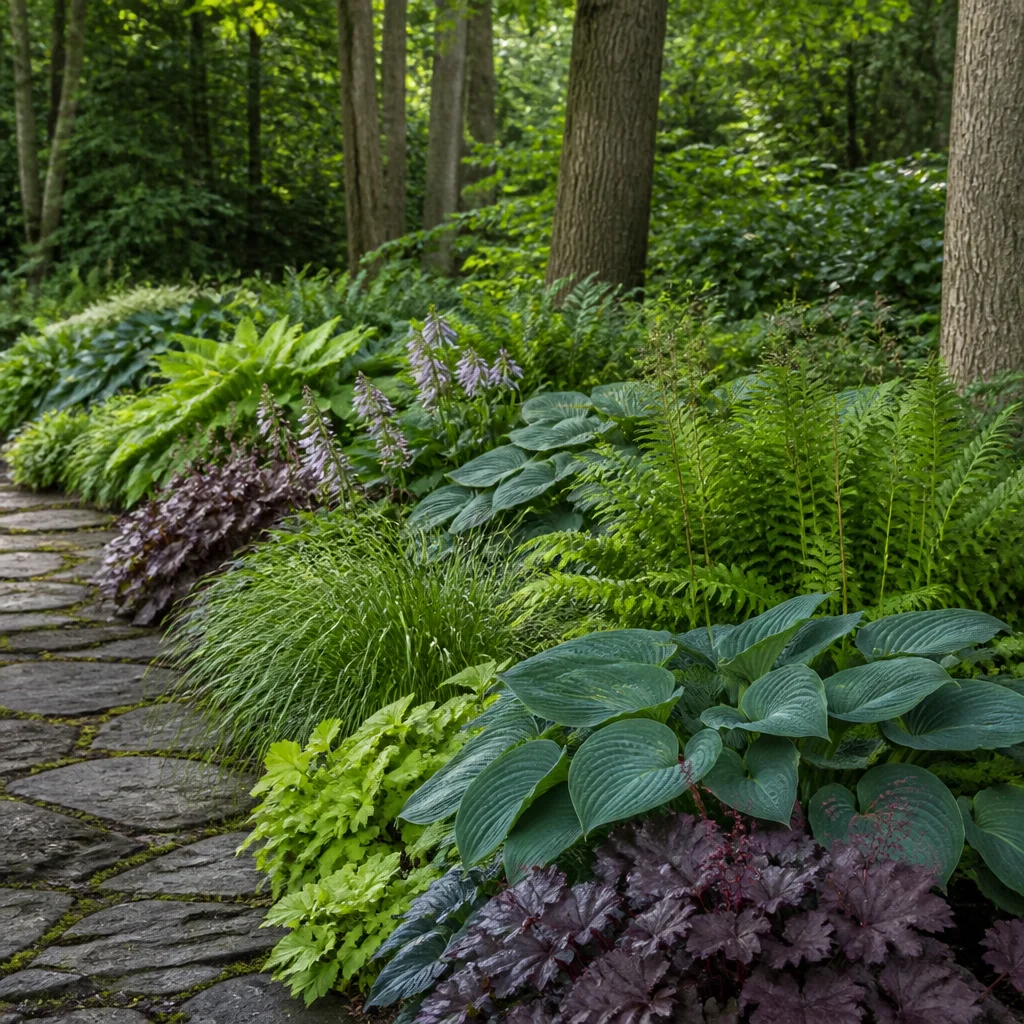
A common problem in shade borders is a wall of medium-height plants that reads as one undifferentiated mass. To avoid that flat look, arrange perennials in deliberate vertical layers. Low growers such as epimedium, tiarella, and pulmonaria can spread near the front edge. Mid-level plants including heuchera, astilbe, and Japanese painted fern build the body of the border. Taller choices like actaea, rodgersia, and mature hostas rise behind them with stronger outlines. This stepped arrangement creates a sense of depth even in a narrow bed. It also allows each plant to be seen rather than hidden. If your border is viewed from several sides, place taller plants in loose central drifts instead of a hard line at the back. Think in overlapping groups, not rows. The result feels more natural, and the eye moves through the planting instead of stopping at a single plane of leaves.
Rely on spring bloomers to bring life to the season before trees fully leaf out
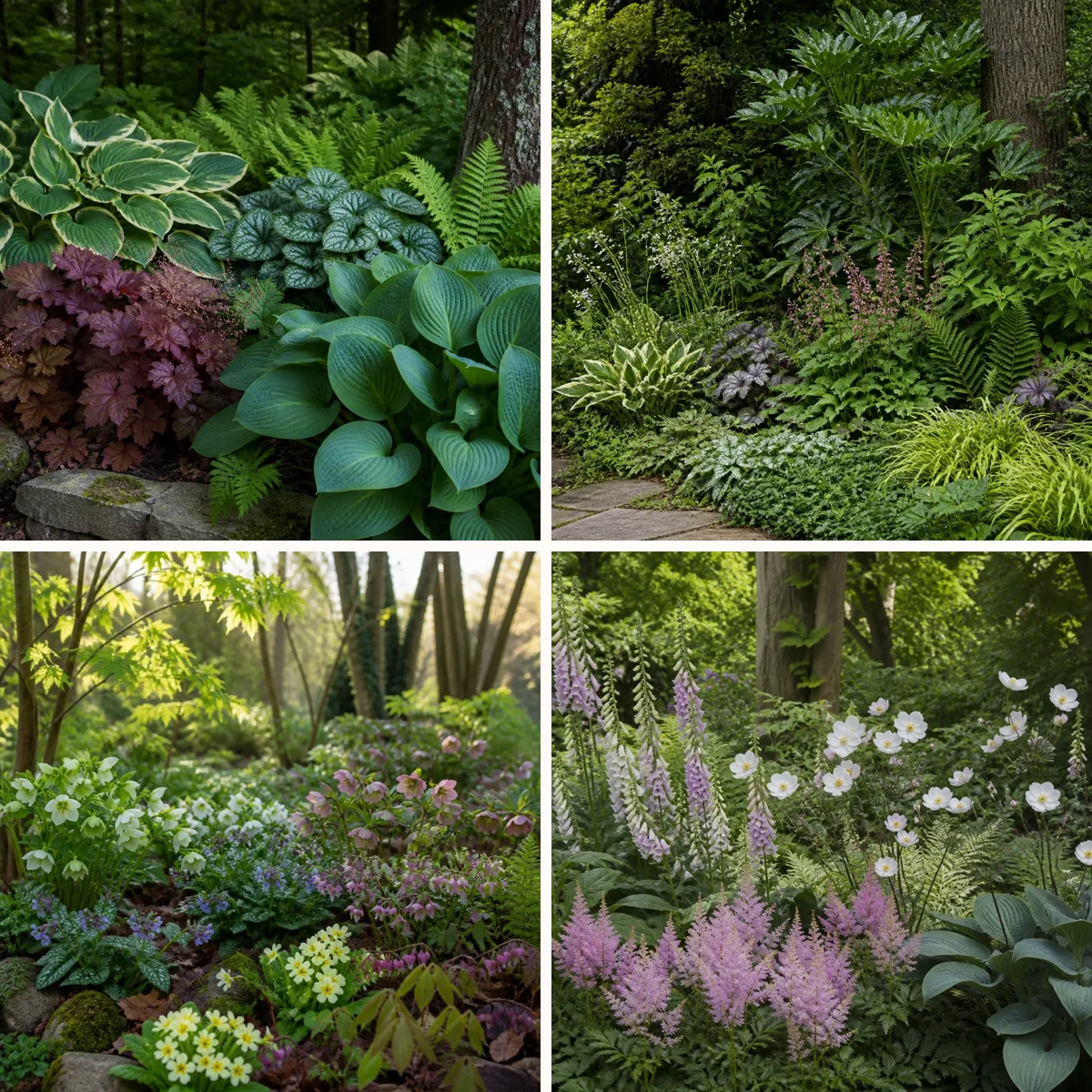
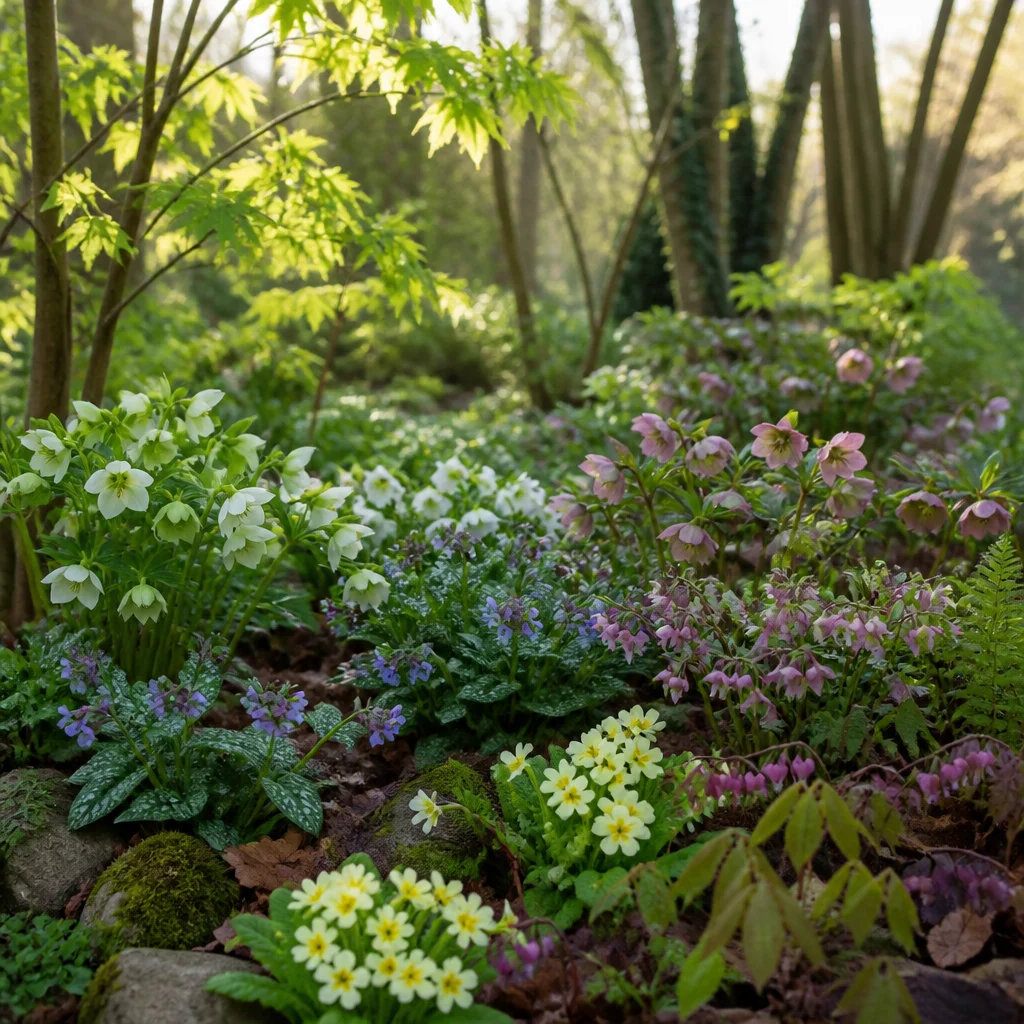
Many shade gardens are at their brightest in spring, when light still filters through branches and early perennials can flower freely. This is the moment for plants such as hellebores, pulmonaria, primroses, epimedium, and woodland phlox. Their blooms arrive when the garden is hungry for color, and many also offer handsome foliage that remains useful after flowering ends. To make spring feel intentional rather than scattered, plant these early bloomers in generous drifts. Hellebores can act as long-lived clumps that anchor the composition, while pulmonaria weaves between them with spotted leaves and pink-to-blue flowers. Epimedium is especially useful under shrubs or trees, where its delicate flowers hover above a reliable carpet of leaves. By concentrating spring performers in visible pockets near paths or entrances, you make the most of the season when shade borders can truly sparkle.
Build summer interest with plume, spire, and daisy-like flowers above the leaves
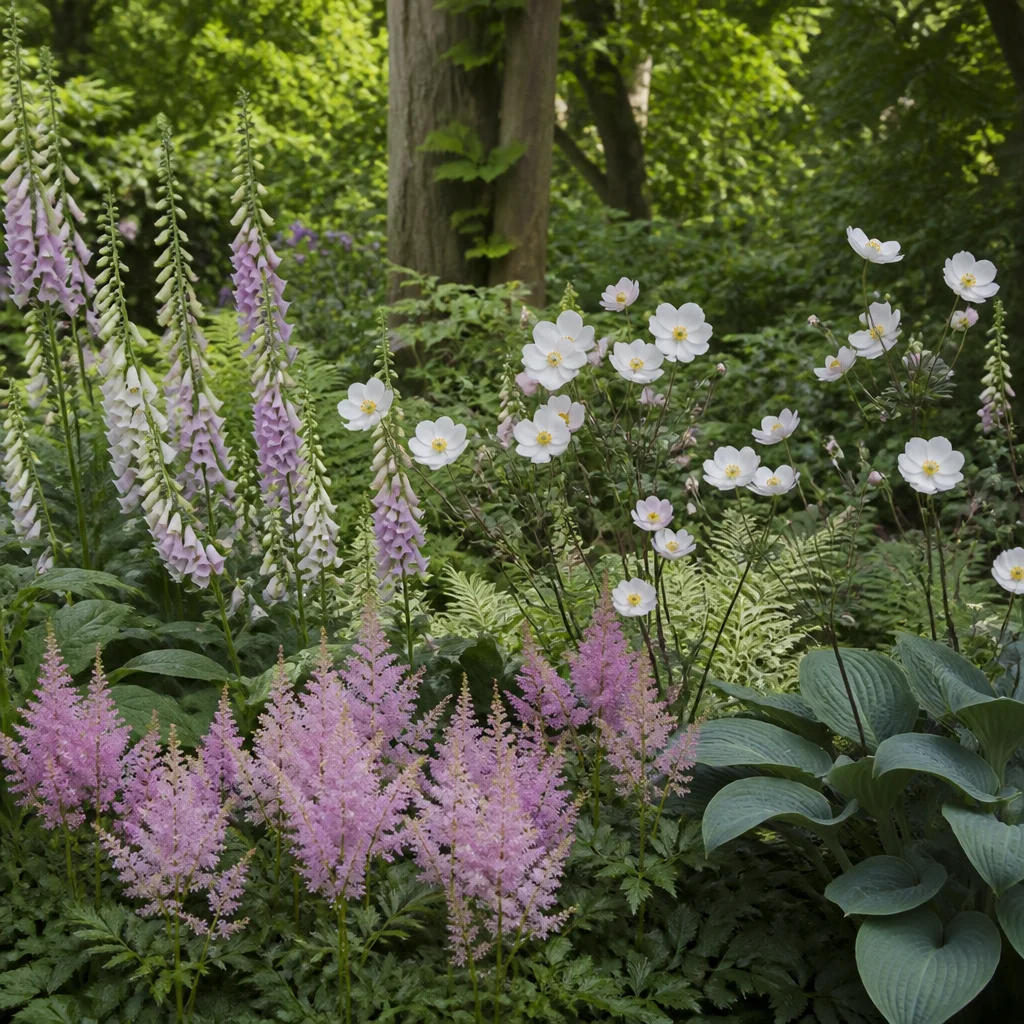
After spring, a shade border needs a second wave of energy, and this is where flower shape matters. Astilbe sends up feathery plumes that contrast beautifully with bold hosta leaves. Foxglove adds vertical spires that pull the eye upward, while Japanese anemones and ligularia provide broader blooms later in the season. Even in subdued light, these flower forms register strongly because they rise above the foliage layer. Try mixing different bloom silhouettes rather than relying on one type. A plume next to a spike, or a rounded flower beside a ferny leaf, creates the kind of contrast that keeps the border lively. Keep color palettes relatively calm if the space is deeply shaded; whites, soft pinks, mauves, and cool purples often read more clearly than very hot tones. This lets flower form and foliage texture take the lead without making the planting feel busy.
Add structural perennials that hold the design together all season
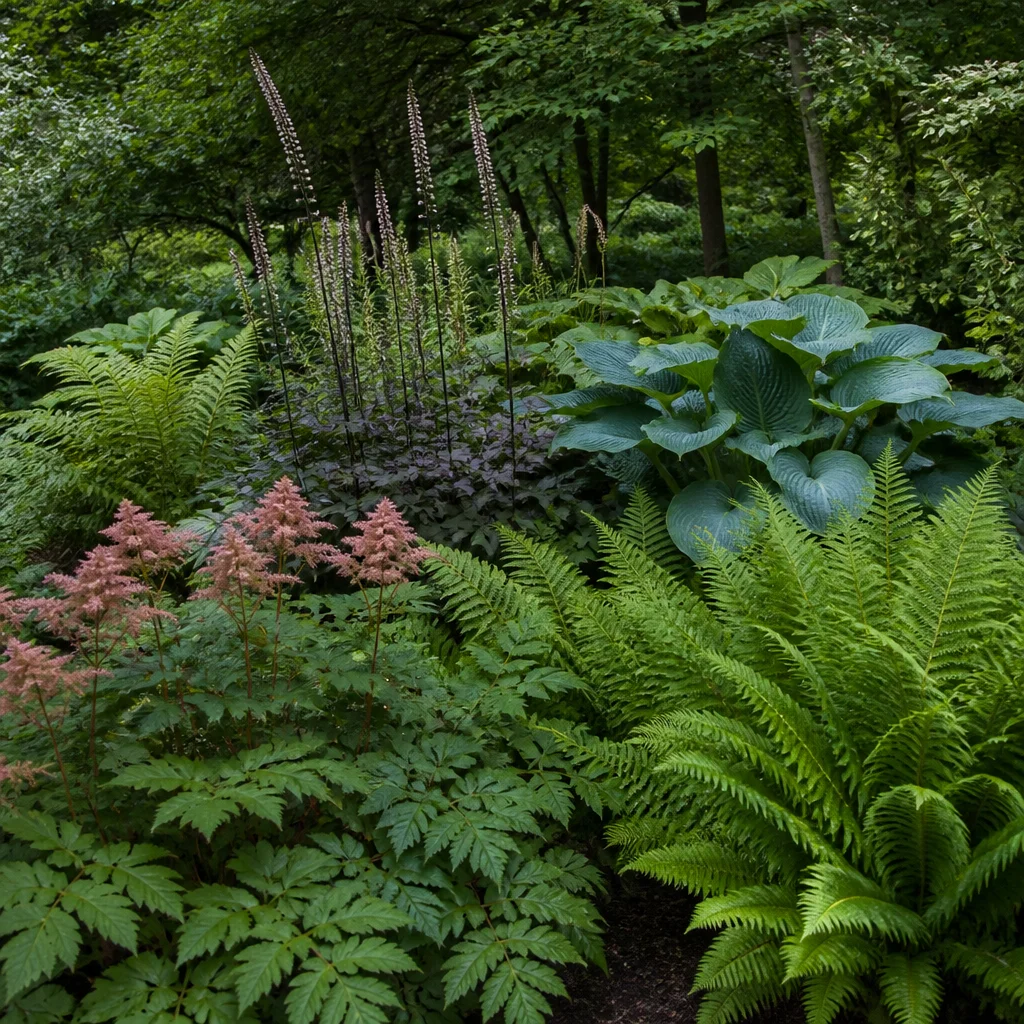
A full border needs a few dependable plants that act almost like shrubs in the composition, giving it bones and permanence. Rodgersia offers bold, architectural leaves that command attention from spring onward. Large hostas can also play this role, especially varieties with strong vase shapes or thick corrugated foliage. Actaea contributes height and elegant late-season flower wands, while some ferns form substantial clumps that reliably return each year. Use these structural perennials as repeated anchors through the bed. Place them at intervals so the eye lands on familiar forms as it moves along the border. This repetition creates order and prevents a collection of smaller shade plants from looking fussy or fragmented. Once your anchors are set, fill around them with softer or more seasonal perennials. The combination gives the planting both stability and movement.
Choose ground-covering perennials to knit gaps and suppress a patchy look
Bare soil can make a shady planting appear thin, even when the main perennials are attractive. Low, spreading perennials help solve this by covering the ground and visually connecting larger clumps. Tiarella, epimedium, ajuga, lamium, and certain hardy geraniums can fill open areas with foliage that softens edges and reduces the stop-start look of isolated plants. The best use of these ground-layer plants is selective rather than overwhelming. Let them flow around larger specimens and spill toward the front of the border, but do not allow one vigorous spreader to swallow every contrast. If your space is dry shade, epimedium is often especially useful because it forms a tidy, resilient carpet. In richer, moister shade, tiarella and ajuga can quickly make the bed look lush. This lower layer is what often turns a border from sparse to settled.
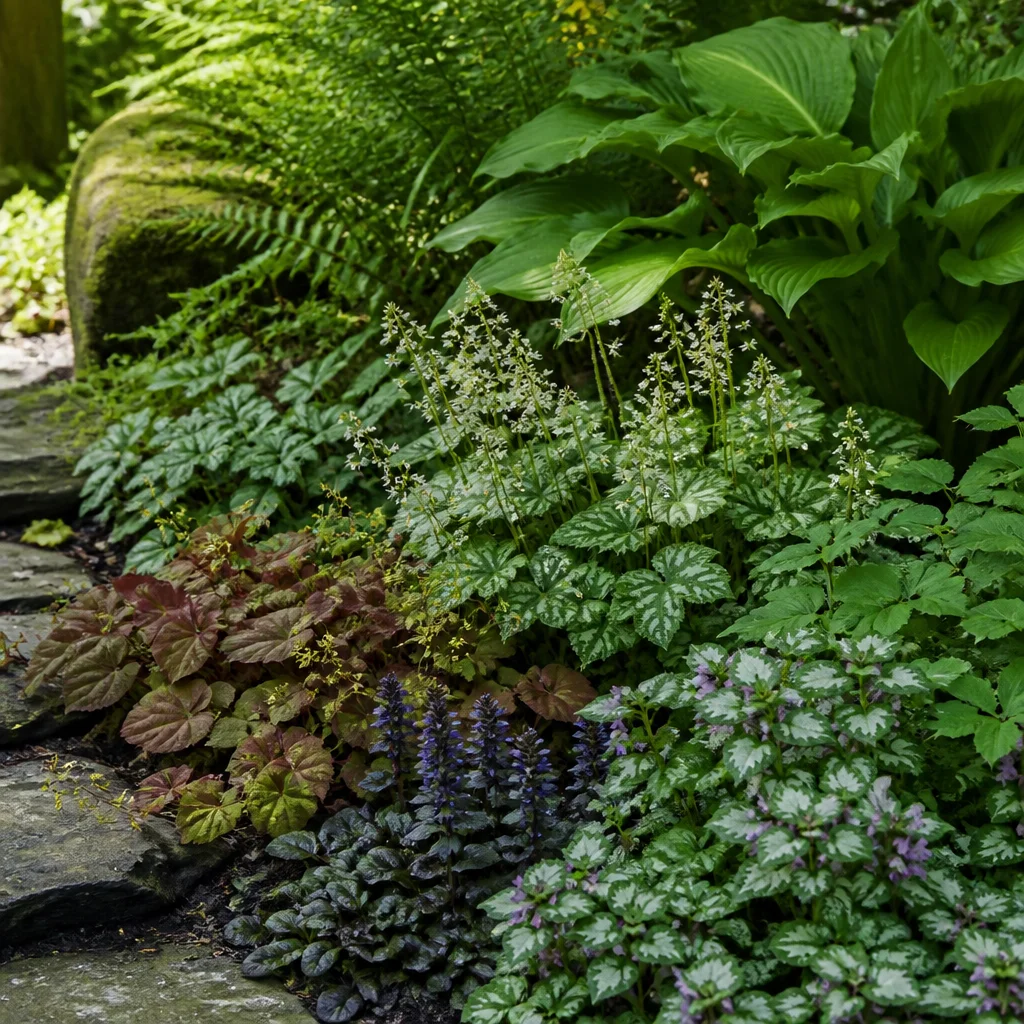
Work with leaf contrast to brighten dark corners without relying on constant color
In deeper shade, flowers may be brief, but foliage contrast can keep the planting luminous for months. Silver-patterned brunnera and pulmonaria can lighten dim spaces, while golden or chartreuse heucheras and hostas bring a gentle glow. These brighter leaves are most effective when set against darker greens, bronzes, or purples, creating enough contrast for the planting to read from a distance. Be disciplined with variegation and bright tones so the border stays elegant. A few repeated highlights are usually more successful than many unrelated leaf patterns. For example, thread silver foliage through one side of the bed, or repeat chartreuse mounds at regular intervals. This creates rhythm and helps illuminate the space naturally. In shady conditions, well-placed foliage color often has more staying power than an ambitious but short-lived display of bloom.
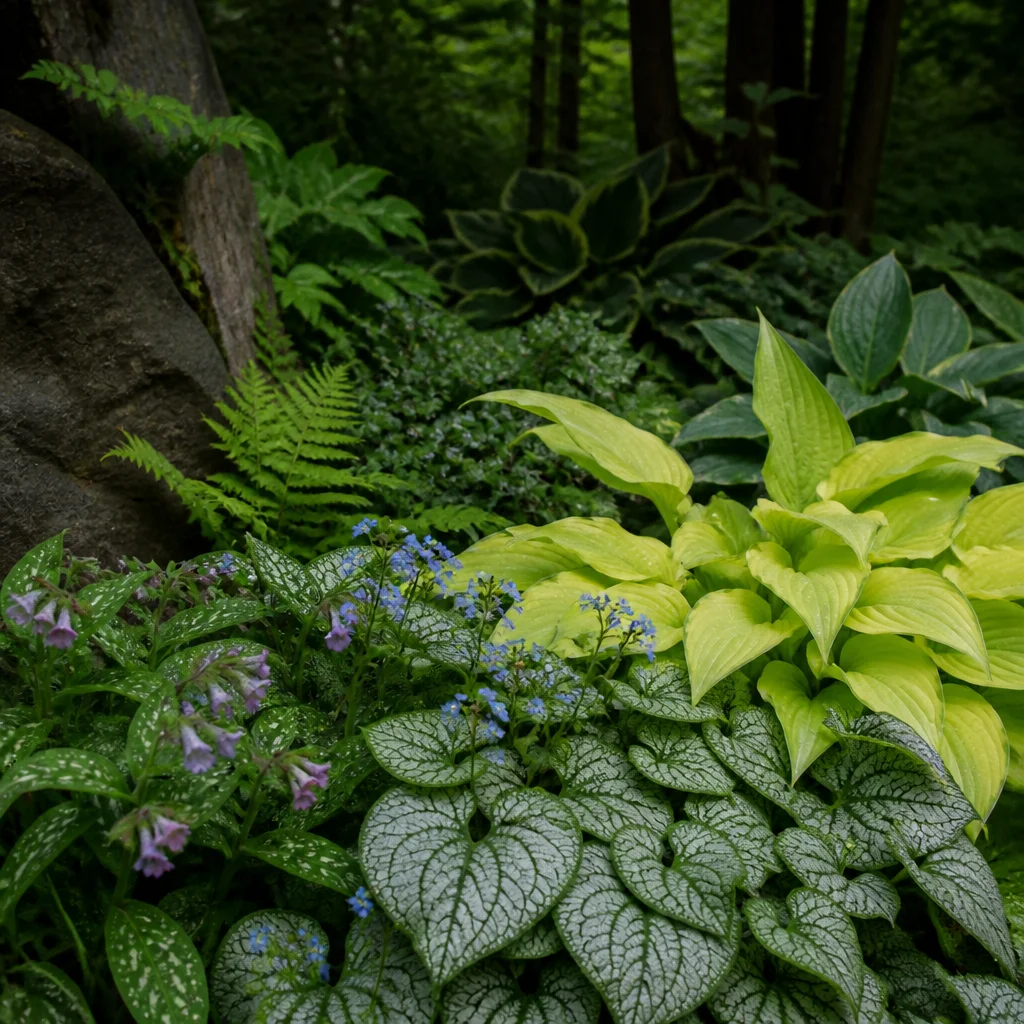
Match moisture and root competition to the right perennial choices
Not all shade is the same, and a border will only feel full when plants are suited to the actual conditions. Moist shade is ideal for astilbe, rodgersia, ligularia, and many ferns, all of which produce large leaves or generous flower displays when the soil does not dry out. Dry shade, especially under established trees, is a tougher setting that calls for durable performers such as epimedium, hellebores, hardy geraniums, and some pulmonarias. Before planting, notice whether tree roots dominate the area, whether the soil stays cool and damp, and how much morning or afternoon sun reaches the bed. Group plants with similar needs together rather than spreading moisture lovers throughout dry ground and hoping for the best. A border looks richer when plants are thriving at their natural size. Correct matching also reduces gaps caused by stress, which is one of the main reasons shady plantings can end up looking uneven.
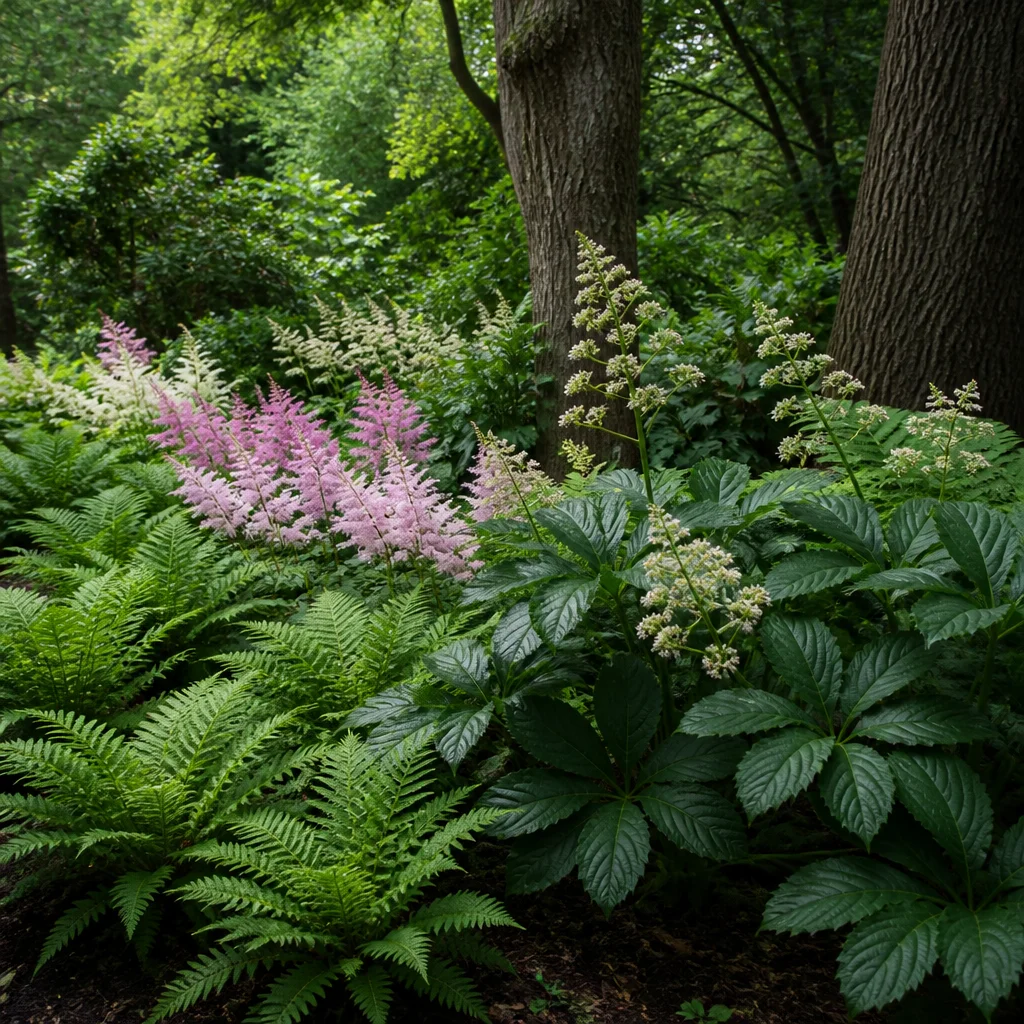
Finish the border with repetition, generous spacing, and a long-season mix
The most successful shade borders are not packed with random one-off plants. They feel full because key perennials are repeated in drifts, giving the eye something to recognize and follow. Instead of buying one each of ten different plants, consider using three or five of the same perennial in several places. Repeat a fern, a heuchera, or a hosta variety so the planting gains rhythm and calm. At the same time, leave enough room for mature width. Shade perennials often broaden beautifully over time, and overcrowding can lead to a congested, flattened effect. Aim for a long-season mix that includes spring flowers, summer bloom, dependable foliage, and a few strong structural clumps that last into autumn. When repetition, proportion, and seasonal layering come together, a shady border feels abundant without becoming chaotic.
How did this story make you feel?
Choose one reaction. You can change it later.