Annual Flowers7 min read
Heat-Tolerant Annual Flowers for Porch Pots, Window Boxes, and Sunny Beds
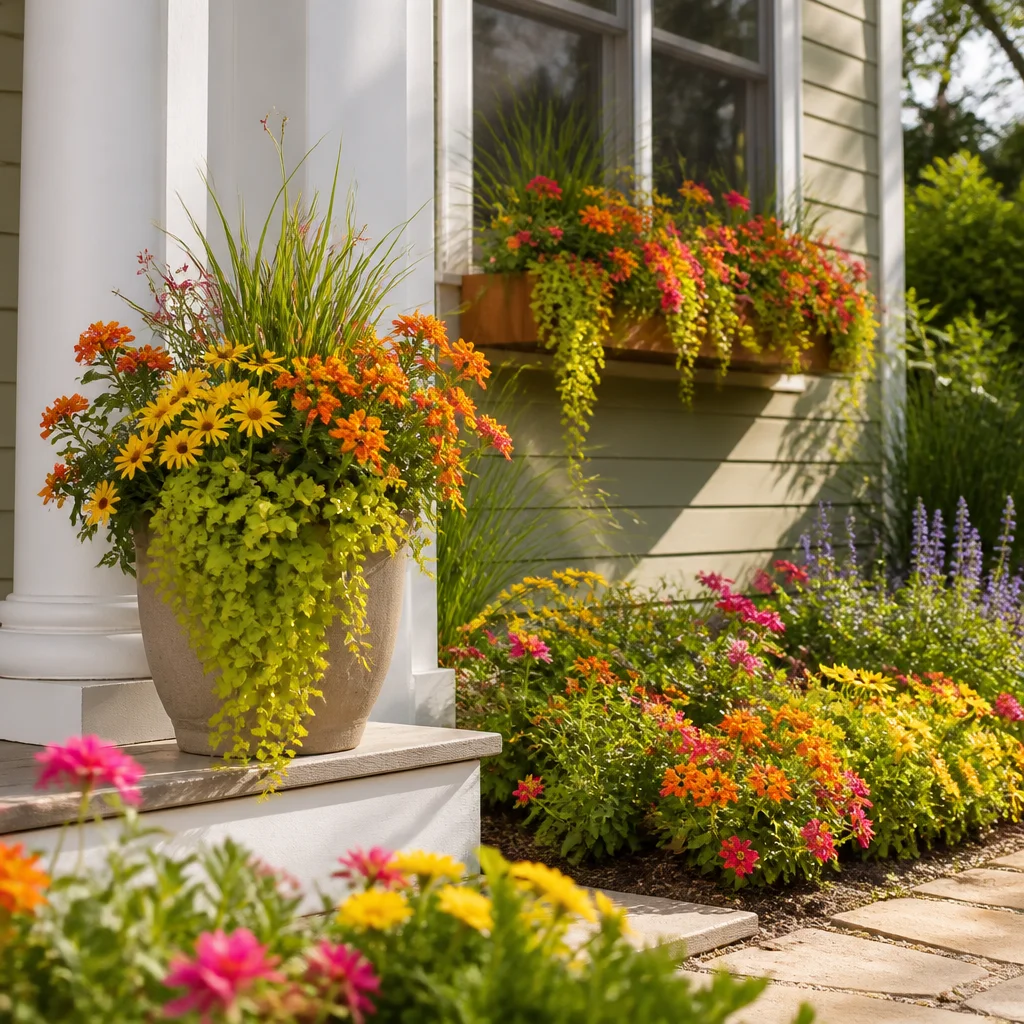
When summer settles in and reflective walls, paving, and railings begin to hold heat well into the evening, not every annual keeps its polish. The best choices for porch pots, window boxes, and sunny beds are the ones that continue to flower, branch well, and look fresh even when the forecast turns relentless. A heat-tolerant display is not only about picking tough plants, but also about combining shapes and habits so the whole planting stays full and balanced through the hottest weeks. A useful way to plan is to think in three forms: upright plants for height and structure, mounding plants for body and color, and trailing plants for movement over edges and between neighboring stems. With that simple framework, even a small container or exposed front bed can look layered, intentional, and lively all season long.
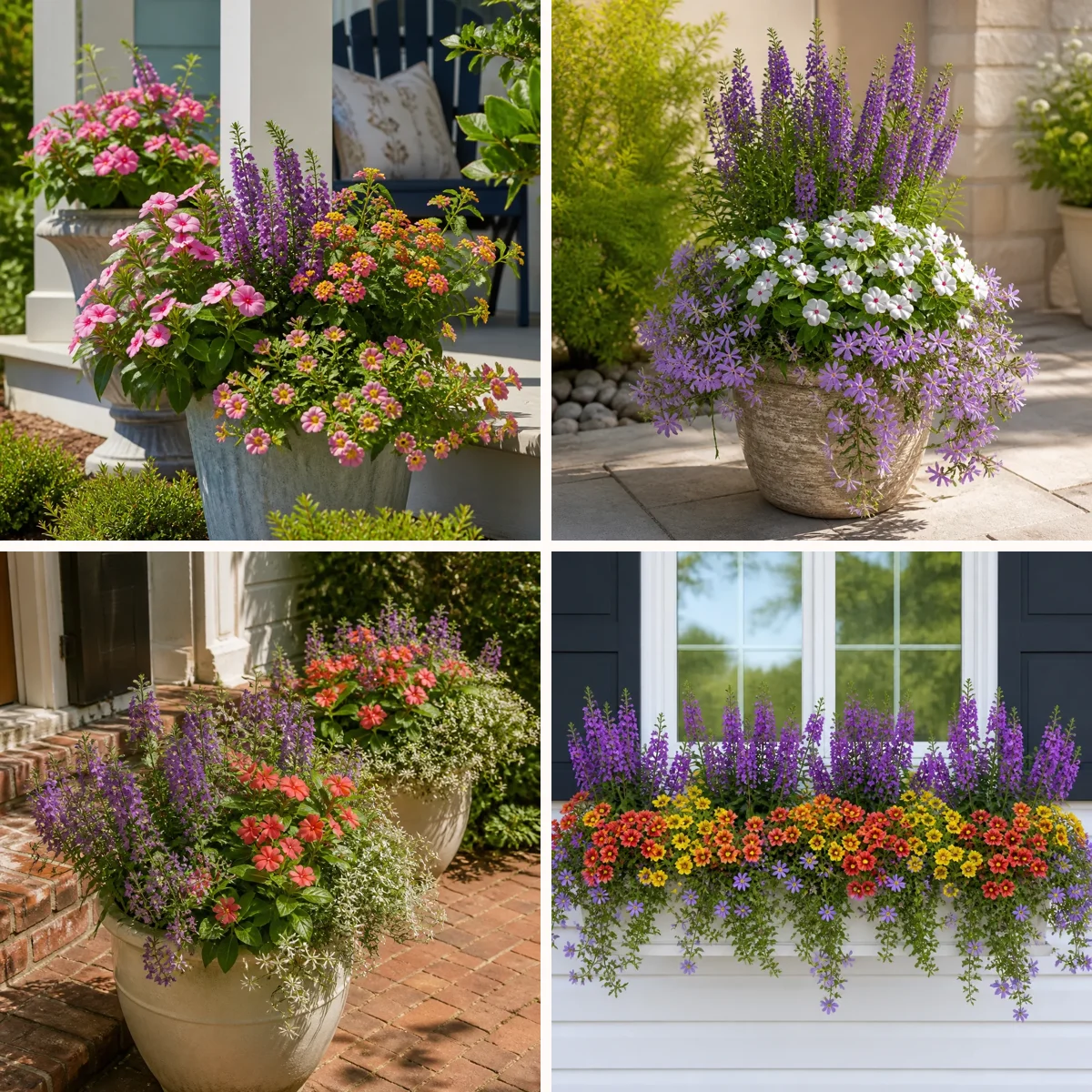

Choose reliable heat performers with clean, lasting color
For consistently sunny positions, start with annuals that are naturally comfortable in warmth rather than trying to force thirsty shade-lovers to cope. Vinca, angelonia, zinnia, lantana, moss rose, gomphrena, pentas, fan flower, and calibrachoa are among the most useful choices because they keep flowering without looking exhausted after a hot afternoon. Many also have neat foliage or self-cleaning blooms, which means containers stay tidier with less deadheading. Think about how each plant behaves as temperatures rise. Vinca and angelonia keep a crisp outline, making them excellent backbone plants. Lantana, fan flower, and calibrachoa broaden and spill, softening hard edges on pots and window boxes. Zinnias and gomphrena bring bright, upright color that still reads clearly from a distance. When you build with proven heat lovers from the start, the whole arrangement needs less rescue watering, less replacement, and fewer midseason corrections.
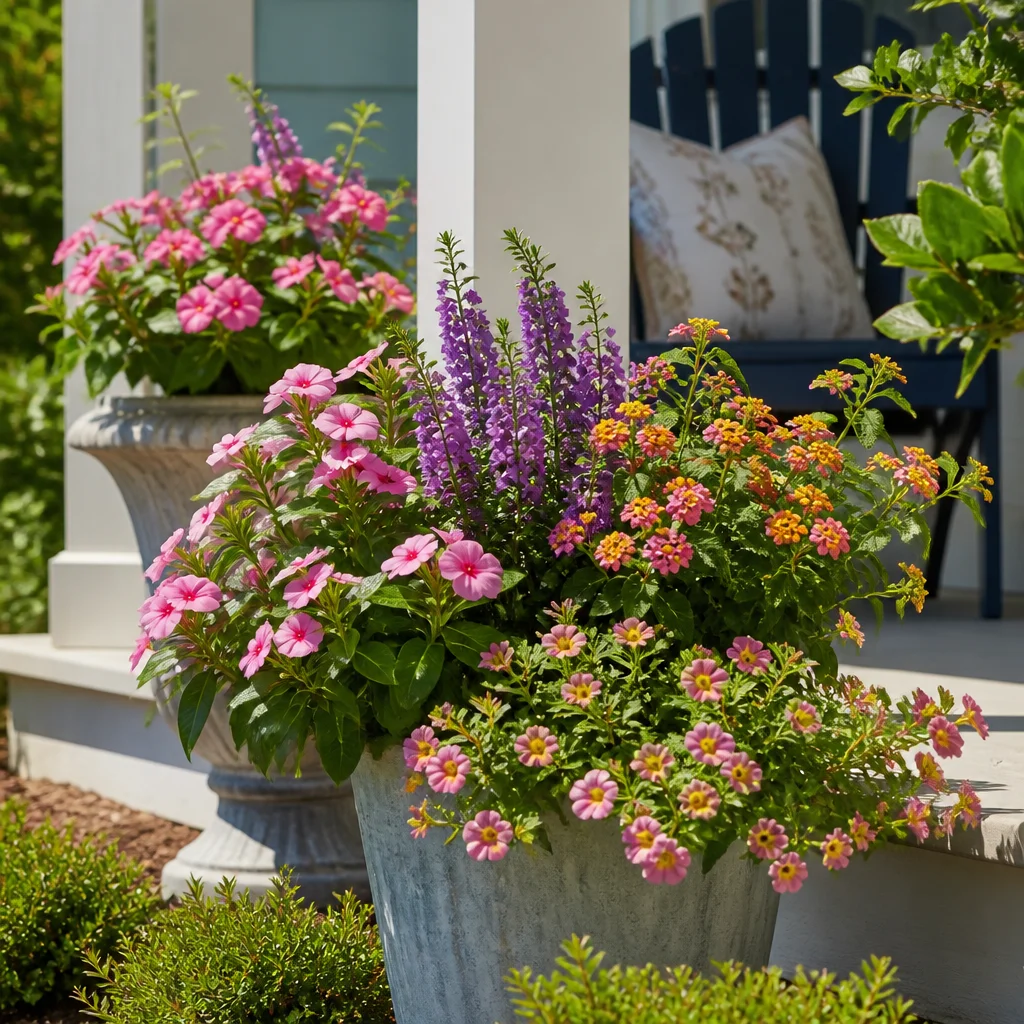
Use the upright, mounding, trailing formula for easy balance
A simple mixed planting becomes much more successful when each plant has a clear role. In a medium porch pot, one upright annual can provide vertical emphasis, two or three mounding plants can fill the center and shoulder area, and one or two trailers can tumble over the rim. This formula keeps the arrangement from becoming top-heavy or flat, and it works just as well in long window boxes where repeated groups create rhythm. Try angelonia as the upright element, vinca or lantana as the mounding layer, and fan flower or calibrachoa as the trailing finish. In sunny beds, use the same principle on a larger scale by placing taller zinnias or pentas toward the back, medium growers in front, and low spreaders such as moss rose near the edge. Repeating this structure from one container or planting section to the next gives a cohesive look even when flower colors vary.
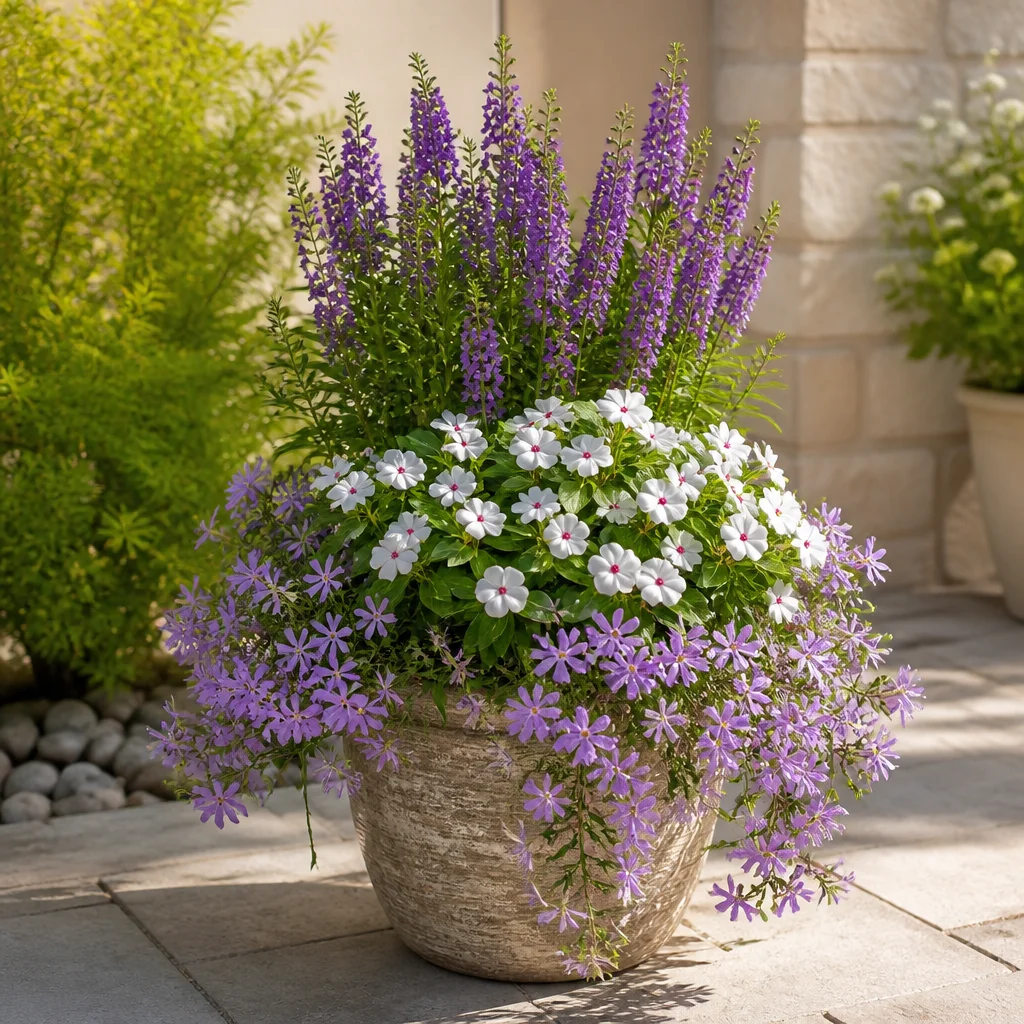
Build porch pots that still look fresh beside hot walls and paving
Porch containers often face extra stress because brick, stone, steps, and dark planters amplify heat around the root zone. In these spots, choose annuals with sturdy foliage and good branching rather than overly soft growth that wilts quickly. A dependable hot-site combination might pair upright purple angelonia, a mound of coral vinca, and white fan flower spilling over the front. The mix is airy enough to handle heat, yet full enough to read well from the curb. Container size matters almost as much as plant choice. A slightly larger pot holds moisture longer and buffers roots from temperature swings, which helps heat-tolerant annuals maintain better color and flower production. If your porch gets reflected afternoon sun, leave a little breathing room between plants at planting time instead of cramming every gap. Within a few weeks, heat-loving annuals usually knit together, and the extra space reduces stress while they establish.
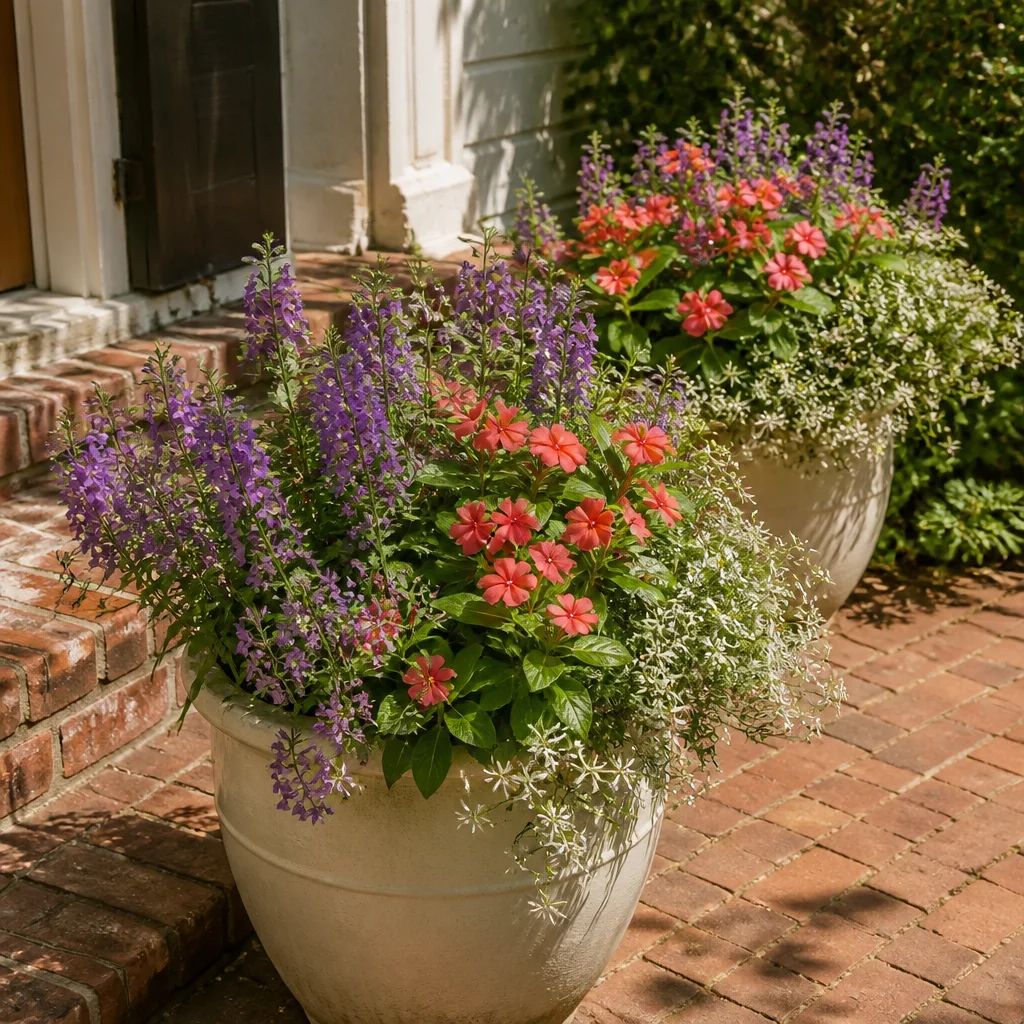
Design window boxes for repeat color and graceful movement
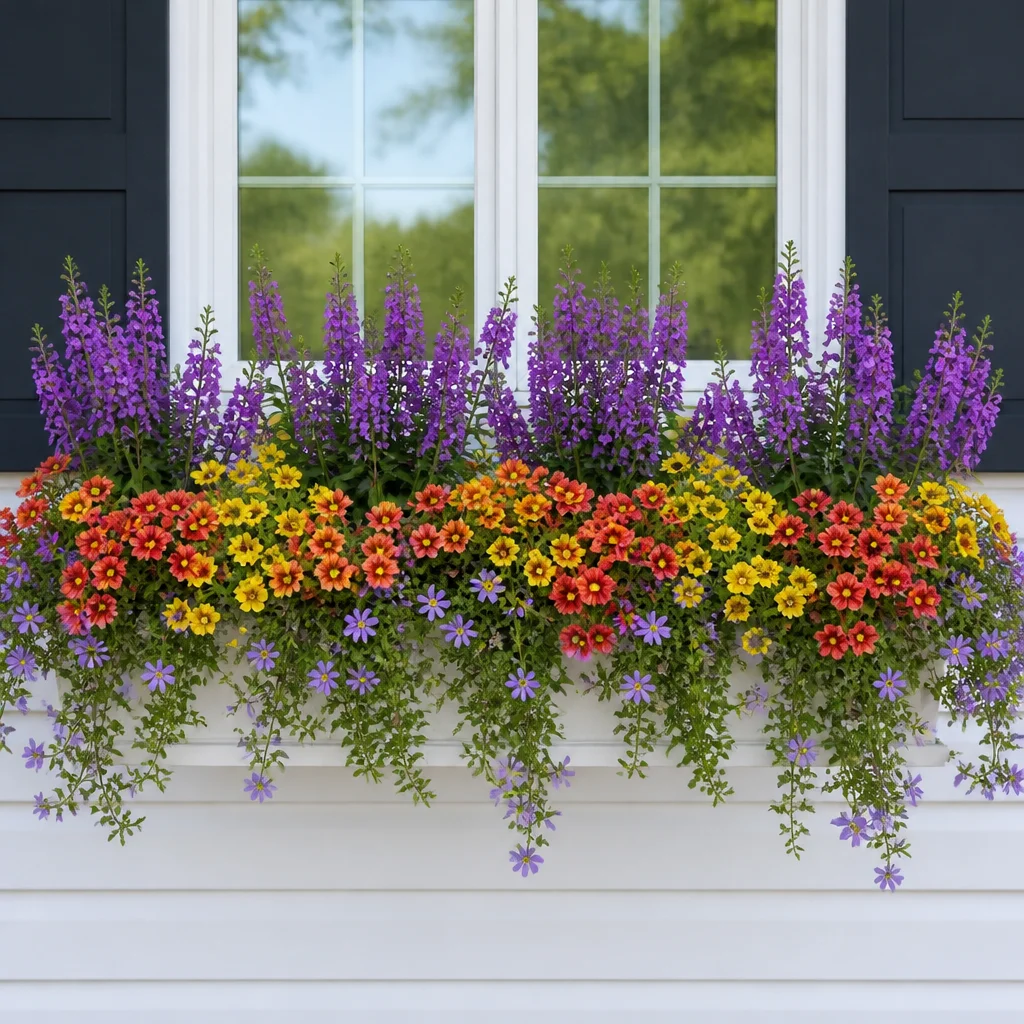
Window boxes benefit from a repeating pattern rather than a random assortment, especially in bright sun where bold forms read best. An easy method is to alternate upright and mounding plants at even intervals, then thread one trailing variety along the front. For example, place compact angelonia at regular points, tuck in mounding calibrachoa or vinca between them, and allow trailing fan flower to weave across the edge. This creates order without stiffness. Because window boxes are viewed straight on, flower colors should be chosen for contrast that remains visible in strong light. Hot pink, white, orange, lavender, and deep purple generally hold their presence better than very pale pastels that can wash out. If the box sits under eaves where rainfall barely reaches, favor varieties known for steady flowering in dry heat, and keep the palette simple so the whole planting reads clearly from both indoors and outdoors.
Create sunny beds with repeating drifts instead of scattered singles
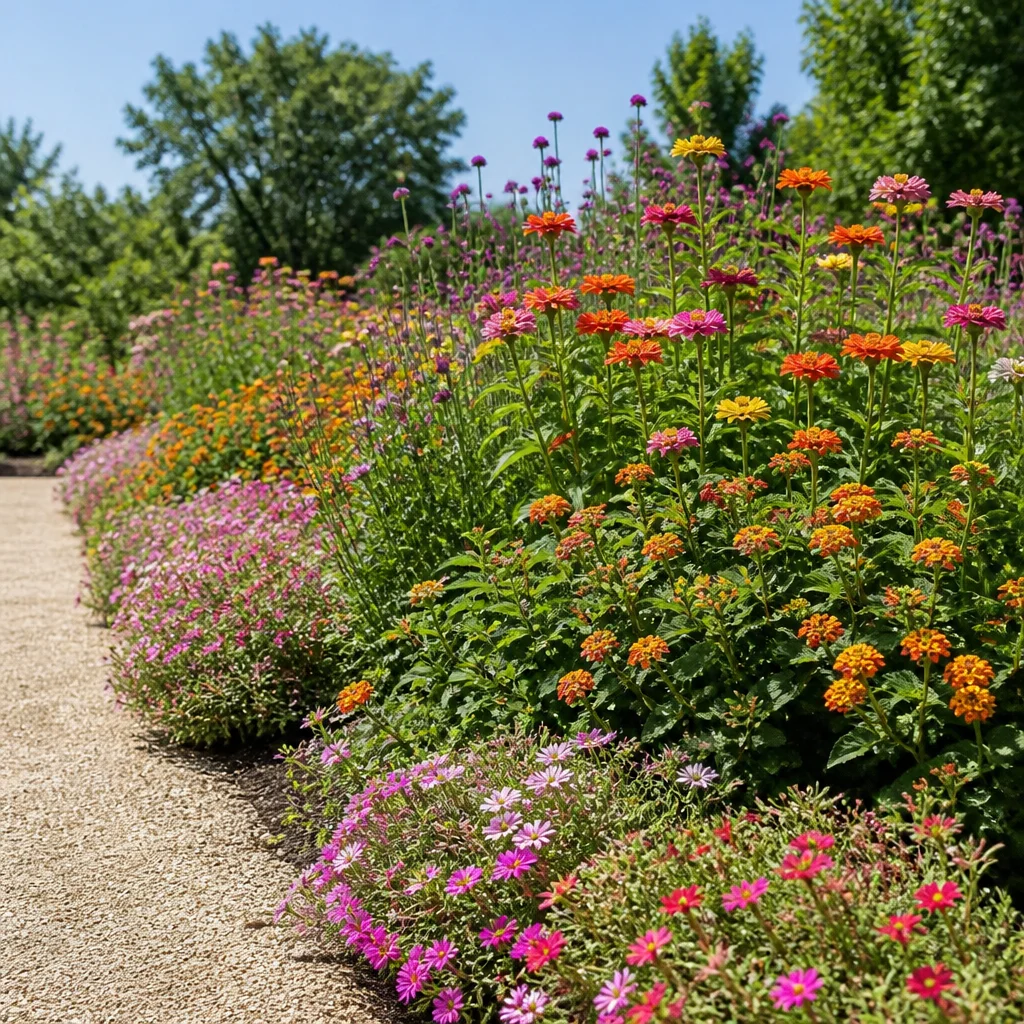
In exposed garden beds, heat-tolerant annuals look strongest when planted in small drifts or clusters rather than as isolated dots. Repeating groups of three, five, or more of the same variety gives a bed enough visual weight to stand up to open sun and broad surroundings. A row of gomphrena or zinnias can provide upright punctuation, while sweeps of lantana or vinca fill the middle ground with steady color. Edge the front of the bed with low annuals that can take heat bouncing off paths and curbs. Moss rose is especially useful here because its succulent foliage stays present even in lean, hot positions, and fan flower can soften a hard border without becoming unruly. When each variety has enough space to form a visible mass, the bed feels calmer, fuller, and much more intentional than a collection of individual plants dotted through mulch.
Let foliage and flower size do some of the styling work
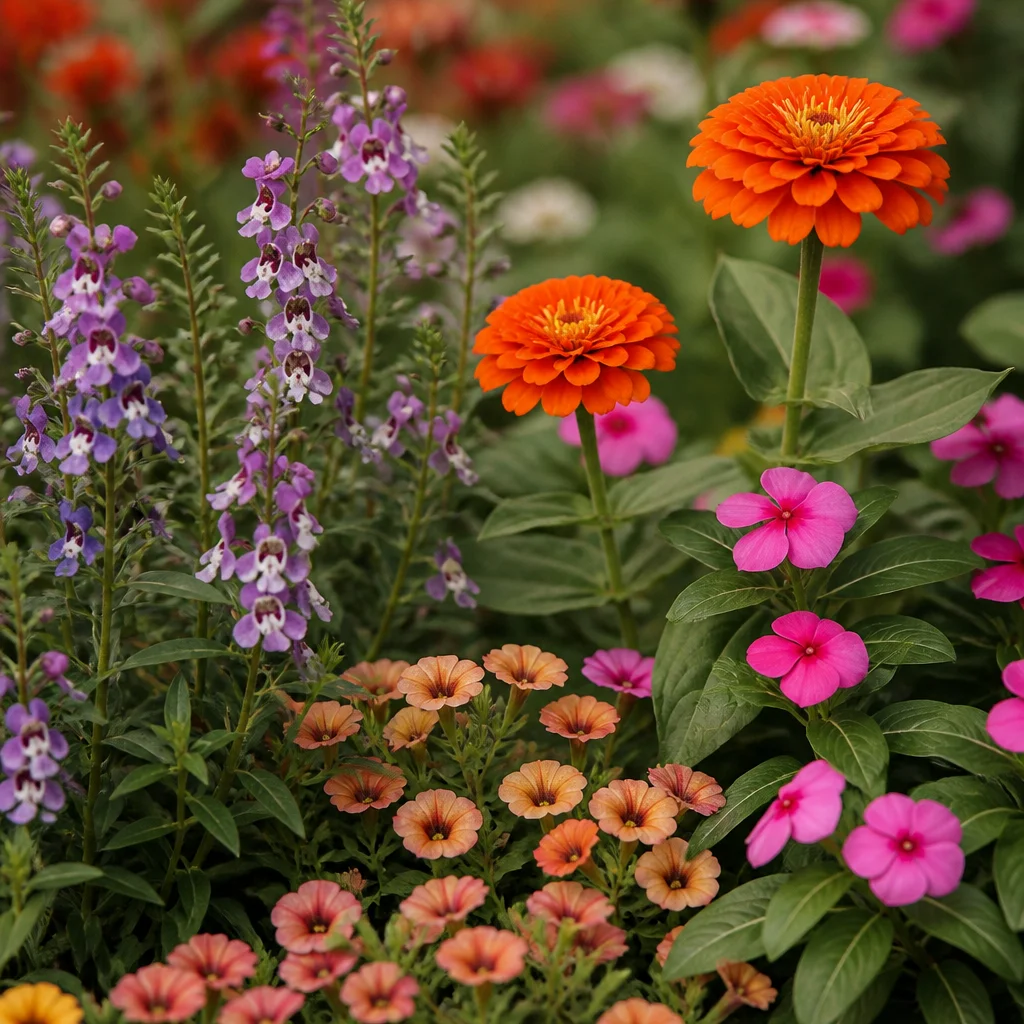
Successful hot-weather plantings are not only about bloom count. Foliage texture, leaf size, and flower scale help arrangements stay attractive between flushes of bloom and through weather shifts. Fine-textured plants such as angelonia and fan flower add lightness, while broader-leaved vinca or lantana give a more solid, sun-proof look. Mixing those textures makes containers feel richer without requiring many different colors. Flower size also changes the mood. Small blooms like calibrachoa or gomphrena create a detailed, sparkling effect, while larger zinnia flowers make a stronger statement from a distance. If you want a porch pot or bed to feel calm, keep bloom sizes fairly consistent and repeat just two or three colors. If you want more energy, combine one large-flowered focal plant with smaller supporting flowers so the display has both impact and intricacy.
Keep summer arrangements blooming with practical maintenance
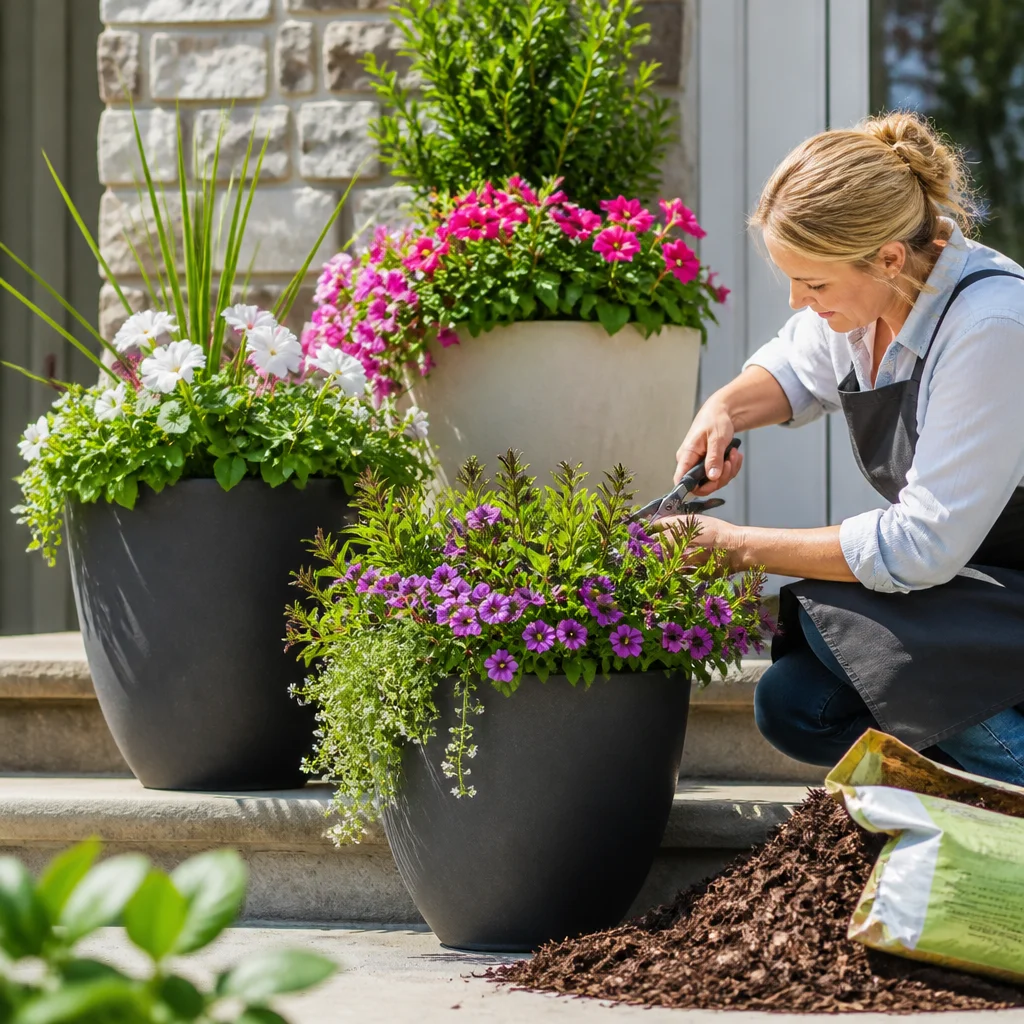
Even the toughest annuals perform better with a little strategic care. In containers, water deeply so moisture reaches the entire root ball, then allow the top layer to dry slightly before watering again rather than giving frequent shallow drinks. A regular feeding routine supports constant flowering, especially for fast bloomers in pots and window boxes that are watered often. Removing occasional tired stems or lightly trimming sprawling growth can quickly restore shape without spoiling the display. In sunny beds, mulch helps moderate soil temperature and slows evaporation around roots, which keeps flower production steadier during hot spells. Pay attention to airflow as plants fill in; crowded stems can reduce vigor and make plantings look fatigued sooner. If one variety starts to dominate, cut it back modestly and let neighboring plants catch up. This light-touch editing is often all that is needed to keep mixed annual plantings handsome through late summer.
Try ready-made combinations for long season color
If you want a foolproof place to begin, use combinations built around one strong upright, one dependable mounding plant, and one trailing accent. For a bright tropical feel, pair rose pentas with golden lantana and purple fan flower. For a cooler palette, combine lavender angelonia, white vinca, and blue trailing fan flower. For a playful high-summer look, use orange zinnias in a bed with magenta gomphrena and a front edge of moss rose in warm mixed shades. You can also adapt the same recipe across several parts of the garden for a linked look. Repeat angelonia in pots by the door, echo the same color with vinca in a window box, and carry the theme into a sunny border with drifts of pentas or zinnias. That repetition makes separate planting areas feel connected, while the mix of upright, mounding, and trailing forms keeps each setting from looking flat. With heat-tolerant annuals chosen for both endurance and shape, summer displays can remain colorful and composed long after the first hot week.
How did this story make you feel?
Choose one reaction. You can change it later.
