Large-Leaf Plants7 min read
Large-Leaf Plants That Make a Bold Indoor Statement Without Overcrowding
Large-leaf plants have a rare talent: they can make a room feel finished with surprisingly little visual clutter. One generous leaf can do the work of several smaller plants, adding shape, contrast, and softness without turning every surface into a display shelf. That makes them especially useful in real homes and apartments, where floor space, light, and circulation matter just as much as style. The key is choosing plants and placements that create presence without bulk. Bold foliage works best when it has room to breathe, a container that suits the scale, and neighboring furniture that does not compete with it. With the right approach, large-leaf plants can frame a sofa, anchor an empty corner, soften hard lines, and bring architectural structure to everyday rooms.

Use one statement plant instead of many smaller ones
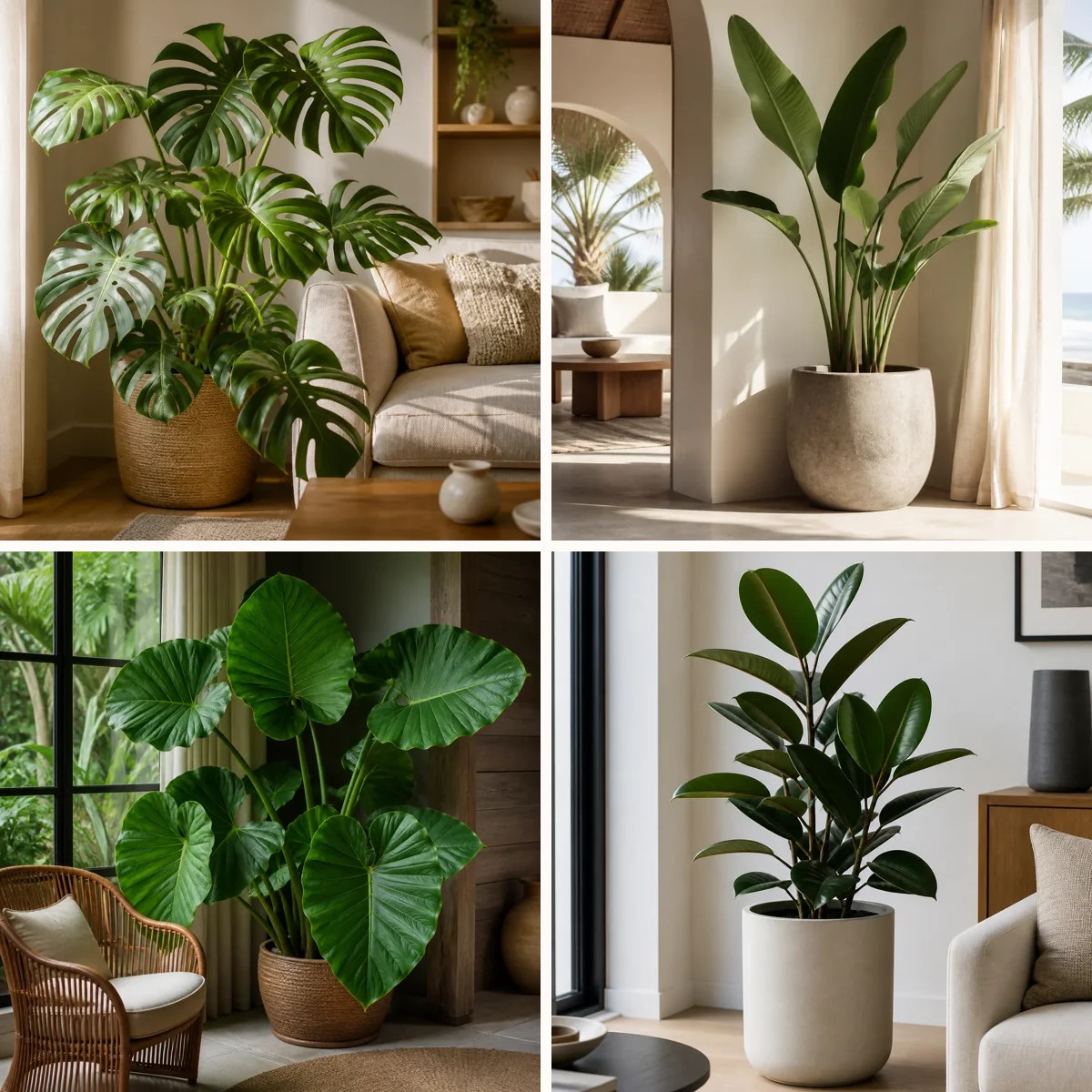
If a room already feels busy, adding several small plants can make it seem even more crowded. A single large-leaf specimen often creates a calmer and more intentional effect. Plants such as bird of paradise, rubber plant, Monstera deliciosa, and split-leaf philodendron can fill a visual gap with one strong silhouette rather than a scatter of pots. This approach works particularly well in apartments where every surface counts. Instead of lining a windowsill, sideboard, and coffee table with small plants, let one substantial plant take the lead near a sofa, reading chair, or entry console. The room keeps its breathing space, and the foliage becomes a focal point rather than background noise.
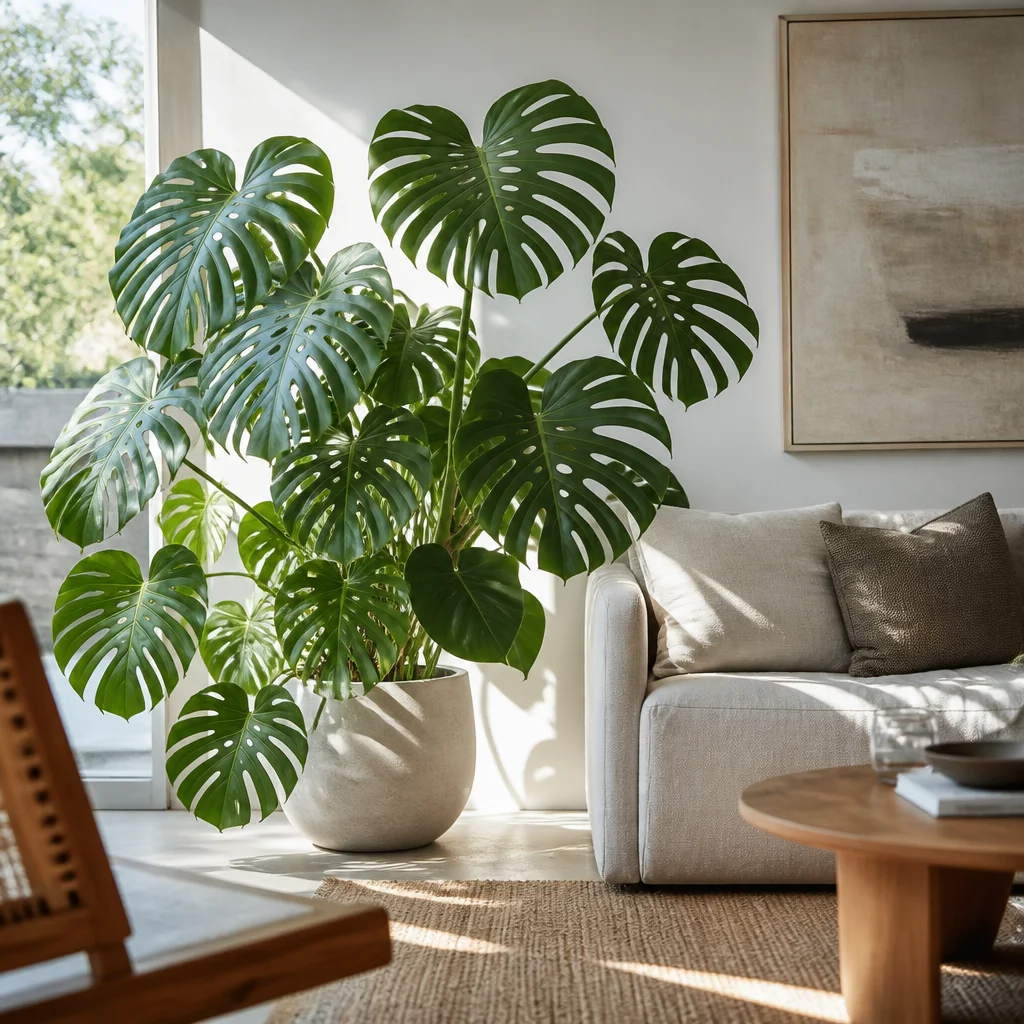
Match leaf size to the room, not just to your wishlist
Big leaves feel dramatic because they read clearly from across the room, but scale still matters. In a compact living room, a plant with broad leaves on upright stems can look elegant, while an extra-wide, sprawling specimen may block pathways or dominate the seating area. Think about mature spread as carefully as height, especially in narrow rooms or beside doors. A practical rule is to leave clear circulation around the plant and avoid letting foliage press into furniture on more than one side. If a room is tight, choose vertical drama: rubber plant, alocasia with upright leaves, or bird of paradise in a slim footprint. Save wider growers like mature monstera for corners with enough empty air around the leaves so their shape can actually be appreciated.
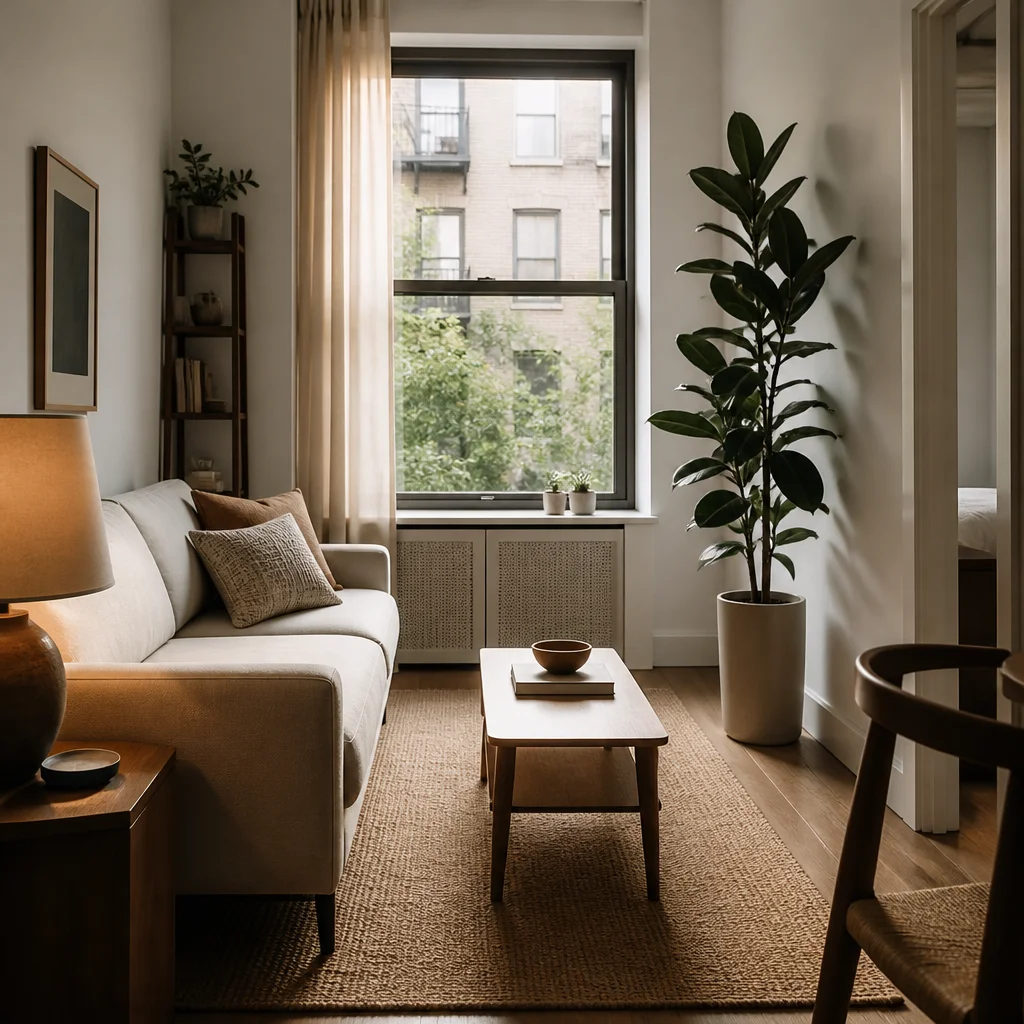
Let empty corners do the heavy lifting
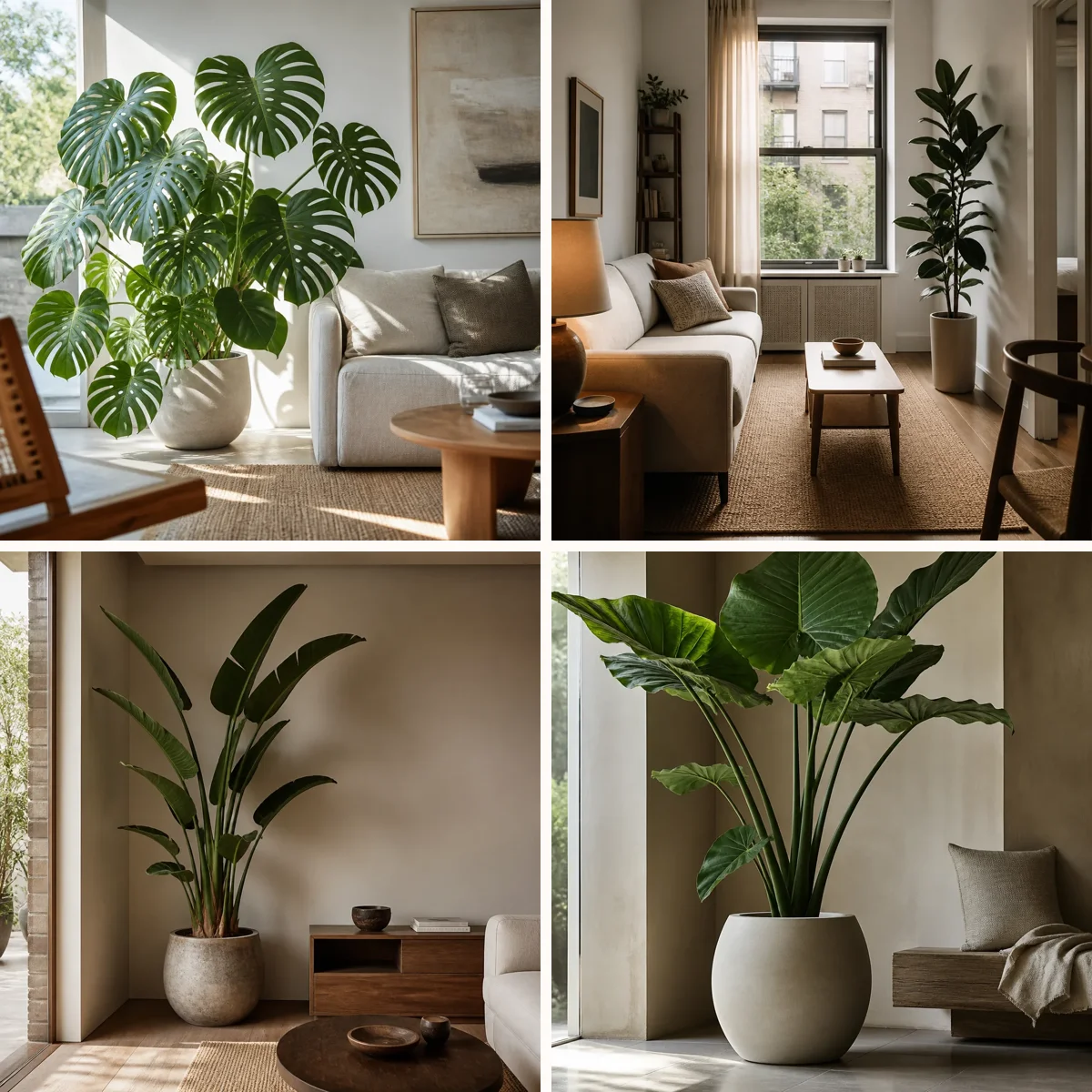
An underused corner is often the best place for bold foliage because it can absorb visual weight without interrupting daily movement. A tall plant with large leaves can turn a blank corner into an intentional feature, especially if the corner sits near natural light and next to relatively low furniture. This creates height variation and gives the eye somewhere to rest. To keep the effect airy, pull the pot slightly away from both walls rather than wedging it tightly into the angle. That small gap helps leaves read as sculptural instead of cramped. In living rooms, corners beside a media unit, near a window, or just beyond the arm of a sofa are especially effective because the plant adds softness to hard edges without stealing usable floor area.
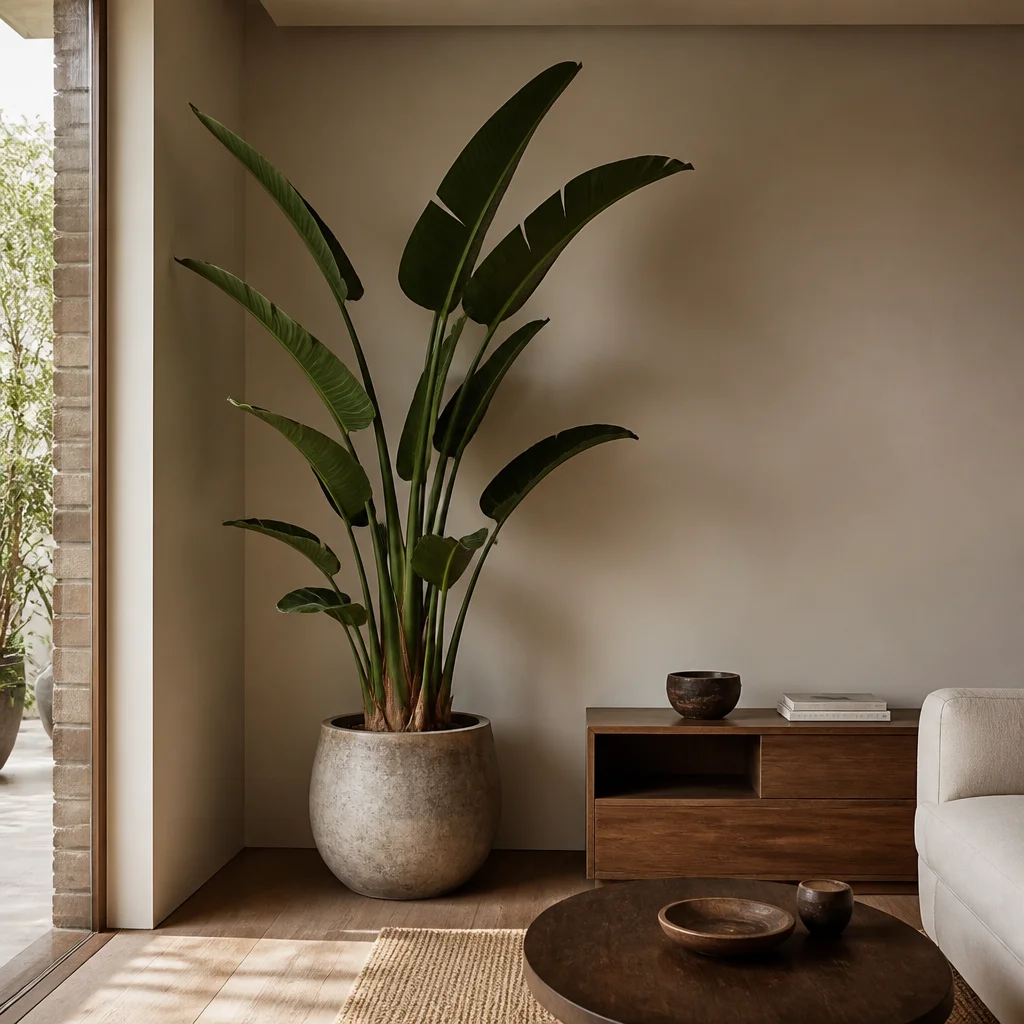
Choose containers that support the foliage, not compete with it
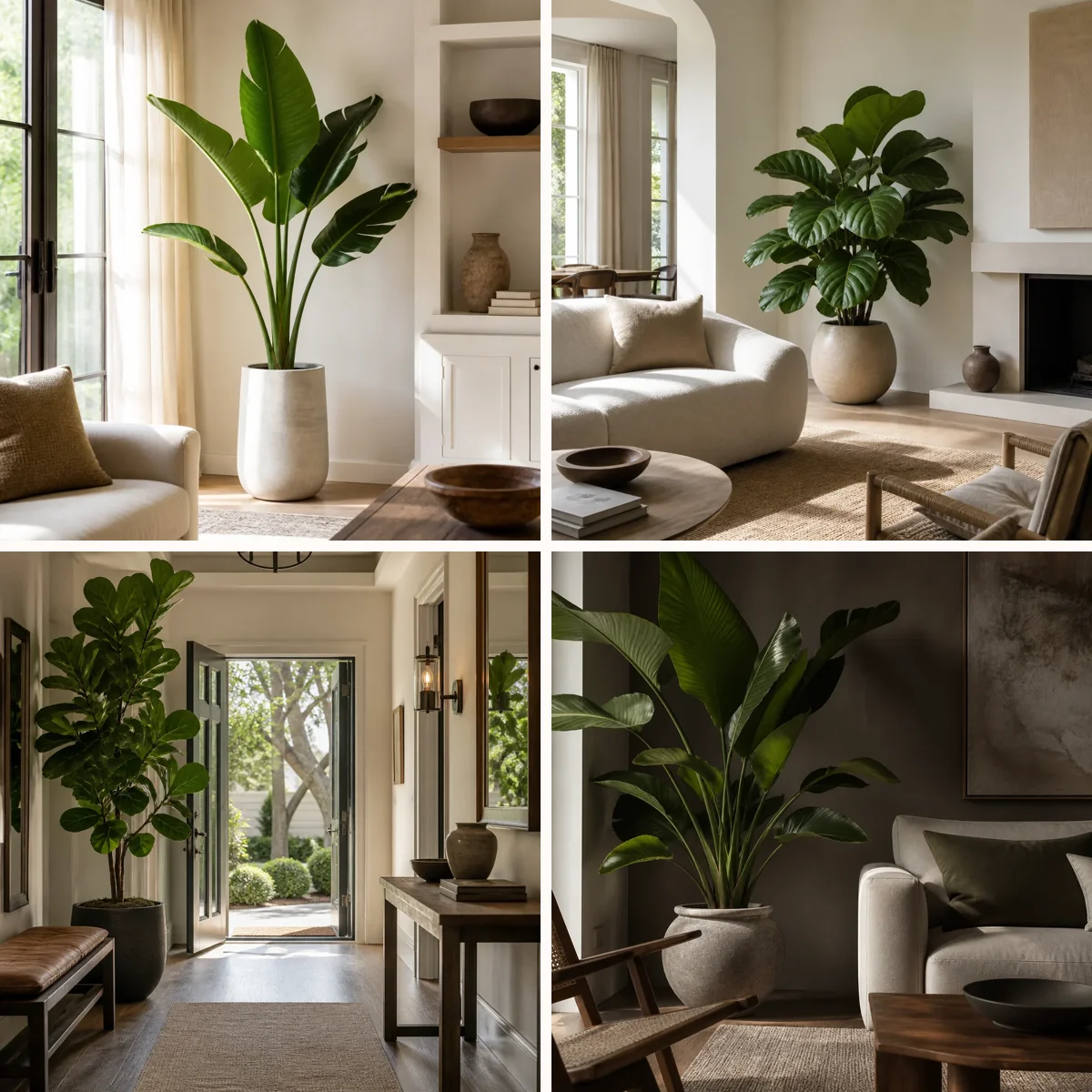
A dramatic plant does not need an equally dramatic pot to make an impact. In fact, when the leaves are large and patterned, simple containers usually look stronger. Matte ceramic, textured stone-look finishes, woven baskets with liners, and quiet earthy colors help the foliage remain the star. The container should feel grounded and proportional, not flashy or overly ornate. Scale is the most important styling detail. A pot that is too small can make a substantial plant look top-heavy and unstable, while one that is too bulky adds unnecessary visual mass. Aim for a container that gives the plant weight at the base without widening the footprint more than necessary. Elevated stands can work for medium large-leaf plants, but floor-level pots often suit taller statement plants better because they feel more settled in the room.
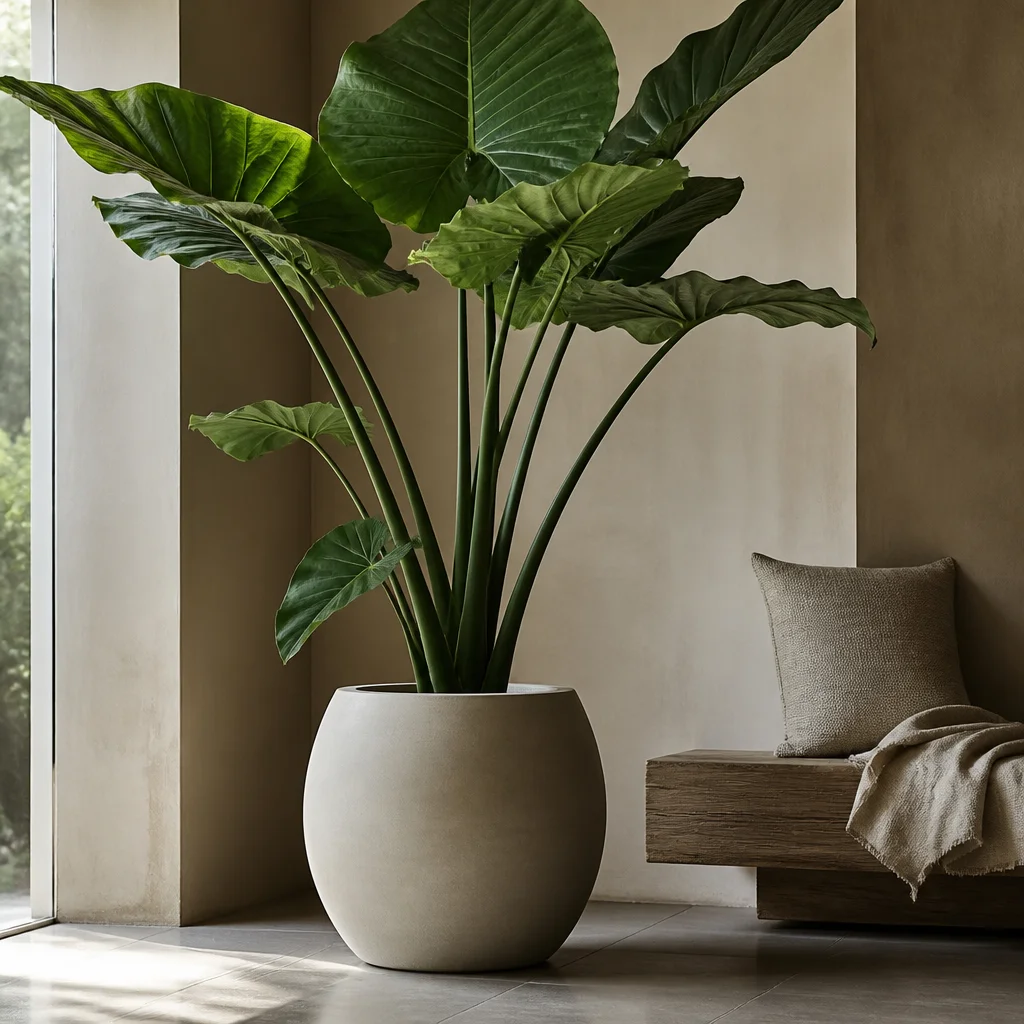
Use large leaves to soften hard architectural lines
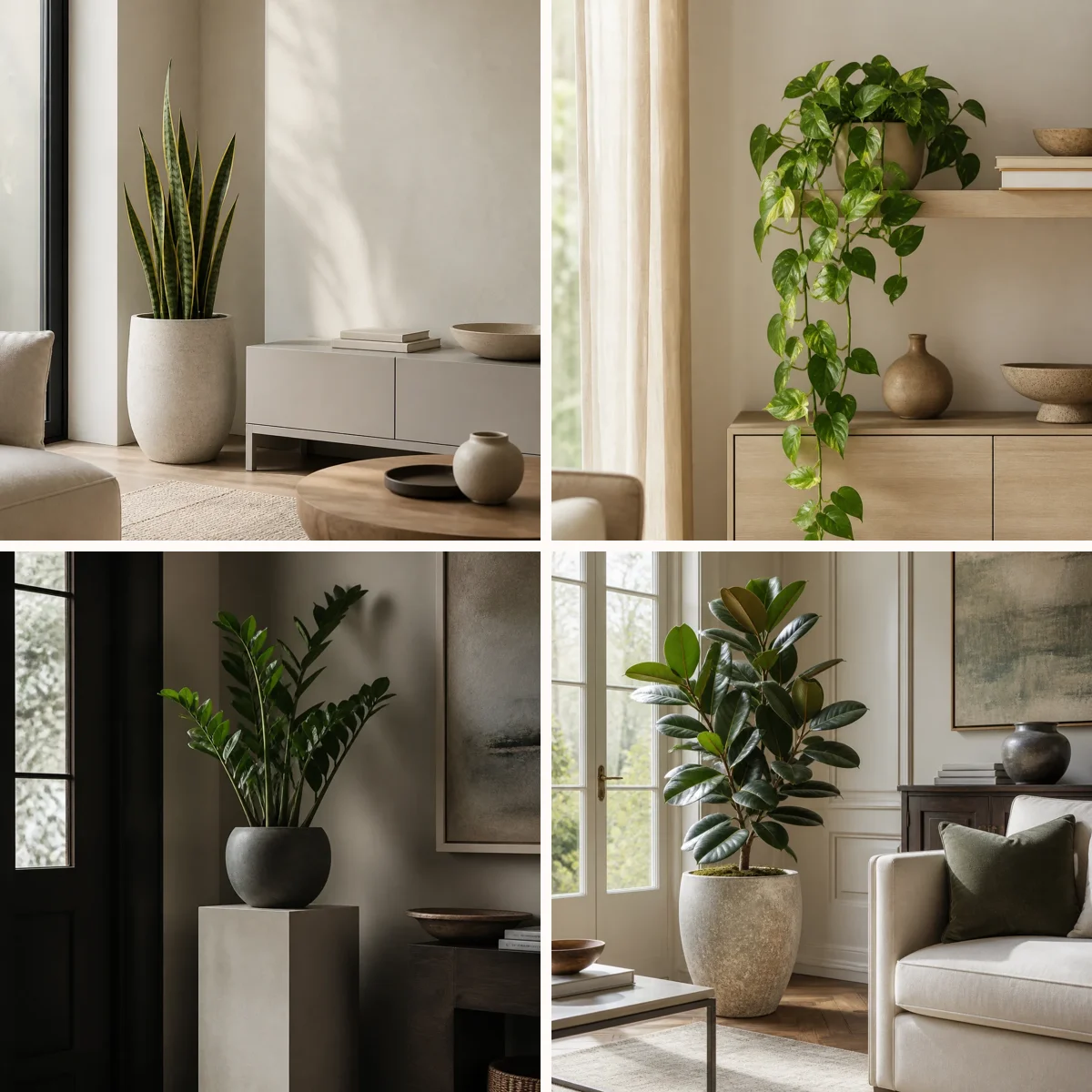
Rooms with straight edges, square storage, and large blank walls can sometimes feel rigid. Large-leaf plants help by introducing curves, asymmetry, and natural movement. A rubber plant can soften the corner of a shelving unit, while a monstera can break up a plain wall with layered leaf shapes. This is one reason bold foliage feels so effective in modern interiors: it balances clean lines without adding clutter. Place plants where they visually interrupt harsh geometry rather than where they simply fit. Next to a rectangular bookcase, at the end of a long dining bench, or beside a sharply framed window, broad leaves can make the room feel more relaxed and lived-in. The contrast between structured furniture and organic foliage is often what creates the strongest statement.
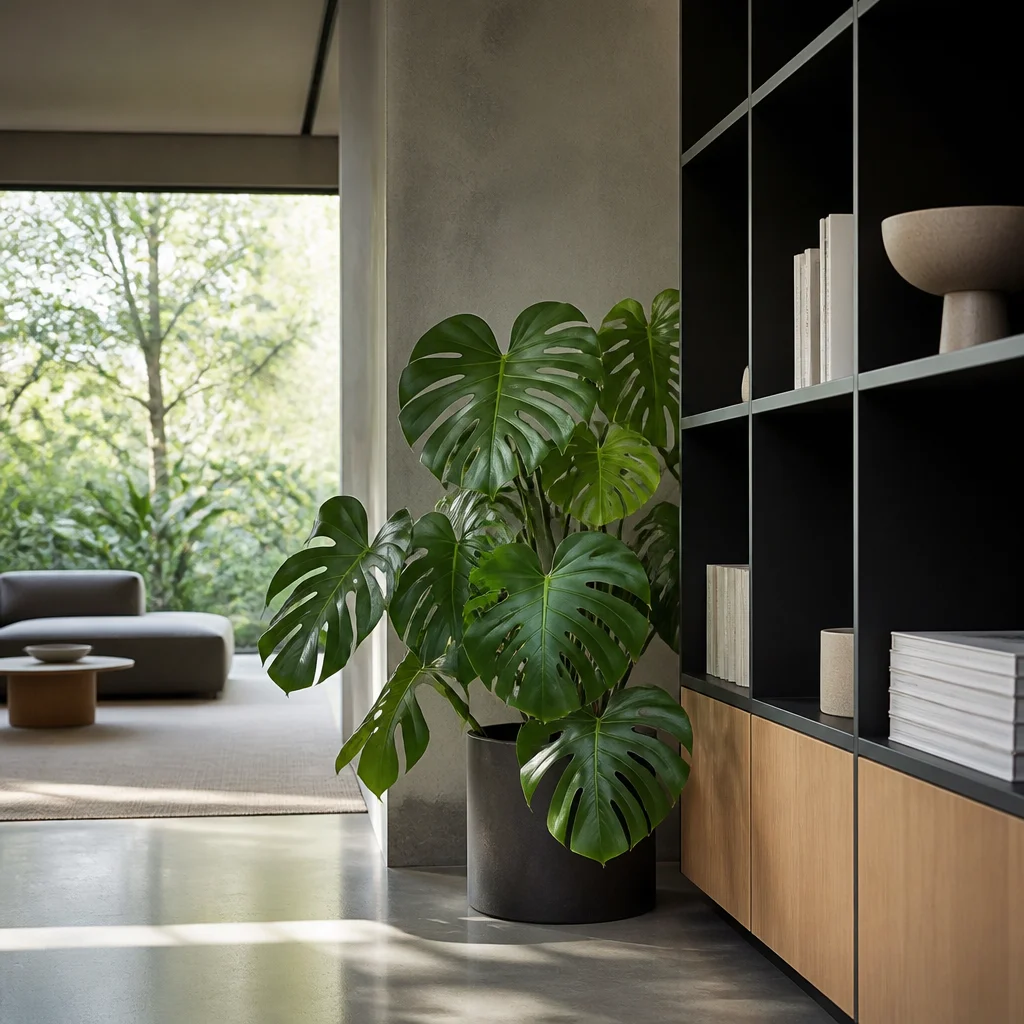
Build around light first, then style the room around the plant
Large-leaf plants only look luxurious when they are healthy enough to hold good shape. Before choosing a position for visual impact, notice where the light is strongest and steadiest through the day. Many popular statement plants prefer bright, indirect light, and they will stretch, lean, or lose density if placed too far into the dim middle of a room. A useful strategy is to place the plant near a window but not necessarily directly in front of it. Side placement often preserves both light and function, allowing the plant to benefit from brightness while leaving the window area usable. Rotate the pot regularly if the plant leans, and resist forcing a dramatic plant into a dark corner purely for styling. The best-looking statement plant is one that grows evenly over time.
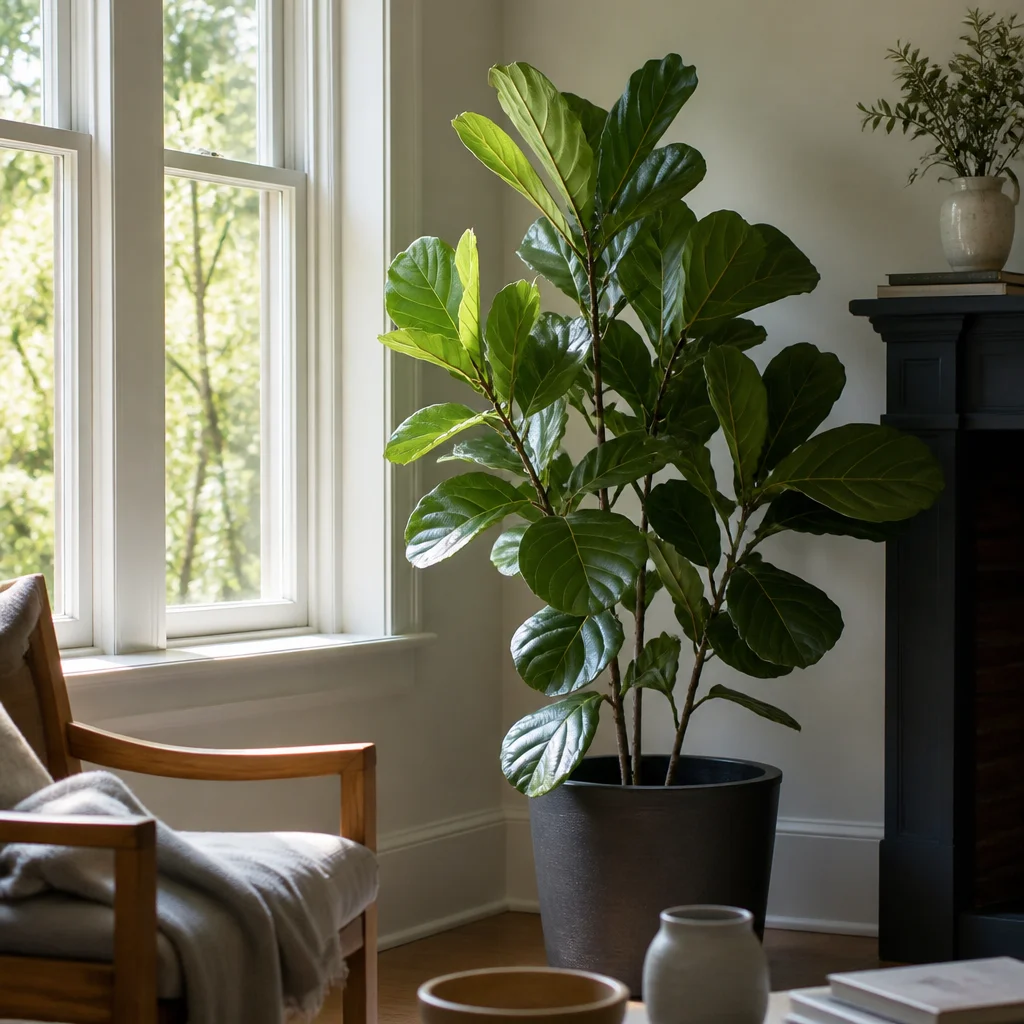
Keep the area around the plant visually quiet
A bold foliage plant needs negative space. If the surrounding area is crowded with baskets, side tables, stacks of books, and patterned textiles, the plant can disappear into the noise. Give it a cleaner backdrop so the shape of the leaves stands out. A plain wall, a simple curtain, or the side of a sofa in a solid fabric often provides enough contrast to make the foliage read more clearly. This does not mean the room has to feel sparse. It simply means editing nearby objects so the plant has room to make its statement. Try clearing the floor immediately around the pot, reducing tabletop décor in the same zone, or moving smaller plants elsewhere. The result is usually more dramatic and more restful than adding more greenery to the same corner.
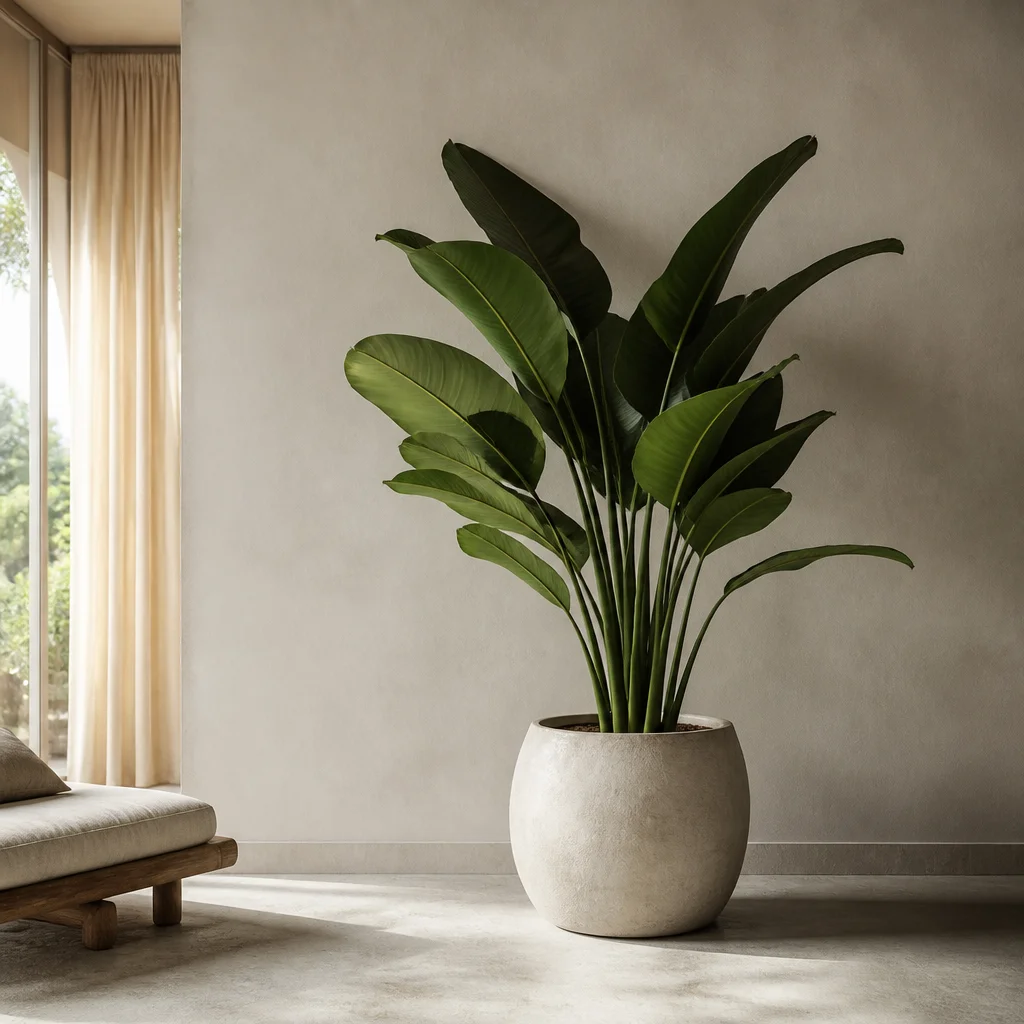
Rely on plant form to create structure in open-plan spaces
In open-plan rooms, furniture arrangements can sometimes feel undefined. A large-leaf plant can act almost like a soft partition, marking a transition between areas without blocking sightlines. For example, a tall plant beside the end of a sofa can subtly separate the living area from a dining nook, while still keeping the room open and flexible. The best candidates for this role have a clear upright shape and leaves that occupy space without becoming dense walls. Bird of paradise and rubber plant are especially useful here because they add height and rhythm rather than visual heaviness. Place the plant where it signals a boundary but still leaves comfortable walking room around it. That way it contributes structure, not obstruction.
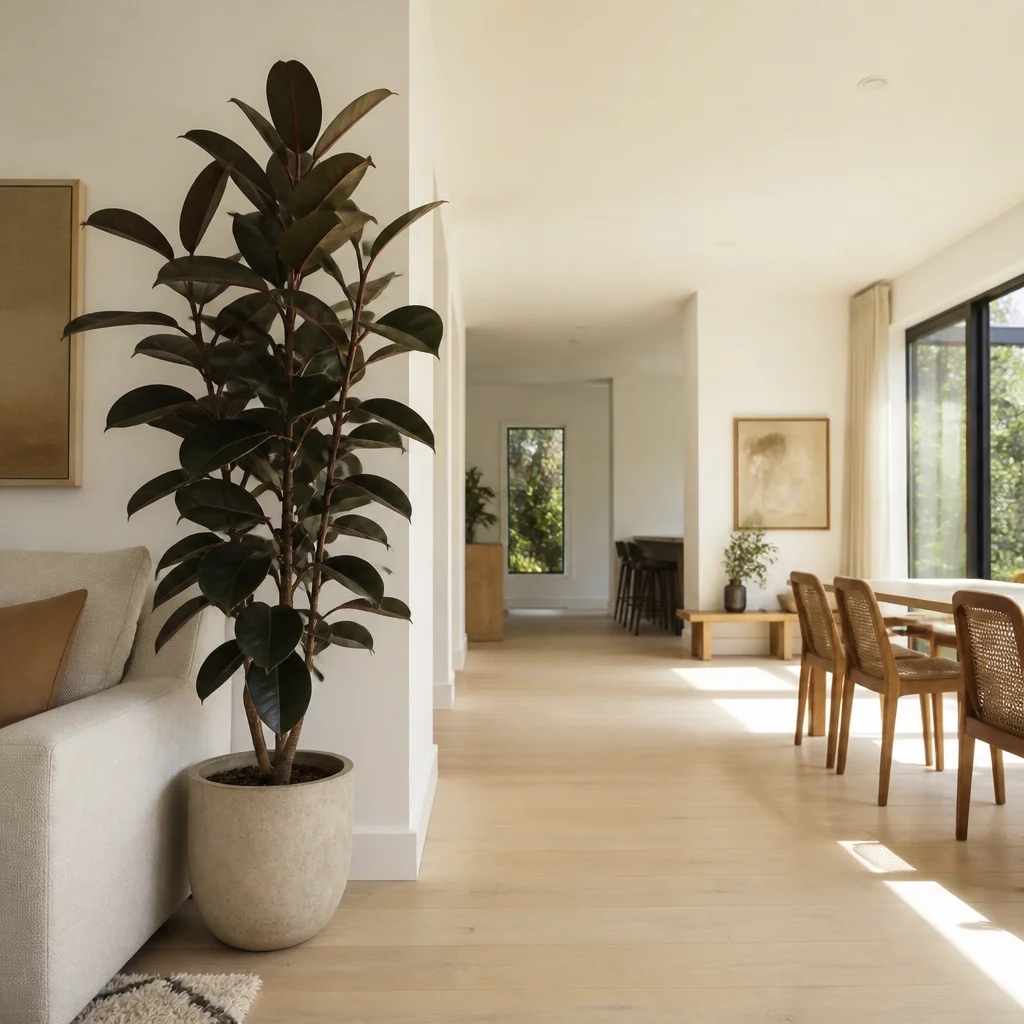
Think seasonally so the plant remains practical year-round
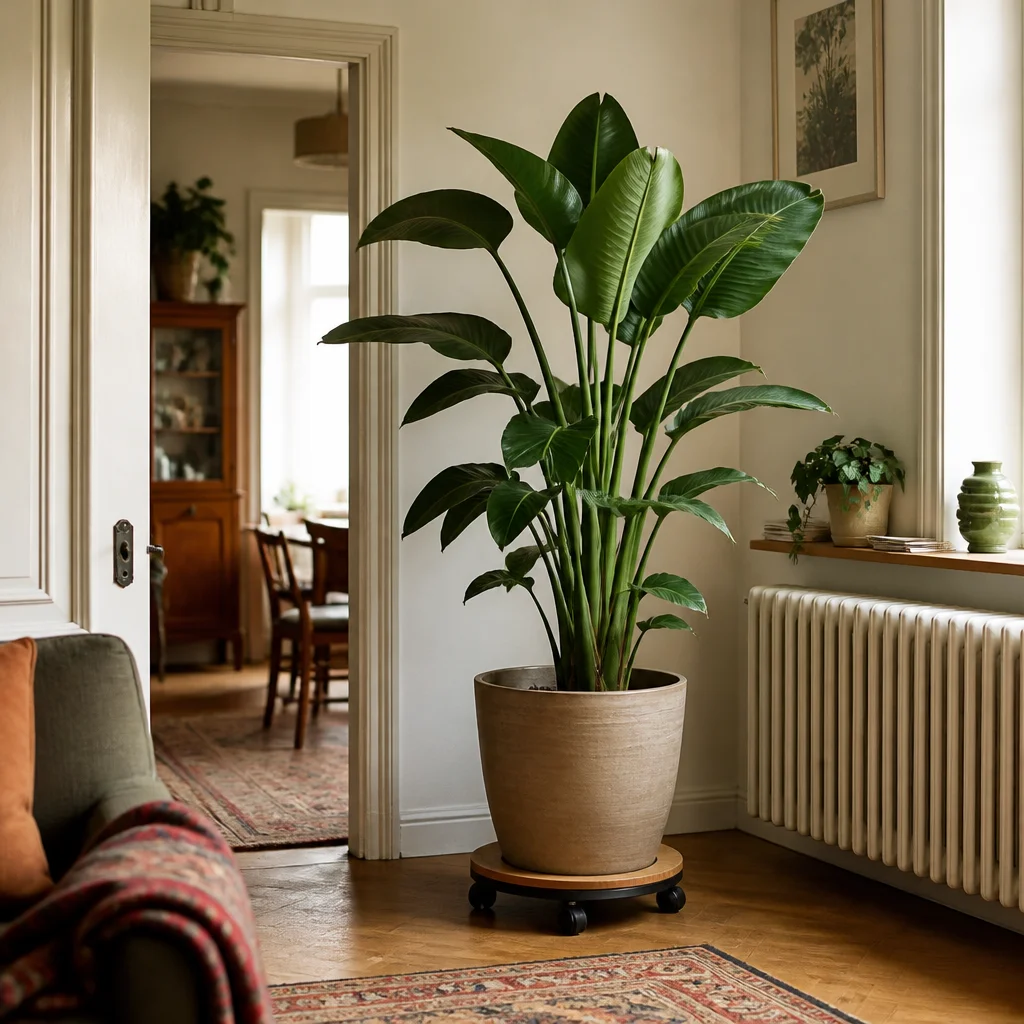
A statement plant should suit daily life in every season, not only the month you bring it home. Large leaves may sit close to radiators in winter, brush against open balcony doors in summer, or occupy space needed for holiday guests. When choosing placement, think beyond the ideal styled moment and consider how the room functions throughout the year. Leave enough flexibility to shift the pot slightly if heating, drafts, or stronger summer sun become an issue. Use saucers or plant caddies where appropriate so moving the plant does not become a major task. A bold indoor plant feels effortless when it can adapt to real routines, and that practicality is what keeps it from becoming visual clutter over time.
Pick plants with strong silhouettes that stay handsome as they mature
Not every large-leaf plant ages in the same way. Some remain upright and composed, while others sprawl, climb, or become uneven unless given support. If you want a lasting statement without constant rearranging, choose plants known for a clear silhouette and manageable growth habit in indoor conditions. Rubber plant, bird of paradise, and many self-heading philodendrons often provide this kind of reliable structure. It also helps to imagine the plant six months or a year from now. Will it need a moss pole, frequent pruning, or significantly more floor space? A bold statement works best when the plant still fits the room after healthy growth. Choosing a form that matures gracefully means you get drama and presence without the slow creep of overcrowding.
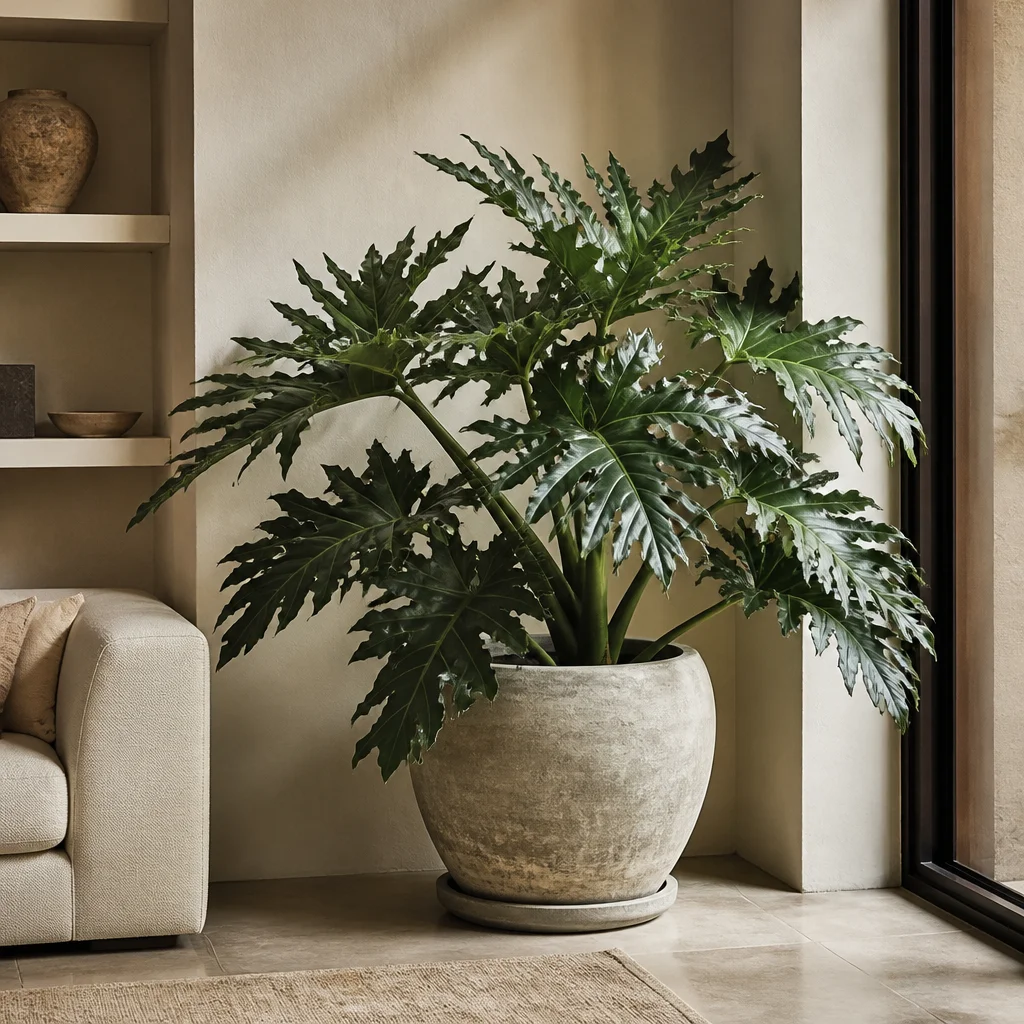
Images are AI-generated inspiration concepts.
Explore the categories ↗How did this story make you feel?
Choose one reaction. You can change it later.