Large-Leaf Plants8 min read
Large-Leaf Plants for Corners, Entryways, and Other Empty Spots
Empty indoor spots often stay empty because they are awkward rather than truly unused. A bare corner may feel too deep for a side table, an entryway may need presence without clutter, and the gap beside a sofa may call for height more than storage. Large-leaf plants solve these problems especially well because their broad foliage reads as structure. They soften hard lines, add visual weight, and turn overlooked spaces into deliberate parts of the room. The best choice is not simply the biggest plant that fits. It is the plant whose outline, leaf size, and growth habit match the shape of the gap around it. In some places, a vase-like plant creates lift without spreading too wide. In others, a rounded mass of foliage anchors the room and makes furniture arrangements feel complete. When you choose with balance in mind, a single substantial plant can define an area better than several smaller accessories.
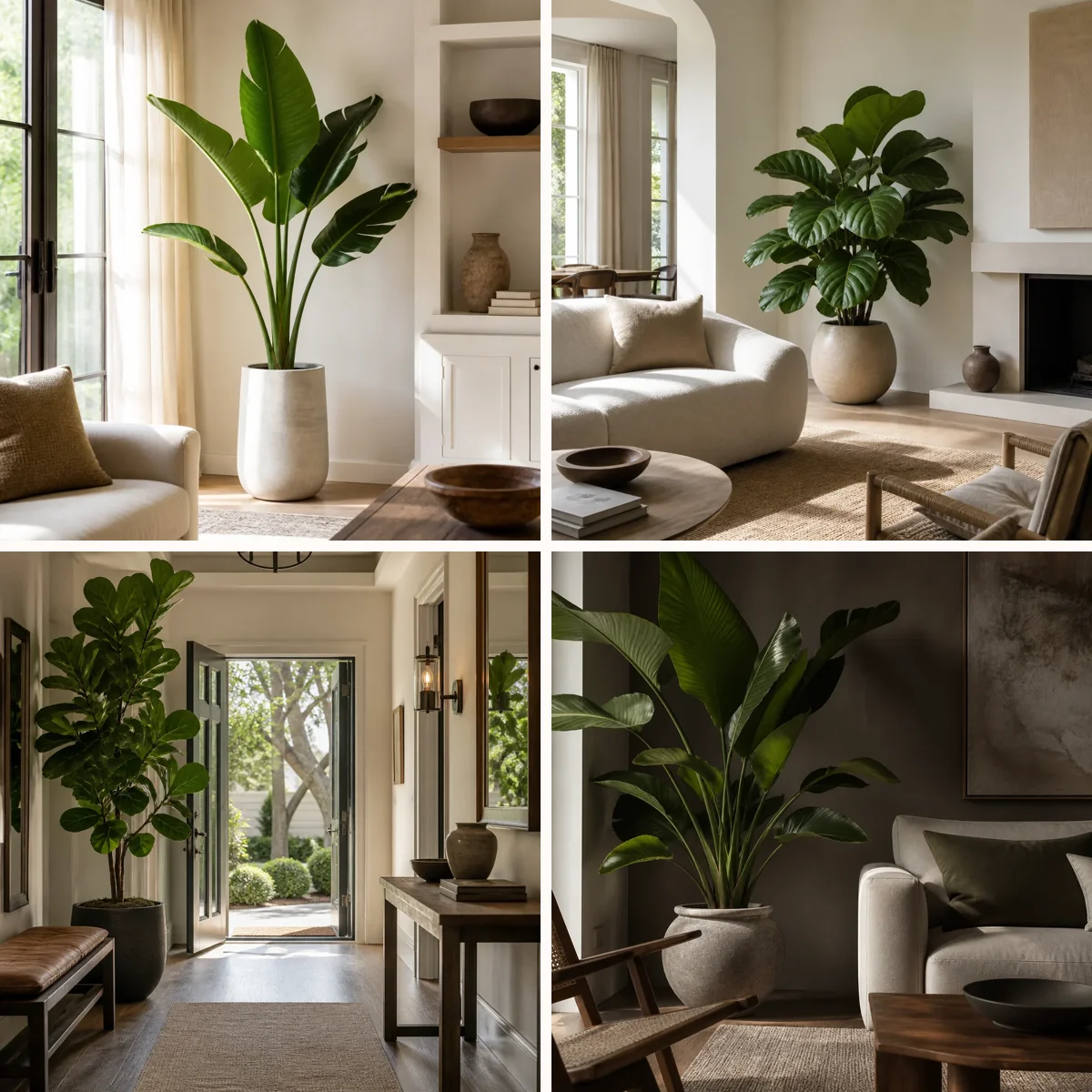

Use upright leaf shapes to give narrow corners purpose
A narrow corner often needs height more than width, so look for large-leaf plants with an upright or fountain-like silhouette. Bird of paradise, upright philodendron types, and some peace lilies can fill vertical space while keeping their footprint manageable. Their leaves rise and arc outward in a way that draws the eye up, making the corner feel intentional instead of forgotten. This is especially useful in living rooms where the ceiling feels high and the furniture sits low. To keep the effect clean, give the plant enough breathing room from both walls so the leaves can be appreciated as a shape rather than mashed into the corner. A planter with a slightly wider base than the nursery pot helps the plant feel grounded and substantial. If the area still seems thin, raise the plant slightly with a low stand so the foliage starts closer to eye level and the whole arrangement gains more presence.
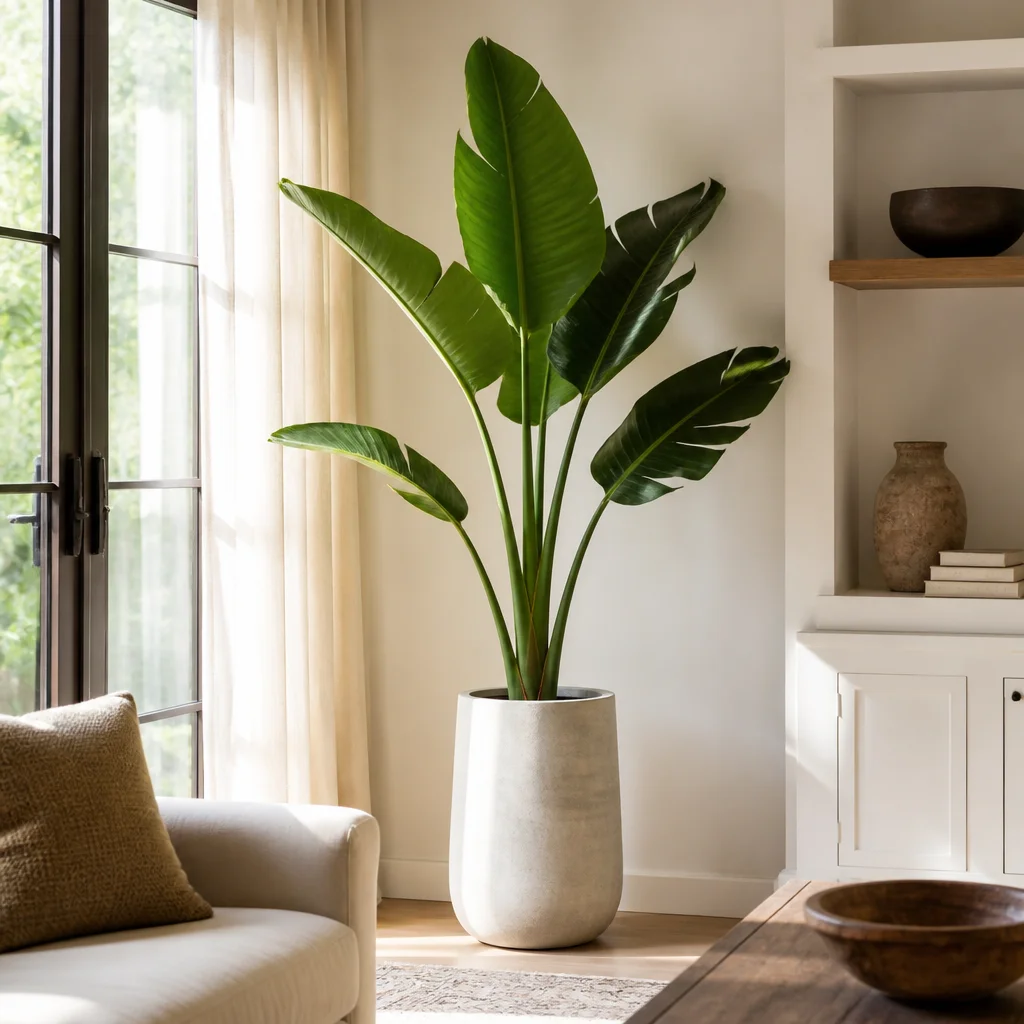
Choose broad, rounded foliage where a room needs visual weight
Some empty spots are not narrow at all; they feel empty because the room lacks mass on one side. In that case, choose a plant with broad, rounded leaves that forms a generous mound or layered canopy. A rubber plant, fiddle-leaf fig with a branching form, or a mature homalomena can counterbalance a large sofa, media console, or dining table. These plants work well when a room feels lopsided and needs something with enough substance to hold its own. The trick is to think in terms of visual weight, not just plant size. Thick, dark, glossy leaves usually read heavier than thin, airy foliage, so they can anchor a sparse area quickly. Pair that weight with a simple pot in a calm color rather than anything busy. When both leaves and container are bold, the result can feel crowded. Let the foliage provide the drama and the planter provide stability.
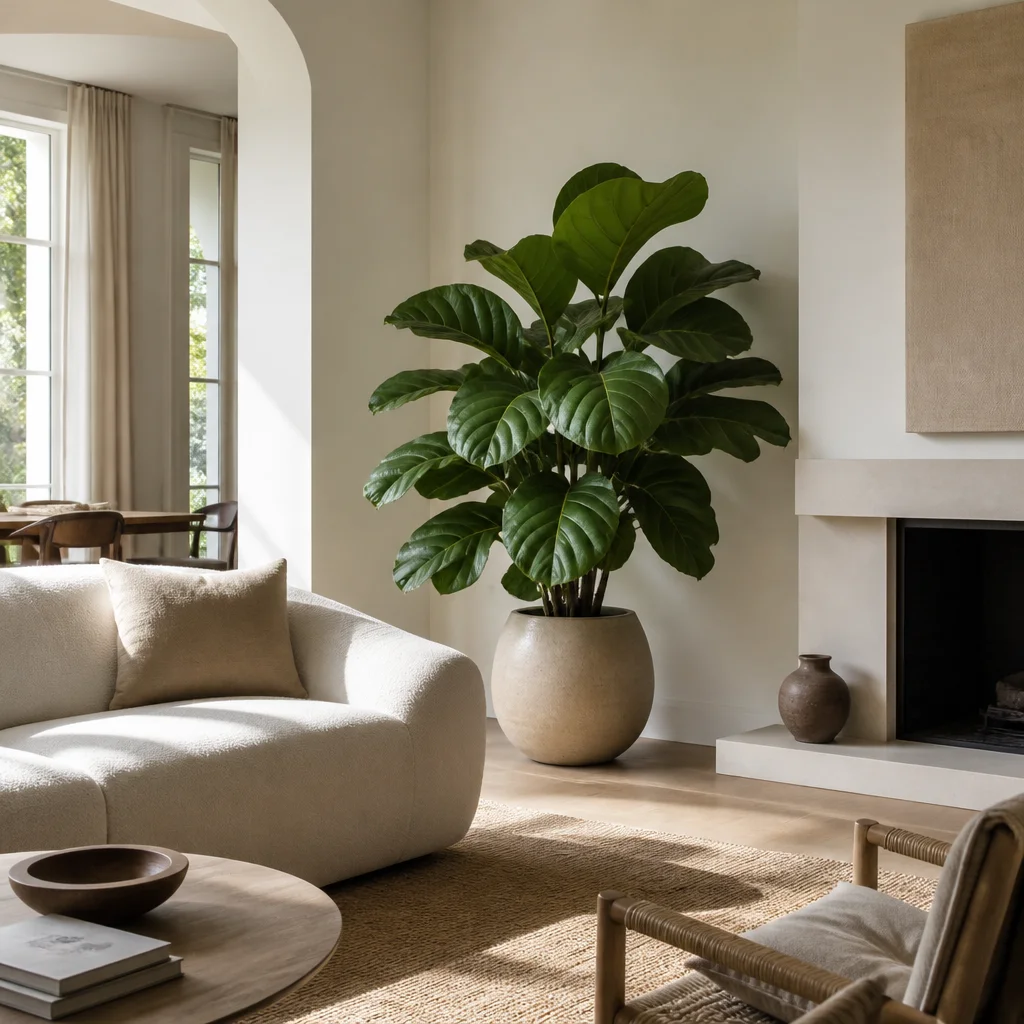
Define an entryway with a plant that greets without blocking flow
Entryways benefit from plants that make an immediate impression yet leave clear walking space. Large-leaf plants with a tidy footprint and distinct outline are best here because they create arrival without becoming an obstacle. A compact bird of paradise, rubber plant, or large peace lily can stand beside a bench, mirror, or console and make the entrance feel finished. The leaves catch the eye from the door and help bridge the shift from outdoors to indoors. In practical terms, measure the path people actually take when entering. Place the pot where leaves will not brush coats, bags, or the swing of the door. If the light is limited, prioritize species that tolerate bright indirect conditions over those that demand direct sun to look their best. An entry plant succeeds when it feels welcoming every day, not only when the light and traffic happen to be perfect.
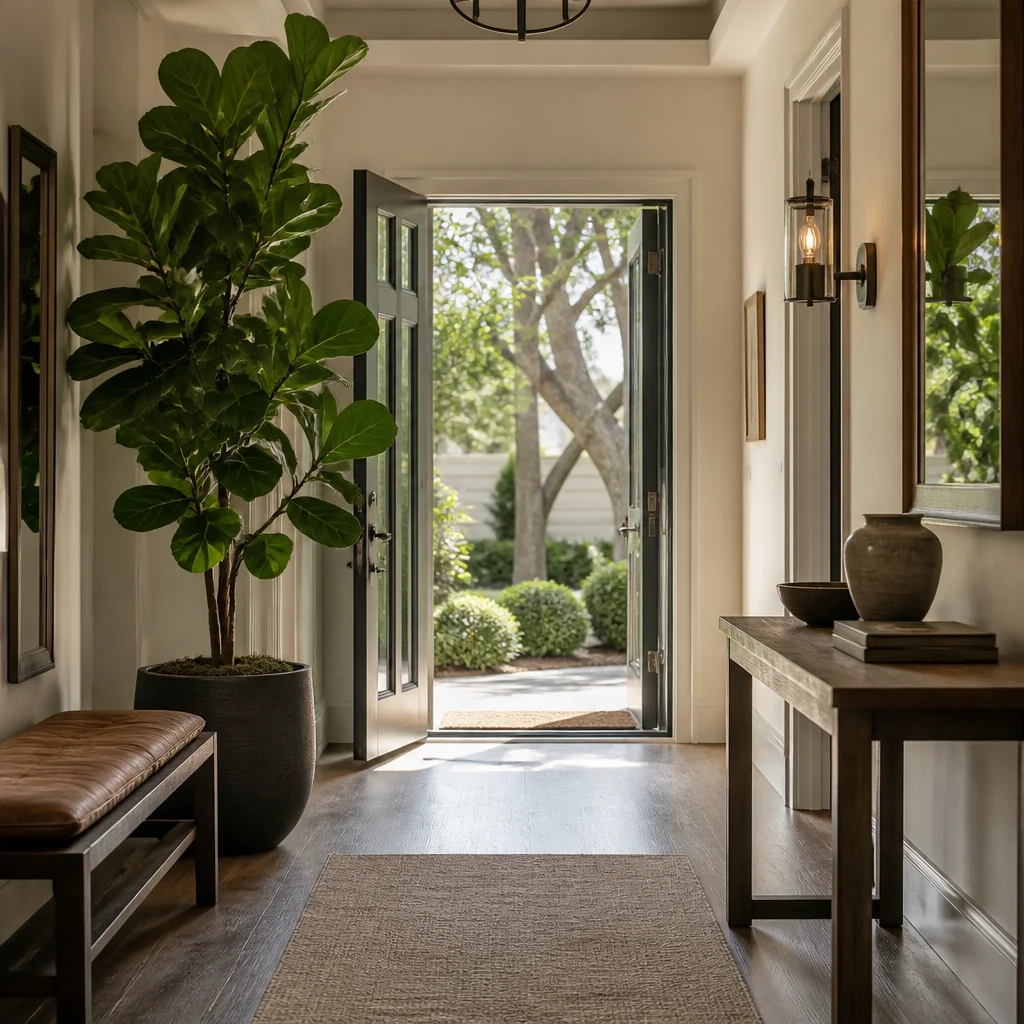
Fill the gap beside furniture with leaves that echo the room’s lines
The awkward space beside a sofa, armchair, or cabinet often improves when the plant’s shape relates to the furniture nearby. If your room is full of straight edges and squared forms, choose a plant with large arching leaves to soften the arrangement. If the furniture is already rounded and plush, a more upright plant can bring a little definition. This kind of shape-matching makes the plant feel connected to the room rather than dropped into a leftover gap. Scale matters just as much as style. The top of the foliage should usually reach at least the height of the furniture beside it, or slightly above, so the plant has enough authority to register as part of the composition. A tiny plant next to a deep sectional looks accidental. A substantial one with clear form can make that same in-between spot feel like a designed transition between seating zones.
Use one oversized plant instead of several small fillers
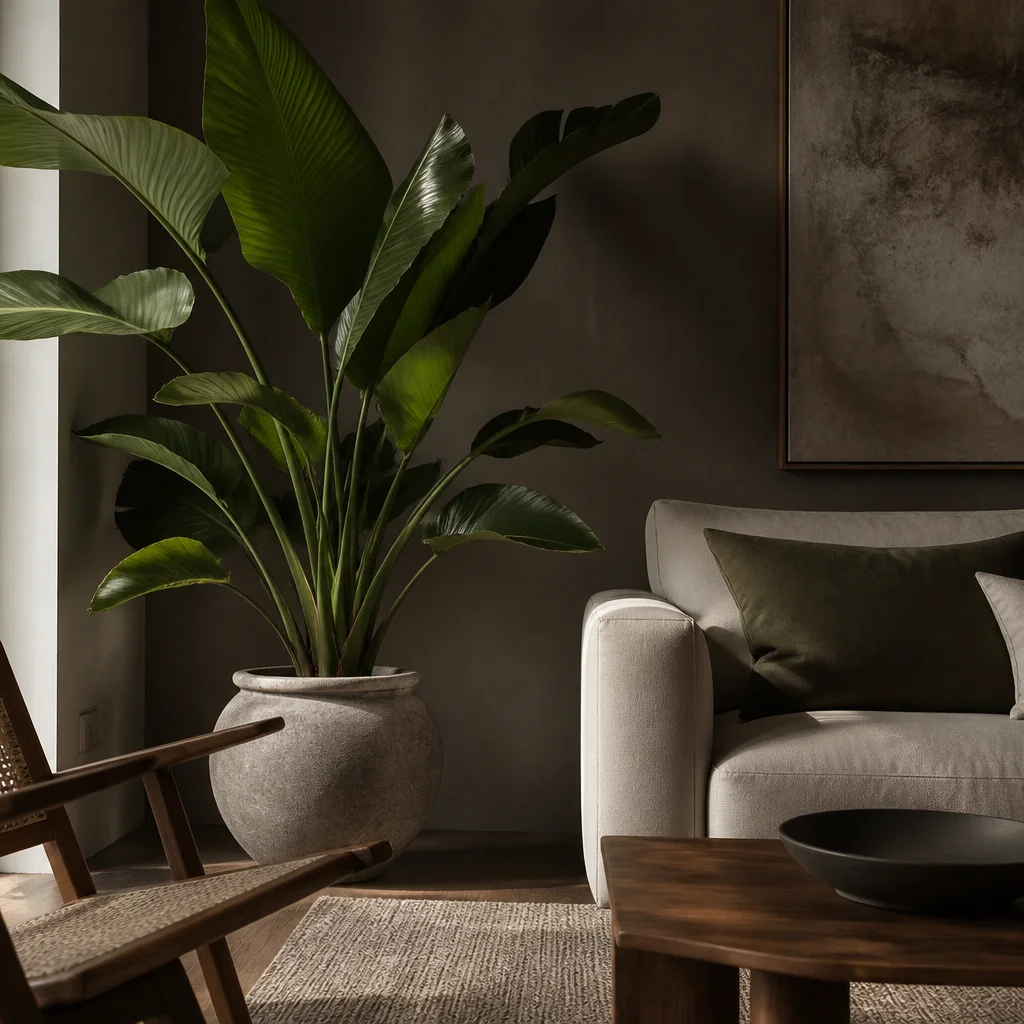
When a room has an empty patch, it is tempting to solve it with a cluster of smaller plants. Sometimes that works, but in many awkward indoor gaps, one larger specimen creates a calmer and more convincing result. A single broad-leaf plant gives the eye a clear focal point and avoids the fussy feeling that can happen when many small pots compete with one another. It also helps the space feel edited, which is useful in modern, minimal, or compact interiors. This approach works especially well in dead corners, unused ends of hallways, and open-plan rooms that need subtle zoning. Choose a plant large enough to stand on its own and a pot with enough visual heft to support it. If you want added texture, include only one companion element, such as a low basket, small stool, or floor lantern nearby. That keeps the area layered without turning it into storage by another name.
Match leaf texture and pot finish to the mood of the room
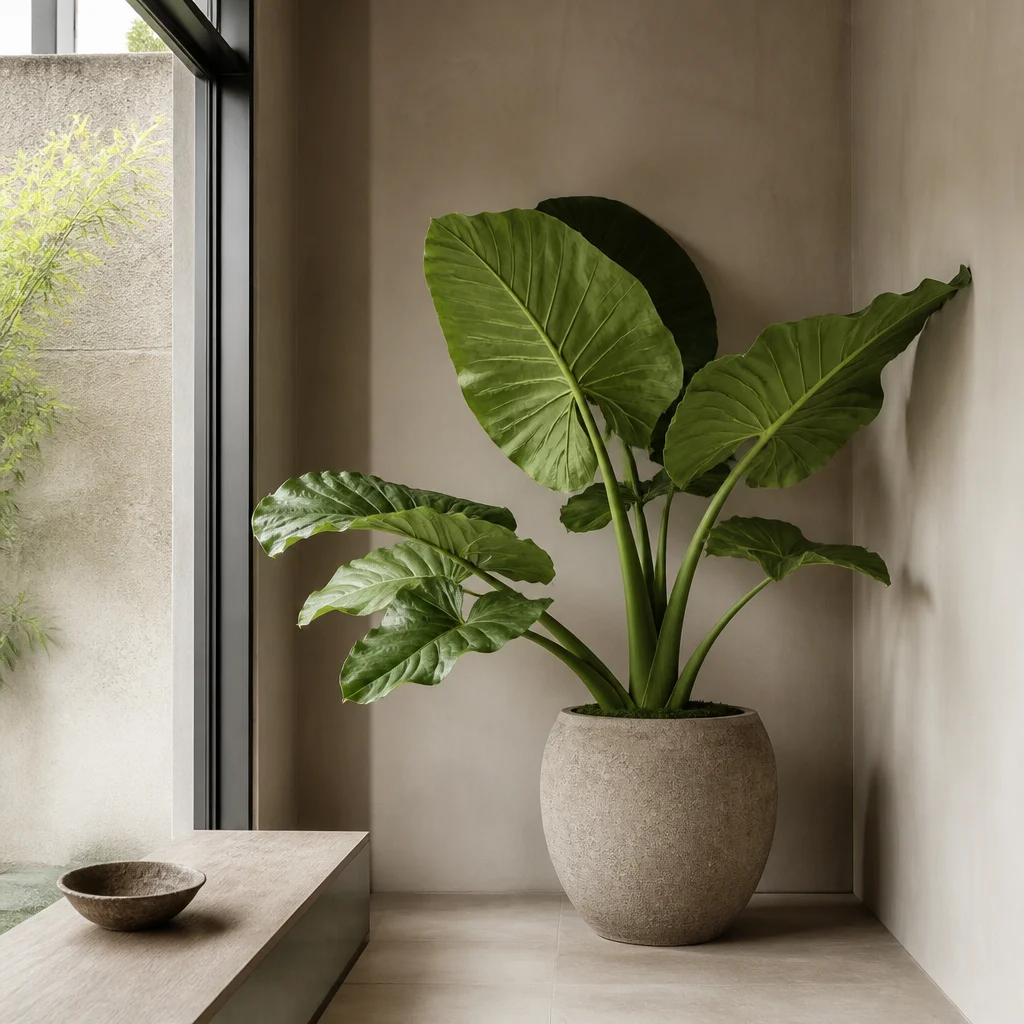
Large-leaf plants do more than occupy space; they also influence mood through texture. Glossy leaves feel polished and crisp, which suits contemporary rooms, formal dining areas, or entryways that need a neat appearance. Velvety, rippled, or softly drooping leaves feel gentler and more relaxed, making them a good choice for bedrooms, reading corners, or softer living spaces. The plant can therefore fill a gap while also reinforcing the atmosphere you want the room to have. The container should support that mood rather than distract from it. Matte ceramic, stone-look planters, and woven baskets create very different impressions even with the same plant. For a serene room, keep finishes quiet and natural. For a sharper, architectural look, a simple cylindrical planter in black, charcoal, or off-white often works best. Paying attention to both leaf texture and pot finish makes the plant feel integrated rather than purely functional.
Solve blank vertical space with plants that layer leaves at different heights
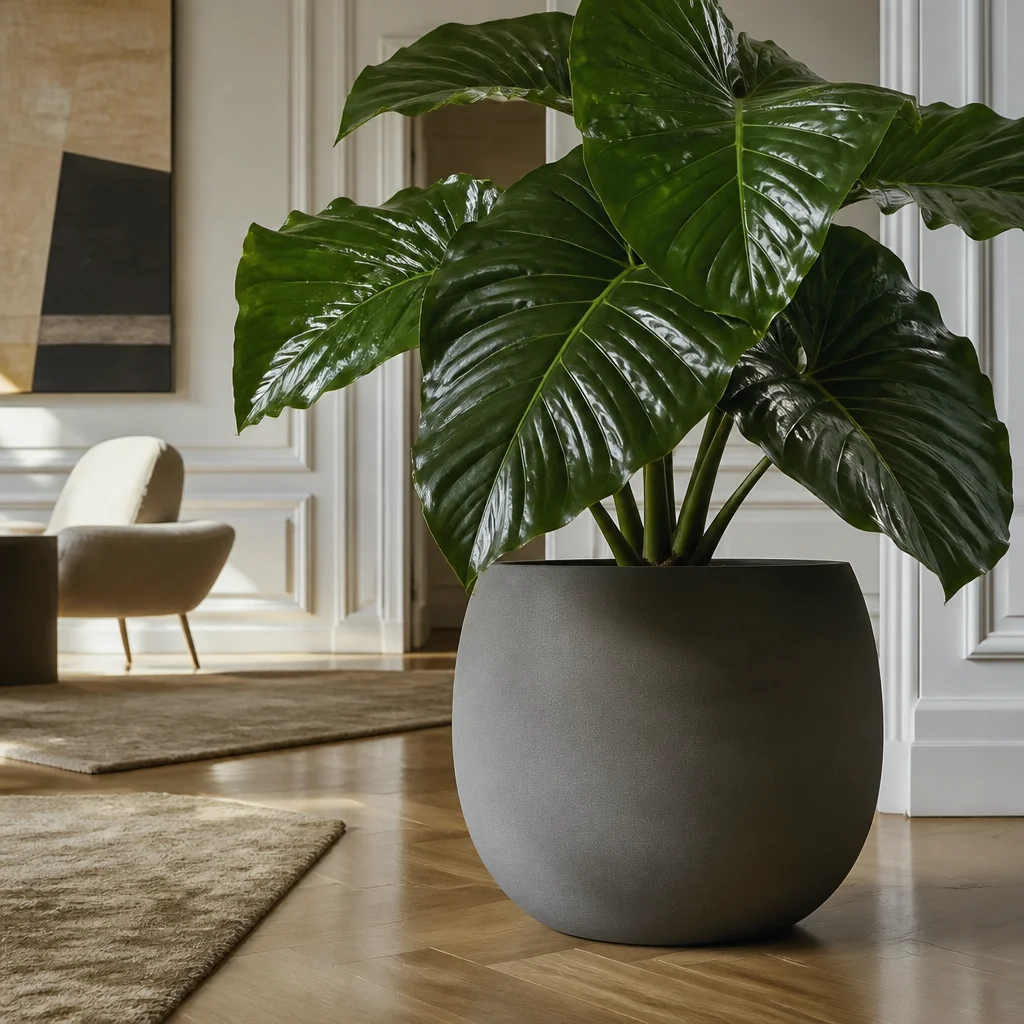
Some empty spots feel awkward because all the visual action is low, leaving a blank wall above. A large-leaf plant with leaves set at multiple heights can help connect floor and wall in a gentle way. Plants that grow on strong stems or canes, or those with a layered crown, create a stepped silhouette that moves the eye upward without needing shelves or artwork. This is useful near tall windows, in stair landings, or beside plain walls where the room feels unfinished. Positioning matters here. Turn the plant slightly so its best side faces into the room and the leaf layers can be seen rather than flattened against the wall. A little asymmetry often looks better than placing the pot exactly in the center of the gap. If the wall is very bare, a plant with larger leaves spaced along stems can feel lighter and more elegant than one dense mass, because it breaks up the emptiness without making the area look crowded.
Respect light and circulation so the plant can keep its shape
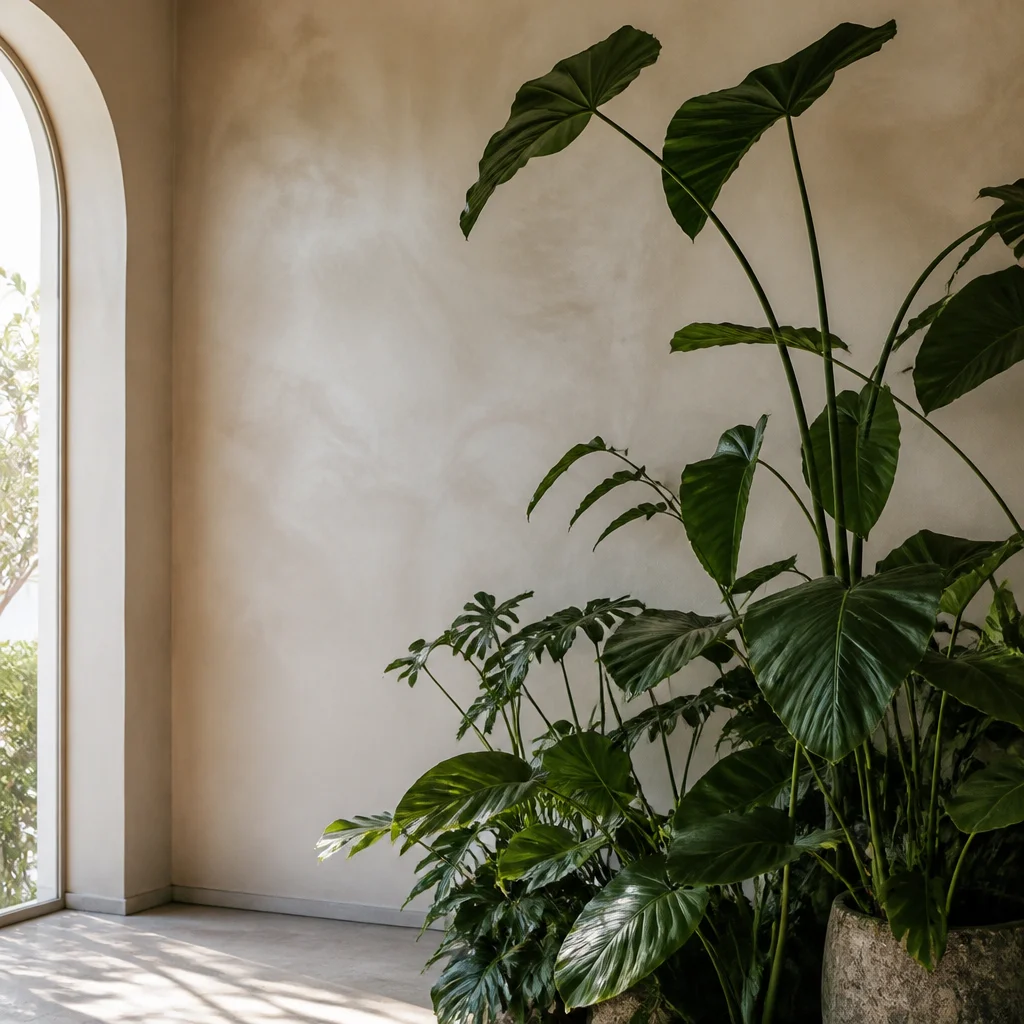
A plant can only define a space well if it stays healthy enough to hold the shape you chose it for. Before buying, notice whether the empty spot receives bright indirect light, lower filtered light, or a brief period of direct sun. Large-leaf plants often look their most sculptural in bright indirect conditions, where leaves stay broad and stems stay balanced. If the location is too dim, the plant may lean, thin out, or lose the fullness that made it appealing in the first place. Circulation matters too. Heating vents, cold drafts, and constant brushing from passersby can quickly spoil large foliage. Keep enough clearance for leaves to expand naturally and rotate the pot from time to time so growth stays even. If the ideal visual spot is not ideal for the plant, move the plant slightly off the exact point rather than forcing it to struggle. A healthy, well-shaped plant always looks more intentional than one placed perfectly but growing poorly.
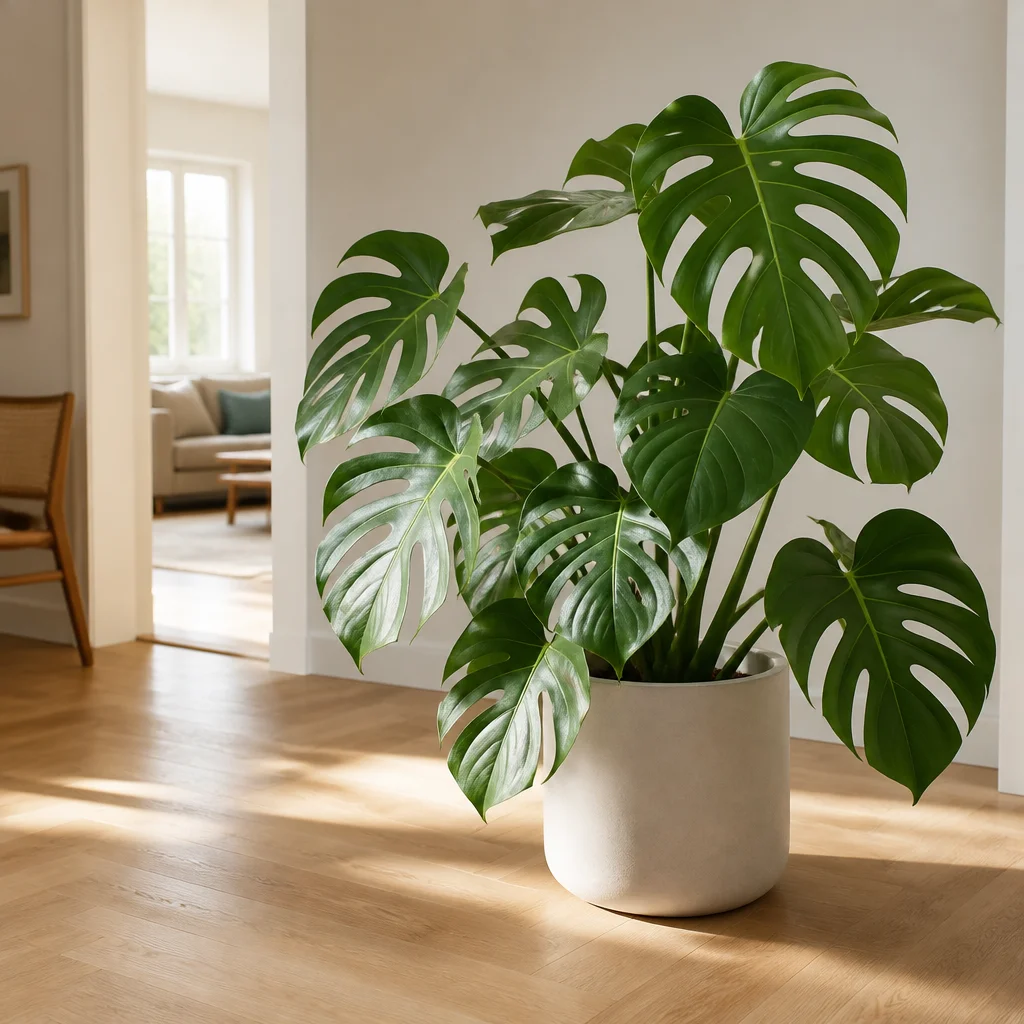
Let the plant become a room divider in open-plan spaces
In open layouts, awkward empty spots often appear where one area fades into another without a clear boundary. A substantial large-leaf plant can act as a soft divider between zones such as dining and living areas, or between a workspace and a lounge corner. The key is to choose a plant with enough height and width to signal separation while still allowing sightlines and movement. Broad foliage gives definition without the heaviness of a screen or shelving unit. Place the planter just off the center of the transition rather than directly in the middle of traffic. This creates a gentle edge that people move around naturally. A plant with leaves that spread mostly above the pot is especially useful because the floor remains open and the room still feels spacious. Used this way, a large-leaf plant does more than decorate an empty spot; it quietly organizes the whole room.
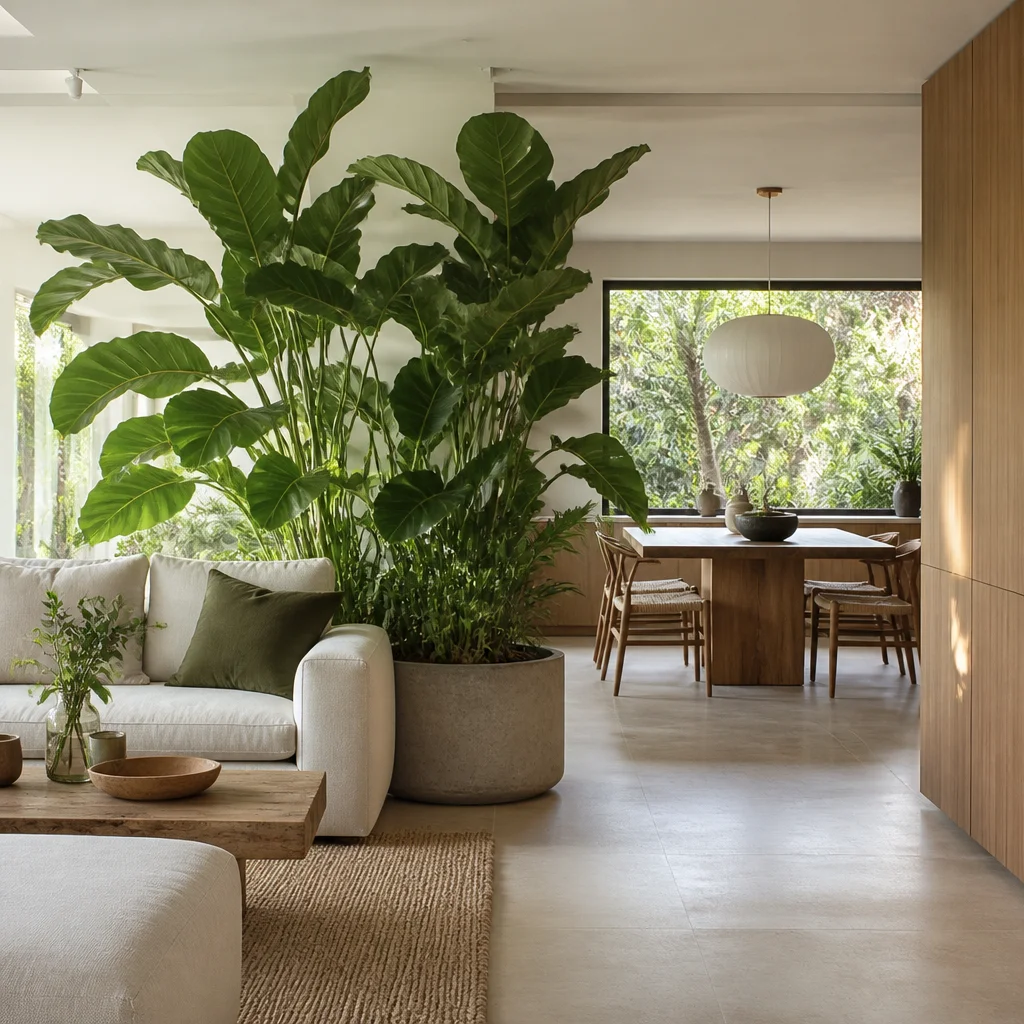
Images are AI-generated inspiration concepts.
Explore the categories ↗How did this story make you feel?
Choose one reaction. You can change it later.