Large-Leaf Plants7 min read
8 Large-Leaf Houseplants That Instantly Make a Room Feel Tropical
Big leaves change a room faster than almost any other plant feature. Their broad surfaces catch light, soften hard edges, and create the layered, green abundance that people often associate with tropical escapes. Even a simple corner can feel fuller and more relaxed when one dramatic plant brings in bold shape, saturated color, and a sense of scale that smaller houseplants cannot match. The secret is not only choosing plants with oversized foliage, but also using each one for what it does best. Some create a tall, architectural silhouette, while others spread outward and make a space feel dense and leafy. The eight houseplants below are especially useful for building that vacation-like mood indoors, along with practical ways to style and care for them so their leaves stay lush and impressive.

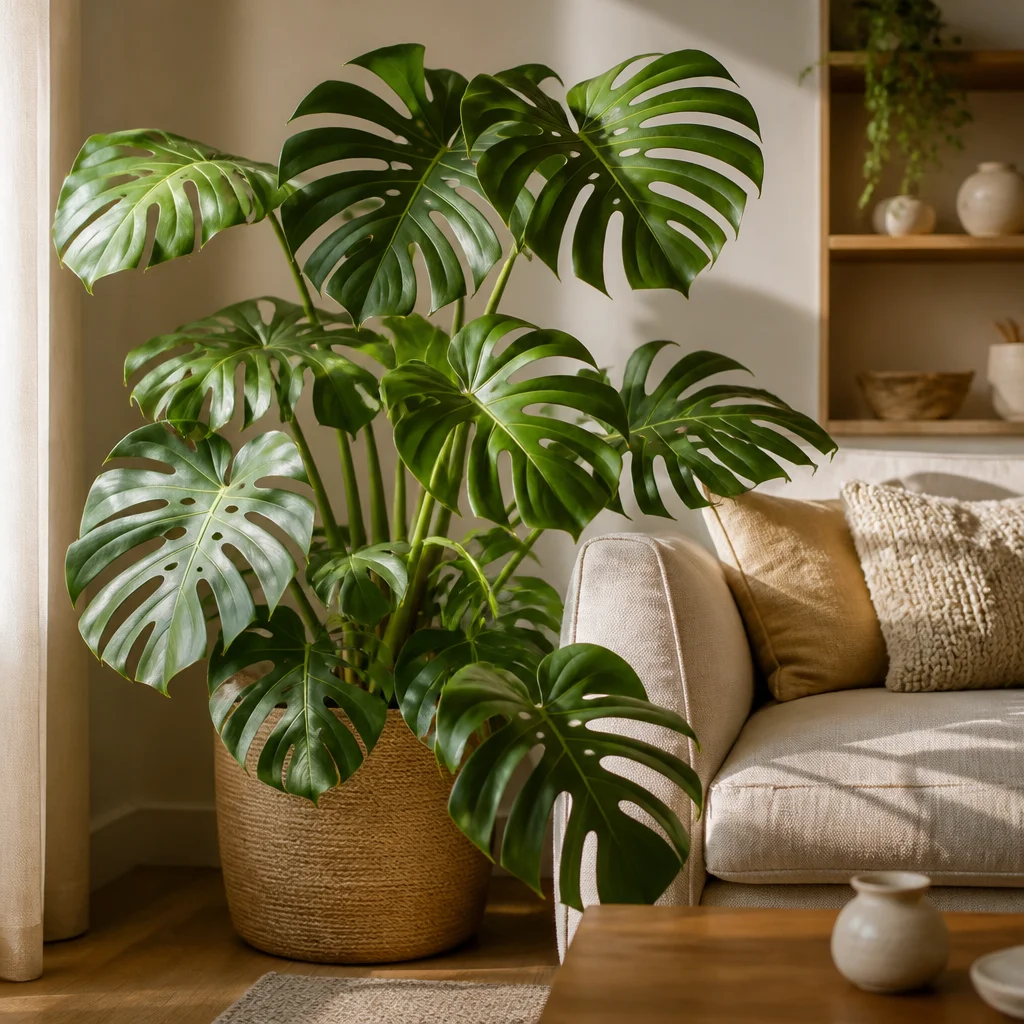
Monstera deliciosa for an easy, iconic jungle look
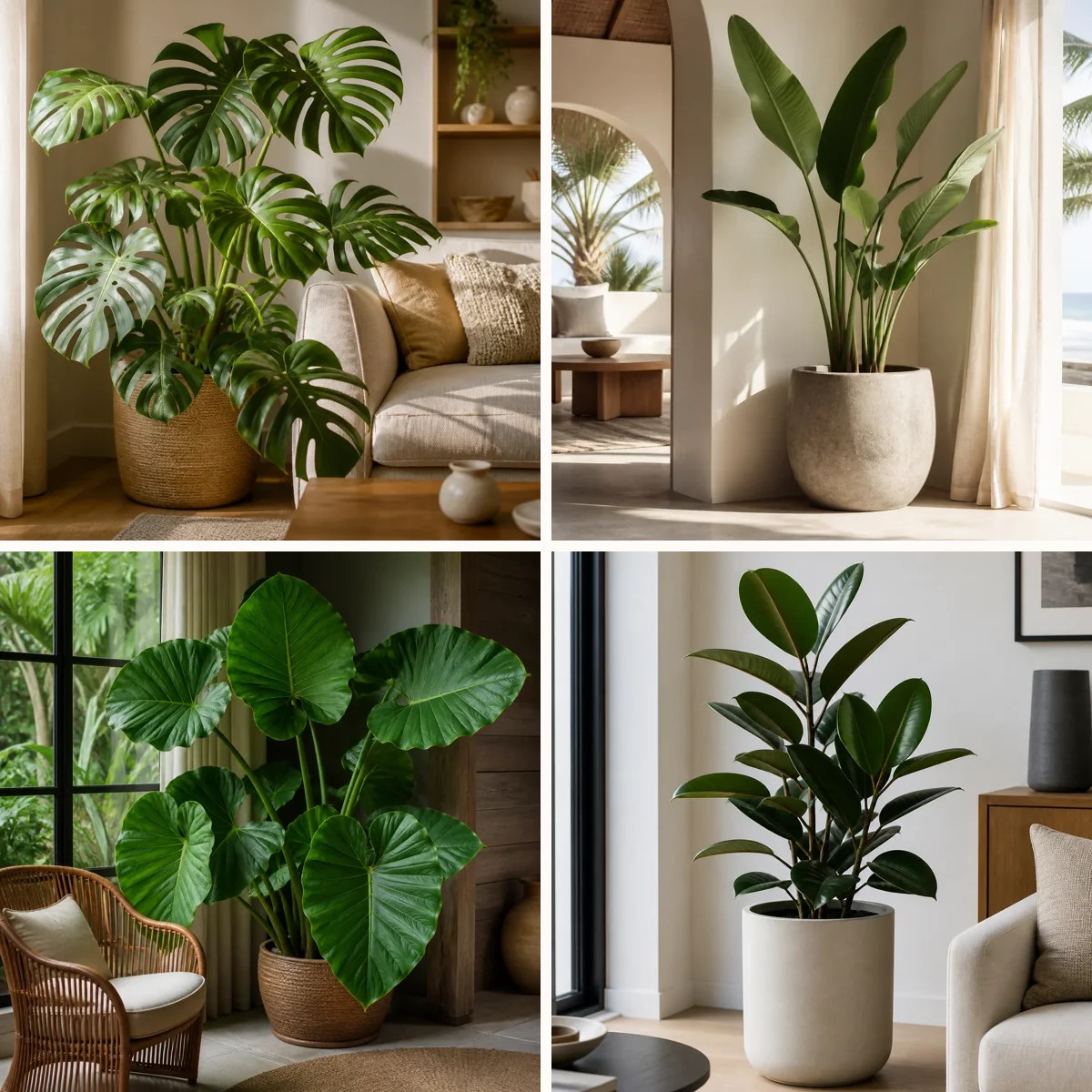
If you want one plant that instantly signals tropical abundance, Monstera deliciosa is a strong first choice. Its large, glossy leaves develop deep splits and holes as the plant matures, which gives it both drama and movement. Because the foliage is bold without being stiff, it suits many interiors, from relaxed living rooms to cleaner modern spaces that need a softer, greener counterpoint. Use monstera where it has room to spread a little rather than squeezing it into a narrow gap. A low pot on a stand beside a sofa, lounge chair, or console works well because the leaves can extend at different heights and create a layered outline. Bright indirect light helps the foliage grow larger and more evenly shaped, and a moss pole or sturdy support encourages the plant to climb and produce more mature leaves. Rotate it regularly so it does not lean heavily toward one window, and wipe the leaves often to keep their rich green finish looking fresh.
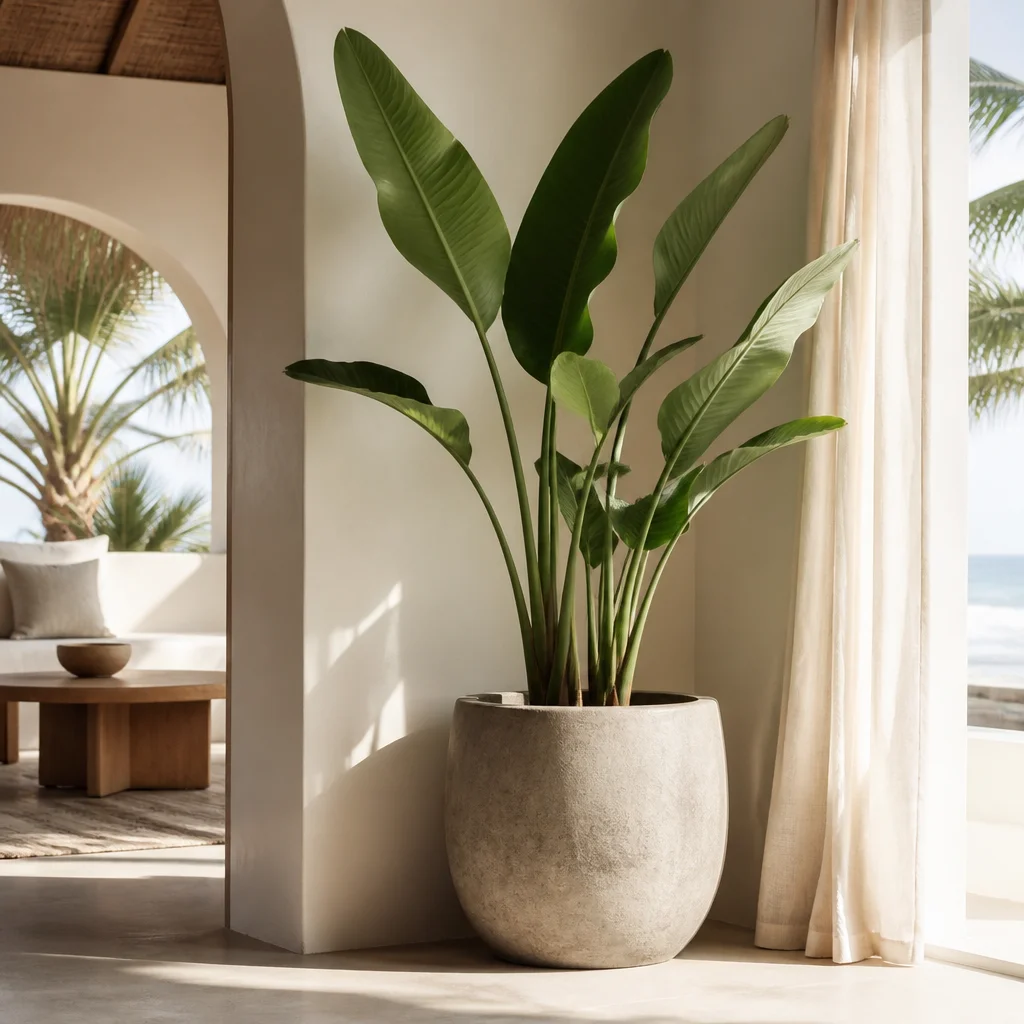
Bird of paradise to add height and a resort-style silhouette
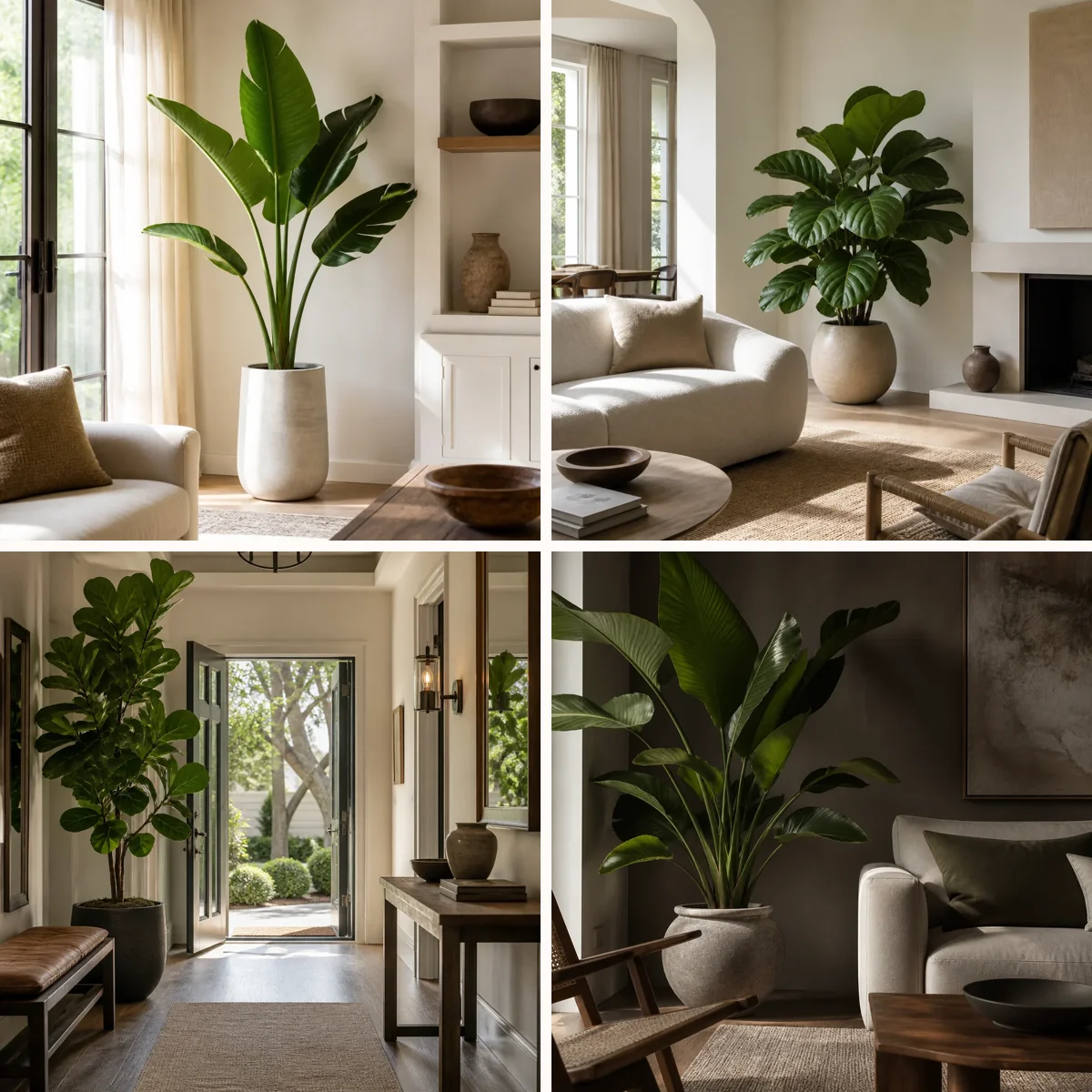
Bird of paradise brings the kind of upright, paddle-shaped foliage that makes a room feel like a hotel atrium or a sunlit terrace. The leaves are long, broad, and held on tall stems, so the plant reads as vertical and expansive at the same time. This makes it especially helpful in rooms with high ceilings, empty corners, or furniture arrangements that need a stronger focal point. Place it where its height can be appreciated, such as next to curtains, open shelving, or a blank wall that needs softening. It prefers as much bright light as you can give it indoors, and stronger light usually means larger, sturdier leaves. Do not worry if older leaves develop natural splits, as that can be part of the plant’s character. To keep the look polished, pair bird of paradise with a substantial planter in warm neutral tones, and leave visual space around it so its sculptural shape is not crowded by too many smaller objects.
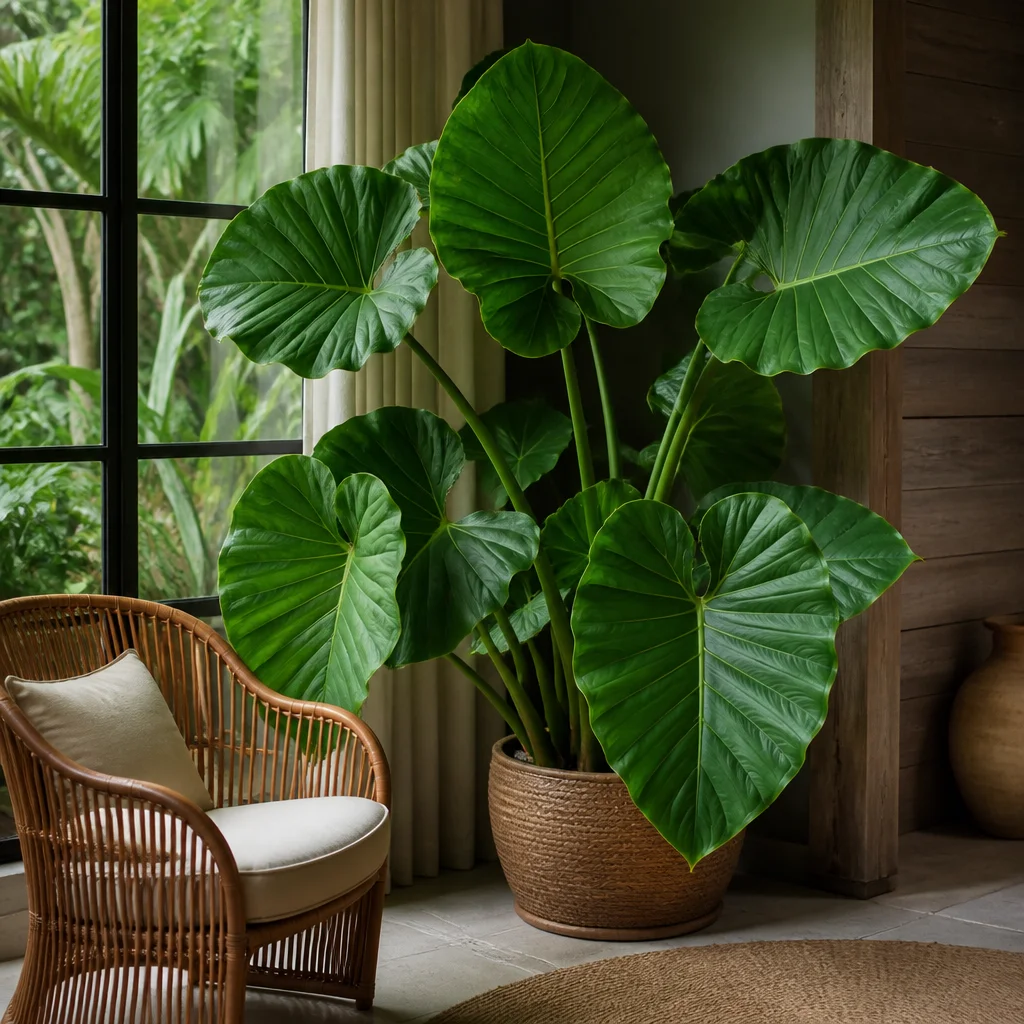
Elephant ear for dramatic heart-shaped foliage
Few plants create tropical impact as quickly as elephant ear. Its oversized, heart-shaped or shield-like leaves bring instant fullness and an almost cinematic sense of lushness. Depending on the variety, the foliage may arch outward, point upward, or show darker veining, but the overall effect is always generous and bold. This is a plant for people who want leaves to be the main event. Because elephant ears have such broad surfaces, they look best in spots where their shape can be read clearly, such as near a bright window with filtered light or in a spacious corner with minimal clutter. They also appreciate consistent moisture more than many houseplants, so they suit owners who are attentive with watering. Styling-wise, they pair beautifully with natural textures like wood, rattan, and linen because those materials underline the tropical mood without competing with the foliage. One healthy specimen can do more for a room than several smaller plants scattered around.
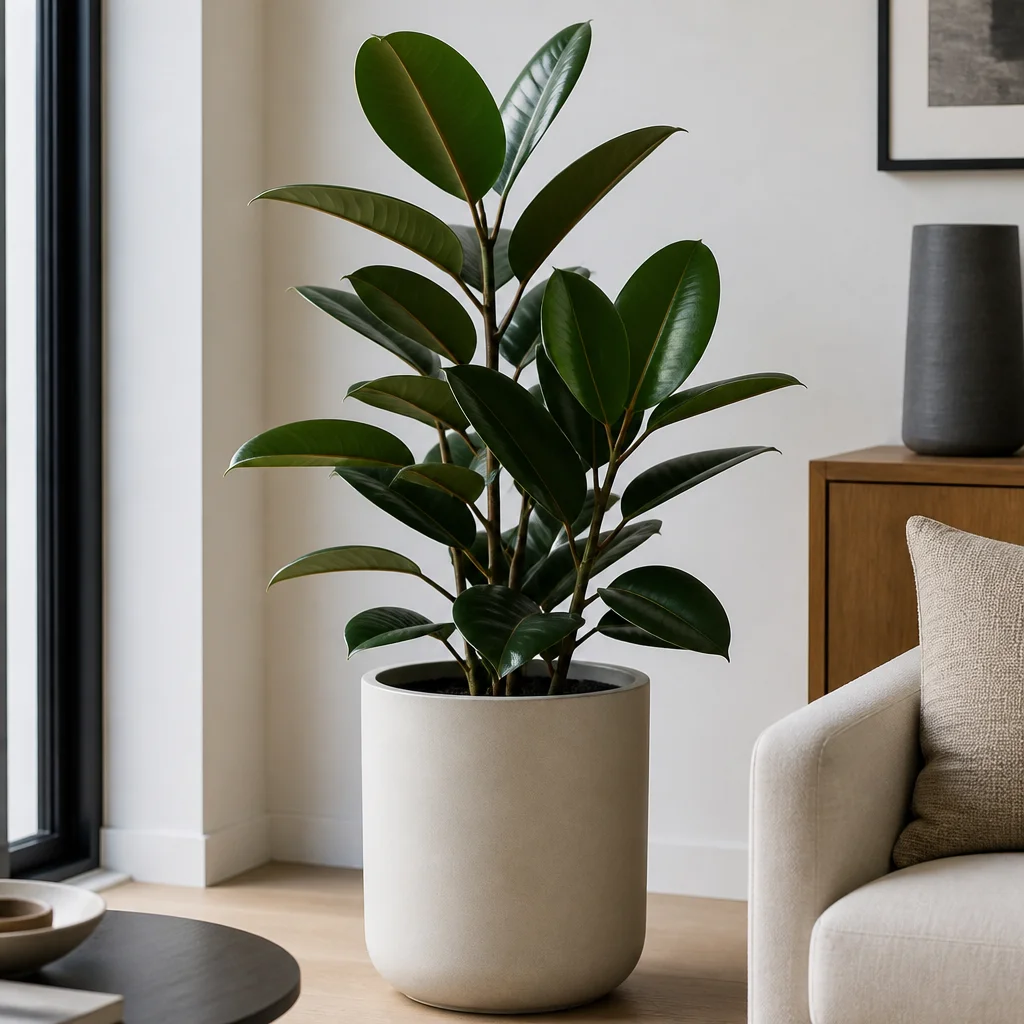
Rubber plant for deep green richness and a cleaner tropical mood
Not every tropical-feeling room has to look wild or dense. A rubber plant offers large, thick leaves and a glossy finish, but with a tidier, more structured habit than some looser species. The broad oval foliage creates a sense of abundance while still feeling controlled, which makes this plant perfect for modern interiors that want warmth and greenery without losing visual order. Choose a green variety if your goal is a lush, saturated palette. The darker foliage adds depth, especially in rooms with pale walls, light woods, or neutral upholstery. Rubber plants often work well flanking a media unit or standing near an entry where you want an immediate statement. Bright indirect light keeps growth balanced, and careful watering is important because overly wet soil can spoil the plant’s crisp appearance. If you prune the top lightly over time, you can encourage a bushier shape and create a fuller canopy of oversized leaves.
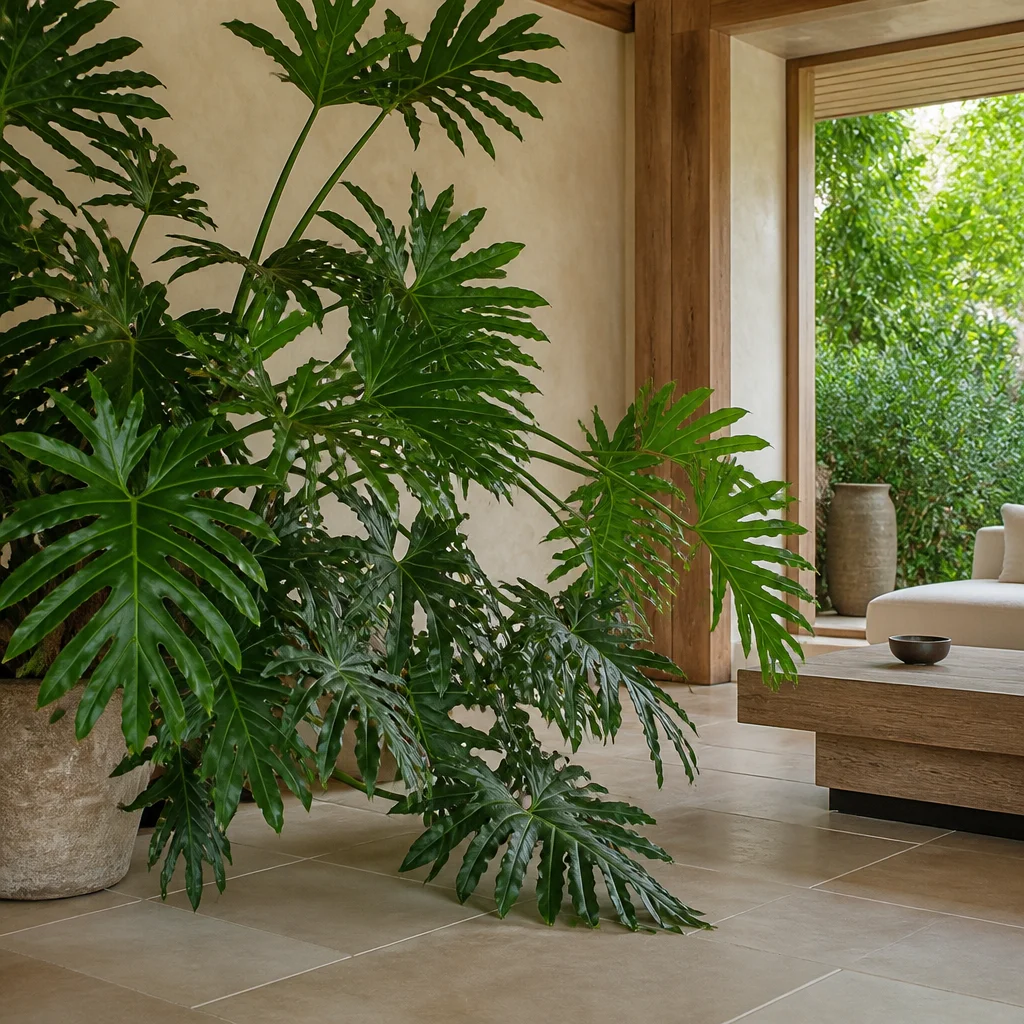
Philodendron selloum for a full, layered canopy effect
Philodendron selloum, often grown for its massive, deeply lobed leaves, creates a room-filling presence that feels lush from every angle. Unlike plants with simpler leaf shapes, this one brings both size and texture, so the silhouette stays interesting even when viewed across the room. It is ideal when you want a space to feel established, leafy, and immersive rather than merely decorated with greenery. This plant benefits from a location with enough floor area for the leaves to radiate outward. It is especially effective in living rooms, sunrooms, or dining areas where guests can move around it and appreciate its shape from different sides. Keep the styling around it simple: a strong pot, a clean floor area, and perhaps one nearby natural material such as a woven chair or wooden bench. Because the foliage can become expansive, occasional grooming of older leaves helps the plant keep a fresh, balanced form instead of looking crowded or tired.
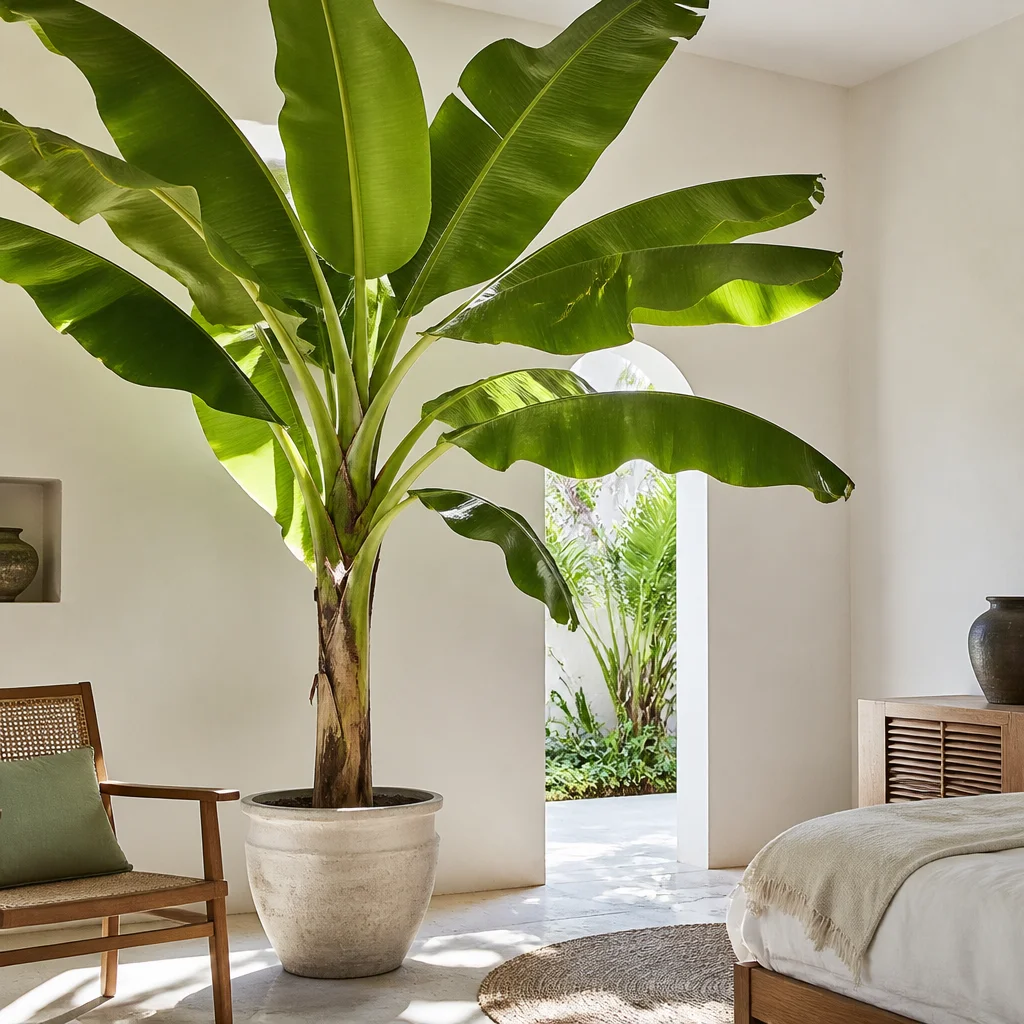
Banana plant for soft, breezy movement
A banana plant gives tropical style a lighter, more relaxed energy. Its long, generous leaves unfurl with a fresh green brightness and bring a breezy quality that feels different from the heavier gloss of many other large-leaf species. If your room needs to feel more casual, sunny, and holiday-like, banana foliage can set exactly that tone. Give it the brightest spot you have, ideally with several hours of strong light, because this plant’s best growth comes from abundant brightness. Since the leaves are large but somewhat delicate, place it away from constant brushing traffic that can tear the foliage. In terms of styling, banana plants shine in airy spaces with pale walls, light textiles, and simple furniture where their movement becomes part of the atmosphere. A cluster of two or three plants may be unnecessary when one healthy banana already creates the desired effect, so let a single specimen command attention.
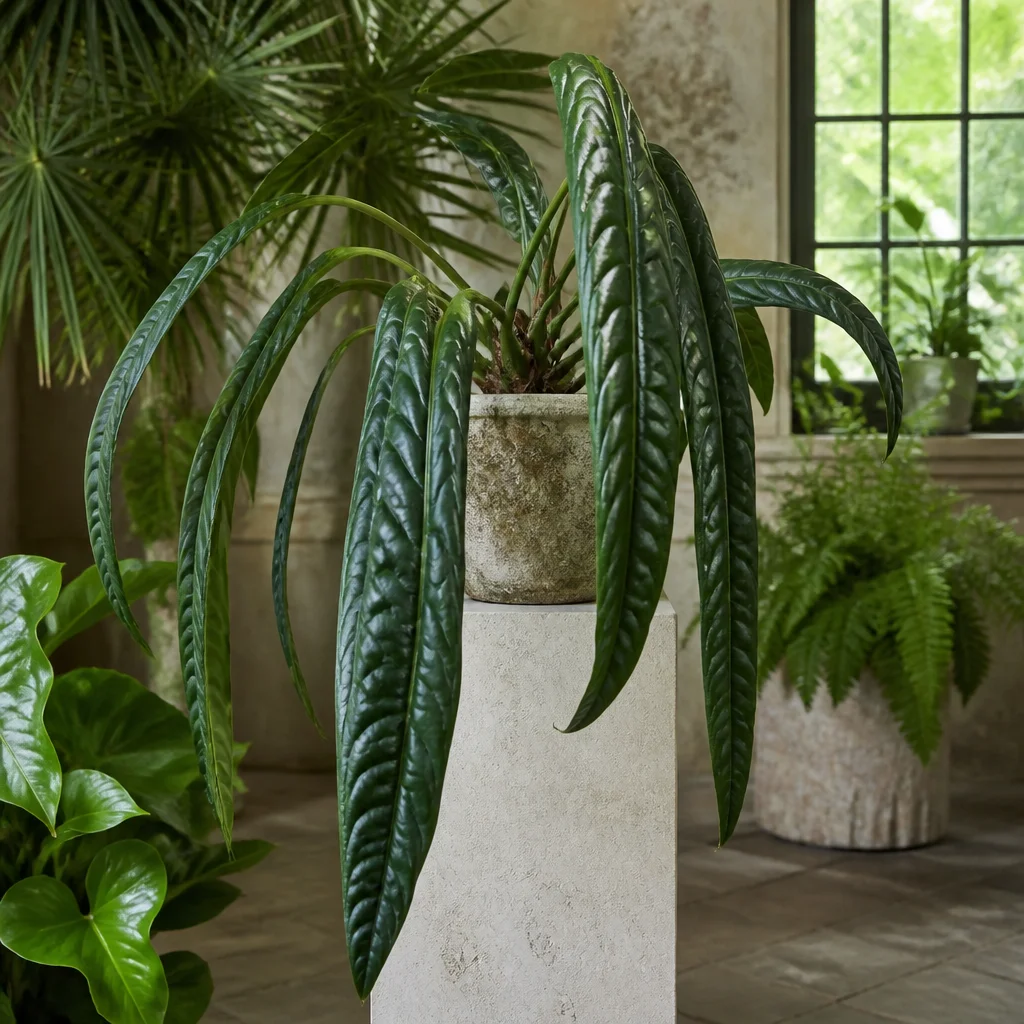
Anthurium veitchii or other giant anthuriums for tropical texture
For a more unusual take on oversized foliage, giant anthuriums offer dramatic leaf length and striking surface texture. Anthurium veitchii, in particular, is known for long, rippling leaves that look almost architectural while still feeling distinctly tropical. This gives you a way to add lushness that is less common than monstera or bird of paradise, yet every bit as memorable. These plants work especially well when displayed slightly elevated, such as on a pedestal or plant stand, so the elongated leaves can drape and show off their form. They suit interiors that mix botanical abundance with a curated feel, because the texture reads almost sculptural. Good humidity and bright indirect light help them look their best, and they reward patient care with foliage that becomes increasingly dramatic over time. If you want your plant styling to feel collected rather than predictable, a giant anthurium can be the piece that changes the whole mood of the room.
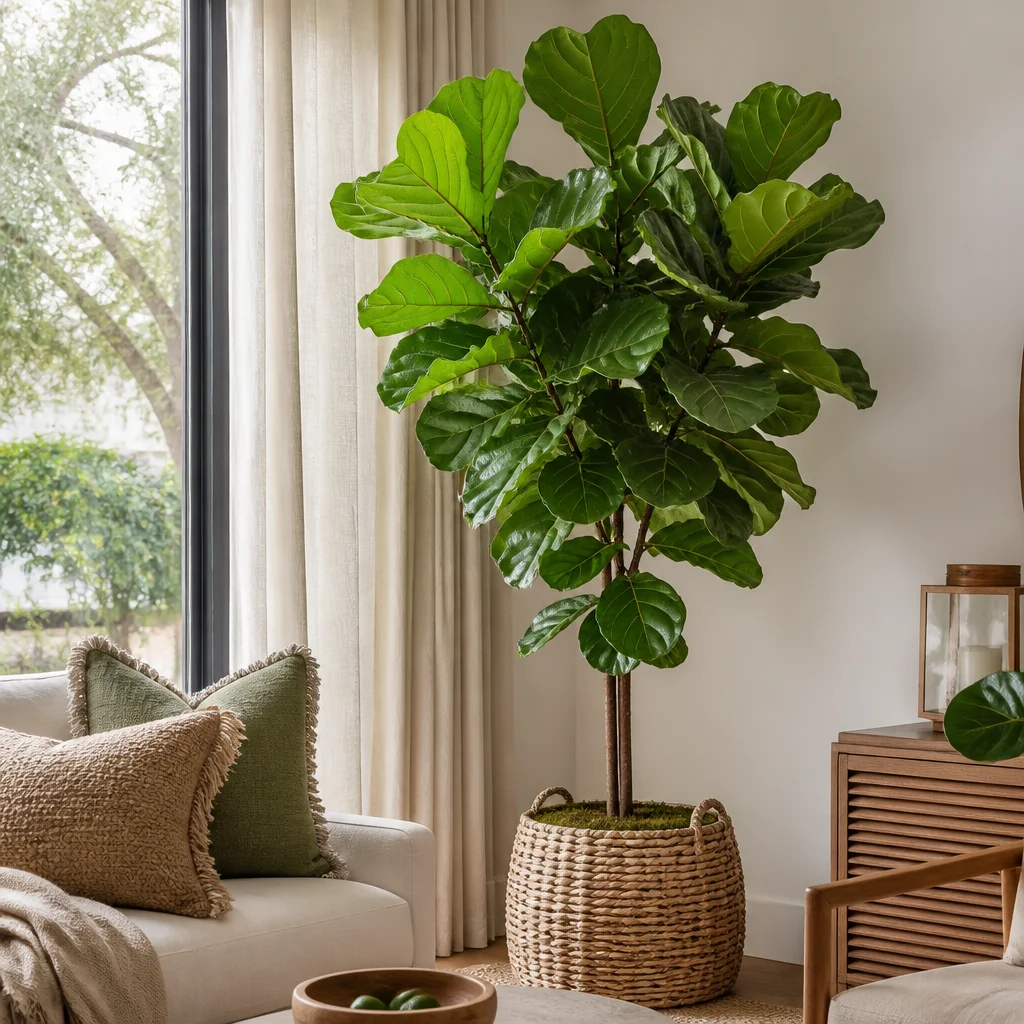
Fiddle-leaf fig for bold scale and a statement finish
The fiddle-leaf fig remains popular for a reason: its broad, violin-shaped leaves create immediate scale and make a room feel finished. While its look is more upright and tree-like than sprawling, the large foliage still contributes to that tropical sense of generous greenery. It is especially effective in spaces that need a strong anchor, such as an empty corner, the end of a sofa arrangement, or a room with lots of vertical lines. The key to using fiddle-leaf fig well is to treat it as a statement piece rather than one plant among many. A substantial basket or planter helps it feel intentional, and a position with bright, steady light supports healthier leaf retention. Once you find a spot it likes, avoid moving it often. For the most convincing tropical atmosphere, combine its bold leaves with softer supporting elements such as woven shades, natural fiber rugs, or linen curtains. The result feels lush but still refined, like a polished indoor retreat rather than an overfilled plant collection.
Images are AI-generated inspiration concepts.
Explore the categories ↗How did this story make you feel?
Choose one reaction. You can change it later.