Low-Light Plants7 min read
Low-Light Plants for Small Spaces, Shelves, and Apartment Living
A home does not need floor-to-ceiling windows or spare square footage to feel green. Many houseplants are well suited to apartment life, especially when you choose varieties that stay compact, tolerate modest light, and adapt to being styled on shelves, side tables, narrow ledges, or small corners. The key is not forcing sun-loving plants to survive in dim rooms, but matching the plant to the conditions you actually have. Low light also does not mean no light. Most plants on this list prefer bright indirect light but can cope with lower levels better than fussier choices. For small homes, that flexibility matters as much as size. A plant that grows slowly, keeps a tidy shape, and forgives the occasional imperfect watering routine can make limited space feel calmer rather than more crowded.

Choose Upright Plants That Use Vertical Space Well
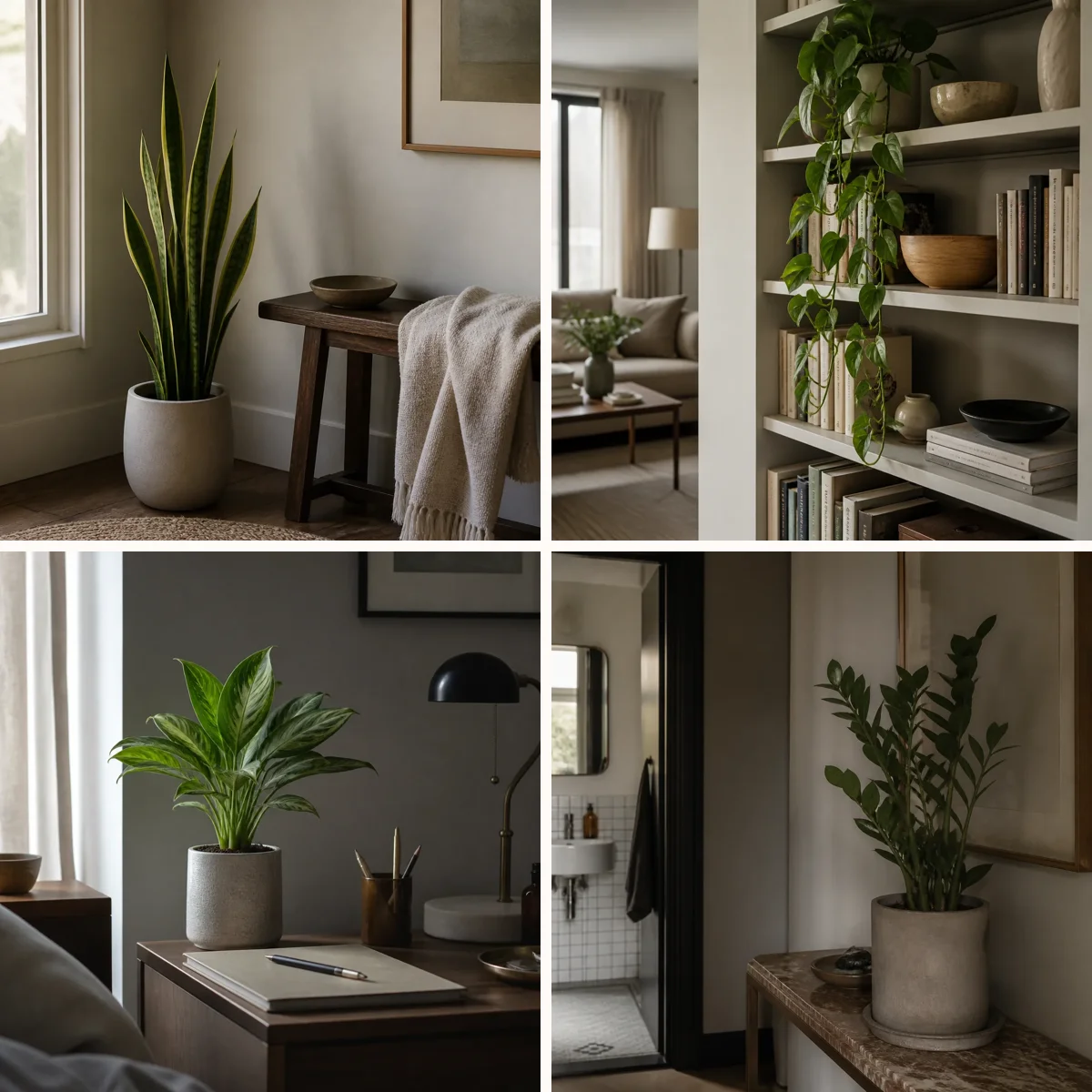
When floor space is limited, upright plants do more with less. Snake plant, ZZ plant, and cast iron plant are strong choices because they hold a clear silhouette, grow slowly, and fit into narrow gaps beside a sofa, desk, or entry bench. Instead of spreading outward, they create height, which helps a room feel layered without taking over precious walking space. This is especially useful in apartments where every square foot works hard. A slim pot tucked into a corner can soften sharp lines and make a small room feel finished. For the best effect, choose a container with a simple shape and enough weight to stay stable. If the room is quite dim, resist the urge to crowd several large plants together in one spot. One upright specimen often looks more intentional and is easier to care for than a crowded cluster competing for the same limited light.
Use Trailing Plants to Turn Shelves Into Green Features
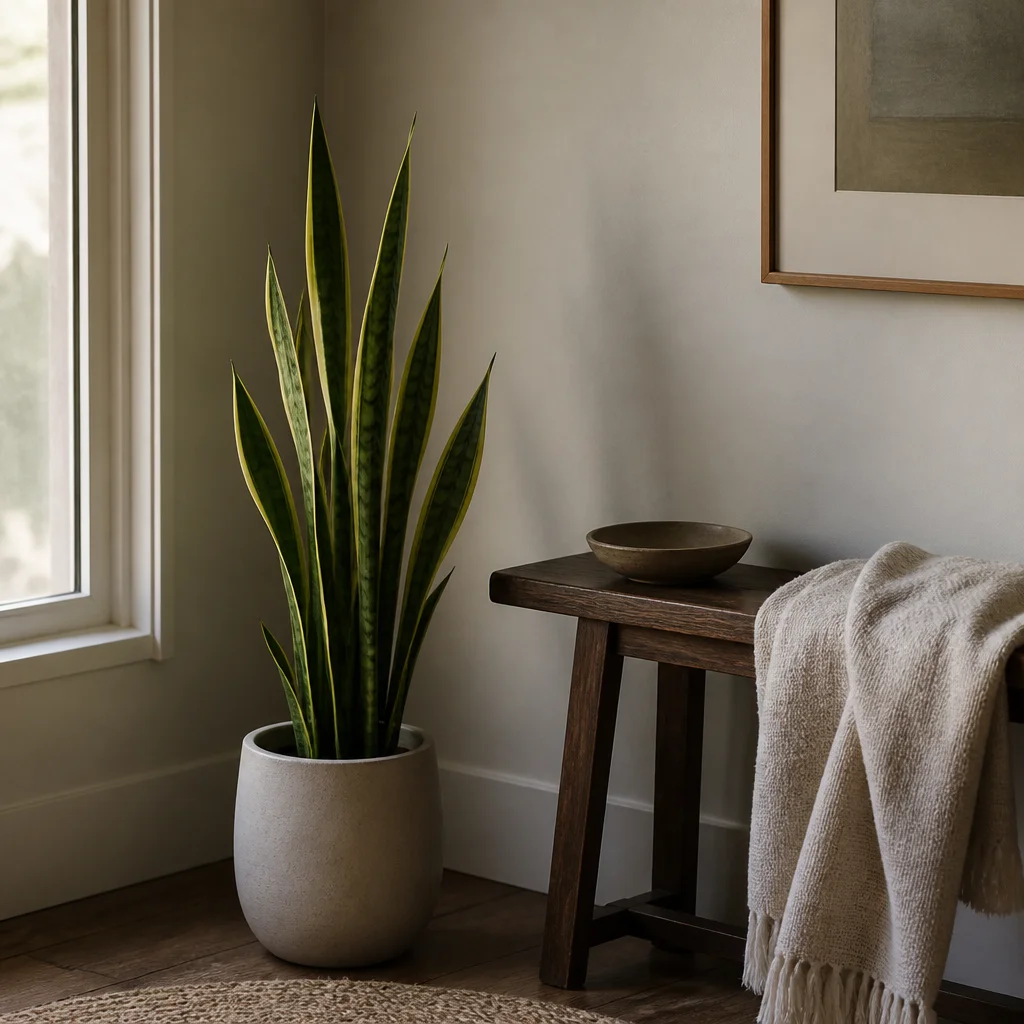
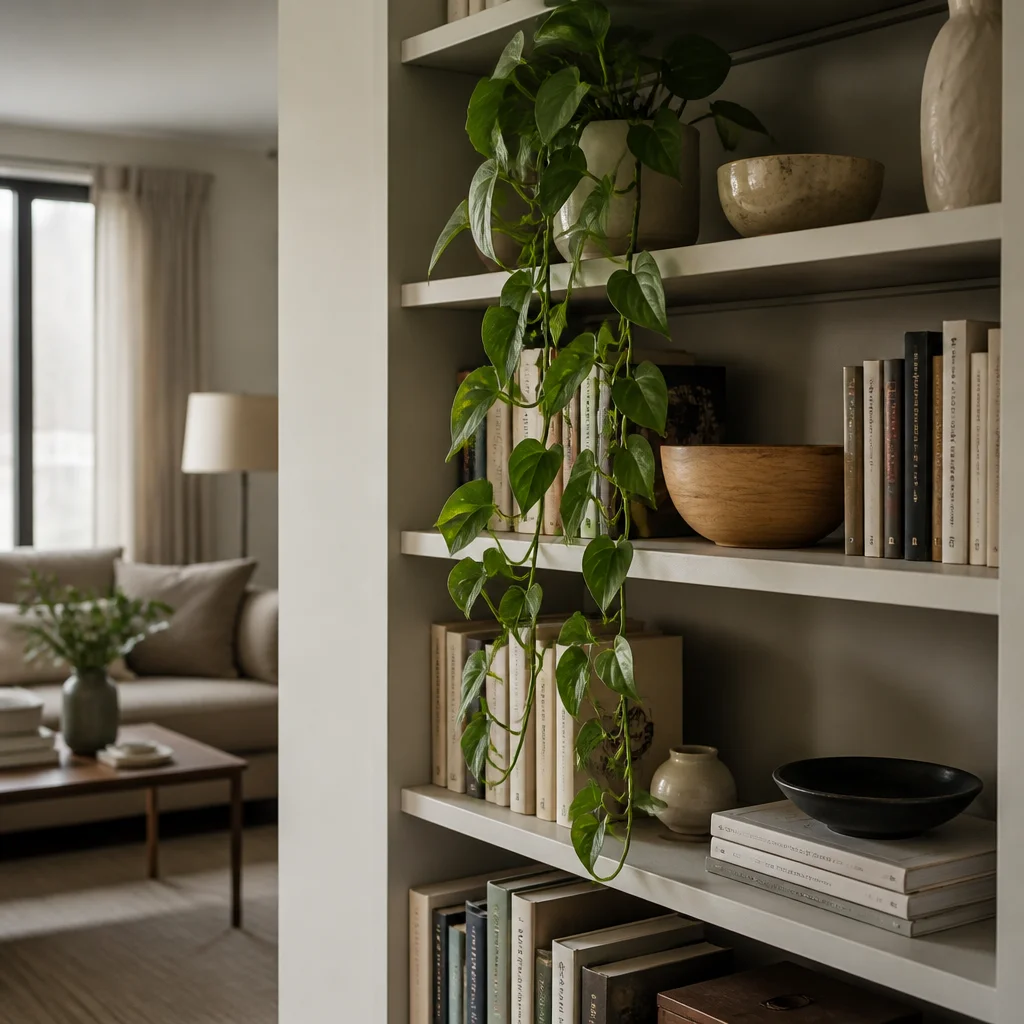
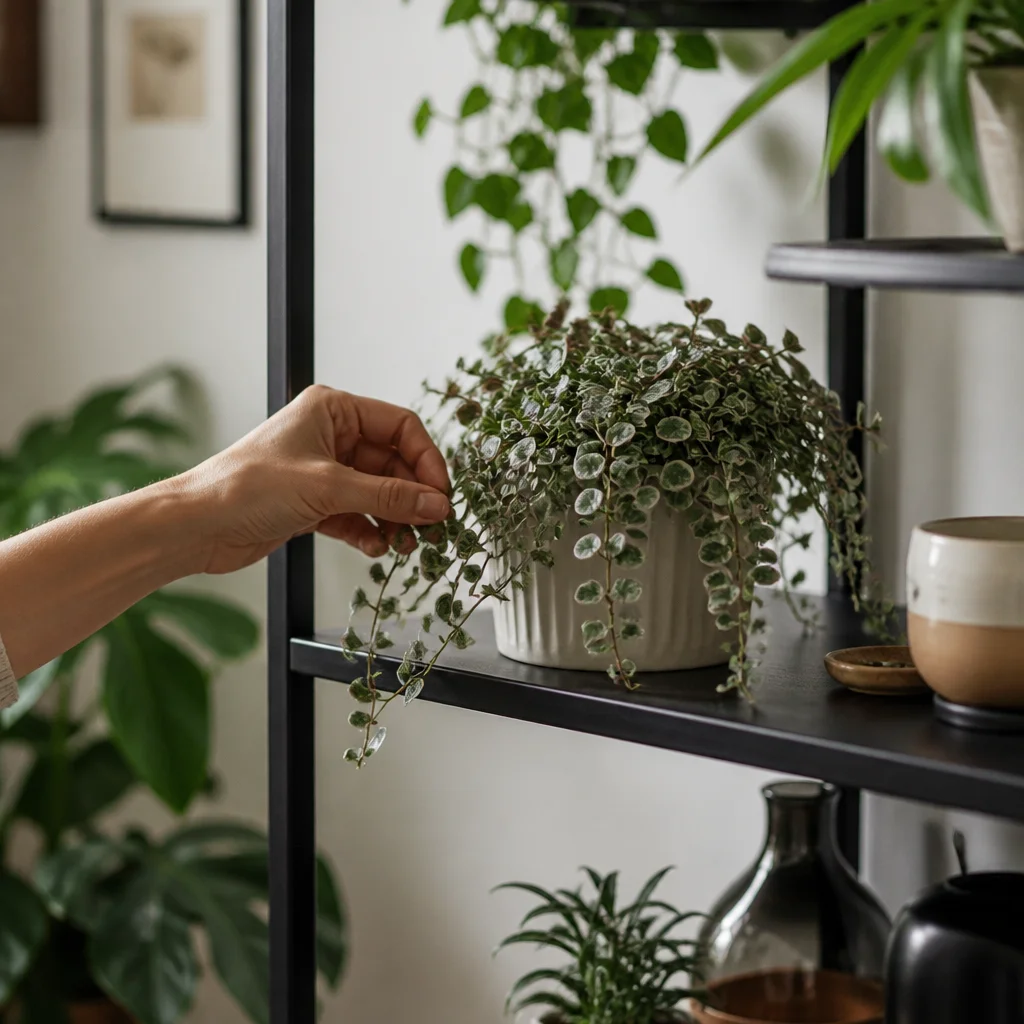
Shelves are prime real estate in small homes, and trailing plants make them feel alive without using tabletop space. Heartleaf philodendron, satin pothos, and smaller pothos varieties are practical picks for low-light apartments because they drape attractively and can be guided along the edge of a bookcase or cabinet. Their soft lines also balance the hard edges of storage furniture. To keep shelf styling neat, let one plant trail from each shelf rather than placing many vines together. This prevents a tangled look and allows air to move around the foliage. If a vine becomes too long, trim it back to maintain proportion with the shelf. That simple pruning habit keeps the plant compact, encourages fuller growth, and stops it from turning a small room into a maze of leaves.
Pick Compact Tabletop Plants for Daily Living Areas
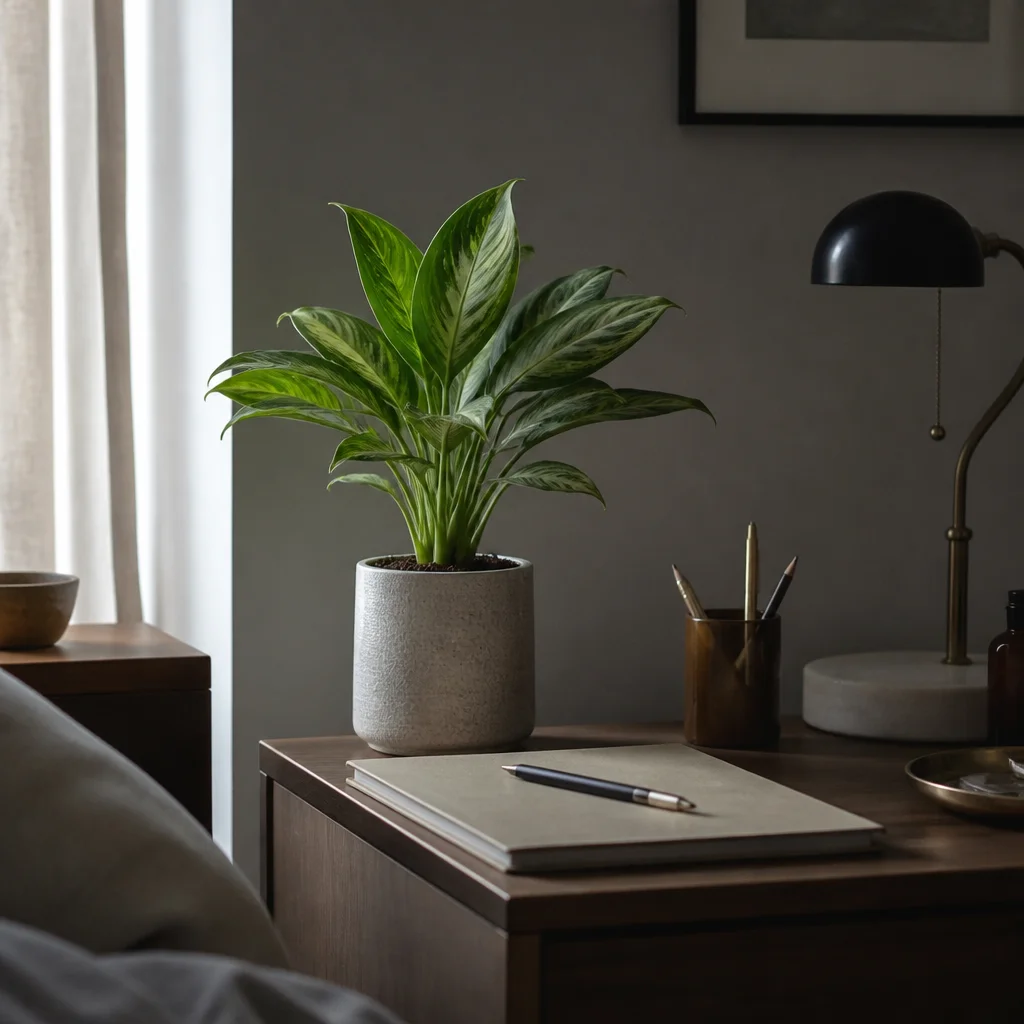
Not every plant in a small home needs to make a dramatic statement. Compact tabletop plants can bring life to coffee tables, bedside tables, bathroom counters, and work desks without demanding much room. Chinese evergreen in smaller cultivars, parlor palm, and bird’s nest fern are useful examples because they stay manageable and add texture where you spend the most time. Small plants work best when they leave space for everyday function. On a desk, that means choosing a pot small enough not to compete with your lamp or notebook. On a bedside table, it means selecting a plant with a tidy shape that does not brush against you. In low light, smaller plants are also easier to rotate toward the best available window over time, helping them grow more evenly without turning your routine into a major project.
Let Adaptable Plants Solve Awkward Spots
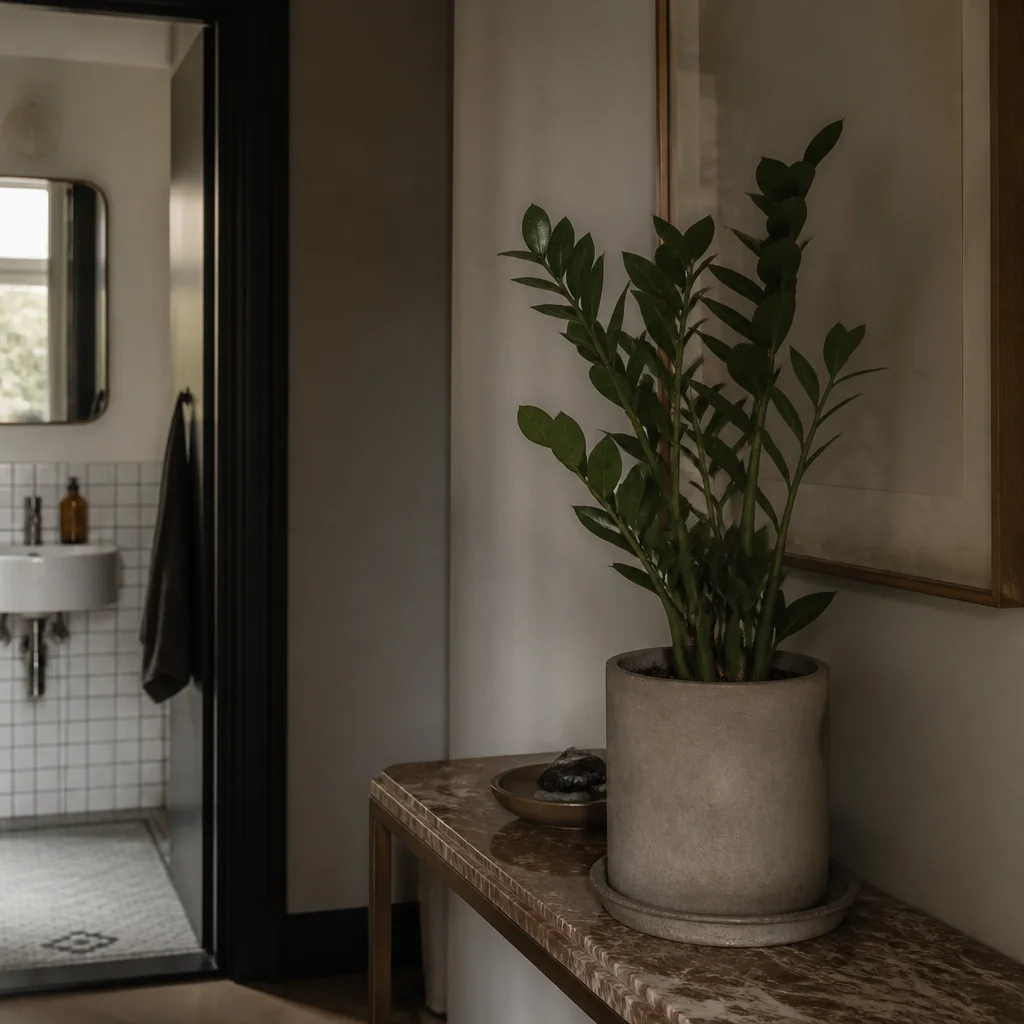
Most apartments have a few difficult areas: a dim hallway table, a bathroom shelf with a frosted window, or the top of a wardrobe where light is present but weak. These awkward spots are where adaptable plants earn their place. ZZ plant, lucky bamboo, and peace lily are often chosen for these conditions because they tolerate less-than-ideal light better than many decorative plants and still look composed. The practical trick is to match the plant’s size and moisture needs to the spot, not just its light tolerance. A peace lily in a bathroom may appreciate slightly higher humidity, while a ZZ plant may be better for a dry hallway where you do not want to water often. Thinking about the whole environment, not just brightness, helps you place plants where they can stay healthy with minimal reshuffling.
Group Small Plants by Care Needs, Not Just by Looks
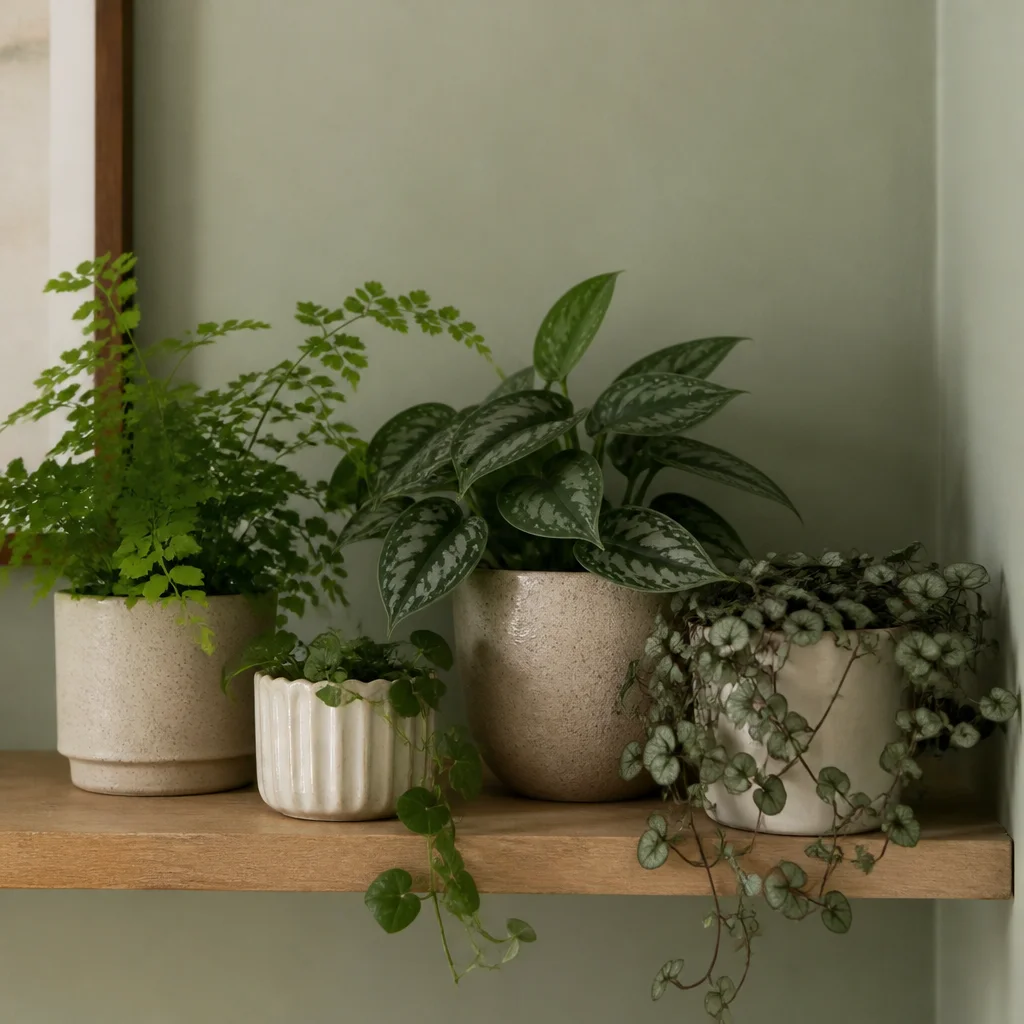
A collection of small pots can easily become visual clutter in a compact home unless it is organized with purpose. One of the easiest ways to make a group feel calm is to combine plants that like similar care. For example, a shelf with pothos, heartleaf philodendron, and satin pothos is simpler to manage than a mixed group with one thirsty fern, one drought-tolerant succulent, and one humidity-loving tropical. This approach helps both style and maintenance. When watering needs align, you are less likely to overwater one plant while trying to care for another. Visually, repeating similar leaf sizes or tones also creates rhythm. You can still add contrast through pot materials or plant heights, but the arrangement will feel more deliberate and less like a random lineup of whatever fit the shelf.
Use Reflective and Pale Surroundings to Support Low-Light Areas
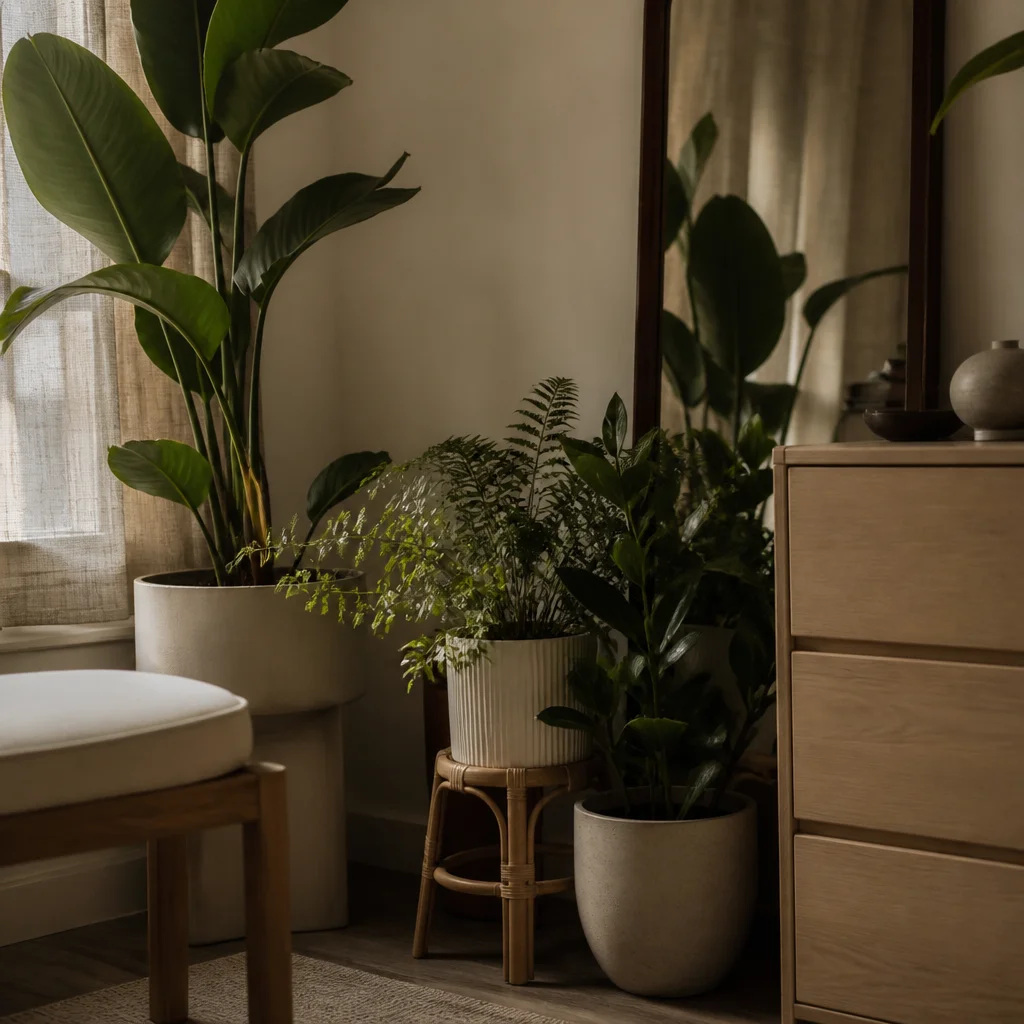
In homes with limited natural light, the space around the plant matters almost as much as the plant itself. Positioning greenery near pale walls, light wood furniture, mirrors, or sheer window treatments can help available light move around the room. This does not replace a brighter location, but it can make a modestly lit corner more supportive for low-light-tolerant plants. Styling can also make plants stand out better in dim interiors. Deep green leaves often look especially elegant against cream, soft gray, or natural oak. If your room feels shadowy, avoid visually heavy pairings such as dark pots on dark furniture in dark corners. A lighter planter or stand can lift the whole arrangement and prevent the plant from disappearing into the background.
Prune, Rotate, and Repot Sparingly to Keep Plants Apartment-Friendly
Small-space plant care is often about restraint. In lower light, many plants grow more slowly, which is useful for apartment living but also means they can become lopsided if left facing one direction for too long. Rotating pots every few weeks helps stems and leaves develop more evenly. Light trimming also keeps plants compact and prevents a shelf display from becoming unruly. Repotting should be thoughtful rather than automatic. A plant that is slightly snug in its pot is often easier to place and less likely to surge into oversized growth. Move up only one pot size when roots truly need more room. This keeps maintenance realistic, protects limited surfaces from giant containers, and helps your collection stay scaled to your home rather than constantly outgrowing it.
Build a Small Plant Palette Instead of Filling Every Empty Corner
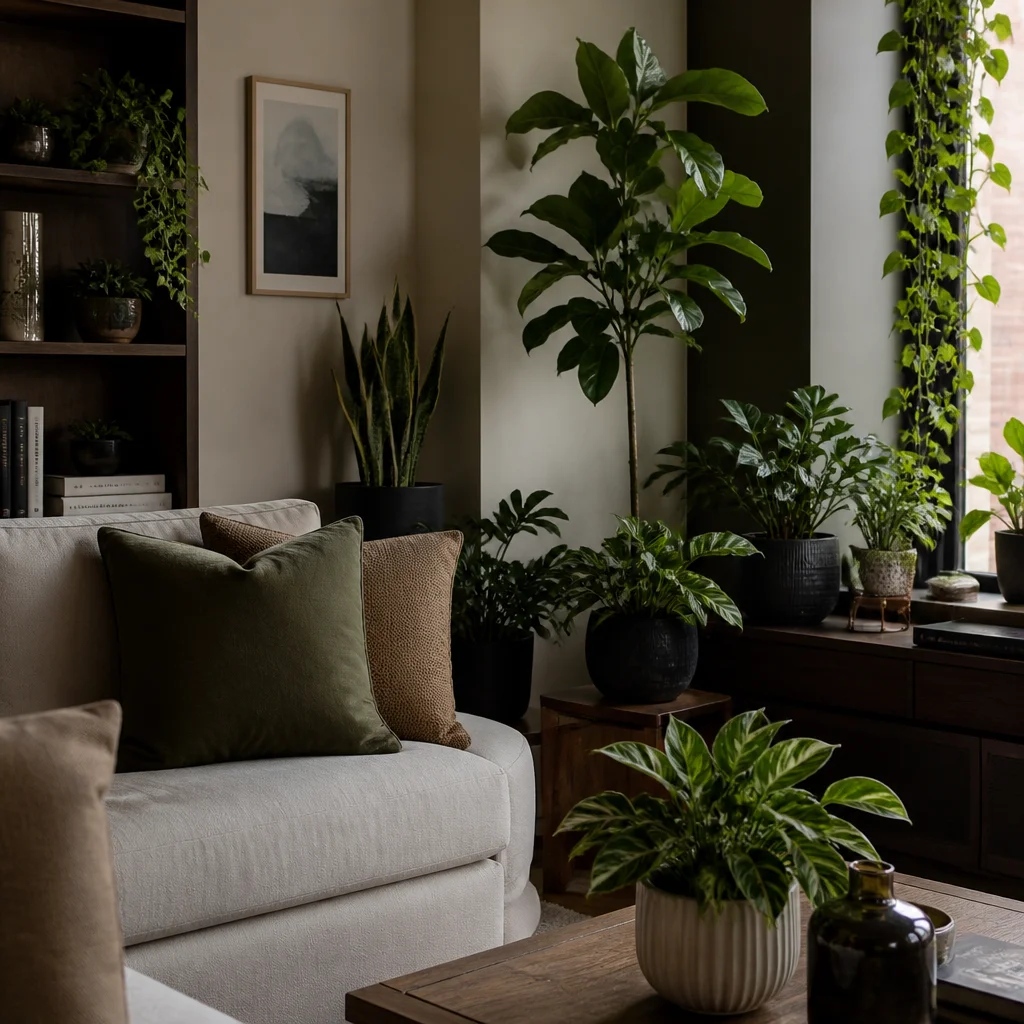
In a compact home, greenery looks best when it is edited. Rather than placing a plant in every available gap, choose a small palette of reliable low-light varieties and repeat them throughout the space. A few snake plants for structure, a couple of trailing philodendrons for softness, and one or two compact tabletop plants can be enough to create continuity without visual overload. Repeating familiar plants also makes care easier because you learn their signals over time. You will notice more quickly when a pothos is thirsty or when a ZZ plant is perfectly happy being left alone. That confidence matters in apartment living, where simplicity often leads to healthier plants and more enjoyable rooms. A restrained collection can still feel lush when each plant is well placed, properly sized, and allowed to contribute something distinct.
Images are AI-generated inspiration concepts.
Explore the categories ↗How did this story make you feel?
Choose one reaction. You can change it later.