Flowering Houseplants10 min read
12 Flowering Houseplants That Bring Long-Lasting Color to Windowsills
A blooming plant on a windowsill does more than fill a gap between curtain and glass. It softens the room, adds a sense of care, and gives everyday corners a livelier rhythm as buds open and fade in turn. The best indoor bloomers are not always the flashiest at first glance. Often, they are the ones that stay compact, settle happily into container life, and reward steady care with repeat flowers over many months. If you want color that feels cheerful rather than fussy, focus on plants that suit ordinary indoor conditions and look good up close. A windowsill is a small stage, so flower size, leaf texture, and pot choice all matter. These twelve flowering houseplants stand out for dependable display, manageable habits, and the way they brighten daily life without demanding a greenhouse routine.

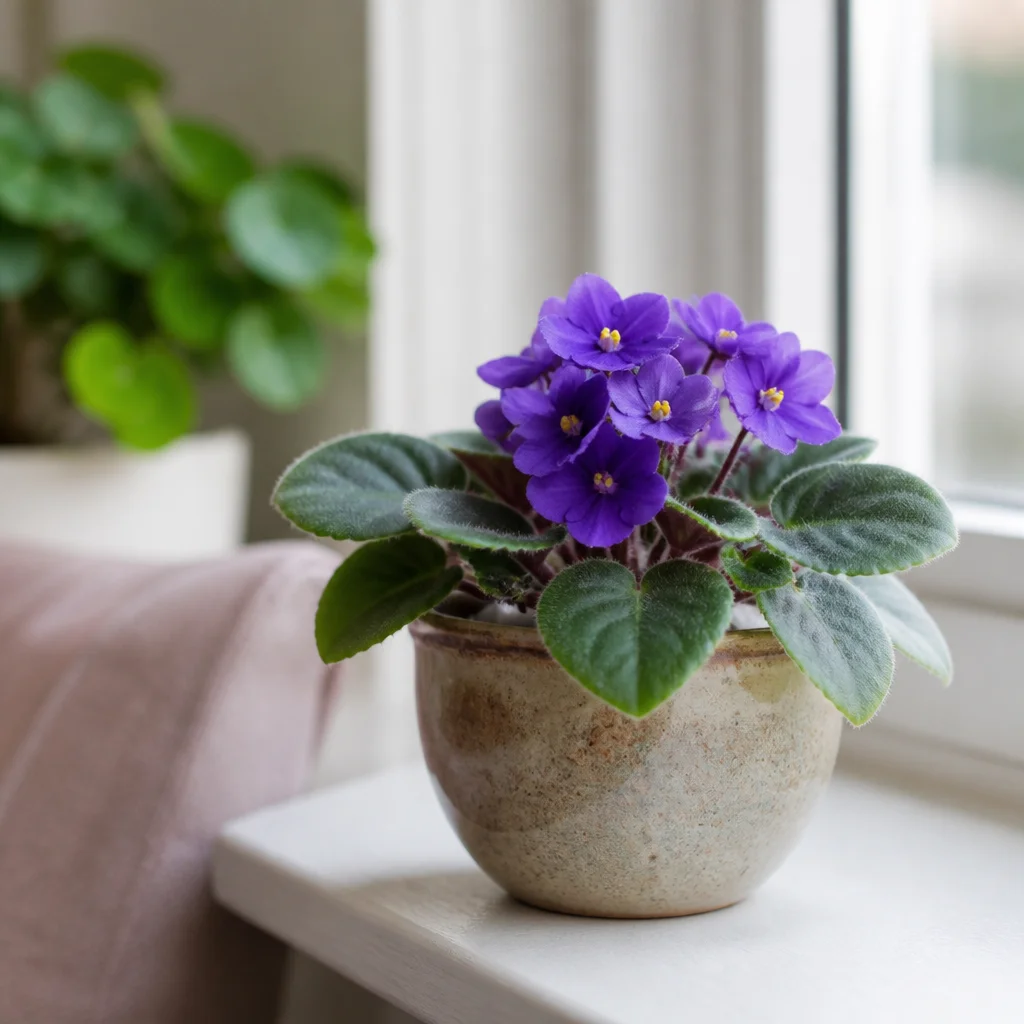
African Violet for Constant Color in Small Spaces
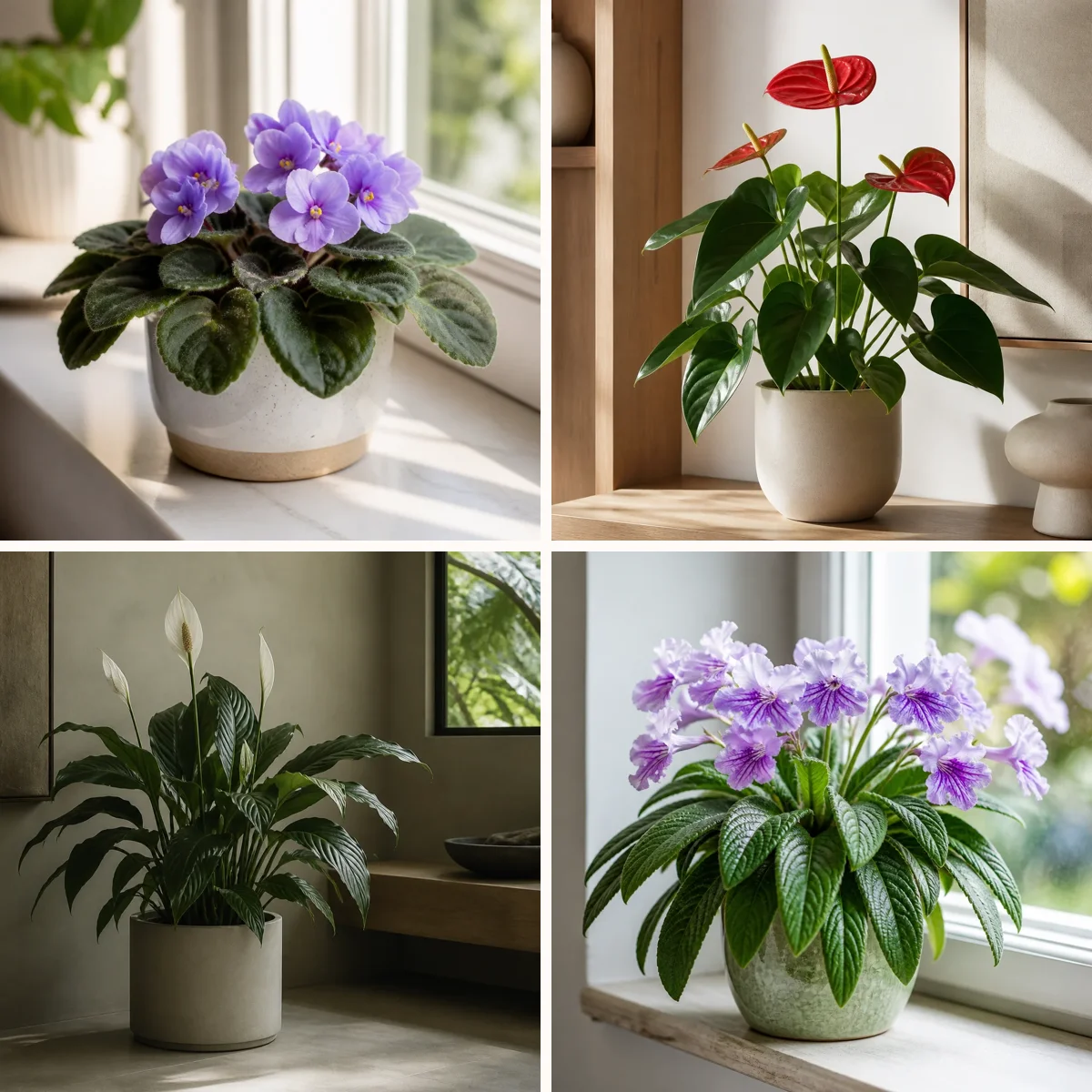
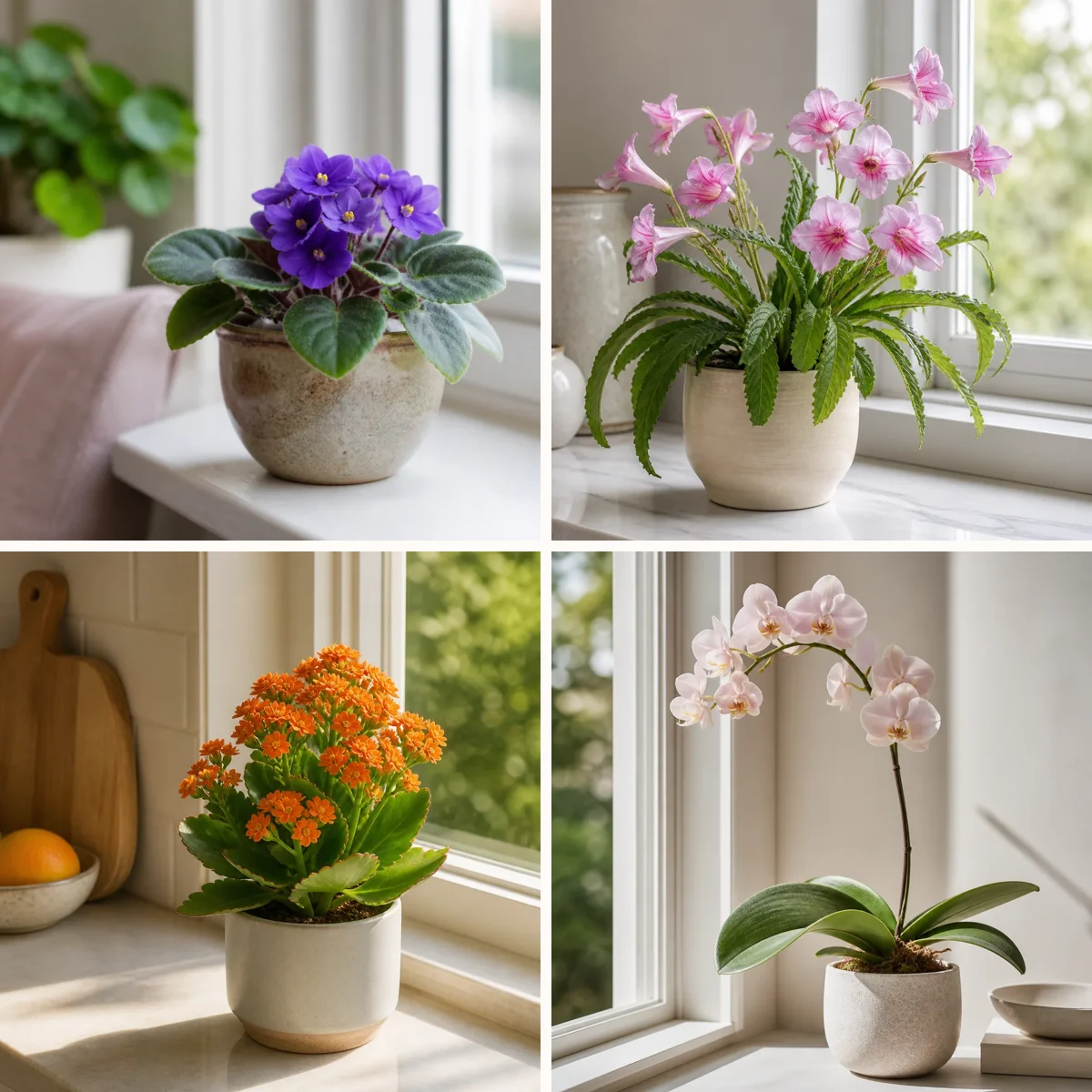
African violets are among the most reliable windowsill bloomers because they stay neat, flower repeatedly, and come in a wide range of purple, pink, blue, and white tones. Their soft leaves form tidy rosettes that do not sprawl, so even a narrow sill can hold one or two plants without looking crowded. In bright, indirect light, they often cycle into bloom again and again, making them ideal if you want steady color rather than one dramatic flush. The useful trick with African violets is to style them in matching small pots and let the flowers provide the variety. A group of two or three in slightly different bloom colors looks intentional and cheerful, especially in simple ceramic containers that do not compete with the petals. Keep foliage dry when watering, rotate the pot every week or two for even growth, and remove spent flowers promptly so the plant keeps a polished appearance.
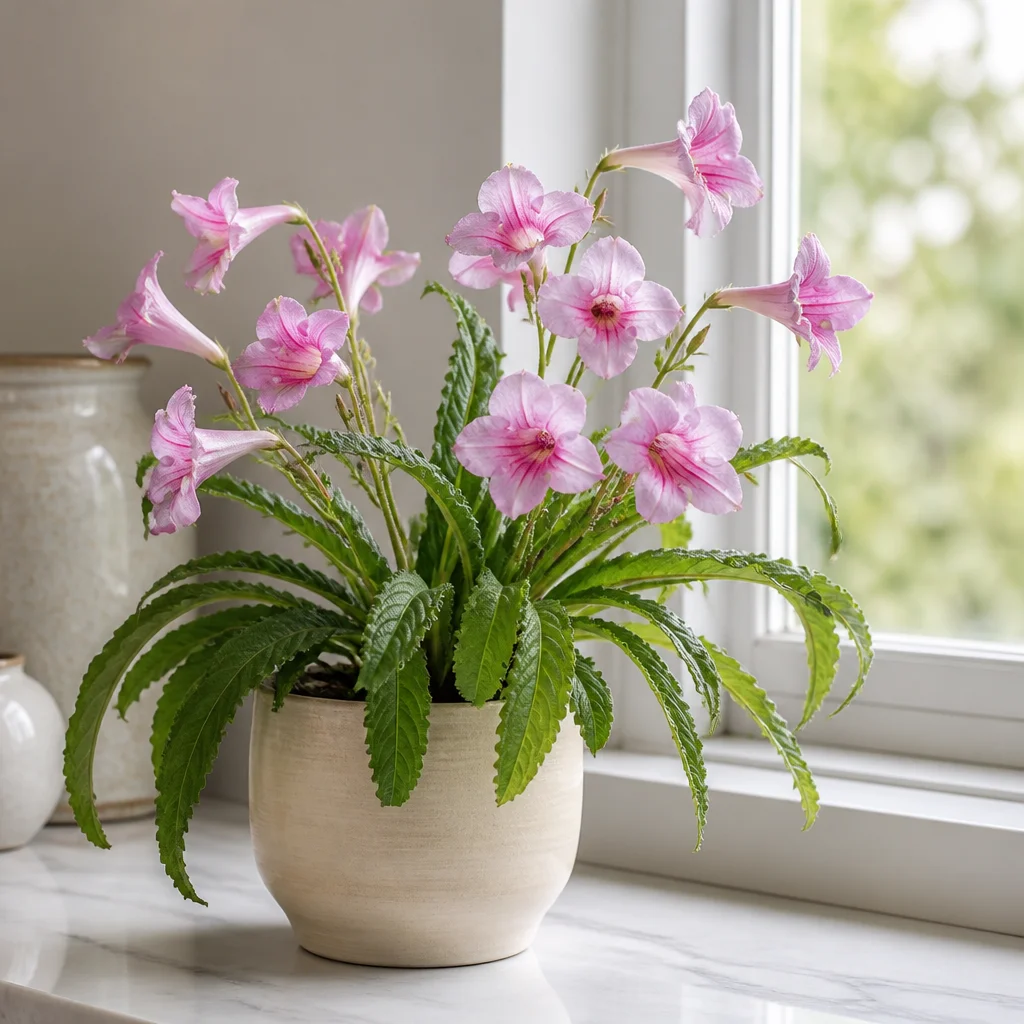
Cape Primrose for Elegant Trumpets Over a Long Season
Cape primrose, also called streptocarpus, is a wonderful choice when you want flowers that feel airy and refined instead of dense and heavy. It produces a succession of trumpet-shaped blooms above velvety or strap-like foliage, and many varieties continue for long stretches indoors. Because the leaves often arch rather than mound tightly, this plant brings movement to a windowsill while still remaining compact enough for everyday living spaces. One smart way to use cape primrose is as a visual bridge between leafy houseplants and more traditional flowering specimens. Its flowers float lightly, so it pairs well beside plain green foliage without making the sill feel cluttered. Choose a container with enough width for its leaf spread, place it where bright filtered light reaches the plant for much of the day, and snip away old bloom stems to keep new buds coming.
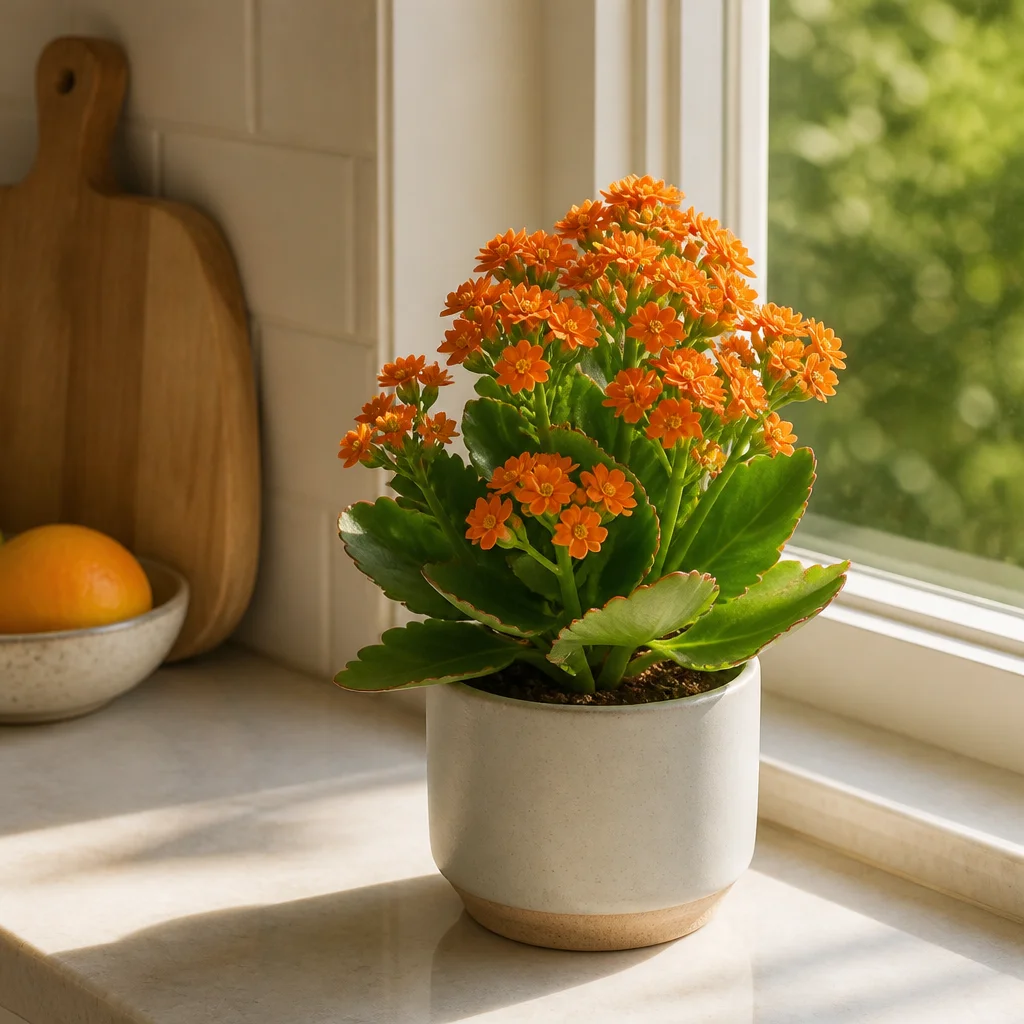
Kalanchoe for Bright Clusters and Easy Care
Kalanchoe is one of the easiest ways to bring bold flower color indoors without taking on a demanding care routine. Its succulent leaves stay handsome even out of bloom, and its clusters of red, orange, yellow, pink, or white flowers can last for weeks. The plant’s naturally compact shape suits kitchen sills, sunny breakfast nooks, and any spot where you want a tidy splash of color that can handle a little neglect better than thirstier bloomers. For a polished display, treat kalanchoe as a color accent and repeat its flower tone elsewhere in the room through a tea towel, cushion, or vase. That small echo makes the plant feel like part of the decor rather than an afterthought. Give it strong light, avoid soggy soil, and clip off fading flower heads once the show is over so the foliage stays fresh and ready for the next blooming cycle.
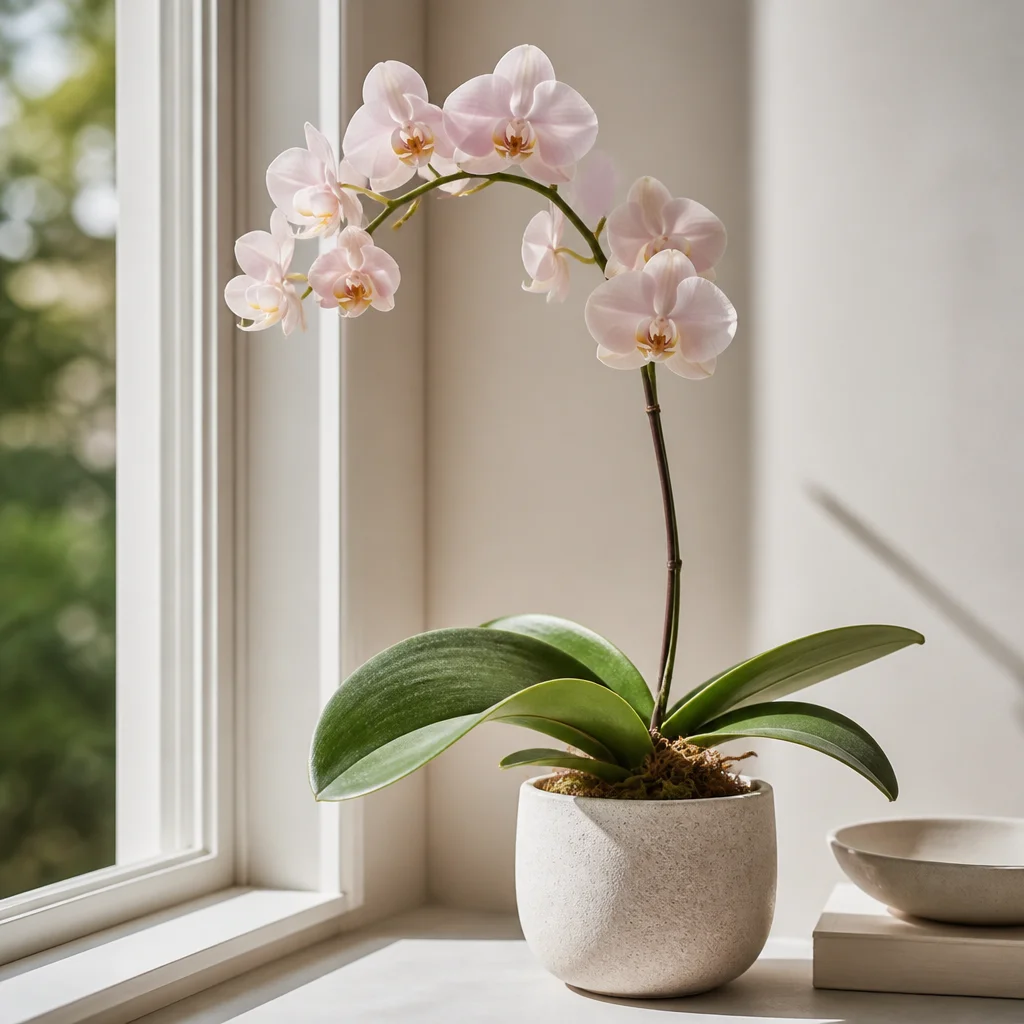
Phalaenopsis Orchid for Graceful Repeat Blooming
A phalaenopsis orchid brings a calmer, more sculptural kind of color to a windowsill. Its arching flower stems can remain attractive for many weeks, and healthy plants often rebloom with dependable care. Although orchids are sometimes seen as difficult, this type is well suited to indoor life because it tolerates average household warmth and does not need direct sun blazing through the glass all day. The best styling idea for phalaenopsis is to give it visual breathing room. One orchid in a beautiful pot can do more for a windowsill than a crowded row of mismatched plants. Let the clean leaves and elegant flower line stand out against a plain background, and keep nearby accessories minimal. Water thoroughly but infrequently, keep it in bright indirect light, and support the flower stem neatly so the whole display stays poised rather than floppy.
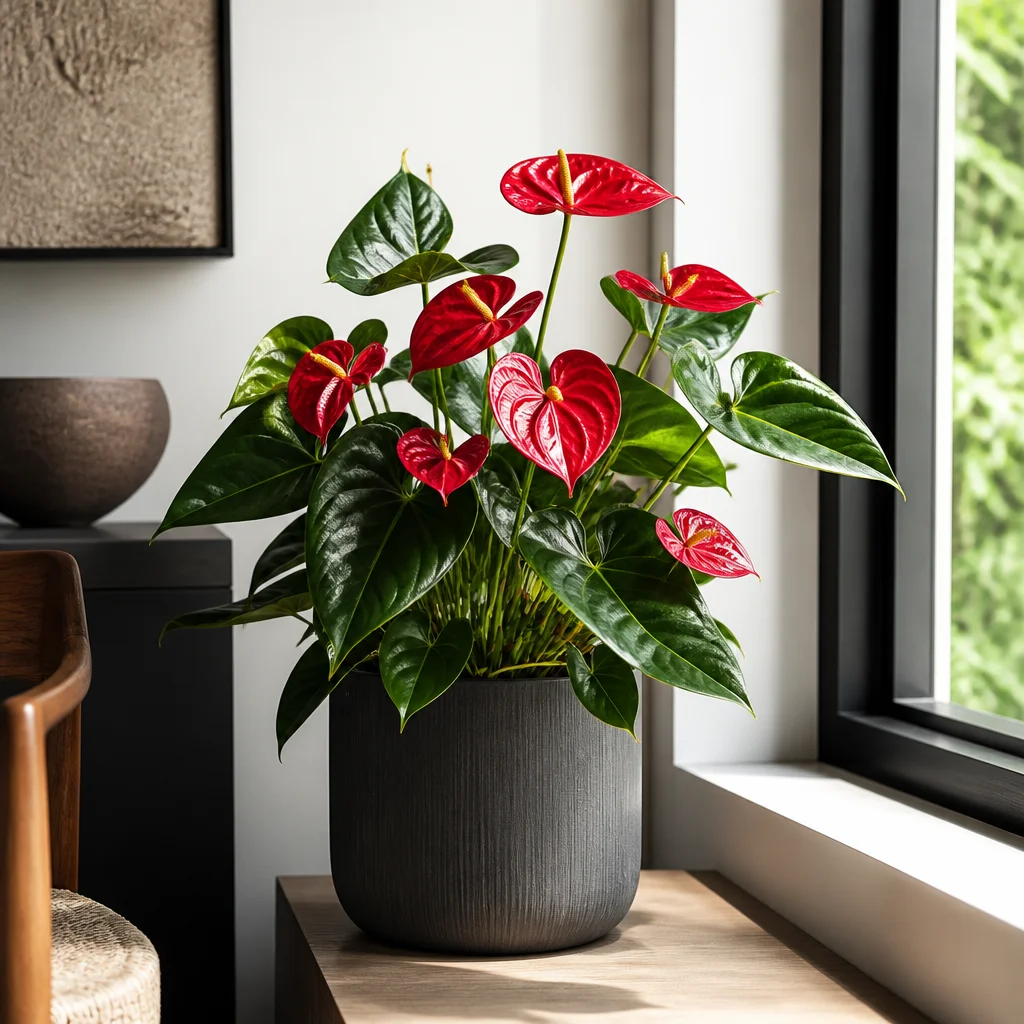
Anthurium for Glossy Leaves and Lasting Waxy Bracts
Anthurium offers an unusually long-lasting indoor display because its colorful heart-shaped bracts persist far longer than many soft-petaled flowers. Red is classic, but pink, white, and deeper jewel tones can also brighten a room for extended periods. Even when not flowering heavily, the glossy foliage looks substantial and decorative, giving this plant a strong year-round presence on a sill or nearby stand. A practical idea with anthurium is to use it where polished surfaces and clean lines dominate, such as a home office or modern kitchen. Its shiny leaves and sleek blooms suit contemporary interiors especially well. Place it in a pot with a bit of height so the flowers sit close to eye level, keep humidity reasonably steady if possible, and wipe the leaves occasionally to maintain that fresh, lacquered look.
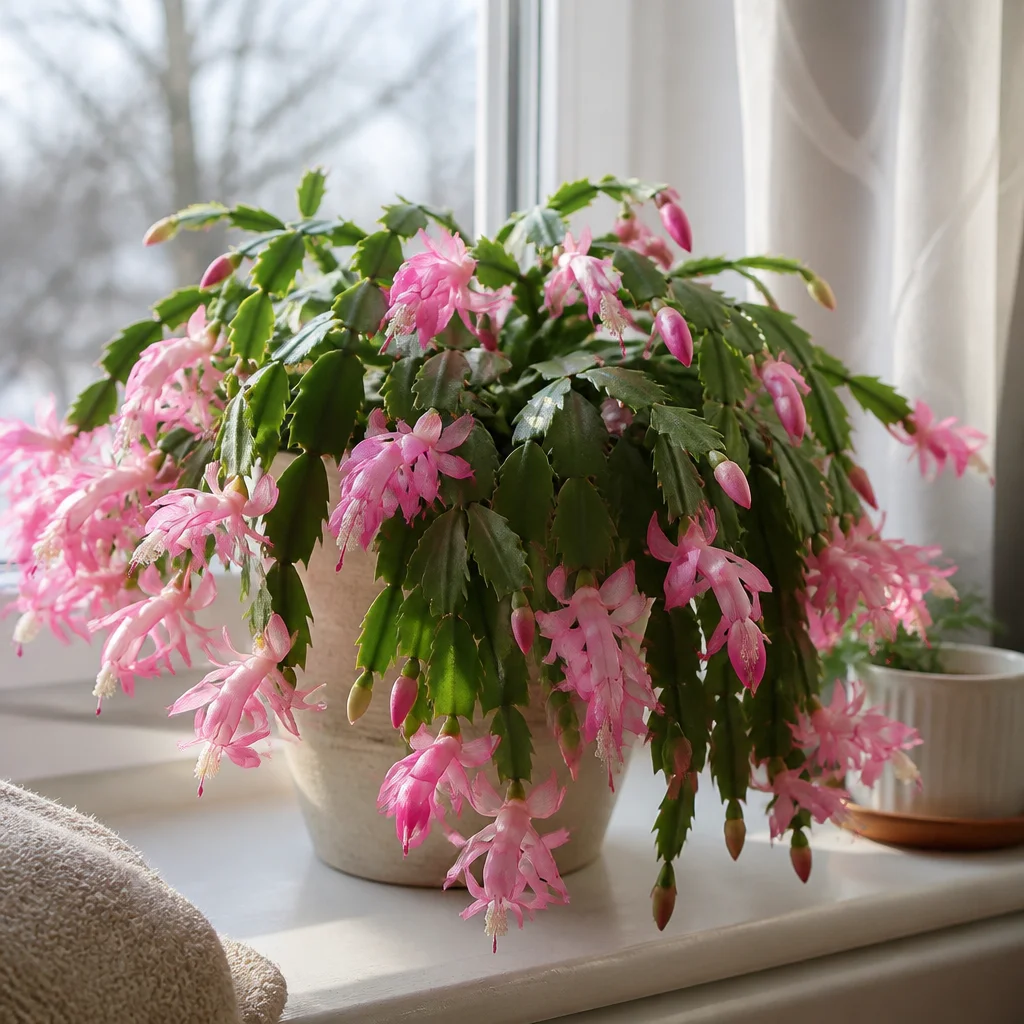
Christmas Cactus for Seasonal Waves That Return Year After Year
Christmas cactus earns its place on a windowsill because it stays compact, adapts well to indoor conditions, and can flower generously with good seasonal timing. The flattened trailing stems soften hard window lines, and the blooms appear in pink, red, white, peach, or purple shades that light up darker months. Unlike many one-season gift plants, it can remain a lasting part of your home and bloom again each year. The most useful approach is to think of Christmas cactus as a plant that improves with age. Older specimens often become more characterful, with fuller branching and more abundant flowers. Display it in a simple hanging or pedestal-style pot near the sill if space is tight, so the stems can drape freely without being crushed. Once buds form, try not to shift it around too much, as stability helps preserve the display.
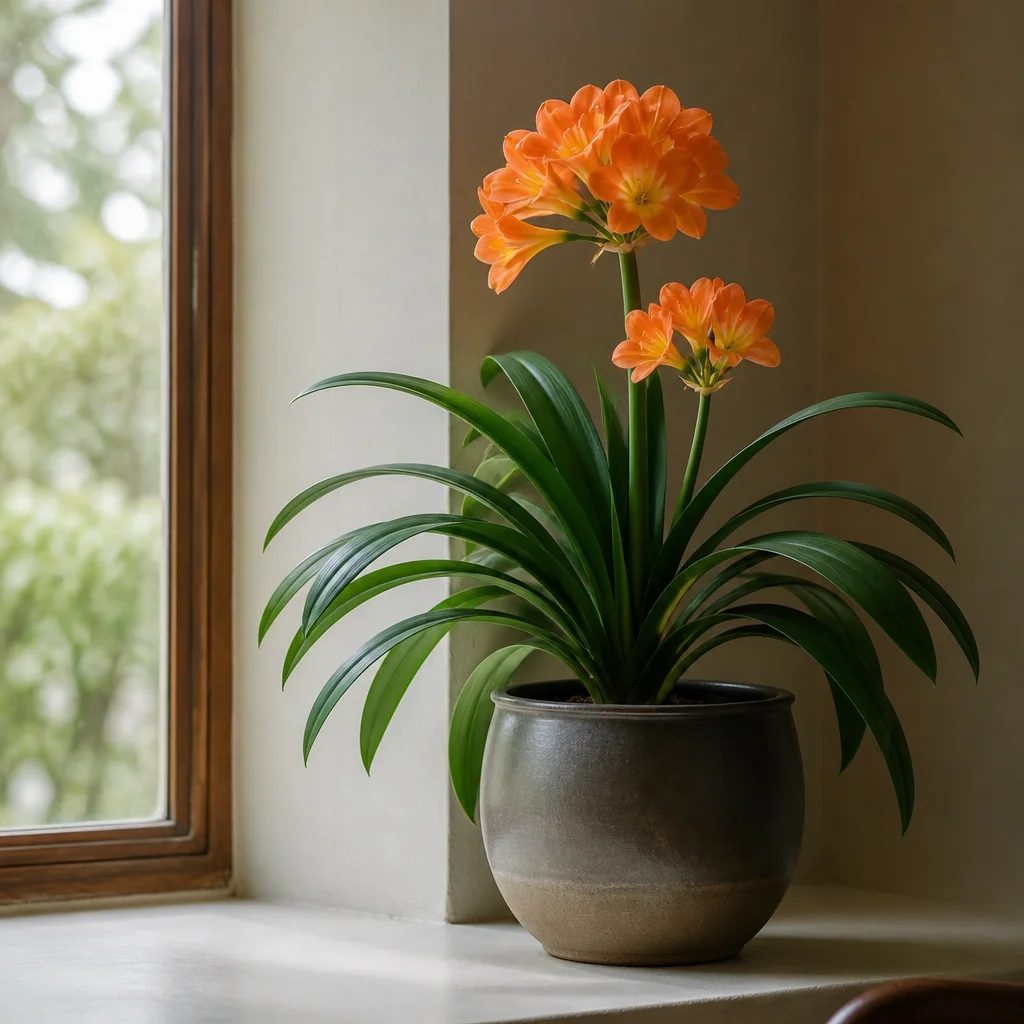
Clivia for Bold Umbels and a Calm Architectural Habit
Clivia is a strong candidate for brightening indoor spaces because it combines strap-like evergreen leaves with sturdy stems topped by clusters of trumpet flowers. Orange is most familiar, but softer yellows and warmer tones are also available. It does not bloom nonstop, yet its flowering period is memorable and its foliage remains handsome between cycles, making it worthwhile in homes that prefer fewer, better plants. A good styling tip is to place clivia where its symmetrical leaf fans can be appreciated from the front, such as on a deep sill at the end of a hallway or in a bright landing window. It has a composed, architectural quality that looks especially good in solid, understated pots. Avoid overpotting, let the plant feel a little snug in its container, and keep the leaves clean so the whole plant reads as intentional and substantial.
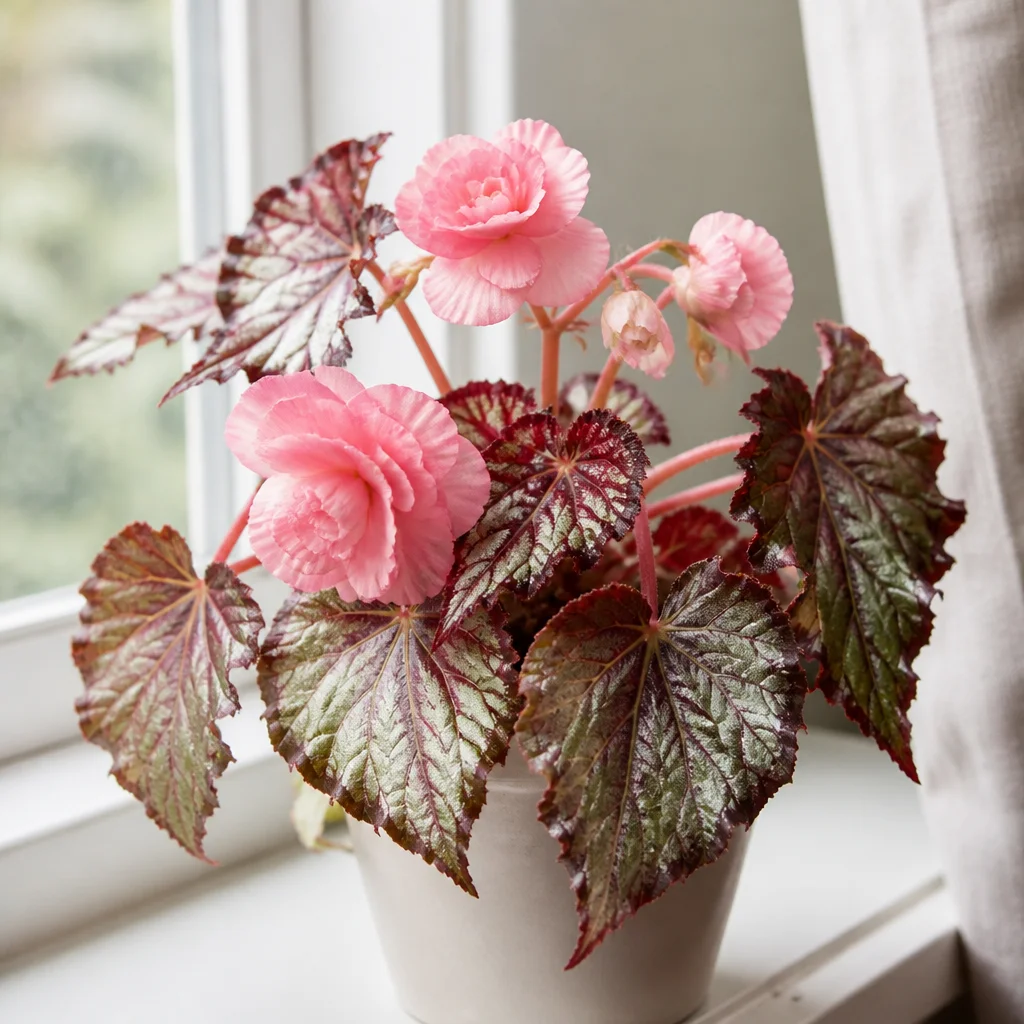
Begonia for Colorful Flowers Paired With Decorative Foliage
Certain flowering begonias are excellent for indoor display because they bring two forms of interest at once: blooms and attractive leaves. Depending on the type, you may get clusters of flowers in warm or pastel shades alongside foliage that is glossy, winged, textured, or patterned. This layered appeal is helpful on windowsills, where plants are viewed up close and should still look appealing between flowering peaks. The key idea with begonias is to choose one whose leaf shape complements your room. Cane types can feel lively and upright, while compact wax begonias stay rounded and approachable. Because they already offer visual complexity, they usually look best in plain pots with space around them. Keep them in bright light out of harsh midday scorch, pinch as needed to maintain a balanced shape, and remove tired blooms to keep the plant crisp.
Crown of Thorns for Sun-Loving Flowers on a Tough Plant
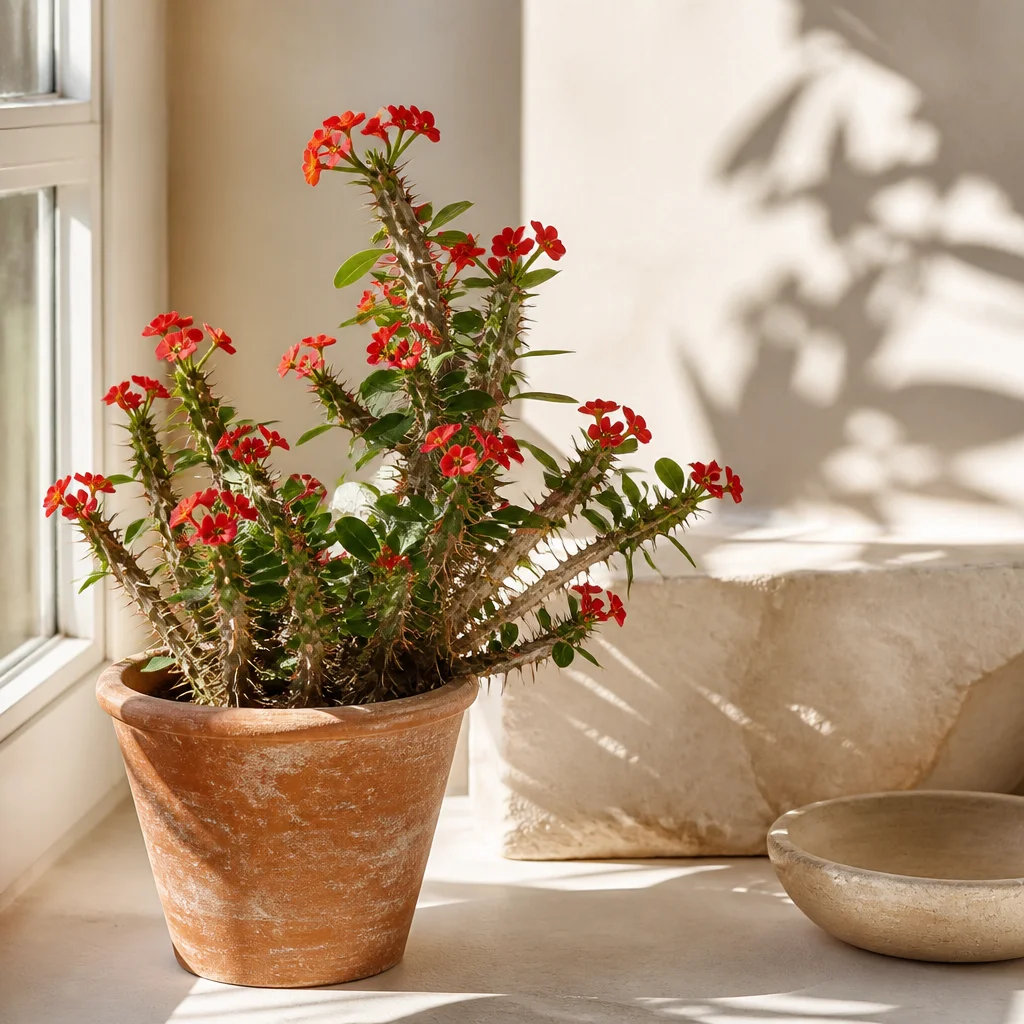
Crown of thorns is especially useful for very bright windows where softer houseplants may struggle. It produces small but persistent colorful bracts over long periods, often in red, pink, cream, or yellow shades, and its succulent stems cope well with dry indoor air. The overall effect is cheerful and durable rather than lush, which can be exactly right for sunny rooms that need a low-fuss flowering plant. A clever way to use crown of thorns is in a warm-toned terracotta or sandy ceramic pot that suits its sun-loving character. This gives the display a cohesive, sunlit feel and emphasizes the plant’s resilience. Place it where it receives strong light, water only when the potting mix has dried appropriately, and give it enough personal space on the sill so its thorny stems are not brushed accidentally during daily routines.
Peace Lily for White Blooms in Softer Light
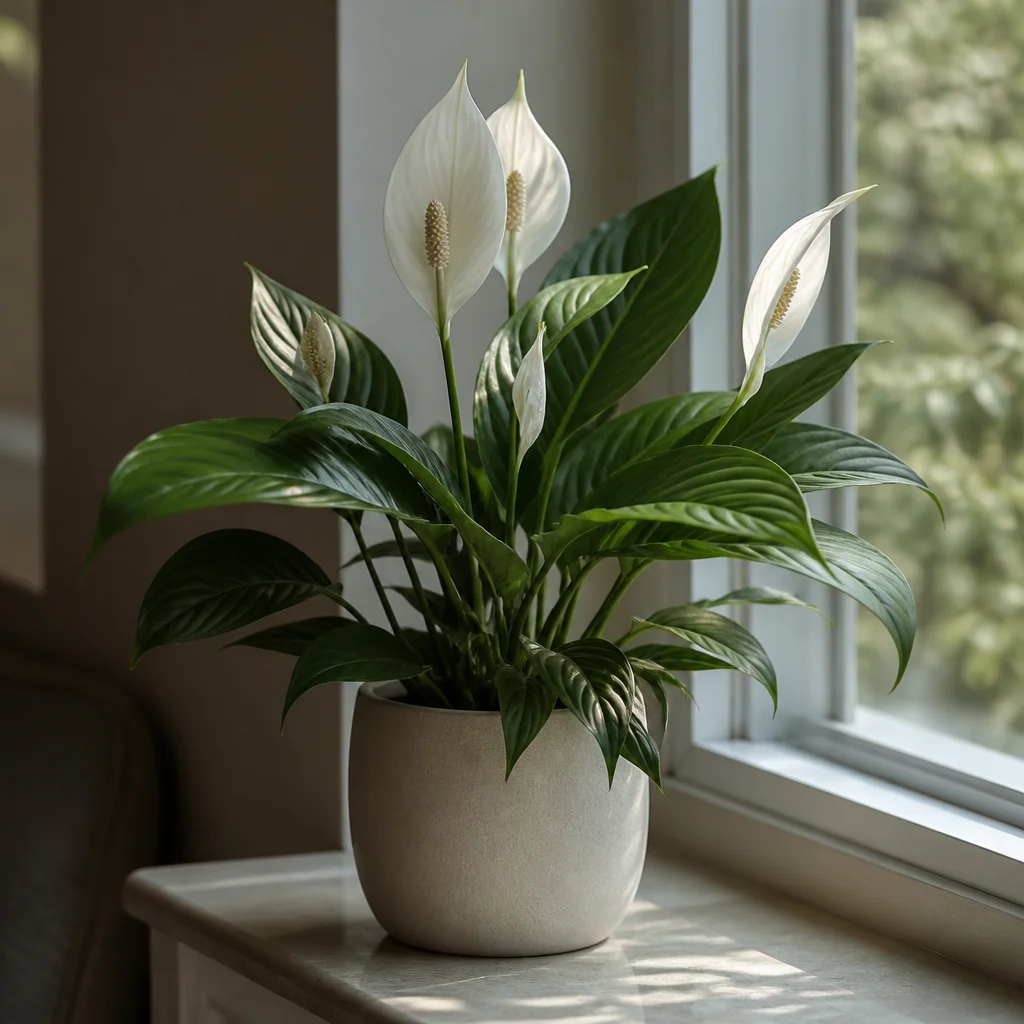
Peace lily is often chosen for foliage, but its white spathes also provide a long-lasting floral effect that can brighten places where direct sun is limited. This makes it valuable for windowsills with gentle morning light or rooms where brighter bloomers would fail to flower well. The contrast between dark green leaves and creamy white blooms feels fresh, simple, and easy to integrate into many decorating styles. The strongest design idea with peace lily is to use it as a lightening element in a darker corner or against a colored wall near a window. Its flowers visually lift surrounding greenery and help a plant grouping feel cleaner and less heavy. Choose a pot that echoes the calm simplicity of the blooms, keep the soil evenly moist rather than waterlogged, and trim away aging white spathes once they begin to green or brown.
Oxalis for Delicate Flowers and Folds of Colorful Foliage
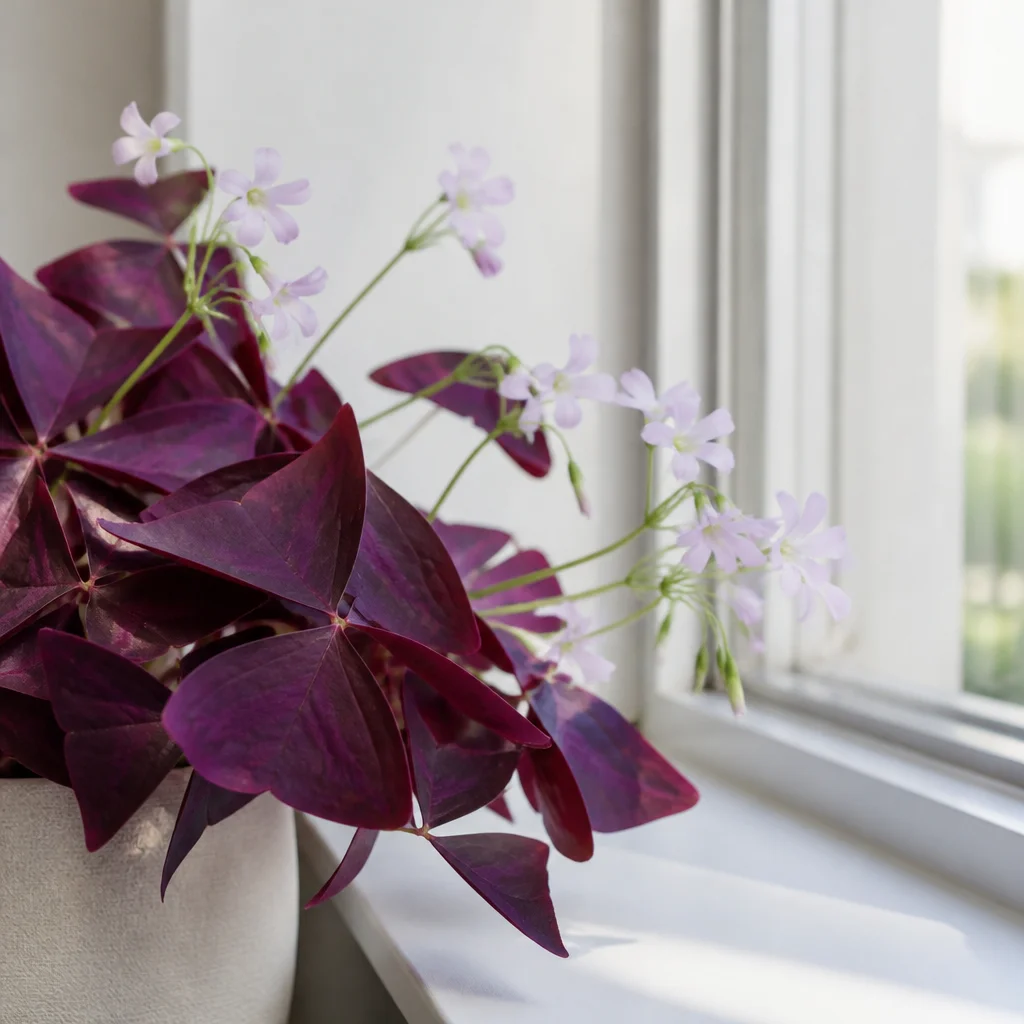
Oxalis brings a playful quality to windowsills through both its small flowers and its distinctive leaves, which may appear deep purple or fresh green depending on the variety. The leaves open and close with changing light, giving the plant a sense of movement that makes everyday observation rewarding. Its blooms are usually light and dainty, but because they appear above such decorative foliage, the overall display feels lively and complete. A practical styling tip is to place oxalis where you pass often, such as over a sink or beside a breakfast table, so its daily leaf movements become part of the room’s rhythm. It looks especially appealing in simple pots that let the leaf color stand out. Keep it in bright light, avoid letting it sit in heavy wet soil, and do not be alarmed if it occasionally takes a short rest period before growing strongly again.
Lipstick Plant for Cascading Blooms at Eye Level
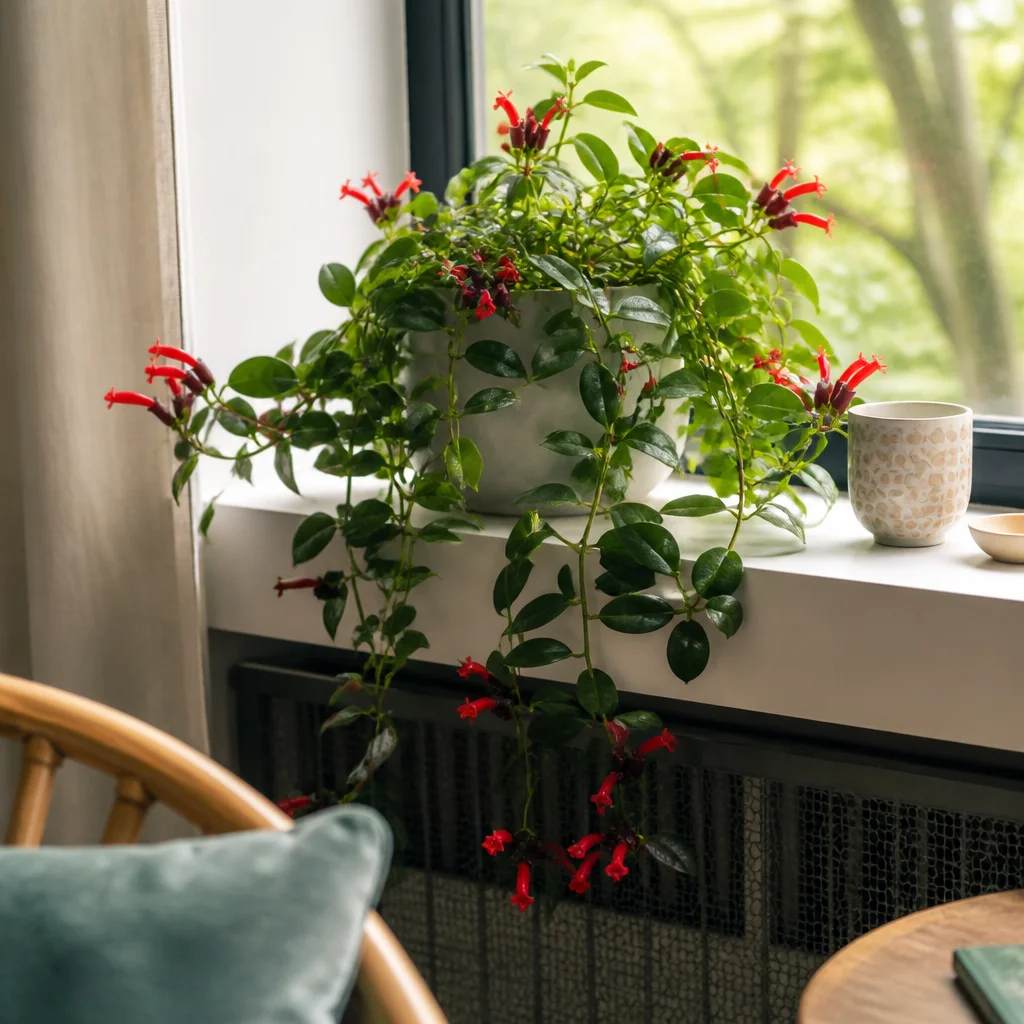
Lipstick plant is perfect for adding flowering color to a windowsill when you want something that softens the edges rather than sitting as a rigid mound. Its trailing stems carry glossy leaves and tubular flowers that emerge from darker buds, creating a lively contrast. Because it naturally spills, it can turn an ordinary sill into a greener, more layered feature without taking up much horizontal space. The most useful idea is to raise or hang lipstick plant so the flowers can be seen from the side, not just from above. On a high sill, shelf edge, or hanging position near the window, the stems show their full charm. Pair it with compact upright bloomers to create a varied indoor display, give it bright filtered light, and maintain fairly even moisture so buds do not shrivel before opening.
How did this story make you feel?
Choose one reaction. You can change it later.