Fruit in Containers7 min read
Espaliered Fruit Trees in Pots: A Small-Space Starting Guide
An espaliered fruit tree brings the pleasure of blossom, foliage, and a possible harvest to a surprisingly narrow space. Trained along a support, its branches make a living pattern against a sunny wall or fence without demanding the footprint of a full orchard. Growing one in a pot takes some planning, though: roots need room, branches need patient guidance, and a container dries out faster than garden soil. Start with a manageable tree and a simple shape, then build your routine around steady watering and thoughtful pruning.
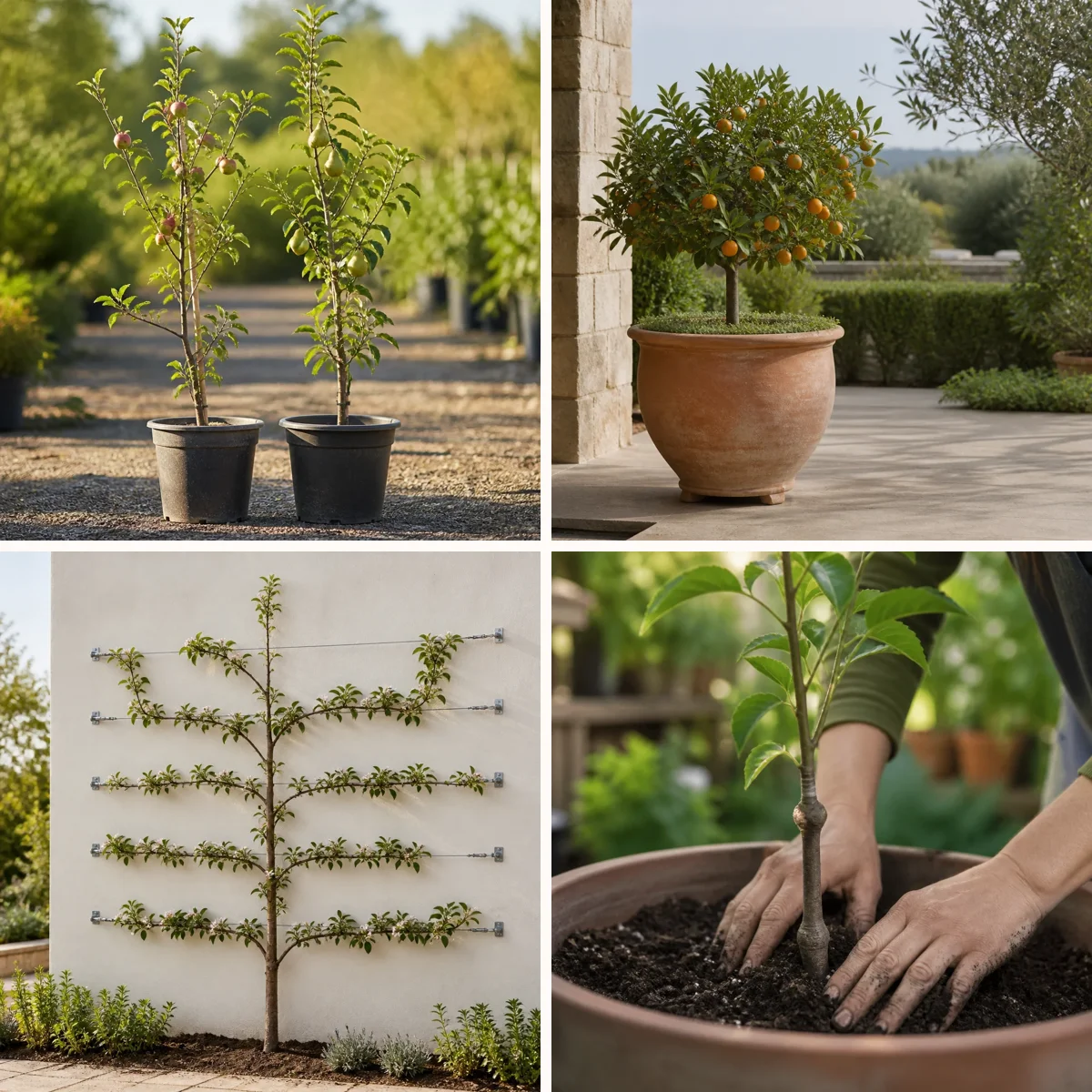

Choose a Fruit Tree That Suits the Space
Apples and pears are classic choices for espalier because their flexible young shoots can be trained into horizontal tiers. Look for a variety suited to your climate and a dwarfing or semi-dwarfing rootstock appropriate for container growing. Rootstock influences vigor and eventual size, but a small pot alone will not reliably keep an unsuitable tree compact. Check pollination requirements before buying. Some varieties need a compatible partner that flowers at the same time, while others are described as self-fertile and may still crop better with a partner nearby. If space allows only one tree, ask a local nursery which varieties perform well on their own in your area. A young, untrained tree offers flexibility, while a partly trained specimen gives you a useful head start.
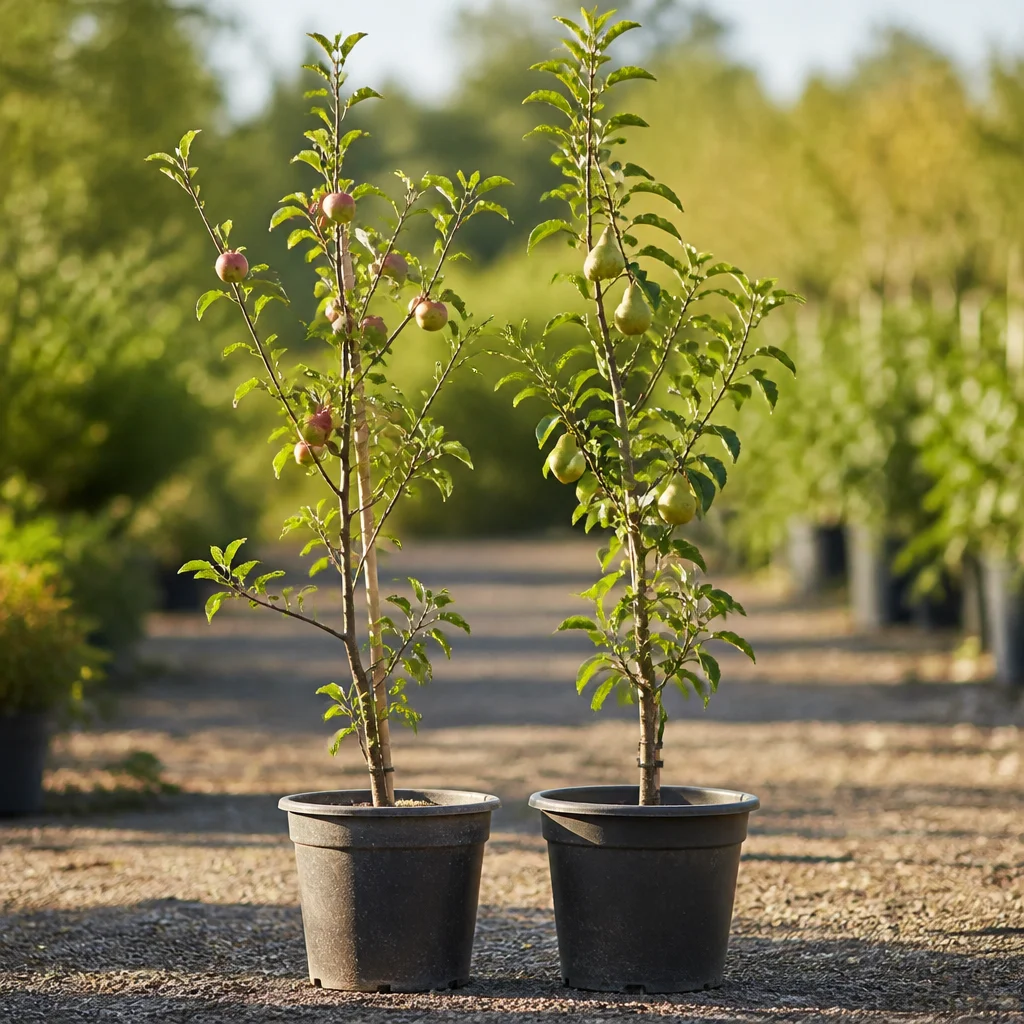
Give the Roots a Generous Container
Choose a sturdy pot with drainage holes and enough volume for several years of growth. A container roughly 45–60 centimeters wide is a practical starting point for many young dwarf apple or pear trees, though the root system and expected vigor matter more than a single measurement. Avoid a pot so narrow that it tips once the support and branches are in place. Frost-resistant terracotta has a warm, traditional look but can be heavy and dry out quickly. Lightweight resin is easier to move, while wood offers a softer appearance and needs periodic inspection for decay. Set the pot on feet or spacers so excess water can escape, and consider the combined weight of the pot, wet compost, tree, and support before placing it on a balcony.
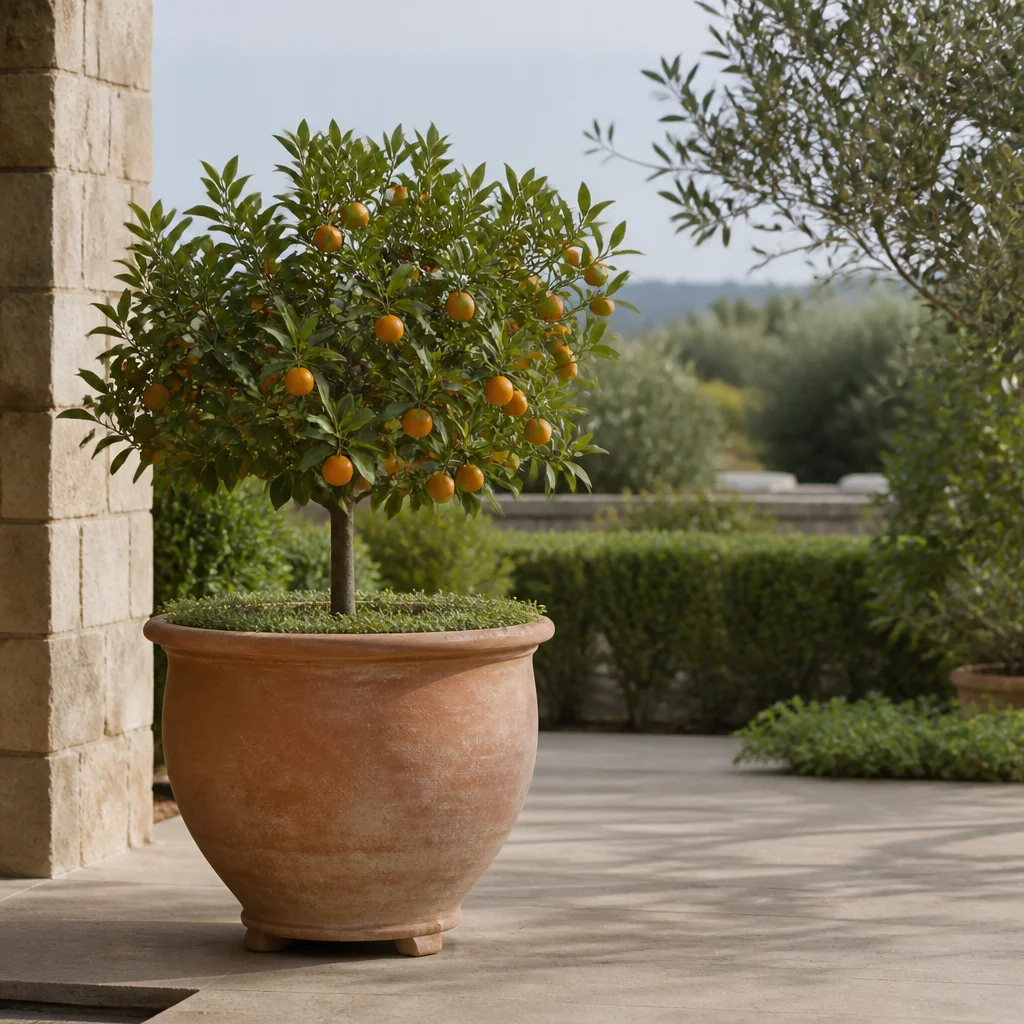
Build a Support That Can Carry the Tree
An espalier needs a framework stronger than the slim sapling suggests. A freestanding trellis fixed securely in the container can work for a small specimen; a wall- or fence-mounted system of sturdy horizontal wires is often more stable as the tree matures. Use suitable fixings for the surface and leave a gap between the branches and wall so air can circulate and maintenance remains possible. Position the support before planting to avoid disturbing established roots. Space horizontal wires to suit your chosen design, often about 30–45 centimeters apart for a compact arrangement. Make sure the pot cannot blow over or drag on the wires, and check a landlord’s or building’s rules before attaching anything to a shared wall.
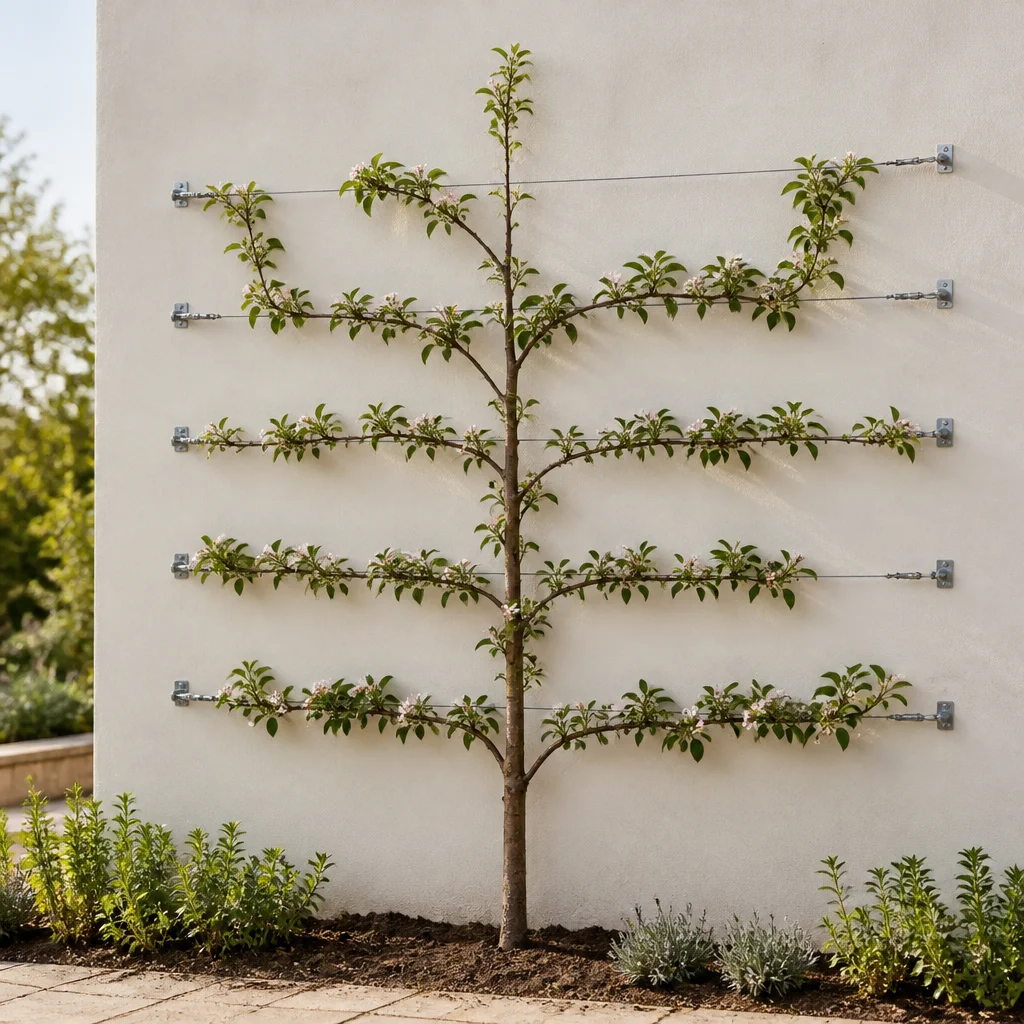
Plant at the Right Depth
Use a quality potting mix suitable for long-term container growing; a soil-based mix can provide useful weight and structure. Do not add a layer of gravel at the bottom as a substitute for drainage holes. Instead, keep the holes open and use a free-draining mix throughout the pot. Place the tree at approximately the same soil level it grew at previously, keeping the graft union above the surface. Spread or gently loosen circling roots where practical, fill around them, and water thoroughly to settle the mix. Leave a few centimeters between the soil and pot rim to make watering easier. A thin mulch of bark or compost can slow evaporation, but keep it clear of the trunk.
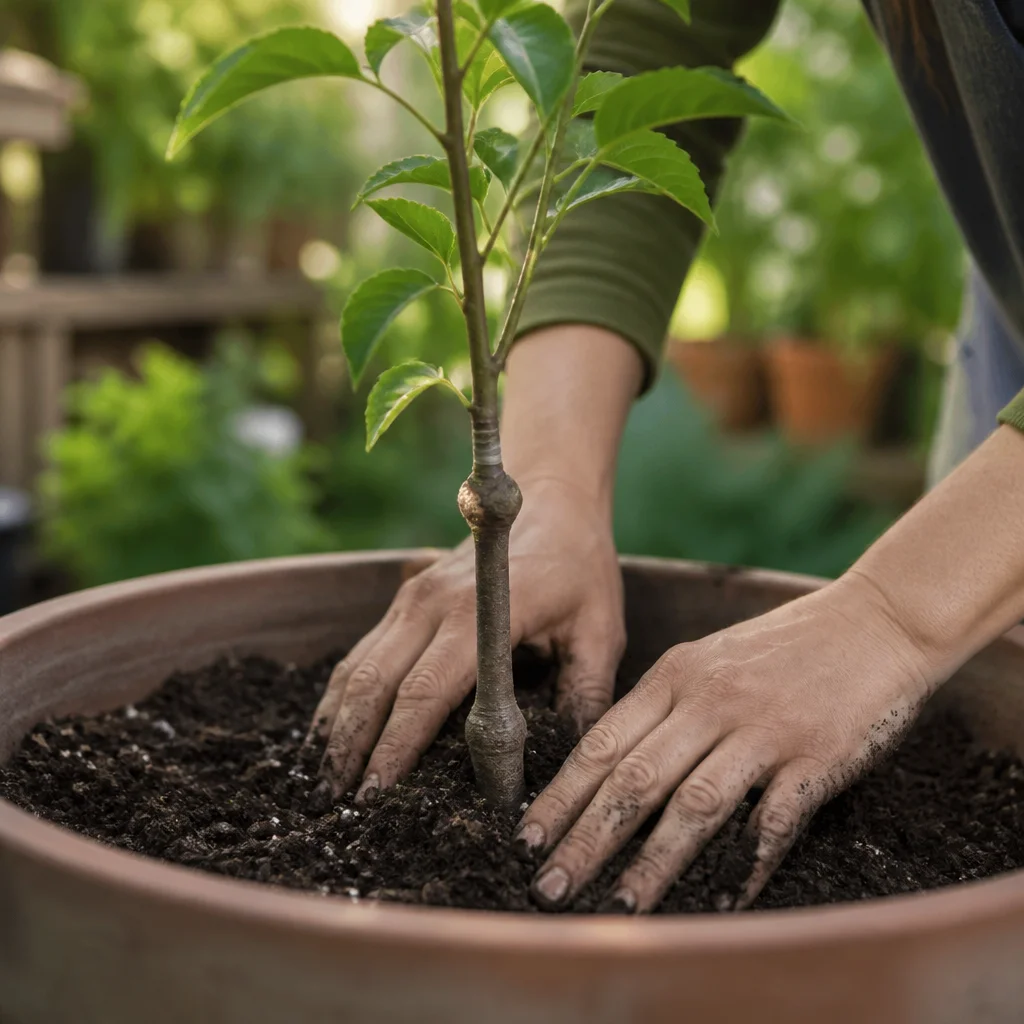
Pick a Simple Training Shape
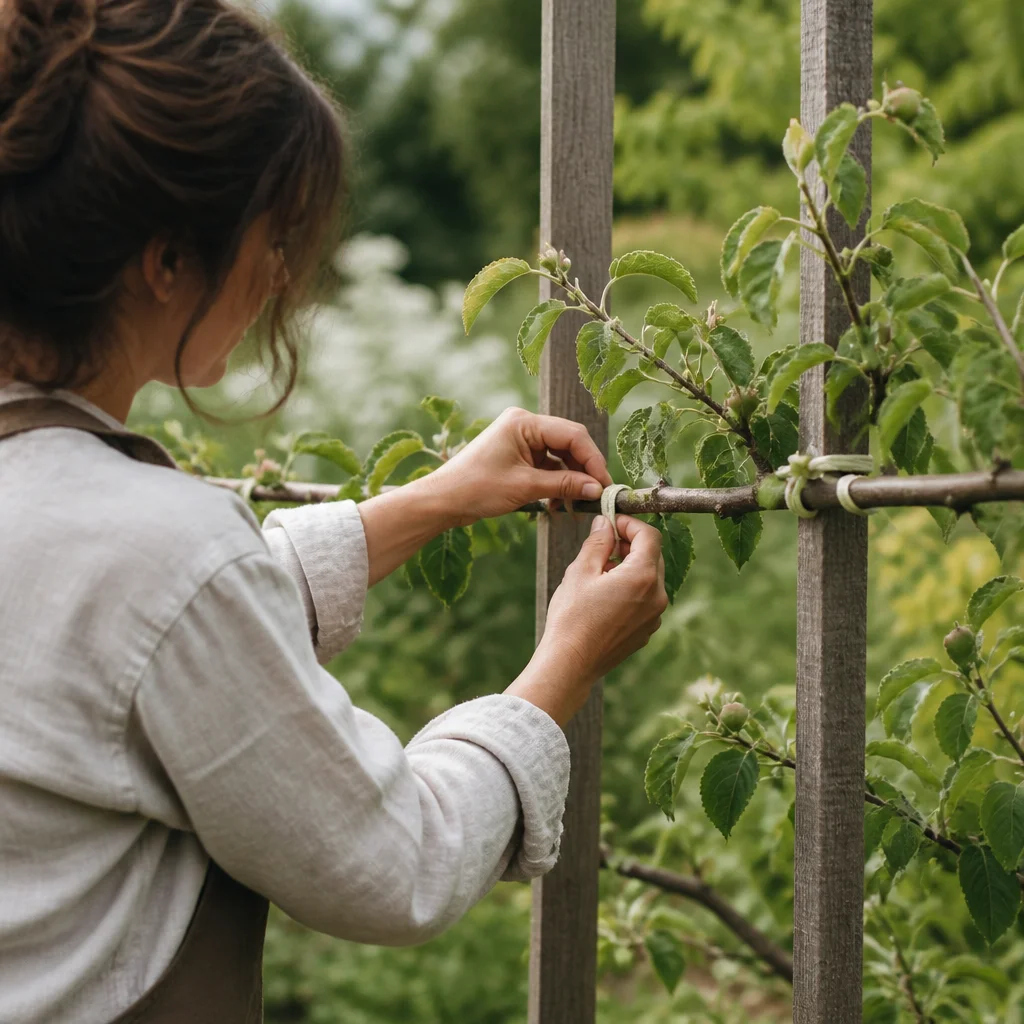
For a first espalier, a single horizontal tier or a small fan is easier to manage than an elaborate pattern. A horizontal design has a central stem with pairs of branches extending to either side; a fan spreads several branches outward from a low point. Let the available wall width and the tree’s existing shoots guide your choice rather than forcing a rigid design immediately. Tie young, pliable shoots loosely to the framework with soft garden ties, leaving room for thickening. Bend them gradually over several sessions if they resist; older wood can snap. Check ties regularly and adjust or replace them before they bite into the bark. Building a balanced framework may take several growing seasons, and an imperfect but healthy shape is a good result.
Prune for Structure, Light, and Fruiting Wood
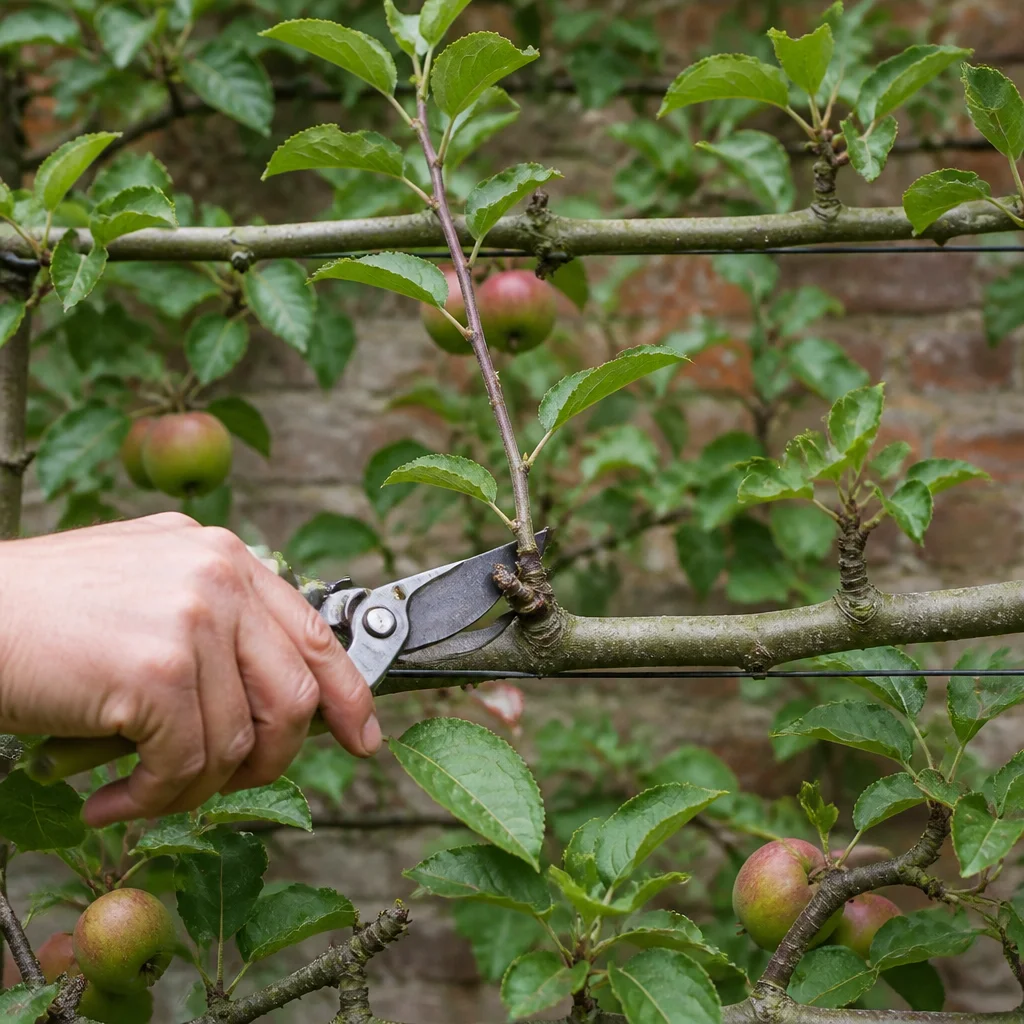
Pruning keeps the framework clear and helps direct growth, but timing depends on the fruit and local conditions. For established apples and pears, winter pruning is commonly used to shape the main framework, while summer pruning can shorten vigorous side shoots and help maintain the trained outline. Learn the needs of your particular variety before cutting, because fruit is produced on different types of wood depending on the tree. Start by removing dead, damaged, or crossing growth with clean, sharp tools. Preserve the branches needed for your framework and avoid stripping off every short side shoot: some may become productive fruiting spurs. Make gradual adjustments rather than a drastic annual haircut. If you are unsure whether a shoot carries fruit buds, leave it until you can identify its growth.
Water Deeply and Feed Moderately
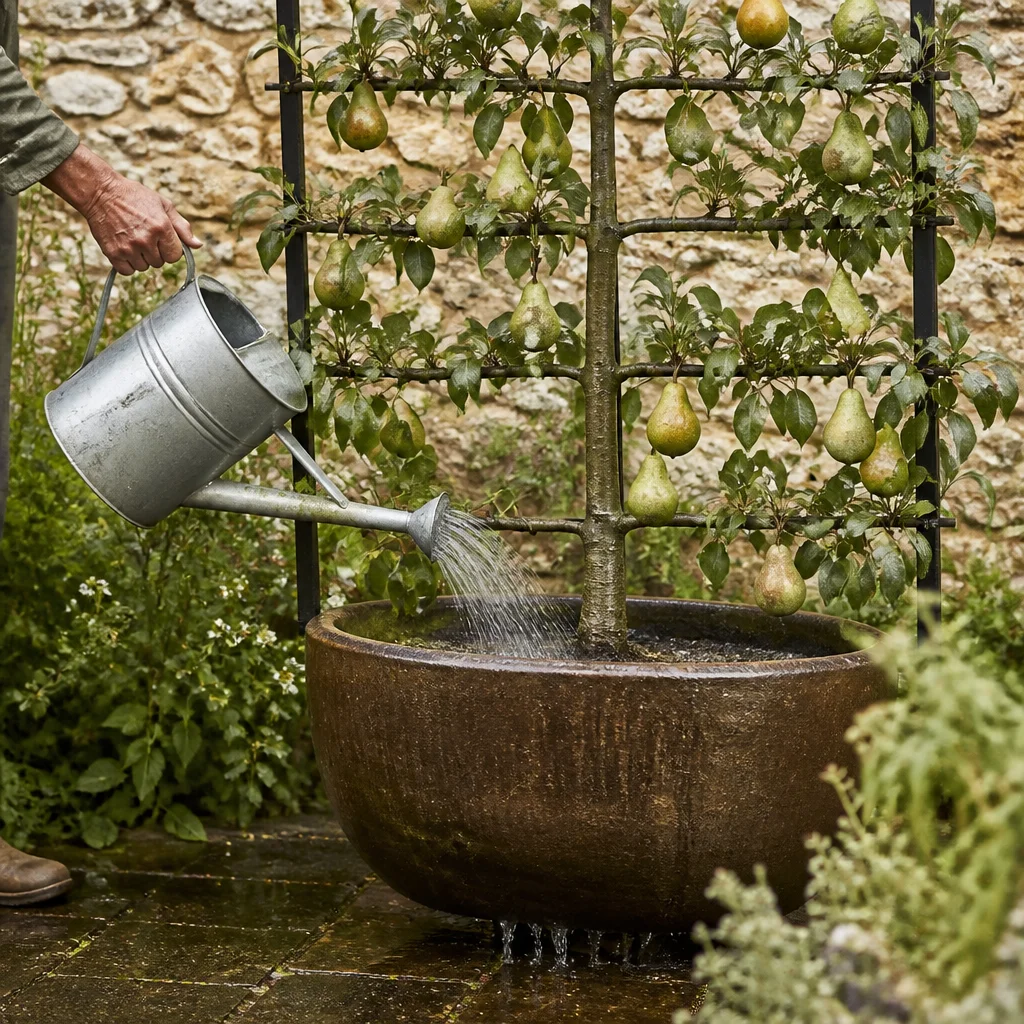
A potted tree depends on you for moisture, especially during warm, windy weather and while fruit is swelling. Check the mix below the surface regularly; when the upper layer begins to dry, water slowly until excess drains from the bottom. A small tree in a large pot may need less frequent watering than a mature tree with a crowded root system. Do not leave the container standing in water for long periods. Refresh the surface with a little compost in spring and use a balanced fertilizer suitable for fruit trees according to its label. Excess nitrogen can encourage leafy growth at the expense of the manageable shape you want. Watch the tree’s vigor rather than assuming that more feed will mean more fruit.
Plan for Pollination and a Modest Harvest
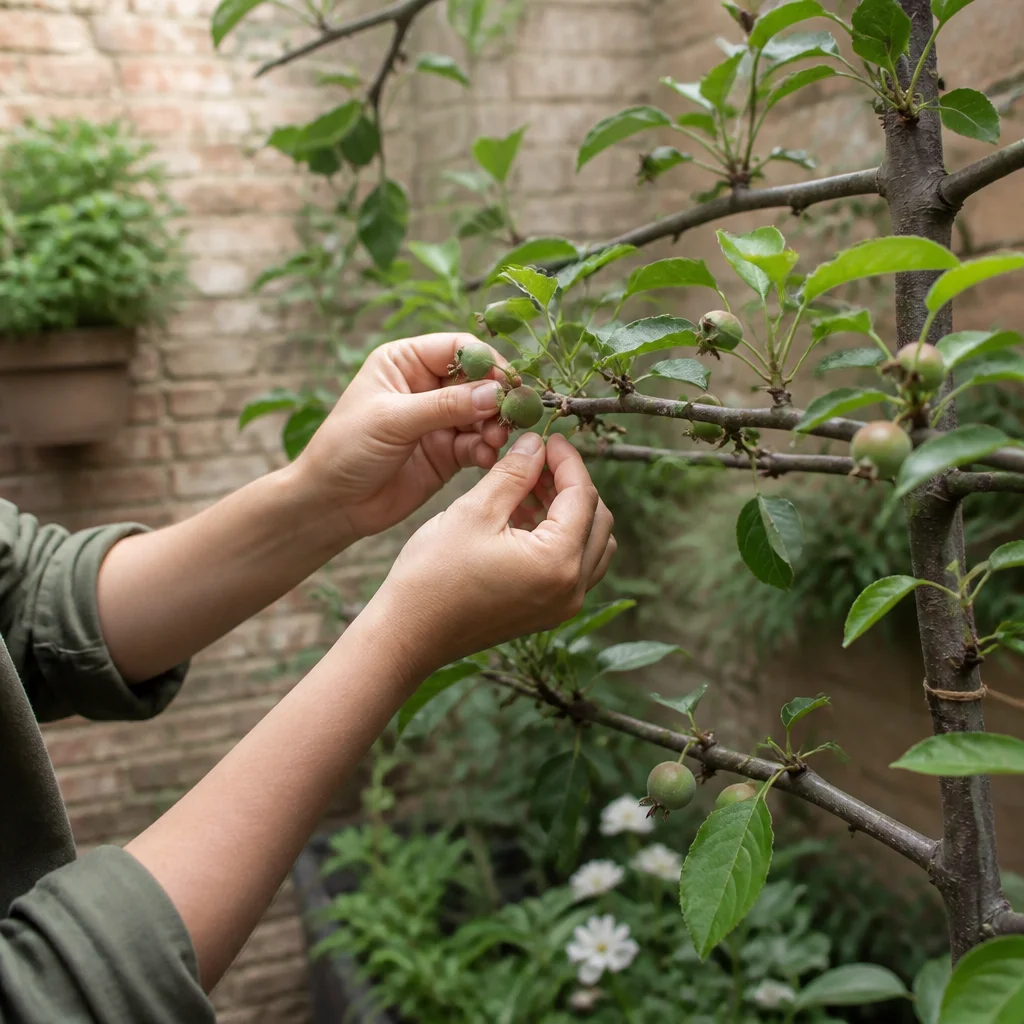
Even a well-trained tree may not fruit immediately. Give a young plant time to establish its roots and framework, and expect harvest size to vary with weather, pollination, and the tree’s age. Protect blossom from severe late frost when practical, using breathable fleece temporarily and removing it when conditions improve so pollinators can reach the flowers. If many small fruits set, thin them according to the fruit and variety. This reduces weight on young branches and gives the remaining fruit more room to develop. Support a heavily laden limb if needed, and remove fruit that is damaged or diseased. A small, healthy crop is more useful than a heavy one that strains a young container tree.
Keep Roots Healthy Through the Seasons
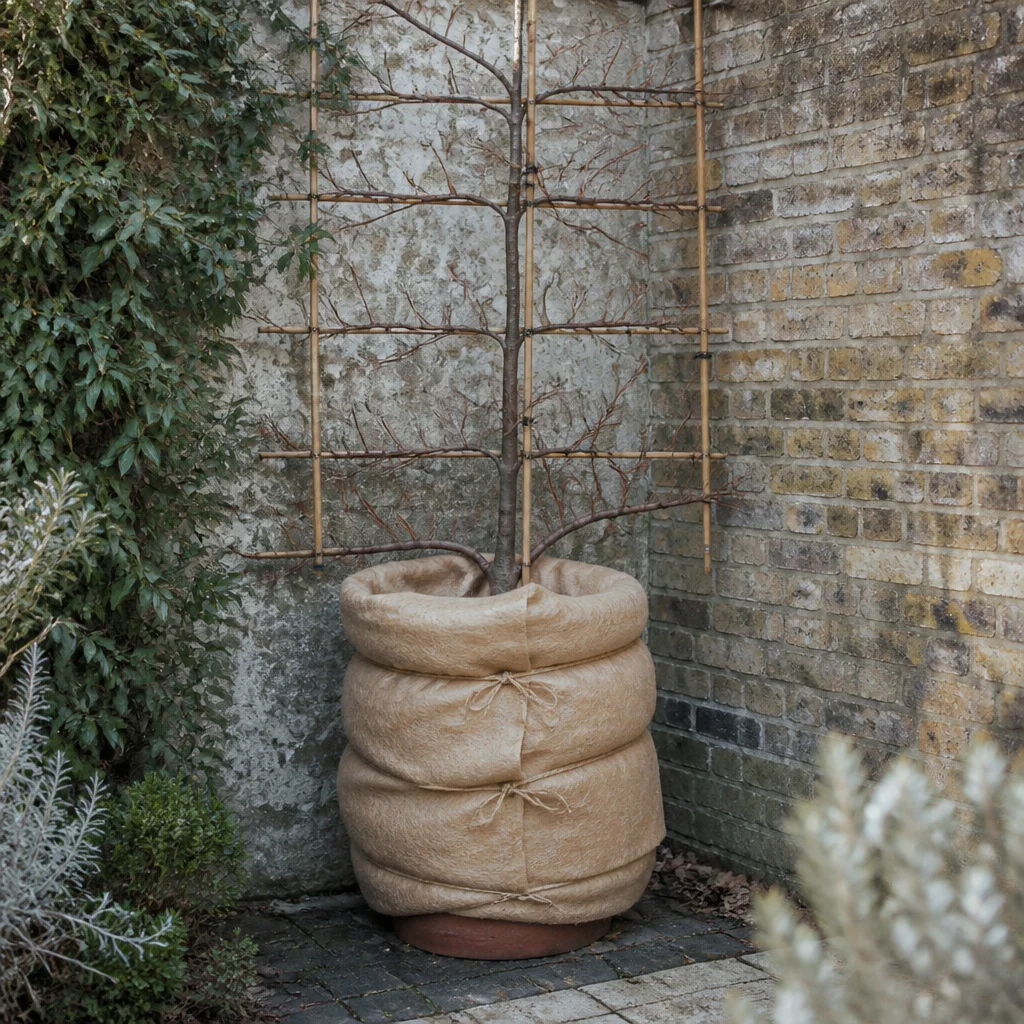
Container roots experience greater temperature swings than roots in the ground. In cold regions, group pots in a sheltered position and insulate the container during severe freezes while keeping drainage clear. The tree still needs seasonal dormancy, so avoid moving it into a heated room. In hot weather, shade the pot itself if it overheats, without unnecessarily shading the foliage. Every few years, assess whether roots are crowded and water runs straight through. During the dormant season, a suitable tree can be moved into a slightly larger pot or carefully root-pruned and returned to its container with fresh mix. Root pruning is stressful, so research the method for your fruit and rootstock or ask an experienced grower for help. Check regularly for pests and remove fallen or diseased material.
Style the Tree as a Living Focal Point
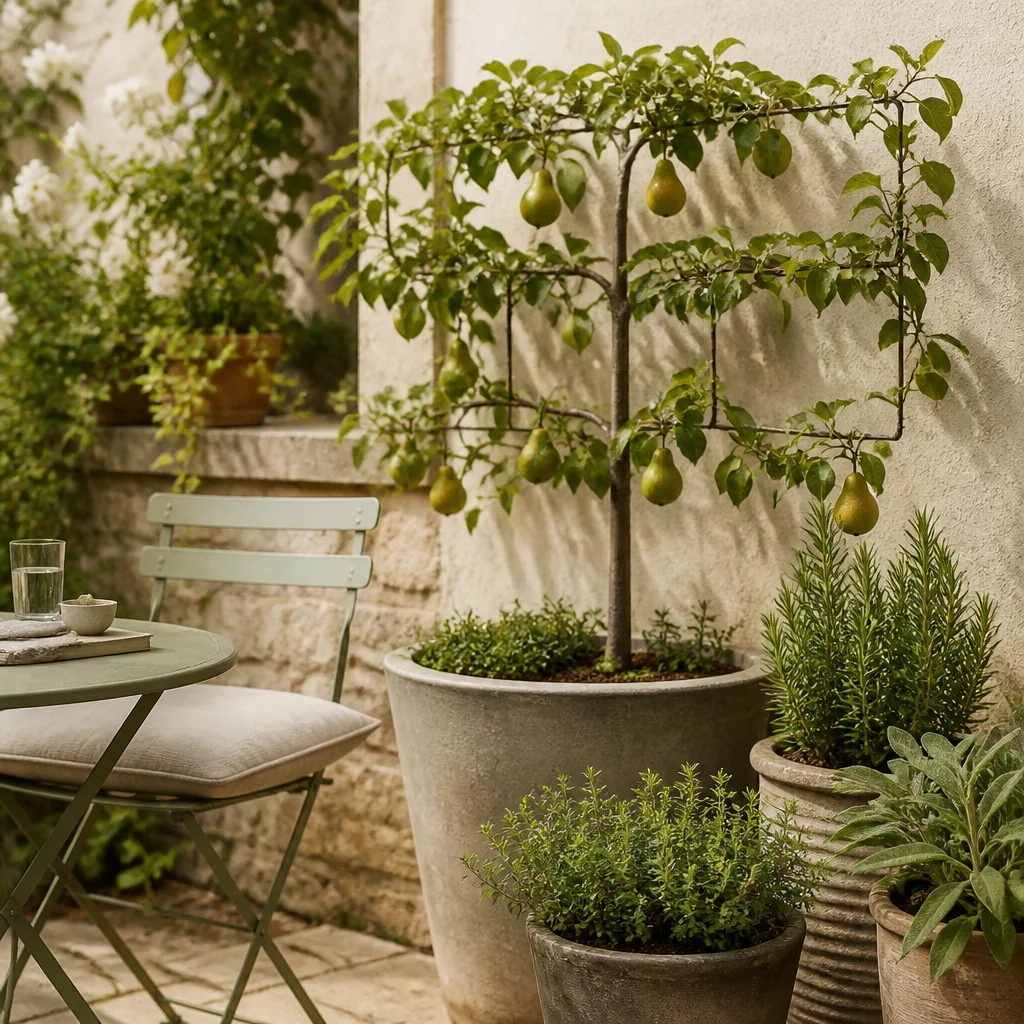
Place the pot where the tree receives the sun its fruit needs, generally at least six hours of direct light daily, while allowing access for watering and pruning. A plain wall can make the branch pattern stand out; a muted container keeps attention on blossom and fruit. Repeat the pot color in nearby planters for a calm, cohesive look, or use one larger specimen to anchor a seating area. Keep companion plants modest so they do not compete heavily for water or obscure the trunk. Separate pots of low-growing herbs or seasonal flowers are easy to rearrange as the tree grows. Leave working space around the container, and remember that a beautiful espalier is not static: its shape becomes more individual with each season of training.
How did this story make you feel?
Choose one reaction. You can change it later.
